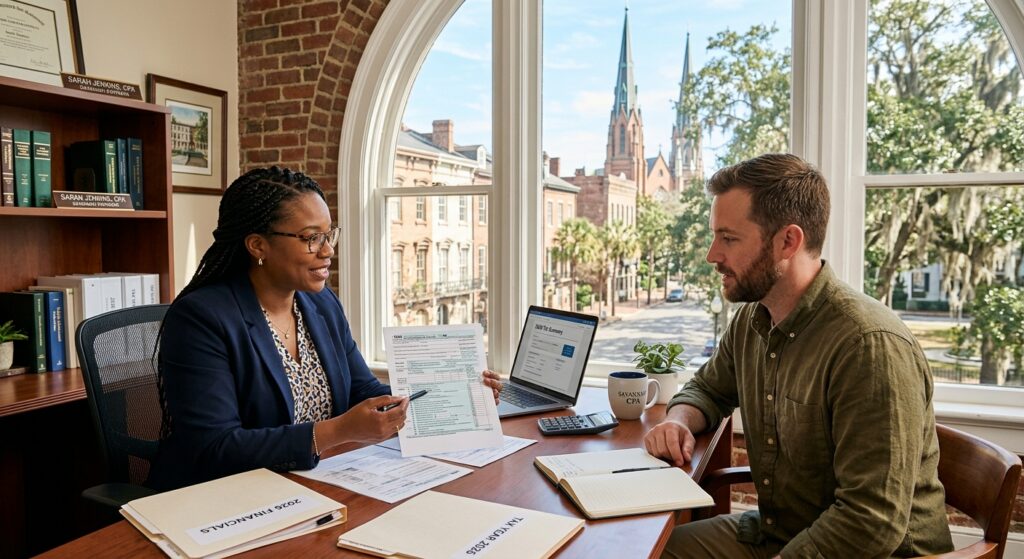
Savannah CPA Guide: 2026 Tax Strategies for Business Owners & Investors
Finding the right Savannah CPA for tax preparation can transform your 2026 tax outcome. A skilled Savannah CPA does far more than file returns. Instead, this professional builds year-round strategy that lowers your bill legally. Moreover, business owners, real estate investors, and high earners in Chatham County face unique 2026 rules. Therefore, this guide breaks down verified IRS figures and practical strategies you can use today.
Table of Contents
- Key Takeaways
- What Does a Savannah CPA Actually Do in 2026?
- How Can a Savannah CPA Lower Your 2026 Business Taxes?
- What Should Real Estate Investors Ask a Savannah CPA?
- How Do Self-Employed Savannah Workers Save on Taxes?
- What Strategies Help High-Net-Worth Savannah Clients?
- How Do You Choose the Right Savannah CPA?
- Uncle Kam in Action
- Next Steps
- Related Resources
- Frequently Asked Questions
Key Takeaways
- A proactive Savannah CPA builds year-round strategy, not just April filings.
- The 2026 Section 179 expensing limit reaches $2,560,000 for qualifying equipment.
- The Section 199A QBI deduction phases in at $201,750 single, $403,500 joint.
- Entity structuring can save Georgia business owners thousands in self-employment tax.
- Real estate investors gain from depreciation, cost segregation, and 1031 exchanges.
What Does a Savannah CPA Actually Do in 2026?
Quick Answer: A Savannah CPA prepares returns, plans tax strategy, structures entities, and represents clients before the IRS. In 2026, the best CPAs focus on proactive planning.
Many people think a CPA only files taxes once a year. However, the modern role goes much deeper. A great Savannah CPA acts as a strategic partner throughout the year. Furthermore, this professional monitors changing IRS rules and applies them to your situation. As a result, you keep more of what you earn.
In 2026, tax law shifted significantly under recent federal legislation. Consequently, business owners need guidance that reflects current figures, not outdated assumptions. A qualified advisor helps you avoid costly mistakes. In addition, they help you claim every deduction and credit you deserve. You can learn more about our approach to proactive tax strategy planning.
Core Services a Savannah CPA Provides
Certified public accountants offer a wide range of services. Moreover, the right mix depends on your goals. Below are the most common services requested by Georgia clients:
- Individual and business tax return preparation and filing
- Year-round tax strategy and quarterly estimated payment planning
- Entity structuring for LLCs, S Corps, and C Corps
- Bookkeeping, payroll, and financial statement preparation
- IRS audit representation and resolution support
Why Local Knowledge Matters
Georgia has its own tax rules that a national chain may overlook. Therefore, a local expert who understands Chatham County business patterns adds real value. For example, tourism, hospitality, and port-related businesses dominate the Savannah economy. As a result, seasonal cash flow planning becomes essential. A local CPA also understands Georgia Department of Revenue filing requirements. You can verify state rules directly at the Georgia Department of Revenue website. If you need help finding tax preparation near me in Georgia, local guidance matters.
Pro Tip: Ask your CPA how often they meet clients. Proactive firms schedule at least quarterly reviews.
How Can a Savannah CPA Lower Your 2026 Business Taxes?
Quick Answer: A Savannah CPA lowers business taxes using the Section 199A QBI deduction, Section 179 expensing up to $2,560,000, and smart entity choices for 2026.
Business owners face many opportunities to reduce their tax burden. However, most miss these strategies without professional help. A skilled advisor combines several tools to maximize savings. Furthermore, timing matters greatly for equipment purchases and income deferral. Let us review the most powerful 2026 strategies for Savannah entrepreneurs.
The Section 199A QBI Deduction
The qualified business income deduction remains one of the biggest breaks available. In 2026, eligible owners may deduct up to 20% of qualified business income. However, limitations phase in at higher income levels. For 2026, the phase-in range runs from $201,750 to $276,750 for single filers. Additionally, married couples filing jointly see the range double, starting at $403,500. You can review the rules on the official IRS QBI deduction page.
Section 179 Equipment Expensing
Buying equipment offers immediate tax relief. For 2026, the Section 179 expensing limit reaches $2,560,000. As a result, businesses can deduct qualifying purchases upfront instead of over many years. This strategy suits restaurants, contractors, and medical practices well. Moreover, it pairs nicely with bonus depreciation for larger investments. Our team explains this further on our business financial solutions page.
Entity Structuring for Tax Efficiency
Your business structure directly affects your tax bill. Therefore, choosing the right entity matters. Many Savannah business owners save by electing S Corp status. This election reduces self-employment tax on distributions. However, the IRS requires reasonable compensation first. A CPA calculates the optimal salary and distribution mix. Explore our entity structuring services for details.
2026 Business Tax Figures at a Glance
| Item | 2026 Figure |
|---|---|
| Section 179 expensing limit | $2,560,000 |
| QBI phase-in start (single) | $201,750 |
| QBI phase-in start (MFJ) | $403,500 |
| Excess business loss threshold (single) | $256,000 |
Pro Tip: Time large equipment purchases before December 31 to claim 2026 Section 179 benefits.
What Should Real Estate Investors Ask a Savannah CPA?
Quick Answer: Investors should ask about depreciation, cost segregation, 1031 exchanges, and passive loss rules. These tools cut taxable rental income significantly in 2026.
Savannah’s booming rental and short-term rental market attracts many investors. However, real estate taxation involves complex rules. Therefore, working with a knowledgeable CPA proves essential. A good advisor helps you maximize deductions while staying compliant. Furthermore, they plan property sales to minimize capital gains taxes.
Depreciation and Cost Segregation
Depreciation lets you deduct property costs over time. Moreover, cost segregation accelerates these deductions. This study reclassifies building components into shorter depreciation periods. As a result, investors front-load large deductions in early ownership years. Our real estate investor tax services explain this powerful strategy. You can also review depreciation basics through the IRS depreciation resources.
1031 Exchanges to Defer Gains
Selling appreciated property triggers capital gains tax. However, a 1031 exchange defers that tax when you reinvest. Savannah investors use this strategy to build wealth faster. Nevertheless, strict deadlines apply. You must identify replacement property within 45 days. Additionally, you must close within 180 days. A CPA coordinates these timelines carefully.
Did You Know? Short-term rentals may qualify for non-passive treatment. This can unlock larger loss deductions in 2026.
How Do Self-Employed Savannah Workers Save on Taxes?
Quick Answer: Self-employed workers save through retirement plans, home office deductions, HSA contributions, and quarterly estimated payment planning in 2026.
Freelancers and 1099 contractors face the full self-employment tax. This tax runs 15.3% on net earnings. However, smart planning reduces the overall burden. A CPA helps self-employed clients claim every legitimate deduction. Furthermore, they set up retirement plans that shelter income from tax. Learn more on our self-employed tax services page.
Retirement Plans and HSAs
Retirement contributions offer strong tax savings. A SEP-IRA or Solo 401(k) shelters large amounts of income. Additionally, health savings accounts provide triple tax benefits. For 2026, the HSA limit is $4,400 for individuals and $8,750 for families. These contributions reduce taxable income directly. You can confirm HSA limits at the IRS Publication 969.
Home Office and Vehicle Deductions
Many self-employed workers use part of their home for business. Therefore, they may claim the home office deduction. This deduction covers a portion of rent, utilities, and insurance. Moreover, vehicle expenses often qualify when used for business. A CPA ensures you document these deductions correctly. As a result, you reduce audit risk while maximizing savings.
Pro Tip: Pay quarterly estimated taxes on time. This avoids IRS underpayment penalties in 2026.
What Strategies Help High-Net-Worth Savannah Clients?
 Free Tax Write-Off Finder
Quick Answer: Wealthy clients benefit from multi-entity structures, charitable giving, estate planning, and advanced investment strategies tailored for 2026 tax law.
High earners face complex tax situations. Consequently, they need advanced planning beyond basic returns. A skilled CPA coordinates income, investments, and estate goals. Furthermore, they help minimize exposure to higher tax brackets. Our high-net-worth tax planning services address these needs directly.
Charitable Giving Strategies
Charitable giving reduces taxes while supporting causes you value. Moreover, donor-advised funds let you bunch donations for larger deductions. Gifting appreciated stock avoids capital gains tax too. A CPA structures these gifts to maximize impact. As a result, you help your community and lower your tax bill.
Estate and Gift Planning
Estate planning protects wealth across generations. Therefore, high-net-worth families should plan early. Annual gifting reduces the taxable estate over time. Additionally, trusts offer control and tax efficiency. A CPA works with your attorney to build a solid plan. You can review gift tax rules through the IRS gift tax guidance.
| Client Type | Top 2026 Strategy |
|---|---|
| Business Owner | Section 179 + S Corp election |
| Real Estate Investor | Cost segregation + 1031 exchange |
| Self-Employed | Solo 401(k) + QBI deduction |
| High-Net-Worth | Multi-entity + charitable giving |
How Do You Choose the Right Savannah CPA?
Quick Answer: Choose a Savannah CPA with proactive planning, relevant industry experience, transparent pricing, and strong client results for 2026.
Not every CPA fits your needs. Therefore, you should evaluate several factors before hiring. First, look for someone who plans ahead, not just files. Second, confirm they understand your industry. Third, ask about their communication style and availability. Finally, review their track record with clients like you.
Questions to Ask Before You Hire
Interviewing a CPA helps you find the right match. Moreover, good questions reveal their approach. Consider asking these before you commit:
- How do you help clients reduce taxes throughout the year?
- What experience do you have with my industry?
- How and how often will we communicate?
- Do you offer entity structuring and advisory services?
- Can you share client results similar to my situation?
Verify Credentials and Standing
Always confirm a CPA holds an active license. In Georgia, you can verify credentials through the state board. Furthermore, check for any disciplinary history. You can also confirm IRS preparer credentials through the IRS directory of tax return preparers. Working with a qualified Savannah tax professional gives you peace of mind. Our tax advisory services connect you with experienced strategists.

Uncle Kam in Action: How a Savannah Restaurant Owner Saved $38,000
Client Snapshot: Marcus owns two popular restaurants in downtown Savannah. He operates near the historic district and serves thousands of tourists yearly.
Financial Profile: His combined restaurant revenue reached $1.4 million in 2026. However, his net profit sat around $310,000 before tax planning.
The Challenge: Marcus operated both restaurants as a single-member LLC. As a result, he paid full self-employment tax on all profits. Moreover, he never claimed accelerated depreciation on his kitchen equipment. Consequently, he overpaid taxes for years. He also lacked a retirement plan to shelter income.
The Uncle Kam Solution: Our team restructured his business using an S Corp election. Therefore, Marcus paid himself a reasonable salary of $120,000. The remaining profit flowed as distributions, avoiding self-employment tax. Next, we applied Section 179 expensing to $180,000 of new kitchen equipment. This produced a large upfront deduction for 2026. Furthermore, we set up a Solo 401(k) to shelter additional income. Finally, we optimized his Section 199A QBI deduction within the phase-in range.
The Results: These combined strategies produced major savings. See the measurable outcomes below:
- Tax Savings: $38,000 in the first year alone
- Investment: $9,500 in Uncle Kam advisory and planning fees
- First-Year ROI: Roughly 4x return on his investment
Marcus now meets our team quarterly to refine his strategy. As a result, he expects continued savings each year. See more stories on our client results page.
Next Steps
Ready to lower your 2026 tax bill? Working with an experienced Savannah tax preparation team starts with a plan. Take these steps today:
- Schedule a strategy call to review your 2026 tax situation.
- Gather your income, expense, and entity documents.
- Explore our tax strategy planning services today.
- Ask about entity structuring before year-end deadlines.
Related Resources
- Tax Preparation and Filing Services
- Tax Solutions for Business Owners
- The MERNA Method Tax Framework
- Free Tax Planning Calculators
Frequently Asked Questions
How much does a Savannah CPA cost in 2026?
Fees vary based on complexity and services. Simple returns may cost a few hundred dollars. However, advisory and strategy work costs more. Many business owners find the tax savings far exceed the fees.
Do I need a CPA or a regular tax preparer?
CPAs hold advanced credentials and training. Therefore, they handle complex situations better. Business owners and investors benefit most from CPA expertise. Simple returns may not require a CPA.
When should I hire a Savannah CPA?
Hire early in the year for the best results. Proactive planning requires time to implement. Waiting until April limits your options. Year-round guidance produces the largest savings.
Can a CPA help with an S Corp election?
Yes, a CPA handles S Corp elections completely. They calculate reasonable compensation and file the paperwork. Moreover, they manage payroll and ongoing compliance. This election often saves thousands in self-employment tax.
What is the 2026 Section 179 deduction limit?
For 2026, the Section 179 expensing limit is $2,560,000. This lets businesses deduct qualifying equipment upfront. As a result, you reduce taxable income quickly. A CPA confirms which purchases qualify.
This information is current as of 8/3/2026. Tax laws change frequently. Verify updates with the IRS or Georgia Department of Revenue if reading this later. This article is educational and not personalized tax advice.
Last updated: August, 2026

