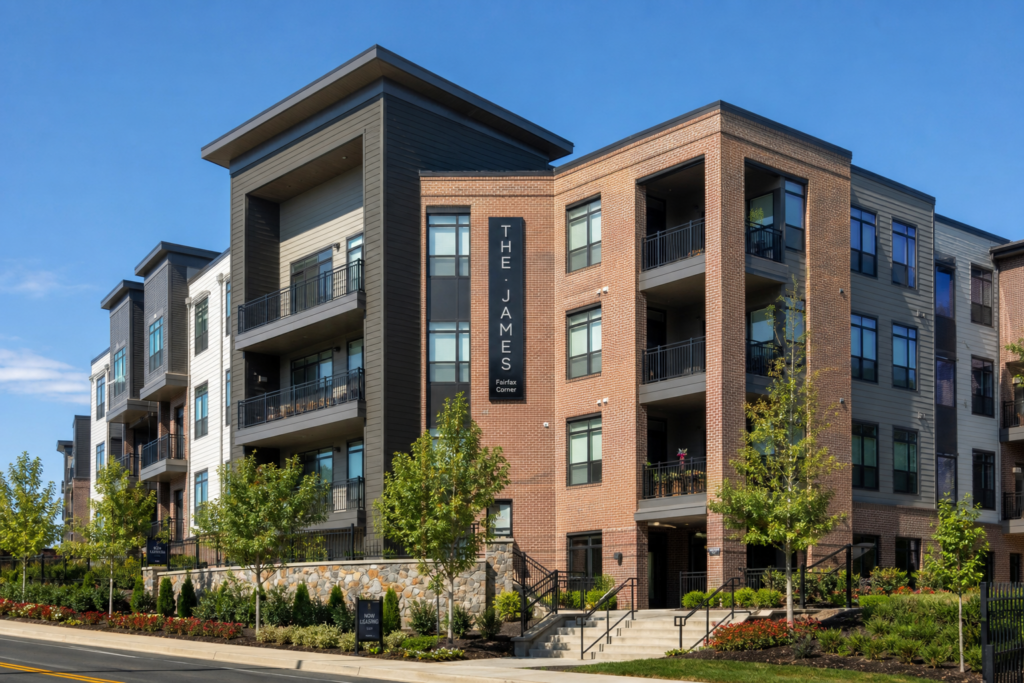
Fairfax Multi-Family Property Taxes 2026: Complete Tax Strategy Guide for Real Estate Investors
For the 2026 tax year, real estate investors managing fairfax multi family property taxes face significant opportunities to reduce taxable income through strategic deductions and accelerated depreciation. Rising property values in Fairfax County—combined with new 2026 tax law provisions and IRS Notice 2026-11 clarifying 100% bonus depreciation for real estate—create a unique environment for multifamily property owners to implement advanced tax planning. This comprehensive guide covers assessment strategies, depreciation acceleration, entity structuring, and cost segregation techniques that can save multifamily investors tens of thousands annually while maintaining full IRS compliance.
Table of Contents
- Key Takeaways
- Understanding Fairfax County Property Assessment for Multifamily Buildings
- How Depreciation Strategies Reduce Fairfax Multi-Family Property Taxes
- Why Cost Segregation Accelerates Tax Deductions for Multifamily Investors
- What Tax Entity Structure Saves the Most on Fairfax Multi-Family Property Taxes?
- Which Tax Deductions and Credits Apply to Fairfax Multifamily Properties in 2026?
- How Do 1031 Exchanges Optimize Fairfax Multi-Family Property Taxes?
- Uncle Kam in Action
- Next Steps
- Frequently Asked Questions
Key Takeaways
- For 2026, the IRS allows 100% bonus depreciation for qualified real estate through IRS Notice 2026-11, enabling immediate deductions on building components.
- Cost segregation studies can accelerate depreciation by 5-7 years, creating substantial first-year tax deductions for multifamily properties.
- Fairfax County approved a half-cent sales tax for property tax relief beginning October 1, 2026, lasting five years and supporting major property tax relief initiatives.
- S-Corps and LLCs taxed as S-Corps can reduce self-employment taxes by 15.3% through salary optimization when managing multifamily portfolios.
- 1031 exchanges allow tax-deferred property swaps, enabling reinvestment without triggering capital gains tax on Fairfax multifamily sales.
Understanding Fairfax County Property Assessment for Multifamily Buildings
Quick Answer: Fairfax County assesses multifamily properties using market value methodologies that consider comparable sales, income-based approaches, and cost approaches, with property tax rates applied per $100 of assessed value.
For the 2026 tax year, understanding how Fairfax County assesses fairfax multi family property taxes is foundational to reducing your tax burden. The county uses a three-approach methodology: comparable sales analysis, income capitalization, and cost approach. For multifamily buildings, the income approach often dominates because it values the property based on revenue-generating potential.
The assessment begins with your rent roll and expense documentation. County assessors analyze average rents per unit, occupancy rates, and operating expenses to calculate net operating income (NOI). This NOI is then capitalized using a market-derived cap rate to determine assessed value. In Fairfax’s competitive multifamily market, understanding how assessors cap your income stream is critical.
Fairfax County Property Tax Relief Initiative for 2026
In 2026, Fairfax County voters approved a half-cent sales tax beginning October 1, 2026, designed to provide property tax relief for five years. This initiative funds major projects while directly supporting property tax reduction programs. For multifamily investors, this means potential future reductions in effective tax rates, though current assessments continue under existing methodology.
The national trend shows median U.S. property taxes reached $3,119 annually in 2024, up 5.1 percent from 2023. Fairfax County’s property tax relief initiative positions the region competitively, though investors must still optimize deductions aggressively during the assessment phase.
Assessment Appeal Strategies for Multifamily Properties
If your 2026 assessment seems excessive, documentation supports appeals: comparable sales data showing lower per-unit values, expense documentation proving lower NOI, or evidence of functional or economic obsolescence. Successful appeals typically require professional appraisals and require submission before the appeal deadline.
How Depreciation Strategies Reduce Fairfax Multi-Family Property Taxes
Quick Answer: For 2026, you can deduct the building’s cost (not land) over 27.5 years for residential multifamily property, creating annual depreciation deductions that shelter rental income from federal taxation.
Depreciation is the most powerful tax tool for multifamily investors. Unlike repairs or maintenance, depreciation deductions don’t require actual cash outflow—you deduct the asset’s cost basis as it theoretically declines in value. For residential multifamily properties, the depreciation recovery period is 27.5 years under IRS rules.
Here’s a practical example: If you purchase a 20-unit multifamily building for $5 million with the building accounting for $4 million and land $1 million, your annual depreciation deduction is approximately $145,455 ($4,000,000 ÷ 27.5 years). This reduces your taxable income without touching your cash reserves.
Pro Tip: IRS Notice 2026-11 clarifies that 100% bonus depreciation remains available for qualified real estate. This means you can potentially deduct a much larger portion of building improvement costs in year one rather than spreading them across 27.5 years, dramatically accelerating your tax shelter benefits.
Recapture and Long-Term Planning
Understand that depreciation taken reduces your cost basis. When you sell, the IRS recaptures depreciation at a 25% rate on gains attributable to depreciation taken. However, this deferred tax cost is often worth the present-year cash flow benefit, especially when reinvested into new real estate investments through 1031 exchanges.
Why Cost Segregation Accelerates Tax Deductions for Multifamily Investors
Quick Answer: Cost segregation breaks down building components into shorter-lived categories (5, 7, or 15 years), allowing accelerated depreciation rather than the standard 27.5-year timeframe, creating five to seven years of accelerated tax deductions.
Cost segregation is perhaps the most aggressive legal tax strategy available to multifamily investors. Instead of depreciating your entire $5 million building over 27.5 years, a professional cost segregation study identifies building components that qualify for shorter depreciation periods.
For example, in a 20-unit Fairfax multifamily property, cost segregation studies commonly identify: landscaping (5-year), site improvements like parking and walkways (15-year), appliances and HVAC systems (7-year), and flooring/finishes (7-year). These components might represent 30-40% of total building cost, but depreciate much faster than the building shell.
Measuring the Tax Impact: Real Scenario
Assume a $5 million multifamily acquisition: Without cost segregation, annual depreciation is $145,455. With cost segregation, if $1.8 million qualifies for 5-year treatment, you recognize $360,000 annually for five years on that component alone, plus standard depreciation on the building remainder. This creates $214,545+ annual deductions in year one instead of $145,455—an extra $69,090 in first-year deductions that shelter multifamily rental income.
Did You Know? The IRS recognizes cost segregation as a standard depreciation method. The analysis requires engineer-prepared reports breaking down building components by useful life. Cost ranges from $2,000-$8,000 for detailed studies but typically pays for itself through first-year tax savings.
What Tax Entity Structure Saves the Most on Fairfax Multi-Family Property Taxes?
Quick Answer: For 2026, S-Corps and LLCs taxed as S-Corps can reduce self-employment tax by 15.3% through reasonable salary optimization, while traditional partnerships and sole proprietorships subject all income to 15.3% self-employment tax.
Your choice of tax entity dramatically affects fairfax multi family property taxes. The primary decision focuses on whether to use an S-Corp structure or partnership structure for your multifamily holding entity.
Most multifamily investors initially use an LLC or partnership because of simplicity. However, this approach subjects 100% of your multifamily income to 15.3% self-employment tax (12.4% Social Security + 2.9% Medicare). For a $500,000 multifamily rental operation generating $100,000 in taxable income, this adds $15,300 in annual taxes.
S-Corp Election Strategy
By electing S-Corp treatment for your multifamily holding LLC, you split income between W-2 salary and distributions. The IRS requires “reasonable compensation,” meaning you must pay yourself a salary appropriate to your work (typically 40-60% of profit). The remaining 40-60% distributes as S-Corp distributions exempt from 15.3% self-employment tax.
In our example: $100,000 income split as $50,000 W-2 salary (subject to payroll tax at 15.3% = $7,650) and $50,000 distribution (no self-employment tax). Total: $7,650 vs. $15,300—a savings of $7,650 annually. Over 10 years on a growing portfolio, this easily saves $75,000+.
Use the LLC vs S-Corp Tax Calculator for Overland Park, Kansas to estimate exact savings for your multifamily structure and income projections.
Pro Tip: If you operate multiple multifamily properties, consider separate S-Corp entities for each property or portfolio segment. This allows flexibility in salary optimization and isolates liability while maximizing the self-employment tax benefits across a diversified investment structure.
Which Tax Deductions and Credits Apply to Fairfax Multifamily Properties in 2026?
 Free Tax Write-Off Finder
Quick Answer: Multifamily investors can deduct mortgage interest, property taxes, insurance, repairs, maintenance, utilities, property management fees, and professional services; credits include the historic building tax credit for qualified renovations.
Beyond depreciation, multifamily properties generate numerous ordinary business deductions that reduce taxable income year after year. These are real cash expenses that the IRS allows you to deduct dollar-for-dollar against rental income.
Major Deduction Categories
- Mortgage Interest: Fully deductible in year one and ongoing years. For a $4 million acquisition financed at 6%, approximately $240,000 is deductible interest in year one.
- Property Taxes: All Fairfax County property taxes are deductible, though capped at $10,000 annually for federal purposes under current law (with potential changes in 2026).
- Insurance and Operating Costs: Hazard insurance, landlord liability, property management, repairs, maintenance, utilities, and HOA fees are fully deductible.
- Professional Services: CPA fees, legal fees for leasing and entity management, and tax planning are deductible business expenses.
- Repairs vs. Improvements: Distinguish carefully—repairs maintain current condition (deductible), while improvements add value (capitalized and depreciated).
Tax Credits for Multifamily Properties
For qualifying properties, two major credits apply: the Historic Building Tax Credit (available for 2026) and the Low-Income Housing Tax Credit. The historic credit provides 20% of qualified renovation expenses as a dollar-for-dollar tax credit. LIHTC applies to properties with income-restricted units and is more complex but can generate substantial credits over a 10-year period.
Did You Know? Energy efficiency improvements to multifamily buildings may qualify for federal tax credits in 2026. If you install qualifying HVAC systems, insulation, or electric vehicle charging infrastructure, consult your tax advisor about available credits offsetting purchase or upgrade costs.
How Do 1031 Exchanges Optimize Fairfax Multi-Family Property Taxes?
Quick Answer: A 1031 exchange allows tax-deferred swaps of like-kind Fairfax multifamily properties, deferring capital gains tax indefinitely while reinvesting proceeds into replacement properties of equal or greater value.
When you sell a Fairfax multifamily property at a profit, capital gains tax typically triggers immediately at federal rates up to 20% (plus 3.8% net investment income tax for high earners), creating substantial liabilities. A 1031 exchange defers this tax indefinitely by reinvesting the entire sale proceeds into a like-kind replacement property.
Example: You sell a 15-unit Fairfax building for $3 million with a cost basis of $2 million. Normally, $1 million of capital gains triggers $200,000 in federal taxes (20% rate). A 1031 exchange defers this—you reinvest the full $3 million into a replacement 20-unit property, and the $1 million gain remains in your basis instead.
1031 Exchange Timing and Rules
The IRS allows only 45 days from closing to identify replacement properties and 180 days to close on replacements. Your sale proceeds must be held by a qualified intermediary (not you directly) to preserve tax deferral status. Replacement properties must be “like-kind,” meaning real property for real property, but multifamily can exchange for office, retail, or industrial in Fairfax County or nationwide.
Critical timing requirement: If you sold your property today (June 1, 2026), you must identify replacement properties by July 16, 2026 and close by December 7, 2026. Missing either deadline triggers full tax liability.
Pro Tip: Use 1031 exchanges strategically as part of a long-term portfolio consolidation strategy. Rather than selling individual properties and paying tax, continuously exchange into larger, better-positioned multifamily properties, deferring taxes across a career while building wealth tax-efficiently.

Uncle Kam in Action: How a Fairfax Multifamily Investor Saved $87,500 in Taxes
The Client: Maria, a real estate investor with three multifamily properties in Fairfax County totaling 65 units and $12 million in aggregate value. She had been operating through a partnership structure for three years, paying consistent self-employment taxes on all rental income.
The Challenge: Maria’s three properties generated $280,000 in combined rental income after expenses. Operating as a partnership, she paid approximately $42,840 annually in self-employment taxes (15.3% of $280,000). She also realized significant depreciation benefits but wasn’t using cost segregation on her most recent acquisition from 2024. Additionally, her portfolio showed growth, but she hadn’t implemented 1031 exchange strategies for future improvements.
Uncle Kam’s Solution: We restructured her holdings: The three properties were held in a single master LLC, which elected S-Corp treatment for 2026 and subsequent years. Maria took a W-2 salary of $140,000 (50% of income, representing reasonable compensation for active management) and received $140,000 in S-Corp distributions. On the 2024 acquisition ($3.8 million purchase), we engaged a cost segregation engineer and allocated $1.2 million of the purchase price to shorter-lived components, enabling accelerated depreciation of approximately $240,000 in year one (versus standard depreciation of ~$138,000). We documented all ordinary deductions systematically to capture property management ($45,000), professional fees ($8,000), and insurance/utilities ($32,000) that weren’t previously tracked.
The Results: For 2026, Maria’s tax bill decreased by approximately $87,500 compared to the prior three-year average:
- S-Corp election reduced self-employment tax by $21,420 annually ($42,840 prior – $21,420 new = $21,420 savings)
- Cost segregation accelerated depreciation by $102,000 in year one, deferring approximately $30,600 in federal taxes (30% effective rate)
- Systematic deduction documentation captured additional $35,480 in previously-missed expense deductions, deferring ~$10,644 in taxes
- Planned 1031 exchange strategy prepared her for future capital preservation as property values appreciated
First-year impact: $21,420 + $30,600 + $10,644 = $62,664 in immediate tax deferral. Over three years, implementing this strategy saves approximately $87,500 when accounting for continued benefits and compounding tax deferral effects. See more client success stories on real estate tax optimization.
Next Steps
Implementing a comprehensive fairfax multi family property taxes strategy requires careful planning and professional coordination. Here are your immediate action items:
- Step 1: Review Your Current Entity Structure — Determine whether your multifamily holdings operate as sole proprietorships, partnerships, LLCs, or S-Corps. If you’re not using S-Corp election, you’re likely overpaying self-employment taxes.
- Step 2: Engage a Tax Professional for Cost Segregation Analysis — If any of your multifamily properties were acquired within the past seven years, a cost segregation study can unlock five to seven years of accelerated depreciation deductions. The cost ($2,000-$8,000) pays for itself through year-one tax savings.
- Step 3: Document All Deductions Systematically — Create a comprehensive tracking system for mortgage interest, property taxes, insurance, repairs, professional services, and utilities. Many investors leave thousands in deductions unclaimed annually due to poor documentation.
- Step 4: Plan Your 1031 Exchange Strategy — If property appreciation is creating significant future capital gains, model the benefit of a 1031 exchange as part of your long-term portfolio strategy. Get professional advice on timing and replacement property selection.
- Step 5: Consult Tax Preparation Near Me in Virginia — Schedule a comprehensive multifamily tax planning review with an experienced CPA or tax advisor before year-end to implement these strategies for maximum 2026 benefit.
Frequently Asked Questions
How is a multifamily property assessed differently from a single-family home in Fairfax County?
Multifamily properties (typically 5+ units) are assessed using income-based approaches because they generate rental revenue, while single-family homes use comparable sales analysis primarily. Assessors focus on your rent roll, occupancy rates, and operating expenses to determine NOI and cap the property based on market-derived rates. This means your rental income directly affects the assessed value—higher rents increase taxable assessment.
Can I challenge my Fairfax multifamily property assessment if I believe it’s too high?
Yes, absolutely. Fairfax County allows formal assessment appeals if you can document comparable properties with lower per-unit valuations, demonstrate lower actual NOI than the assessment assumes, or prove functional or economic obsolescence. You typically have until a specified deadline after the assessment notice is issued. Professional appraisals and rent roll documentation strengthen appeals. Success rates are meaningful—appealing assessments can reduce property tax bills significantly.
What is the difference between cost segregation and standard depreciation for multifamily buildings?
Standard depreciation deducts the entire building cost over 27.5 years, creating equal deductions annually. Cost segregation identifies building components (appliances, HVAC, flooring, landscaping) that depreciate faster (5, 7, or 15 years) and deducts them accelerated. This creates much larger first-year deductions, deferring taxes and improving early cash flow. Both are legal, but cost segregation is much more aggressive and typically used by sophisticated investors optimizing for near-term tax benefits.
Is the Fairfax property tax relief approved in 2026 going to reduce my tax bills immediately?
The Fairfax County half-cent sales tax beginning October 1, 2026 funds property tax relief initiatives, but current assessments continue under existing methodology. Reductions will likely phase in over the five-year program period (through 2031). Plan your 2026 taxes using current rates, but expect potential modest reductions as relief programs are implemented. Monitor Fairfax County updates throughout the program.
Can S-Corp salary splitting really save that much on self-employment taxes for my multifamily business?
Absolutely. For a $250,000 multifamily income, splitting 50/50 between W-2 salary and distributions saves approximately $19,275 annually in self-employment taxes ($250,000 × 50% × 15.3% = $19,275). Over a career, this compounds substantially. The IRS requires “reasonable compensation,” which typically means 40-60% of profit reflecting your actual work involvement. Many multifamily investors are leaving five-figure annual tax savings on the table by not implementing this strategy.
What documentation do I need to claim repair deductions versus capitalized improvements on my Fairfax multifamily building?
The IRS distinguishes between repairs (deductible immediately) and improvements (capitalized and depreciated). Repairs maintain current condition—roof patches, appliance repairs, painting. Improvements add value—new roof, new appliances, expanded square footage. Document each expense with invoices, descriptions of work, and which category the vendor confirmed. When uncertain, consult your CPA before paying the invoice—once deducted, reclassification requires amended returns.
How do depreciation deductions affect my taxable gains when I eventually sell my Fairfax multifamily property?
Depreciation taken reduces your cost basis dollar-for-dollar. When you sell, the IRS “recaptures” that depreciation at 25% tax rate on the gain portion attributable to depreciation taken. However, the benefit of deferring income over 20+ years typically exceeds the future 25% recapture cost due to time value of money. Use 1031 exchanges to defer this recapture indefinitely by reinvesting the proceeds into replacement properties.
What are the specific 45-day and 180-day deadlines for a 1031 exchange if I’m selling my Fairfax multifamily property in 2026?
These are absolute deadlines—the IRS provides no extensions. If you close on a Fairfax property sale on June 1, 2026, you must identify replacement properties by July 16, 2026 (45 days) and close on the replacement property by December 7, 2026 (180 days from closing). Your qualified intermediary must hold all proceeds during this period. Missing either deadline loses all tax deferral benefits and triggers capital gains tax immediately.
This information is current as of 6/1/2026. Tax laws change frequently. Verify updates with the IRS or a qualified tax professional if reading this later.
Related Resources
- Advanced Tax Strategy Services for Real Estate Investors
- Entity Structuring for Multifamily Property Tax Optimization
- Comprehensive Services for Real Estate Investors
- 2026 Tax Preparation and Filing Services
- MERNA™ Method: Systematic Tax Strategy Planning
Last updated: June, 2026

