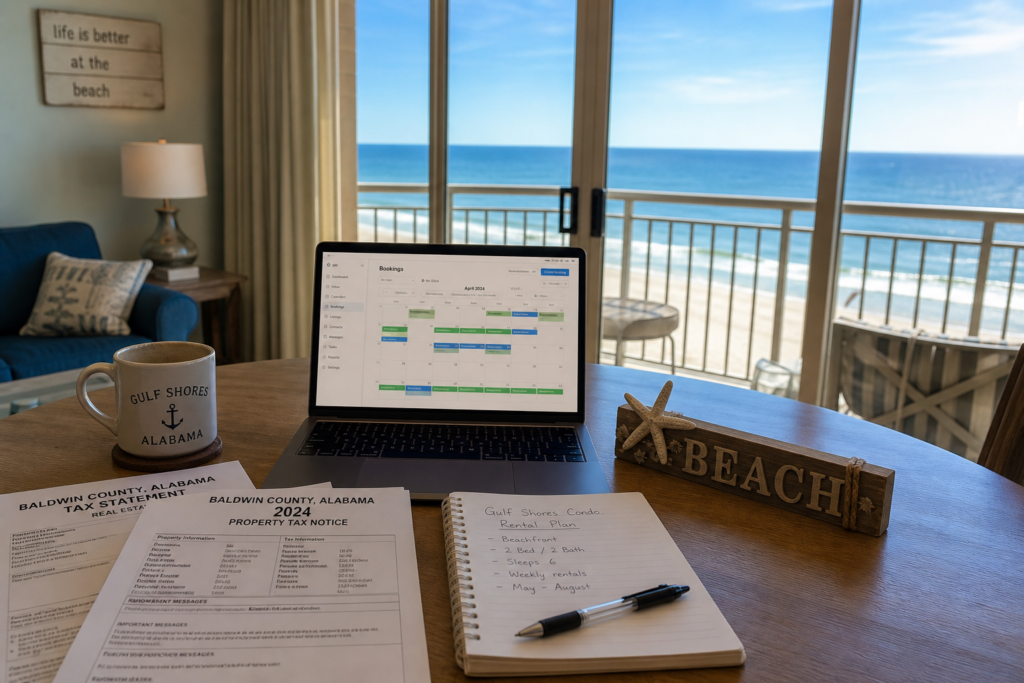
Gulf Shores Airbnb Taxes: The Complete 2026 Host Tax Guide
Navigating Gulf Shores Airbnb taxes can feel overwhelming for new and seasoned hosts alike. Whether you own a beachfront condo or a family cottage, understanding your Alabama short-term rental tax obligations is essential in 2026. This guide covers lodging taxes, licensing rules, federal deductions, and proven strategies. As a result, you can stay compliant while keeping more of your rental income working for you.
Table of Contents
- Key Takeaways
- What Taxes Apply to Gulf Shores Airbnb Rentals?
- Does Airbnb Collect and Remit Your Gulf Shores Taxes?
- What Federal Tax Deductions Can Gulf Shores Hosts Claim?
- How Do You Report Gulf Shores Airbnb Income to the IRS?
- How Do You License and Register Your Gulf Shores Rental?
- Uncle Kam in Action
- Next Steps
- Related Resources
- Frequently Asked Questions
Key Takeaways
- Gulf Shores rentals under 180 days trigger Alabama lodging taxes in 2026.
- Hosts must obtain a rental license before accepting guests.
- Federal deductions can significantly lower your taxable rental income.
- You still file returns even when Airbnb collects some lodging taxes.
- Good records protect you during any IRS or state audit.
What Taxes Apply to Gulf Shores Airbnb Rentals?
Quick Answer: Gulf Shores Airbnb hosts pay state and local lodging taxes on stays under 180 days. Federal income tax also applies to net rental profit.
Understanding Gulf Shores Airbnb taxes starts with recognizing the layers involved. First, Alabama imposes a state lodging tax on short-term rentals. Second, Baldwin County and the City of Gulf Shores add their own lodging levies. Together, these local rates commonly push the combined lodging tax near 10% for many properties. Therefore, every booking under 180 days carries a tax burden you must collect.
In addition, federal income tax applies to your net rental income. Consequently, you face two distinct systems: transactional lodging taxes and annual income taxes. Many hosts confuse the two. However, keeping them separate is the key to staying compliant. Real estate investors especially benefit from working with a proactive tax team like specialists who serve rental property owners.
Alabama State Lodging Tax
Alabama charges a state lodging tax on accommodations rented for fewer than 180 continuous days. As a result, most Airbnb stays qualify. You can review the official rules through the Alabama Department of Revenue lodging tax page. Moreover, the state expects timely monthly filings unless you qualify for a less frequent schedule.
County and City Lodging Taxes
Baldwin County and Gulf Shores each layer additional lodging taxes on top of the state rate. Furthermore, these local rates fund tourism promotion and infrastructure. Because rates vary by exact jurisdiction, confirm your property’s location carefully. A property inside city limits may face different rates than an unincorporated parcel nearby.
Pro Tip: Verify your exact tax jurisdiction using your county parcel number before your first booking. This prevents costly filing errors.
The 180-Day Rule Explained
Alabama defines short-term lodging as stays under 180 continuous days. Consequently, most vacation guests trigger lodging tax. However, a single tenant staying beyond 180 days may fall outside the lodging tax rules. Nevertheless, most Airbnb hosts rarely reach that threshold. Therefore, plan to collect lodging tax on nearly every reservation you accept.
Does Airbnb Collect and Remit Your Gulf Shores Taxes?
Quick Answer: Airbnb collects some Alabama lodging taxes automatically. However, you remain responsible for verifying coverage and filing any taxes Airbnb does not handle.
Airbnb has agreements to collect and remit certain lodging taxes in Alabama. As a result, the platform may add these taxes to guest checkout and pay the state directly. However, coverage is not always complete. Local city or county taxes sometimes fall outside Airbnb’s automated collection. Therefore, you must confirm exactly which taxes the platform handles for your specific Gulf Shores address.
Many hosts assume Airbnb covers everything. Unfortunately, that assumption creates compliance gaps. Moreover, if you also list on Vrbo or book direct, those channels may not collect any lodging tax. Consequently, you could owe taxes on bookings you thought were fully covered. Business owners managing multiple listings should consider streamlined bookkeeping and financial systems to track this accurately.
Taxes Airbnb Typically Collects
- Alabama state lodging tax on qualifying bookings
- Certain county lodging taxes where agreements exist
- Taxes shown as a separate line at guest checkout
Taxes You May Still Owe
Even with Airbnb collecting, gaps often remain. For instance, direct bookings and other platforms may not remit anything. In addition, some local levies stay your responsibility. You can verify platform tax coverage through Airbnb’s occupancy tax help center. If you host in Alabama, connecting with a Tax Preparation Near Me in Alabama specialist ensures nothing slips through.
Pro Tip: Download your Airbnb transaction history monthly. Then reconcile which taxes were collected versus what you must remit.
What Federal Tax Deductions Can Gulf Shores Hosts Claim?
Quick Answer: Gulf Shores hosts can deduct mortgage interest, depreciation, cleaning, utilities, and management fees against rental income for 2026.
Federal deductions dramatically reduce your taxable rental income. First, ordinary and necessary expenses tied to your rental qualify. These include cleaning, supplies, utilities, insurance, and platform fees. Second, mortgage interest and property taxes generally remain deductible against rental income. Third, depreciation lets you recover the property’s cost over time. Together, these deductions can offset a large share of your gross Airbnb revenue.
The IRS treats vacation rentals under specific rules. You can review these in IRS Publication 527 on residential rental property. Furthermore, mixed personal and rental use adds complexity. Therefore, tracking personal-use days versus rental days matters. Smart proactive tax planning strategies can turn these rules into meaningful savings.
Common Deductible Expenses
- Cleaning fees and turnover supplies
- Utilities, internet, and streaming for guests
- Property insurance and short-term rental coverage
- Airbnb service fees and management costs
- Repairs, maintenance, and furnishings
Depreciation and Cost Segregation
Depreciation spreads your building’s cost across 27.5 years for residential property. However, cost segregation can accelerate portions into shorter recovery periods. As a result, high-income hosts may front-load large deductions. This strategy appeals to high-income real estate investors seeking to reduce current-year tax bills. Nevertheless, proper studies and documentation are essential.
The Short-Term Rental Loophole
A powerful 2026 strategy involves the average stay rule. When average guest stays fall at seven days or fewer, the IRS may treat activity as non-passive. Consequently, active hosts who materially participate might offset other income with rental losses. However, the material participation tests are strict. Therefore, professional guidance protects you from misapplying this valuable rule.
Did You Know? The short-term rental tax strategy does not require real estate professional status. Instead, it hinges on average stay length and participation.
How Do You Report Gulf Shores Airbnb Income to the IRS?
 Free Tax Write-Off Finder
Quick Answer: Most Gulf Shores hosts report rental income on Schedule E. Hosts providing substantial services may use Schedule C instead.
Reporting your Gulf Shores Airbnb taxes correctly depends on the services you provide. Generally, passive rental owners report on Schedule E. However, if you offer hotel-like services such as daily cleaning or meals, the IRS may require Schedule C. That distinction matters because Schedule C income faces self-employment tax. Therefore, understanding your service level shapes your entire tax outcome.
Airbnb typically issues a Form 1099-K reporting your gross payments. As a result, the IRS already sees your rental revenue. Consequently, you must report all income accurately. You can review reporting thresholds through the IRS Form 1099-K guidance page. Failing to match reported amounts often triggers automated notices.
Schedule E vs Schedule C
Schedule E reports passive rental income and avoids self-employment tax. In contrast, Schedule C applies when you run the rental like a business with substantial services. Because the 15.3% self-employment tax is significant, most hosts prefer Schedule E when eligible. Nevertheless, the correct form depends on facts, not preference.
Sample Tax Layer Table
| Tax Type | Level | Who Collects | Filing Frequency |
|---|---|---|---|
| State Lodging Tax | State | Airbnb / Host | Monthly |
| County Lodging Tax | County | Airbnb / Host | Monthly |
| City Lodging Tax | Municipal | Host | Monthly |
| Federal Income Tax | Federal | Host | Annual |
Sample Booking Calculation
Consider a $1,000 three-night stay. With a combined 10% lodging tax, guests pay an extra $100 in lodging tax. That $100 flows to the taxing authorities, not to you. Meanwhile, your $1,000 in revenue becomes taxable income after deductions. Therefore, if deductible expenses total $400, your taxable net is $600.
How Do You License and Register Your Gulf Shores Rental?
Quick Answer: Gulf Shores requires a rental license for stays under 180 days. You must also register for state and local lodging tax accounts.
Before your first guest arrives, licensing comes first. Gulf Shores requires a short-term rental license for properties rented fewer than 180 days. As a result, hosting without one risks fines and enforcement. Furthermore, you must register with the Alabama Department of Revenue for a lodging tax account. Then you handle any county and city registrations that apply to your address.
Registration protects you legally and financially. Moreover, proper setup ensures you can file and remit taxes on time. You can learn more about entity and structure choices through smart business entity structuring options. Choosing the right structure early can simplify both liability and tax reporting for your rental.
Step-by-Step Registration Checklist
- Confirm your exact taxing jurisdiction and city limits
- Apply for your Gulf Shores short-term rental license
- Register a state lodging tax account with Alabama
- Set up county and city tax accounts as needed
- Establish recordkeeping before your first booking
Ongoing Compliance Tasks
Compliance continues after setup. Consequently, you file lodging tax returns on schedule, usually monthly. In addition, you reconcile Airbnb payouts against collected taxes each period. Finally, you store receipts and statements for federal deductions. Working with a local Alabama tax preparation team keeps these tasks manageable and audit-ready.
Pro Tip: Renew your rental license before it expires. Lapsed licenses can pause your listing and cost bookings.
Penalties for Non-Compliance
Skipping registration carries real consequences. For example, unpaid lodging taxes accrue interest and penalties. Moreover, cities can issue fines or restrict your ability to operate. Nevertheless, most hosts avoid trouble simply by registering early and filing consistently. Therefore, treat compliance as a fixed cost of running a profitable rental.

Uncle Kam in Action: How a Gulf Shores Investor Saved $28,000
Client Snapshot: Marcus and Dana owned two beachfront condos in Gulf Shores. They ran both as active Airbnb short-term rentals. However, they felt buried under lodging tax filings and federal reporting confusion.
Financial Profile: The couple generated $185,000 in combined 2026 rental revenue. In addition, Marcus earned $220,000 from his engineering career. As a result, their household income pushed them into a high bracket.
The Challenge: They faced two problems. First, they were unsure which lodging taxes Airbnb actually remitted. Second, they missed valuable federal deductions every year. Consequently, they overpaid taxes and worried about compliance gaps.
The Uncle Kam Solution: Our team first reconciled every Airbnb payout against collected lodging taxes. Then we confirmed their city and county filings were current. Next, we applied the short-term rental strategy because average guest stays fell under seven days. Since Marcus and Dana materially participated, their rental losses offset other income. Furthermore, we completed a cost segregation study on both condos. As a result, they accelerated significant depreciation into 2026.
The Results: The strategy delivered strong, measurable outcomes for the couple.
- Tax Savings: $28,000 reduced federal tax liability in 2026
- Investment: $9,500 in Uncle Kam advisory and study fees
- First-Year ROI: Nearly 3x return on their investment
Beyond the savings, they gained confidence and clean records. Therefore, they now host without lodging tax anxiety. Read more real client results and case studies to see similar outcomes.
Next Steps
Ready to master your Gulf Shores Airbnb taxes for 2026? Take these actions now to protect profit and stay compliant. In addition, consider professional ongoing tax advisory support for peace of mind.
- Confirm your exact lodging tax jurisdiction this week.
- Verify which taxes Airbnb collects for your property.
- Renew or apply for your rental license promptly.
- Schedule a review with a qualified tax strategist.
Related Resources
- Tax Strategies for Real Estate Investors
- Tax Preparation and Filing Services
- The MERNA Method Tax Approach
- More Tax Strategy Articles
Frequently Asked Questions
Does Airbnb collect Alabama lodging tax automatically?
Airbnb collects certain Alabama lodging taxes on qualifying bookings. However, coverage is not always complete. Therefore, verify which local taxes remain your responsibility to file.
Do I need a license to run an Airbnb in Gulf Shores?
Yes. Gulf Shores requires a rental license for stays under 180 days. Consequently, you should apply before accepting your first guest.
How often do I file Gulf Shores lodging tax returns?
Most hosts file lodging tax returns monthly. However, low-volume properties may qualify for less frequent schedules. Confirm your frequency with the Alabama Department of Revenue.
Can I deduct expenses on my Gulf Shores rental?
Yes. You can deduct cleaning, utilities, insurance, fees, and depreciation. As a result, these deductions significantly lower your taxable rental income for 2026.
What happens if I do not pay lodging taxes?
Unpaid lodging taxes accrue interest and penalties. Moreover, the city may fine you or restrict operations. Therefore, timely filing protects both your listing and your profit.
This information is current as of 8/3/2026. Tax laws change frequently. Verify updates with the IRS or Alabama Department of Revenue if reading this later.
Last updated: August, 2026

