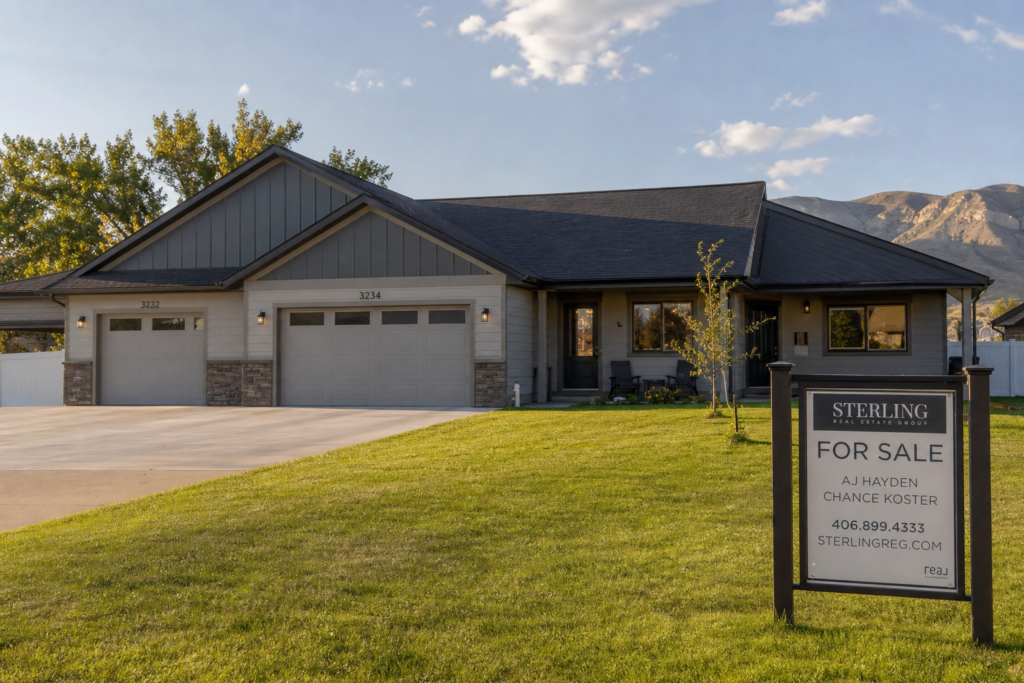
Great Falls Selling Rental Property Taxes: 2026 Guide for Montana Landlords
If you are weighing Great Falls rental property tax preparation, understanding great falls selling rental property taxes before you list is essential. When you sell, the IRS and Montana both want a share of your gain. However, with smart planning, you can legally shrink that bill. This 2026 guide walks Montana landlords through capital gains, depreciation recapture, and proven strategies to keep more of your profit.
Table of Contents
- Key Takeaways
- How Are Great Falls Rental Property Sales Taxed in 2026?
- What Is Depreciation Recapture and Why Does It Hurt?
- How Does Montana Tax Your Rental Property Gain?
- How Can You Legally Reduce Taxes When Selling?
- How Should You Hold Rental Property Before You Sell?
- Uncle Kam in Action
- Related Resources
- Next Steps
- Frequently Asked Questions
Key Takeaways
- Federal long-term capital gains rates for 2026 are 0%, 15%, or 20%.
- Depreciation recapture on rentals is taxed at up to 25% federally.
- Montana taxes gains, but offers a reduced capital gains rate in 2026.
- A 1031 exchange can defer the entire federal and state tax bill.
- Planning before you list saves far more than reacting after closing.
How Are Great Falls Rental Property Sales Taxed in 2026?
Quick Answer: Selling a Great Falls rental triggers federal capital gains tax, depreciation recapture, and Montana income tax. Long-term rates run 0% to 20% federally in 2026.
When you sell a rental in Great Falls, your profit is not one simple number. Instead, the IRS splits your gain into two parts. First comes the capital gain from appreciation. Second comes depreciation recapture from the deductions you claimed over the years. Each part follows different 2026 rules. Therefore, understanding great falls selling rental property taxes means understanding both layers before you sign a listing agreement.
Montana landlords often underestimate this. As a result, many face a surprise bill at tax time. However, careful planning can prevent that shock. Working with a tax pro for real estate investors early makes a real difference.
Understanding Your Adjusted Basis
Your gain equals the sale price minus your adjusted basis. Your basis starts with the purchase price. Then you add improvements, such as a new roof or furnace. Finally, you subtract all depreciation you claimed. Consequently, your basis usually drops over time, which increases your taxable gain.
For example, suppose you bought a Great Falls duplex for $220,000. You added $30,000 in improvements and claimed $60,000 in depreciation. Your adjusted basis is $190,000. If you sell for $340,000, your total gain is $150,000.
Federal Long-Term Capital Gains Rates for 2026
If you held the property more than one year, you qualify for long-term rates. The IRS capital gains tax topic confirms these brackets. For 2026, the rates depend on your taxable income.
| 2026 Long-Term Rate | Single Taxable Income | Married Filing Jointly |
|---|---|---|
| 0% | Up to about $49,450 | Up to about $98,900 |
| 15% | $49,451 to $545,500 | $98,901 to $613,700 |
| 20% | Above $545,500 | Above $613,700 |
Higher earners may also owe the 3.8% Net Investment Income Tax. This surtax applies once income tops $200,000 for single filers or $250,000 for joint filers in 2026. These NIIT thresholds have not been adjusted for inflation.
Pro Tip: Time your sale in a lower-income year. This can drop your federal rate from 20% to 15%.
What Is Depreciation Recapture and Why Does It Hurt?
Quick Answer: Depreciation recapture taxes the deductions you already claimed. In 2026, this unrecaptured Section 1250 gain is taxed up to 25% federally.
Every year you own a rental, you claim depreciation. This lowers your taxable rental income. However, the IRS remembers those deductions when you sell. As a result, it “recaptures” that benefit at a special rate. This surprises many Great Falls landlords who forget past write-offs.
The IRS calls this unrecaptured Section 1250 gain. The IRS Publication 544 on sales of assets explains the mechanics. Furthermore, this portion is taxed at up to 25%, not the friendlier long-term rate.
A Simple Recapture Calculation
Return to our duplex example with $60,000 of depreciation claimed. That $60,000 gets taxed first, at up to 25%. Therefore, recapture alone could cost $15,000 federally. The remaining $90,000 of appreciation then faces the 15% or 20% capital gains rate.
Moreover, you cannot skip recapture by simply not claiming depreciation. The IRS taxes depreciation “allowed or allowable.” Consequently, you owe recapture even if you forgot to deduct it. That fact alone justifies working with a qualified preparer.
Why Bonus Depreciation Matters
The One Big Beautiful Bill Act made 100% bonus depreciation permanent. This helps buyers who use cost segregation studies. However, faster depreciation also means larger recapture later. Therefore, plan your exit alongside your entry.
Did You Know? Land never depreciates. Therefore, only the building portion of your basis triggers recapture.
How Does Montana Tax Your Rental Property Gain?
Quick Answer: Montana taxes your gain as income. However, in 2026 the state applies a reduced net long-term capital gains rate below the top 5.9% rate.
Montana does have a state income tax. As a result, great falls selling rental property taxes include a state layer on top of federal tax. For 2026, Montana’s top individual income tax rate is 5.9%. However, Montana treats net long-term capital gains favorably.
Under Montana’s tax reform, net long-term capital gains face reduced rates of roughly 3.0% and 4.1% in 2026. These lower rates apply instead of the full 5.9%. You can confirm current figures with the Montana Department of Revenue. Local landlords near Tax Preparation Near Me in Montana often overlook this benefit.
Combining Federal and State Tax
Consider our $150,000 gain again. The federal portion may cost roughly $15,000 in recapture plus $13,500 to $18,000 in capital gains tax. Montana then adds its reduced rate on the long-term portion. Therefore, the state bill on $90,000 of gain might land near $3,000 to $3,700.
| Tax Component | 2026 Rate | Applies To |
|---|---|---|
| Federal capital gains | 0%, 15%, 20% | Appreciation portion |
| Depreciation recapture | Up to 25% | Prior depreciation |
| Net Investment Income Tax | 3.8% | High earners |
| Montana long-term gains | ~3.0% or 4.1% | Net long-term gains |
Reporting the Sale Correctly
You report the federal sale on Form 4797 and Schedule D. Then you carry those numbers to your Montana return. A strong tax preparation and filing process keeps both returns consistent. Otherwise, mismatched figures can trigger notices.
How Can You Legally Reduce Taxes When Selling?
 Free Tax Write-Off Finder
Quick Answer: A 1031 exchange, installment sale, or converting to a primary residence can each defer or reduce your 2026 tax bill.
You do not have to accept the full tax bill. Instead, several legal strategies exist. Each one fits a different goal. Therefore, choose the strategy that matches your plans after the sale. A proactive real estate tax strategy plan ties these tools together.
The 1031 Like-Kind Exchange
A 1031 exchange lets you swap one rental for another. As a result, you defer both capital gains and recapture. However, strict deadlines apply. You must identify a replacement within 45 days. Then you must close within 180 days. The IRS like-kind exchange guidance details these rules.
Furthermore, you must use a qualified intermediary. You cannot touch the sale proceeds yourself. Consequently, planning must happen before closing, not after.
Installment Sales
With an installment sale, the buyer pays over several years. Therefore, you spread the gain across multiple tax years. This can keep you in a lower bracket. However, recapture is generally taxed in the year of sale, even with installments.
The Section 121 Exclusion
If you move into the rental first, you may claim the home sale exclusion. In 2026, this exclusion remains $250,000 for single filers and $500,000 for joint filers. However, you must live there two of the last five years. Moreover, recapture still applies to prior depreciation.
Pro Tip: Never miss the 45-day 1031 identification window. Missing it disqualifies the entire exchange.
How Should You Hold Rental Property Before You Sell?
Quick Answer: Your entity choice affects how the sale is taxed. An LLC offers flexibility, while an S corp rarely fits rental property well.
The way you hold your rental shapes your tax outcome. Many Great Falls landlords use a single-member LLC. This provides liability protection without changing how gains are taxed. As a result, the sale still flows to your personal return. A thoughtful entity structuring approach matters before you buy or sell.
However, holding appreciating real estate inside an S corporation often backfires. Removing property from an S corp can trigger tax at fair market value. Therefore, most advisors keep long-term rentals in an LLC or partnership instead.
Comparing Entity Options
Business owners with multiple properties sometimes weigh an LLC against an S corp for their broader operations. You can compare structures with our LLC vs S-Corp Tax Calculator for Great Falls to estimate 2026 differences. Nevertheless, keep passive rentals out of an S corp.
Planning the Timing of Your Sale
Timing drives tax outcomes. For instance, selling in a year with lower wages can drop your capital gains rate. Likewise, spreading a sale across two years may avoid the 20% bracket. Consequently, coordinate the sale with your overall income plan. Working with a firm serving Montana business owners keeps this aligned.
Before you finalize any listing, review your basis records and depreciation schedule. Also, confirm your plans with local Great Falls tax help. Early review prevents costly surprises at closing.

Uncle Kam in Action: A Great Falls Landlord Saves Big
Client Snapshot: Meet Dana, a retired teacher and part-time landlord in Great Falls. She owned two single-family rentals for over 15 years.
Financial Profile: Dana earned about $85,000 a year from a pension and part-time work. Her combined rental gain on both homes topped $260,000.
The Challenge: Dana planned to sell both properties in the same year. However, that plan would push her into the 20% federal bracket. Additionally, she faced roughly $70,000 in depreciation recapture. Her projected 2026 tax bill approached $80,000 between federal and Montana taxes.
The Uncle Kam Solution: Our team built a two-part plan. First, Dana sold one property using a 1031 exchange into a small commercial building. Therefore, she deferred that entire gain and its recapture. Second, she sold the other rental on an installment sale spread over three years. As a result, she stayed in the 15% federal bracket.
Furthermore, we applied Montana’s reduced long-term capital gains rate on the taxable portion. We also coordinated her estimated payments to avoid penalties. Consequently, Dana kept her cash flow steady while cutting her tax bill.
The Results: Dana’s projected tax dropped from about $80,000 to roughly $22,000. That represents a tax savings of $58,000. She paid Uncle Kam $6,500 for the planning and filing work. Therefore, her first-year ROI reached nearly 9x. You can read more outcomes on our client results page. Dana now refers other Great Falls landlords to our team.
Related Resources
- Tax Help for Real Estate Investors
- Ongoing Tax Advisory Services
- Free Tax Calculators
- The MERNA Tax Method
Next Steps
- Gather your purchase records and depreciation schedules today.
- Estimate your gain before you list the property.
- Explore a 1031 exchange with our proactive tax strategy team.
- Book a review before signing any listing agreement.
Frequently Asked Questions
Do I pay Montana tax when selling a Great Falls rental?
Yes. Montana does tax your gain. However, in 2026 the state applies a reduced long-term capital gains rate below its 5.9% top rate.
Can I avoid depreciation recapture entirely?
You cannot fully avoid it on a taxable sale. However, a 1031 exchange defers recapture. Therefore, timing and structure matter greatly.
How long does a 1031 exchange take in 2026?
You must identify a replacement within 45 days. Then you must close within 180 days. Both deadlines are strict and non-negotiable.
What is the cost of professional tax planning?
Fees vary by complexity. However, most landlords save far more than they spend. Our clients often see returns of several times their fee.
Does selling a rental affect my Net Investment Income Tax?
It can. A large gain may push you over the 2026 NIIT thresholds. Then a 3.8% surtax applies to the excess investment income.
Should I hold my rental in an LLC or S corp?
Most landlords use an LLC for rentals. An S corp rarely fits appreciating property. Therefore, discuss your structure before buying or selling.
This information is current as of 7/13/2026. Tax laws change frequently. Verify updates with the IRS or Montana Department of Revenue if reading this later.
Last updated: July, 2026

