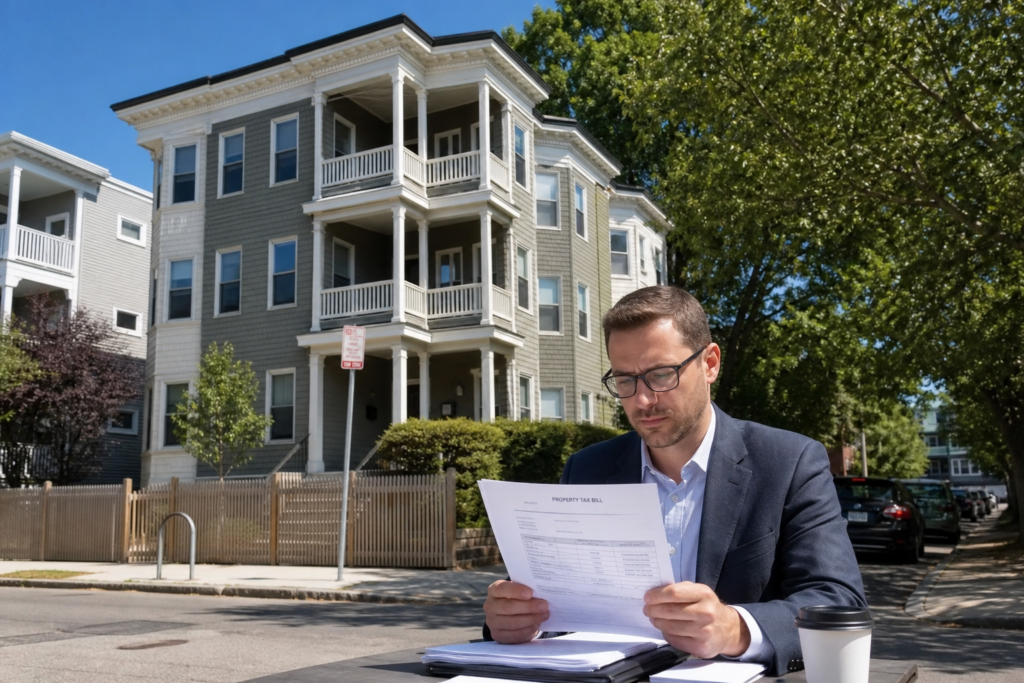
Cambridge Multi-Family Property Taxes: A 2026 Guide for Owners and Investors
Understanding Cambridge multi-family property taxes is essential for owners and investors in 2026. Cambridge uses a classified tax system, so how your building is coded matters enormously. Moreover, smart federal strategies can offset local costs. This guide breaks down assessments, classification, appeals, and 2026 tax planning. As a result, you can protect cash flow and plan with confidence this year.
Table of Contents
- Key Takeaways
- How Do Cambridge Multi-Family Property Taxes Work?
- How Are Multi-Family Properties Assessed in Cambridge?
- What Federal Tax Strategies Reduce Your 2026 Bill?
- How Should You Structure Ownership of Cambridge Multi-Family Property?
- How Do You Appeal Your Cambridge Assessment?
- Uncle Kam in Action
- Next Steps
- Related Resources
- Frequently Asked Questions
Key Takeaways
- Cambridge uses a classified tax system separating residential and commercial property.
- One-to-three family homes are residential; larger buildings often shift classification.
- Federal depreciation and the QBI deduction can offset your local tax burden.
- You can appeal your Cambridge assessment through an abatement application each year.
- Proper entity structuring protects assets and improves your 2026 tax position.
How Do Cambridge Multi-Family Property Taxes Work?
Quick Answer: Cambridge multi-family property taxes depend on assessed value multiplied by the applicable class tax rate, which the city sets annually.
Cambridge multi-family property taxes follow Massachusetts law under Proposition 2½. Consequently, the city cannot raise its total tax levy more than 2.5% each year, absent an override. The Cambridge Assessing Department sets values, and the City Council adopts rates. Therefore, your annual bill reflects both your building’s assessed value and its property classification.
Massachusetts allows cities to tax property classes at different rates. As a result, Cambridge maintains separate residential and commercial rates. This split matters greatly for larger multi-family owners. You can review the framework directly through the Massachusetts Division of Local Services, which oversees local assessment standards statewide.
Why Classification Drives Your Tax Bill
In Cambridge, one-to-three family properties generally receive residential classification. However, buildings with four or more units may be treated differently depending on use and structure. Because the residential rate is typically lower than the commercial rate, classification directly shapes your total obligation. Real estate investors should confirm their classification early. Working with a knowledgeable advisor helps, and many owners connect with a tax preparation partner in Massachusetts for local guidance.
The Residential Exemption
Cambridge offers a residential exemption for owner-occupied homes. Therefore, owners living in one unit of a multi-family building may qualify. This exemption reduces the taxable value of your primary residence. Investors who do not occupy their buildings, however, cannot claim it. Understanding this rule is central to sound proactive tax strategy for Cambridge owners.
Pro Tip: Confirm your classification and exemption status each year, since assessed values and eligibility can shift annually.
How Are Multi-Family Properties Assessed in Cambridge?
Quick Answer: Cambridge assesses multi-family property at full market value using sales, income, and cost approaches, updated annually.
Massachusetts requires assessments at 100% of fair market value. Consequently, Cambridge assessors analyze recent sales, rental income, and replacement costs. For income-producing multi-family buildings, the income approach often dominates. As a result, your rents, expenses, and capitalization rates influence value. Higher net operating income can therefore raise your assessment.
Because Cambridge values property yearly, market swings appear quickly on your bill. Furthermore, rising rents in a strong market can push assessments upward. You can research valuation standards through the Massachusetts property tax overview maintained by the state. Investors focused on rentals often benefit from tailored real estate investor tax planning.
The Three Valuation Approaches
- Sales comparison: recent sales of similar buildings nearby.
- Income approach: capitalized net operating income from rents.
- Cost approach: land value plus depreciated construction cost.
Sample Assessment Impact Table
The table below illustrates how assessed value drives your annual tax at different sample rates. These figures are illustrative for 2026 planning, not official Cambridge rates.
| Assessed Value | Sample Rate ($/$1,000) | Annual Tax (Illustrative) |
|---|---|---|
| $900,000 | $5.86 | $5,274 |
| $1,500,000 | $5.86 | $8,790 |
| $2,500,000 | $10.62 | $26,550 |
Did You Know? Massachusetts requires cities to recertify property values regularly, so assessments track market conditions closely.
What Federal Tax Strategies Reduce Your 2026 Bill?
Quick Answer: Depreciation, cost segregation, bonus depreciation, and the 20% QBI deduction can significantly offset your 2026 federal tax on rental income.
While you cannot change local rates directly, federal strategy matters enormously. Cambridge multi-family property taxes are deductible against rental income on Schedule E. Furthermore, depreciation shelters significant income for owners. As a result, your effective tax cost often falls well below the headline numbers. Smart planning turns a fixed local cost into a manageable one.
Depreciation and Cost Segregation
Residential rental buildings depreciate over 27.5 years under IRS rules. Meanwhile, commercial property uses a 39-year schedule. Cost segregation studies accelerate this timeline by reclassifying components. Consequently, you can front-load deductions and improve early cash flow. Review the official rules in IRS Publication 527 for residential rental property.
Bonus Depreciation in 2026
The One Big Beautiful Bill Act restored 100% bonus depreciation for qualifying property. Therefore, many components identified through cost segregation qualify for immediate expensing in 2026. This benefit can be powerful for larger multi-family acquisitions. However, recapture rules apply upon sale. You can review depreciation basics through the IRS depreciation guidance before claiming.
The QBI Deduction
Some rental activities qualify as a trade or business for the 20% qualified business income deduction. Consequently, eligible owners may deduct one-fifth of qualified rental income. Rules are technical, so documentation matters. Learn more from the IRS QBI deduction overview. Many Cambridge owners pair this with broader year-round tax advisory support.
Pro Tip: Order a cost segregation study before your first tax year to maximize early depreciation benefits.
How Should You Structure Ownership of Cambridge Multi-Family Property?
 Free Tax Write-Off Finder
Quick Answer: Most Cambridge multi-family investors use an LLC for liability protection, with tax treatment tailored to their goals.
Entity structure affects liability, taxes, and estate planning. Many investors hold rental property in a limited liability company. As a result, personal assets stay protected from property-related claims. However, the right structure depends on your income, portfolio, and goals. Thoughtful entity structuring guidance can prevent costly mistakes.
An LLC holding rental real estate usually reports on Schedule E, not as an S corporation. Nevertheless, active real estate businesses may benefit from other elections. Comparing structures early avoids surprises. Business owners can use our LLC vs S-Corp Tax Calculator for San Diego to model entity outcomes for 2026.
Comparing Ownership Options
| Structure | Liability Protection | Typical Reporting |
|---|---|---|
| Individual | None | Schedule E |
| Single-member LLC | Yes | Schedule E |
| Multi-member LLC | Yes | Form 1065 |
Planning for High-Net-Worth Owners
Larger portfolios often use multi-entity or trust structures. Consequently, estate planning and asset protection improve together. These strategies require careful design and documentation. Wealthy investors benefit from dedicated high-net-worth tax planning. In addition, coordinated planning aligns local property taxes with your broader wealth goals.
How Do You Appeal Your Cambridge Assessment?
Quick Answer: You appeal by filing an abatement application with the Cambridge Assessing Department by the annual deadline.
If you believe your value is too high, you can seek an abatement. First, gather evidence like comparable sales and income records. Then, file the application before the statutory deadline. Massachusetts sets strict timing rules, so missing the date forfeits your appeal. Therefore, calendar the deadline immediately after receiving your bill.
Steps to File an Abatement
- Review your assessed value against recent comparable sales.
- Document actual rents, vacancy, and operating expenses.
- Submit the abatement application before the annual deadline.
- Appeal to the Appellate Tax Board if denied locally.
The Massachusetts Appellate Tax Board hears appeals when local abatements fail. You can learn about that process through the state’s Appellate Tax Board resources. Strong documentation improves your odds significantly. As a result, organized owners often win meaningful reductions.
Pro Tip: Keep a clean annual rent roll and expense log to support any future abatement request.
Owners who plan proactively rarely overpay on Cambridge multi-family property taxes. Furthermore, combining local appeals with federal strategy compounds your savings. If you want a coordinated plan, our team can help. Explore our full tax preparation and filing services before your next filing season begins.

Uncle Kam in Action: A Cambridge Triple-Decker Investor Saves Big
Client Snapshot: Maria owns two triple-decker buildings near Central Square in Cambridge. She works full time and manages the rentals on the side.
Financial Profile: Her buildings generate roughly $180,000 in annual rental income. Combined assessed value sits near $2.6 million for 2026.
The Challenge: Maria felt buried by rising assessments and a large federal tax bill. Moreover, she had never claimed depreciation strategically. Her prior preparer simply filed returns without any planning. As a result, she overpaid for years.
The Uncle Kam Solution: Our team built a full 2026 plan. First, we ordered cost segregation studies on both buildings. Then, we applied 100% bonus depreciation to qualifying components. Next, we reviewed her classification and confirmed her residential exemption on the unit she occupied. Finally, we filed an abatement application supported by detailed income records.
The Results: The abatement reduced one building’s assessment meaningfully. Meanwhile, accelerated depreciation sheltered a large portion of her rental income. Consequently, her combined federal and local savings reached roughly $58,000 in the first year.
- Tax Savings: approximately $58,000 in year one.
- Investment: about $9,500 in Uncle Kam fees.
- First-Year ROI: roughly 6x her investment.
Maria now plans every year in advance rather than reacting at filing time. See more outcomes on our client results page for real-world examples.
Next Steps
Take these steps to control your Cambridge multi-family property taxes in 2026. In addition, act early so you never miss key deadlines. If you want expert help, connect with a local Cambridge tax preparation team today.
- Confirm your property classification and residential exemption status.
- Order a cost segregation study before your next filing.
- Calendar your abatement deadline immediately after receiving bills.
- Schedule a review through our business solutions and planning support.
This information is current as of 7/27/2026. Tax laws change frequently. Verify updates with the IRS or Massachusetts Department of Revenue if reading this later.
Related Resources
- Tax Strategies for Real Estate Investors
- Proactive Tax Strategy Services
- Free Tax Calculators
- Entity Structuring Guidance
Frequently Asked Questions
Are 2026 Cambridge multi-family tax rates already set?
Cambridge sets rates annually through its budget cycle. Therefore, final 2026 figures depend on the city’s approved levy and classification decisions. Always confirm current rates with the Cambridge Assessing Department before planning.
Do zoning changes automatically raise my property taxes?
No. Zoning changes do not directly set your tax bill. However, they can affect market values over time. As a result, they may influence future assessments indirectly.
Can I deduct Cambridge property taxes on my federal return?
Yes. For rental property, you deduct property taxes as a business expense on Schedule E. Consequently, they reduce your taxable rental income directly. Personal residence rules differ and involve the SALT cap.
How long do I have to appeal my assessment?
Massachusetts imposes strict abatement deadlines tied to your tax bill. Therefore, file promptly after receiving your third-quarter actual bill. Missing the deadline forfeits your appeal for that year.
Is cost segregation worth it for small buildings?
Often, yes. Even modest triple-deckers can generate meaningful accelerated deductions. Nevertheless, the benefit depends on your income and hold period. A quick feasibility review usually answers the question.
Should I hold my Cambridge rental in an LLC?
Many investors do for liability protection. However, the tax outcome usually stays similar to individual ownership. Therefore, discuss your goals with an advisor before forming an entity.
Last updated: July, 2026

