
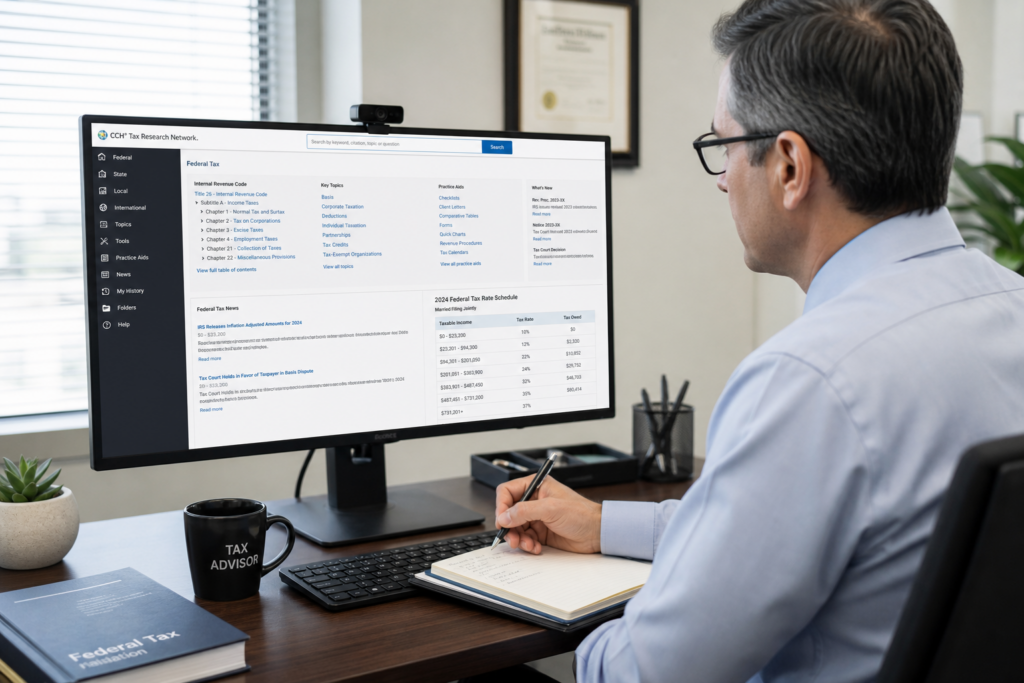
Tax Advisor Reference Database 2026: Pro Guide
A well-built tax advisor reference database 2026 is now the backbone of every high-performing advisory firm. For the 2026 tax year, verified figures change fast, and the One Big Beautiful Bill Act (OBBBA) rewrote major rules. Therefore, a central, trusted source for every limit, threshold, and strategy saves hours and protects clients. In this guide, you will learn how to build one and turn it into billable advisory work. Ready to scale? Book a strategy session today.
Table of Contents
- Key Takeaways
- What Is a Tax Advisor Reference Database 2026?
- Which 2026 Figures Must You Track?
- How Does OBBBA Change Your 2026 Database?
- How Do You Build a Reliable Reference Database for 2026?
- How Does AI Fit Into Your 2026 Database?
- How Do You Turn Your Database Into Revenue?
- Uncle Kam in Action
- Next Steps
- Related Resources
- Frequently Asked Questions

Key Takeaways
- A tax advisor reference database 2026 centralizes verified limits, thresholds, and strategies in one trusted place.
- OBBBA reshaped 2026 rules, so your database must reflect new provisions and permanent tax cuts.
- The 2026 401(k) limit is $24,500, or $32,500 for those 50 and older.
- A strong database powers proactive planning, higher fees, and scalable advisory revenue.
What Is a Tax Advisor Reference Database 2026?
Quick Answer: It is a single, verified source of current tax figures, rules, and strategies. It replaces scattered notes and outdated PDFs with one reliable system.
A tax advisor reference database 2026 is your firm’s central knowledge hub. It stores every current limit, phase-out range, and deadline in one place. Moreover, it links each figure to a strategy your clients can use. As a result, you stop hunting through old files during client calls. Instead, you answer with confidence in seconds.
Most firms still rely on memory or last year’s spreadsheet. However, tax law now moves too fast for that approach. The IRS newsroom publishes updates throughout the year. Therefore, a living database keeps your team accurate and fast. It also protects you during an audit or a review.
Why Scattered Notes Cost You Money
When figures live in ten places, mistakes multiply. For example, one preparer may use an old contribution limit. Consequently, the client overpays or triggers a penalty. Furthermore, these errors damage trust and cost you referrals. A single source of truth removes that risk entirely.
The Shift From Prep to Advisory
Tax prep pays once a year. In contrast, tax planning pays all year long. A strong reference database powers proactive advice, not just filing. Because of this, it becomes the engine for higher-value work. To learn the full model, explore our proactive tax strategy services.
Pro Tip: Tag every figure with its source and update date. This habit makes annual refreshes fast and painless.
Which 2026 Figures Must You Track?
Quick Answer: Track standard deductions, brackets, contribution limits, and QBI thresholds. These figures drive most 2026 planning decisions.
Your tax advisor reference database 2026 should start with the core numbers. These figures appear in nearly every client conversation. Below, we list the essentials with verified 2026 amounts. Always confirm final figures at IRS.gov before you file.
Core 2026 Contribution Limits
Retirement limits change most years. For 2026, the numbers rose again. Therefore, update your database before you meet clients.
| Account Type | 2026 Limit | Catch-Up (50+) |
|---|---|---|
| 401(k) deferral | $24,500 | $32,500 total |
| Roth IRA (young saver) | $7,500 | Varies by rules |
| Gift tax exclusion | $19,000 per recipient | N/A |
| QCD limit | $111,000 | N/A |
Standard Deduction and QBI Thresholds
For 2026, the standard deduction for a single filer is $16,100. In addition, the QBI deduction under Section 199A phases out at set income levels. For single filers, the range runs from $171,500 to $216,500. For married couples filing jointly, it runs from $343,000 to $433,000. These thresholds decide whether business owners qualify. You can review the rules on the IRS QBI page.
Did You Know? For 2026, the 10% and 12% brackets cover joint taxable income up to $100,800. Bracket planning still saves real money.
Business owners benefit most from precise thresholds. For deeper planning support, see our resources for business owner tax planning.
How Does OBBBA Change Your 2026 Database?
Quick Answer: OBBBA made key tax cuts permanent and added new accounts. Your database must reflect these 2026 provisions.
The One Big Beautiful Bill Act became law on July 4, 2025. Since then, it reshaped planning for the 2026 tax year. It locked in the 2017 individual tax cuts permanently. Moreover, it restored 100% bonus depreciation for qualifying assets. These changes must live in your reference database now.
New Provisions Worth Tracking
Several OBBBA items create fresh advisory work. Therefore, add each one to your database with clear notes.
- Permanent 100% bonus depreciation for qualifying property.
- Section 174A domestic R&D expensing, with an amendment path.
- Trump Accounts (Section 530A) with a $1,000 federal seed.
- New deductions for tips and overtime income.
- A higher child tax credit and expanded SALT deductions.
Trump Accounts alone open a huge planning window. Families can contribute up to $5,000 per child each year. In addition, the IRS issued Revenue Procedure 2026-25 with a gift tax safe harbor. You can read the details on Congress.gov and IRS releases.
Watch State Conformity
States do not always follow federal changes. For instance, Massachusetts decoupled from certain OBBBA provisions. Consequently, your database needs a state conformity column. This detail prevents costly filing errors across multiple states. For entity questions, review our entity structuring guidance.
Pro Tip: Flag the Section 174A election deadline in your calendar. Missing it can cost clients real deductions.
How Do You Build a Reliable Reference Database for 2026?
Quick Answer: Start with verified sources, organize by strategy, and update on a schedule. Then link each figure to a client action.
Building a strong database follows a clear process. First, gather verified figures from official sources only. Next, organize them by strategy, not just by number. Finally, set a schedule so nothing goes stale. This structure turns raw data into usable planning.
A Simple Five-Step Build
- Pull core figures from IRS.gov and Treasury sources.
- Group figures by strategy, such as retirement or entity.
- Add a source link and update date to each entry.
- Link each figure to a client-ready action step.
- Review the full database every quarter for changes.
Many firms now use software to hold 300+ strategies in one place. In fact, a system that combines figures, sequencing, and deliverables saves the most time. The biggest friction point for CPAs is burning software credits on prospects who may not buy. That is why tax planning software with unlimited assessments matters so much. You can prove value on every prospect before the engagement is signed.
Firm owners across the country can streamline this work with our platform built for tax professionals. It centralizes 2026 figures and strategies in one dashboard.
Verify Before You Trust
Never copy figures from a random blog. Instead, confirm each number at an official source. The Social Security Administration publishes wage base updates yearly. Likewise, the IRS posts revenue procedures for inflation adjustments. This habit keeps your database defensible and clean.
Did You Know? The 2026 Social Security COLA was 2.8%. Small shifts like this ripple through many client plans.
How Does AI Fit Into Your 2026 Database?

Quick Answer: AI speeds research and scenario modeling. However, human judgment must verify every AI output before use.
Artificial intelligence now shapes both sides of the tax world. On one side, the IRS is embracing AI to detect fraud. On the other side, clients use AI to plan on their own. Therefore, your database must anchor accurate, human-verified figures. This protects clients from confident but wrong AI advice.
The Rise of AI Misinformation
Some clients now arrive with AI-generated tax plans. Often, these plans mix real rules with outdated ones. As a result, you spend billable hours unwinding bad advice. A trusted reference database lets you correct errors fast. It gives you a clear, sourced answer every time.
Using AI the Smart Way
AI works best as a research assistant, not a decision-maker. For example, it can model many scenarios in seconds. However, an entity-aware system checks results across 1040s, 1120-S returns, and K-1s. Because of this, you catch conflicts that single-return tools miss. Always pair AI speed with professional review and the IRS Office of Professional Responsibility guidance.
Ready to modernize your process? Book a strategy session and see how AI plus verified data scales your firm.
How Do You Turn Your Database Into Revenue?
Quick Answer: Turn figures into strategies, strategies into deliverables, and deliverables into recurring advisory fees. Clients pay for clarity.
A database is only useful if it earns money. Fortunately, the path from data to revenue is clear. First, match each client to relevant 2026 strategies. Then, package the plan as a professional deliverable. Finally, price it as an advisory engagement, not a form.
From Spreadsheet to Deliverable
Clients do not pay for spreadsheets. In contrast, they pay for clear, confident direction. A branded plan with a roadmap and risk notes feels premium. Therefore, convert your database output into a polished report. This shift alone justifies fees of $5,000 or more.
A Simple ROI Example
Suppose a client saves $22,000 through better 2026 planning. You charge a $5,000 advisory fee for the work. As a result, the client sees a 4.4x return in year one. Meanwhile, you earn far more than a prep-only fee. This math wins engagements and referrals every time.
| Model | Typical Fee | Client Value |
|---|---|---|
| Tax prep only | $500 – $1,500 | Compliance |
| Advisory plan | $5,000+ | Savings + clarity |
| Ongoing advisory | $1,000+/month | Year-round strategy |
Your database also supports niche clients, such as real estate investors using bonus depreciation. Before you move to your action plan, remember this: a great database is the foundation, and structured advisory services help you grow from there. See real numbers on our client results page.
Uncle Kam in Action: How a Solo EA Scaled to Six Figures in Advisory
Client Snapshot: Maria runs a solo Enrolled Agent practice in Texas. She served 180 tax prep clients each season. However, she felt stuck at a low ceiling on income.
Financial Profile: Her firm earned about $140,000 in yearly prep revenue. Yet she worked long hours for thin margins. She wanted to grow without adding more prep clients.
The Challenge: Maria lacked a central reference system. She kept figures in scattered files and old notes. Therefore, she missed planning chances hiding in her own client base. She also struggled to price advisory work with confidence.
The Uncle Kam Solution: We helped Maria build a tax advisor reference database 2026. It centralized verified figures, OBBBA changes, and 300+ strategies. Next, she ran free assessments on 40 existing prep clients. As a result, she found 18 strong advisory candidates. Then she packaged branded plans for each one. Each plan showed clear 2026 savings and a simple roadmap.
The Results: Maria closed 12 advisory engagements in one quarter. She charged an average fee of $6,000 per plan. Consequently, she added $72,000 in new advisory revenue. Her total investment in the system was $9,000 for the year.
- New advisory revenue: $72,000 in the first quarter.
- Investment: $9,000 for the full year.
- First-year ROI: Roughly 8x on her investment.
Maria now plans year-round instead of only filing. See more stories like hers on our client results page.
Next Steps
Ready to build your own system? Start with these clear actions today.
- Gather your core 2026 figures from IRS.gov this week.
- Add OBBBA provisions and a state conformity column.
- Run free assessments on your current prep clients.
- Explore our advisory growth services for support.
- Book a strategy session to scale faster.
Related Resources
- Proactive Tax Strategy Services
- The MERNA Method Framework
- AI Tax Planning Software
- Tax Planning for Business Owners
Frequently Asked Questions
What is a tax advisor reference database 2026?
It is a central, verified source of 2026 tax figures and strategies. It replaces scattered notes with one reliable system. As a result, you answer client questions fast and accurately.
How often should I update my database?
Review it every quarter at minimum. However, tax laws can change mid-year. Therefore, check IRS releases whenever major news breaks. This habit keeps your figures current and defensible.
Does OBBBA affect my 2026 planning?
Yes, significantly. OBBBA made the 2017 tax cuts permanent for 2026. It also restored 100% bonus depreciation and added Trump Accounts. Consequently, your database must reflect these new rules.
Can AI replace my reference database?
No, AI cannot replace verified, human-reviewed data. AI often mixes current rules with outdated ones. Therefore, use AI to speed research, not to make decisions. Always confirm outputs against official sources.
How much can I charge for advisory work?
Many firms charge $5,000 or more per plan. Ongoing advisory can run $1,000 or more monthly. Because clients see clear savings, they gladly pay. A strong database makes this pricing easy to justify.
This information is current as of 7/2/2026. Tax laws change frequently. Verify updates with the IRS if reading this later.
Last updated: July, 2026

