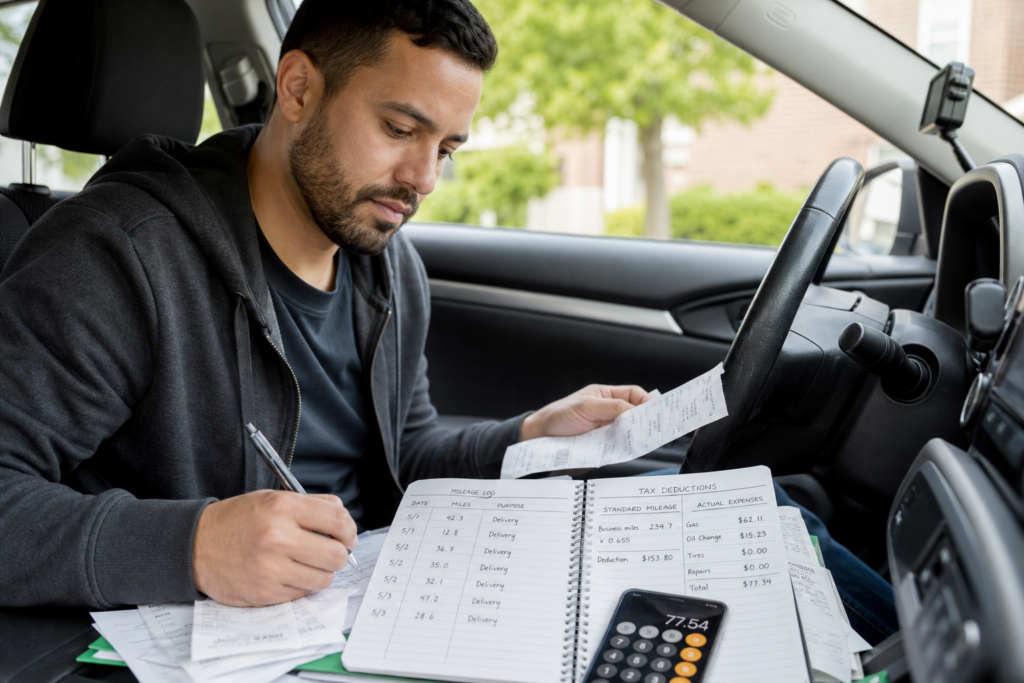
Standard Mileage vs Actual Expenses: 2026 Tax Guide
Choosing between standard mileage vs actual expenses is one of the biggest vehicle tax decisions self-employed drivers face in 2026. This choice affects your Schedule C deduction, your self-employment tax, and your final refund. For 2026, the IRS standard mileage rate is 70 cents per business mile. The actual expense method lets you deduct real costs like gas, repairs, and depreciation. Below, we break down both methods so you keep more money. Learn more with our self-employed tax planning resources.
Table of Contents
- Key Takeaways
- What Is the Difference Between These Methods?
- How Do You Calculate Each Method for 2026?
- Which Method Saves You More Money?
- Can You Switch Between Methods Later?
- What Records Do You Need to Keep?
- What Are the Most Common Mistakes?
- Uncle Kam in Action
- Next Steps
- Related Resources
- Frequently Asked Questions
Key Takeaways
- The 2026 standard mileage rate is 70 cents per business mile.
- The actual expense method deducts real costs like gas and depreciation.
- You must choose the standard rate first if you want future flexibility.
- Good mileage logs protect both methods during an IRS audit.
- Compare standard mileage vs actual expenses every year for best savings.
What Is the Difference Between These Methods?
Quick Answer: The standard mileage method uses a flat 70-cent rate per business mile in 2026. The actual expense method deducts your real vehicle costs instead.
The IRS gives self-employed drivers two ways to deduct car costs. Both methods appear on Schedule C. However, they work in very different ways. The standard mileage method is simple. You track your business miles and multiply them by the rate. As a result, your math stays clean and fast.
The actual expense method is more detailed. You add up every real cost of running your car. Then you deduct the business share of those costs. Therefore, you need strong records for this path. For deeper rules, see the IRS Publication 463 on car expenses.
How the Standard Mileage Method Works
This method bundles many costs into one rate. The 70-cent 2026 rate already includes gas, oil, and normal wear. In addition, it covers depreciation of the vehicle. So you cannot deduct those items separately. You simply log miles and apply the rate. Many freelancers and gig drivers prefer this simple path.
How the Actual Expense Method Works
This method tracks each real dollar you spend. You then multiply the total by your business-use percentage. Common costs you can include are listed below.
- Gas, oil, and routine maintenance
- Repairs, tires, and car washes
- Insurance and registration fees
- Lease payments or depreciation
- Loan interest for business use
Pro Tip: Track your business-use percentage all year. A clean log makes the actual expense method far easier to defend.
How Do You Calculate Each Method for 2026?
Quick Answer: For standard mileage, multiply business miles by 70 cents. For actual expenses, add all costs and apply your business-use percent.
Let us run a real example. Imagine a Florida rideshare driver named Maria. She drives 20,000 total miles in 2026. Of those, 15,000 miles are for business. As a result, her business-use rate is 75%. Now we compare both methods side by side.
Standard Mileage Calculation
Maria multiplies 15,000 business miles by the 2026 rate of 70 cents. Therefore, her deduction is $10,500. This math takes seconds. She only needs a solid mileage log to support the claim.
Actual Expense Calculation
Now Maria adds her real costs. The table below shows her yearly spending.
| Expense | Total Cost |
|---|---|
| Gas | $4,800 |
| Insurance | $2,400 |
| Repairs and tires | $1,600 |
| Depreciation | $5,000 |
| Total | $13,800 |
Maria multiplies $13,800 by her 75% business use. As a result, her actual expense deduction is $10,350. In this case, the standard method wins by $150. Still, the gap is close. Every driver should run both numbers.
These deductions also lower your self-employment tax. Florida drivers can estimate that tax fast. Use our Self-Employment Tax Calculator for Florida to plan your 2026 payments.
Did You Know? The 2026 self-employment tax rate is 15.3%. That covers 12.4% Social Security and 2.9% Medicare.
Which Method Saves You More Money?
Quick Answer: High-mileage drivers with cheap cars often win with standard mileage. Drivers with costly vehicles often win with actual expenses.
The best method depends on your car and your miles. The standard mileage vs actual expenses choice is never one-size-fits-all. Therefore, you should test both each year. Below is a simple comparison to guide your thinking.
| Factor | Standard Mileage | Actual Expenses |
|---|---|---|
| Best for | High miles, low-cost car | Expensive or heavy car |
| Recordkeeping | Simple mileage log | Full receipt tracking |
| 2026 rate | 70 cents per mile | Real cost share |
| Depreciation | Built into rate | Deducted separately |
When Standard Mileage Wins
You likely win with the standard rate when you drive a lot. A fuel-efficient, low-cost car also favors this method. In addition, the simple log saves you hours of work. Many gig and delivery drivers fit this profile perfectly.
When Actual Expenses Win
The actual method shines with pricey vehicles. Heavy SUVs and trucks often qualify for large depreciation. Under the OBBBA, 100% bonus depreciation is now permanent, per recent federal tax legislation. As a result, first-year deductions can be very large. A strong proactive tax strategy helps you claim it correctly.
Can You Switch Between Methods Later?
Quick Answer: Yes, but only if you use the standard rate in year one. Otherwise you must stay with actual expenses for that car.
The IRS sets a key rule on switching. You must pick the standard mileage rate in the first year. Then you can switch to actual expenses in later years. However, the reverse is not allowed. If you start with actual expenses, you are locked in for that vehicle. Florida business owners can review our local tax advisory support for self-employed clients to plan this right.
Why the First-Year Choice Matters
Your first-year pick sets your future options. Choosing standard mileage keeps both doors open. Therefore, many new drivers start there on purpose. This choice gives you flexibility as your car ages.
Leased Vehicles Have Special Rules
Leased cars follow a stricter path. If you choose the standard rate on a lease, you must keep it for the whole lease term. So plan your lease deductions carefully. Review the IRS guidance on business car use before you decide.
Pro Tip: Start new vehicles with the standard rate when unsure. This keeps your future switch options fully open.
What Records Do You Need to Keep?
 Free Tax Write-Off Finder
Quick Answer: Both methods need a mileage log. The actual expense method also needs every receipt for the year.
Good records protect your deduction. The IRS can deny claims with weak proof. Therefore, strong logs matter for both methods. Many drivers use apps to track miles automatically. A clean system also speeds up your annual tax filing and reporting.
Mileage Log Requirements
Your log should capture each business trip clearly. Include the details listed below for each drive.
- Date of the trip
- Starting and ending odometer
- Business purpose of the drive
- Destination or client name
Receipts for Actual Expenses
The actual method needs more paper. Save every gas, repair, and insurance receipt. In addition, keep loan and lease statements. The IRS publishes a helpful recordkeeping guide for small businesses. As a result, you can build a system that survives an audit. Small business owners should automate this early.
What Are the Most Common Mistakes?
Quick Answer: The top mistakes are weak logs, mixing methods, and counting commute miles as business.
Small errors can cost you real money. Some mistakes even trigger IRS audits. Therefore, you should avoid the traps below. Careful planning keeps your deduction safe.
Counting Commute Miles
Your daily commute is not deductible. The drive from home to a fixed office does not count. However, trips between clients often do count. So learn the difference before you file.
Skipping the Yearly Comparison
Many drivers pick one method and forget it. Yet your best method can change each year. For example, a new car may favor actual expenses. Meanwhile, an older car may favor mileage. Consider our entity structuring options if your driving business grows large.
Pro Tip: Run both methods every January. This habit alone can save you hundreds each year.

Uncle Kam in Action: How a Florida Contractor Saved Big
Client Snapshot: Devon runs a mobile HVAC repair business near Tampa. He works alone as a 1099 contractor. His work truck logs heavy miles across the region.
Financial Profile: Devon earned $118,000 in net self-employment income in 2026. He drove 28,000 business miles that year. His truck was a new, heavy-duty model.
The Challenge: Devon had always used the standard mileage method. He assumed it was the simplest choice. However, he never compared it to actual expenses. As a result, he left money on the table each year.
The Uncle Kam Solution: Our team ran both methods for his 2026 return. His new heavy truck qualified for large depreciation. Under the OBBBA, 100% bonus depreciation applied to the business share. Therefore, the actual expense method produced a much bigger deduction. We also fixed his mileage log to protect the claim.
The Results: The switch increased his vehicle deduction by roughly $19,000. That change lowered both his income tax and self-employment tax. In total, Devon saved about $6,200 in federal tax for 2026.
- Tax Savings: $6,200 in the first year
- Investment: $2,400 in Uncle Kam fees
- Return on Investment: About 2.6x in year one
Devon now compares both methods every year. See more wins like his on our client results and case studies page.
Next Steps
Ready to lower your 2026 vehicle taxes? Take these clear actions today to get started.
- Start a daily mileage log using a tracking app.
- Save every vehicle receipt for the full year.
- Run both deduction methods before you file.
- Book a review with our self-employed tax specialists.
Related Resources
- Proactive Tax Strategy Services
- Free Tax Calculators
- Self-Employed Tax Help
- Uncle Kam Tax Strategy Blog
Frequently Asked Questions
What is the 2026 standard mileage rate?
The 2026 business standard mileage rate is 70 cents per mile. That is up from 67 cents in 2025. Always verify current limits at IRS.gov before filing.
Can I use both methods on the same car?
No, you cannot use both methods at once. You must pick one method per vehicle each year. However, you may switch in later years if you started with mileage.
Does the standard rate include depreciation?
Yes, the 70-cent rate already includes depreciation. Therefore, you cannot deduct depreciation separately with this method. The actual expense method handles depreciation on its own.
Which method is better for rideshare drivers?
Most rideshare drivers do well with standard mileage. They log high miles in efficient cars. Still, you should compare both methods every single year.
How does this affect my self-employment tax?
A bigger vehicle deduction lowers your net profit. As a result, your 15.3% self-employment tax drops too. So the right method saves you twice.
This information is current as of 7/10/2026. Tax laws change frequently. Verify updates with the IRS if reading this later.
Last updated: July, 2026

