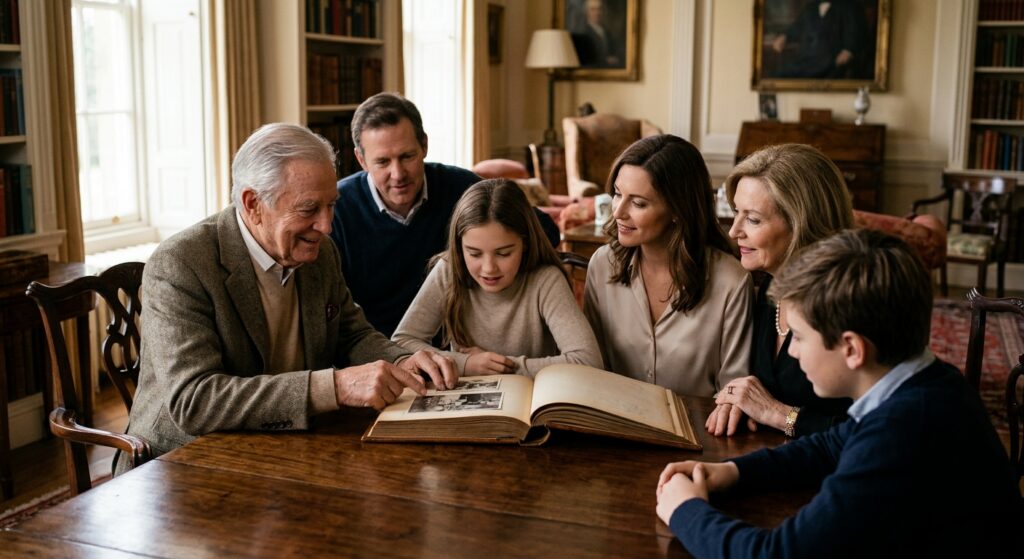
High Net Worth Family Storytelling: The 2026 Playbook for Heir-Ready Wealth Transfer
High net worth family storytelling is quietly becoming the most important tool in modern estate planning. For years, wealthy families focused only on cutting taxes. However, the 2026 landscape has shifted. A permanent, elevated estate tax exemption now collides with heirs who are simply not ready. As a result, high net worth family storytelling matters more than ever. It preserves values, prepares heirs, and protects generational wealth. In this guide, we show you how to do it well.
TL;DR Key Stats (2026): The estate and gift tax exemption is $15 million per person ($30 million per couple) with no scheduled sunset. Cerulli projects $124 trillion in transfers through 2048. Only 35% of family offices have a defined succession plan. Just 36% of ultra-wealthy families say heirs are “very prepared.” Storytelling closes that gap.
Table of Contents
- Key Takeaways
- What Is High Net Worth Family Storytelling?
- Why Does It Matter More in 2026?
- How Does the 2026 Estate Tax Exemption Fit In?
- How Do You Turn Family Stories Into a Succession Plan?
- How Do You Prepare Heirs Through Storytelling?
- Uncle Kam in Action
- Next Steps
- Related Resources
- Frequently Asked Questions
Key Takeaways
- High net worth family storytelling prepares heirs and protects family values.
- The 2026 estate tax exemption sits at $15 million per person, with no sunset.
- Only 35% of family offices have a written succession plan today.
- Heir preparedness, not tax liability, is now the biggest wealth risk.
- Storytelling turns numbers into meaning, guiding responsible stewardship.
What Is High Net Worth Family Storytelling?
Quick Answer: High net worth family storytelling is the practice of documenting and sharing a family’s values, history, and financial lessons. It prepares heirs to steward wealth well.
High net worth family storytelling is more than nostalgia. Instead, it is a governance tool. Wealthy families use it to pass on values alongside assets. Furthermore, it explains the “why” behind money decisions. When heirs understand the story, they make better choices. Therefore, storytelling becomes a bridge between generations. It connects the founder’s vision to the heir’s future. Many families now build this into their proactive tax strategy planning.
The stakes are high. Cerulli Associates projects $124 trillion in wealth transfers through 2048. Of that, roughly $106 trillion flows to heirs. Meanwhile, about $18 trillion goes to charity. Yet many heirs feel unprepared. As a result, families lose both money and meaning. Storytelling helps solve this human problem.
Defining Key Terms
First, let us define the language. Clear terms help both families and advisors. Moreover, they reduce confusion during planning.
- UHNWI: An ultra-high-net-worth individual with $30 million or more in net worth.
- Family governance: The rules and rituals that guide family wealth decisions.
- Heir education: A structured process to prepare the next generation.
- Estate tax exemption: The amount you can transfer tax-free at death.
Why Stories Beat Spreadsheets
Spreadsheets track balances. However, they do not teach judgment. Stories do both. For example, a founder might share how she survived a downturn. That story teaches resilience. Consequently, heirs learn to protect capital during hard times. In addition, stories build emotional buy-in. Heirs who feel connected act as owners, not spenders. The IRS estate tax overview explains the technical side. Storytelling handles the human side.
Pro Tip: Record short video interviews with elders each year. These clips become priceless heir-education tools later.
Why Does High Net Worth Family Storytelling Matter More in 2026?
Quick Answer: In 2026, the biggest risk is heir unpreparedness, not taxes. Storytelling directly addresses that gap during a historic wealth transfer.
The old estate playbook focused on one thing: cutting taxes. However, the 2026 reality has changed. The estate tax exemption is now high and permanent. Therefore, fewer families face large estate tax bills. Yet the human risk remains large. In fact, it may be larger than ever. Many wealthy families serve as high-net-worth tax planning clients who need both tax and governance help.
Consider the survey data. Only 36% of ultra-wealthy families say their heirs are “very prepared.” Meanwhile, 61% worry that wealth will hurt their heirs’ motivation. Furthermore, 36% do not even disclose their full wealth to heirs. These numbers reveal a trust and readiness gap. Storytelling helps close it.
The Family-Office Readiness Gap
Family offices manage the wealth. However, many lack a plan for themselves. Only 35% have a defined succession plan. Even fewer, just 27%, run a structured heir-education process. As a result, the transition often happens by accident. Storytelling and governance fix this weakness.
| Readiness Metric (2026) | Families With It | Gap |
|---|---|---|
| Defined succession plan | 35% | 65% |
| Structured heir education | 27% | 73% |
| Heirs “very prepared” | 36% | 64% |
A Global Wealth Surge
The trend is global, not just American. India recorded 19,877 ultra-wealthy individuals in 2026. That number should reach 25,217 by 2031. Across Asia-Pacific, entrepreneurial wealth is booming. Consequently, more families face the same readiness question. Storytelling scales across borders because values are universal.
Did You Know? Single-owner art collections drove $2.17 billion, about 32% of total auction value, in recent seasons. These assets carry stories that shape family identity.
How Does the 2026 Estate Tax Exemption Fit In?
Quick Answer: For 2026, each person can transfer $15 million tax-free. Couples can transfer $30 million. This exemption is now permanent, with no sunset.
The estate and gift tax rules shape every transfer plan. For 2026, the exemption stands at $15 million per person. Therefore, a married couple can shield $30 million. Importantly, recent legislation made this level permanent. As a result, the old “sunset” fear is gone. However, verify current limits at IRS.gov, since figures can change. The IRS estate and gift tax updates page tracks these changes.
There is also an annual gift exclusion. For 2026, you can give $19,000 per recipient tax-free. Couples can give $38,000 together. These gifts do not touch your lifetime exemption. Consequently, systematic gifting remains a powerful tool. Many families use annual gifts to teach heirs about money. This ties directly to storytelling and stewardship.
2026 Estate and Gift Tax Snapshot
| Provision | 2025 (Prior Year) | 2026 (Current) |
|---|---|---|
| Estate exemption (single) | $13.99M | $15M |
| Estate exemption (couple) | $27.98M | $30M |
| Annual gift exclusion | $19,000 | $19,000 |
| Top estate tax rate | 40% | 40% |
The Enforcement Paradox
Here is the twist. The exemption rose, yet enforcement fell. IRS audit revenue dropped 35% in the prior fiscal year. Meanwhile, exams of $400,000-plus earners fell 26%. The Global High Wealth program even lost 27% of its staff. However, lower audit odds do not change the rules. You still must file accurately. Smart families keep clean records and use proper entity structuring for wealth. The U.S. Treasury tax policy office sets the broader framework.
Pro Tip: Reduced audit risk is not a license to cut corners. File Form 706 correctly for estates above the exemption.
How Do You Turn Family Stories Into a Succession Plan?
 Free Tax Write-Off Finder
Quick Answer: Build a written succession plan around your family narrative. Combine legal documents, governance rules, and heir education for lasting continuity.
Stories inspire. However, plans execute. You need both. First, capture the family narrative. Then, translate it into structure. This is where high net worth family storytelling meets legal planning. Together, they create a durable system. Many families begin with a personalized tax advisory relationship to guide the process.
Business owners face extra layers. A company must pass to the next generation smoothly. Therefore, entity choice and payroll planning matter. Delaware business owners can estimate obligations using our Delaware Small Business Tax Calculator for 2026. This helps model the tax side of a family enterprise transfer.
A Five-Step Storytelling Framework
Use this simple framework to start. Each step builds on the last. Moreover, you can revisit it every year.
- Capture: Record the founder’s origin story and core values.
- Codify: Write a one-page family mission and constitution.
- Connect: Link values to specific assets and trusts.
- Coach: Teach heirs the story and the numbers together.
- Continue: Review and update the plan every year.
Governance Documents That Carry the Story
A family constitution is not a legal will. Instead, it captures shared values and decision rules. Furthermore, it guides how heirs use trusts. Pair it with legal tools for full effect. For example, a dynasty trust can hold assets for generations. The SBA exit planning guide offers helpful succession basics for family firms.
Did You Know? Families with written governance report smoother transitions and fewer disputes among heirs.
How Do You Prepare Heirs Through High Net Worth Family Storytelling?
Quick Answer: Prepare heirs by teaching values, money skills, and family history together. Start early and repeat the lessons often.
Heir preparation is the heart of the work. Wealth without wisdom rarely lasts. Therefore, families must teach both. High net worth family storytelling makes lessons stick. Stories are memorable. Numbers alone are not. As a result, heirs retain the message longer. This is why storytelling belongs in every plan.
Start with age-appropriate steps. Young heirs learn saving and giving. Teens learn budgeting and investing basics. Adults learn about trusts and taxes. Meanwhile, everyone learns the family story. This layered approach builds real readiness over time.
The Transparency Decision
Many families hide the full picture. In fact, 36% never disclose their true wealth. However, secrecy can backfire. Heirs may feel unprepared or resentful. Therefore, consider gradual, structured disclosure. Share more as heirs mature. This balances protection with preparation.
Heir Education Timeline
| Life Stage | Story Focus | Money Skill |
|---|---|---|
| Childhood | Family origin tale | Save and give |
| Teen years | Values in action | Budget and invest |
| Young adult | Business lessons | Trusts and taxes |
| Steward | Legacy vision | Governance role |
Charitable giving also teaches values fast. Families can involve heirs in grant decisions. Consequently, heirs learn purpose alongside dollars. A donor-advised fund makes this easy. The IRS charitable contribution rules explain the tax side. Storytelling explains the heart side.
Pro Tip: Hold an annual family retreat. Blend storytelling, giving, and a review of the succession plan.

Uncle Kam in Action: The Founder Who Almost Left a Mess
Client Snapshot: Meet the Alvarez family. The founder built a manufacturing business in Delaware over 30 years. He had two adult children and three grandchildren.
Financial Profile: The family’s net worth reached about $42 million. That included the operating business, real estate, and an art collection.
The Challenge: The founder had no succession plan. Furthermore, his heirs did not understand the business. He also worried that wealth would spoil the grandchildren. Meanwhile, his estate risked confusion and family conflict. Although the 2026 exemption covered part of the estate, the value exceeded $30 million. Therefore, part of the estate faced the 40% estate tax rate.
The Uncle Kam Solution: Our team built a full plan. First, we recorded the founder’s origin story on video. Then, we wrote a family constitution around his values. Next, we set up a dynasty trust and a donor-advised fund. In addition, we used annual $19,000 gifts to move shares to heirs slowly. We also structured the business for a clean transfer. Finally, we launched a yearly heir-education retreat.
The Results: The plan cut projected estate taxes sharply. Through gifting and trust design, the family reduced taxable estate exposure by roughly $4.2 million in projected estate tax. Moreover, the heirs now understand both the story and the numbers.
- Tax Savings: About $4.2 million in projected estate tax.
- Investment: $85,000 in first-year planning fees.
- ROI: Roughly 49x on projected first-year value.
See more outcomes on our client results and case studies page. Results vary by family and situation.
Next Steps
Ready to protect both your wealth and your values? Start with these clear steps. Each one moves your family closer to readiness. Learn more about our business and family financial solutions today.
- Record your founder’s story on video this quarter.
- Draft a one-page family mission statement.
- Review your 2026 estate exemption strategy with an advisor.
- Schedule your first heir-education retreat.
- Book a call with our tax prep and filing team.
This information is current as of 9/27/2026. Tax laws change frequently. Verify updates with the IRS or FTB if reading this later.
Related Resources
- The MERNA Method for Tax Strategy
- Uncle Kam Tax Strategy Blog
- In-Depth Tax Planning Guides
- About the Uncle Kam Team
Frequently Asked Questions
What is the 2026 estate tax exemption?
For 2026, each person can transfer $15 million tax-free. Couples can transfer $30 million. This exemption is now permanent. However, verify current figures at IRS.gov before you plan.
Why does high net worth family storytelling matter?
Storytelling prepares heirs to steward wealth. It teaches values, not just numbers. Moreover, it reduces family conflict. As a result, more wealth survives across generations.
Are IRS audits declining for the wealthy?
Yes, enforcement has fallen recently. Audit revenue dropped 35% in the prior fiscal year. However, the rules did not change. Therefore, you must still file accurately and keep records.
How do I start preparing my heirs?
Start early with age-appropriate lessons. Record family stories on video. Then teach money skills each year. Finally, hold an annual family retreat to review the plan.
How much does family wealth planning cost?
Fees vary by complexity and asset size. However, the tax savings often far exceed the cost. Our clients frequently see returns of many times their initial investment.
What is the annual gift tax exclusion for 2026?
For 2026, you can give $19,000 per recipient tax-free. Couples can give $38,000 together. These gifts do not reduce your lifetime exemption. Verify the current figure at IRS.gov.
Last updated: September, 2026

