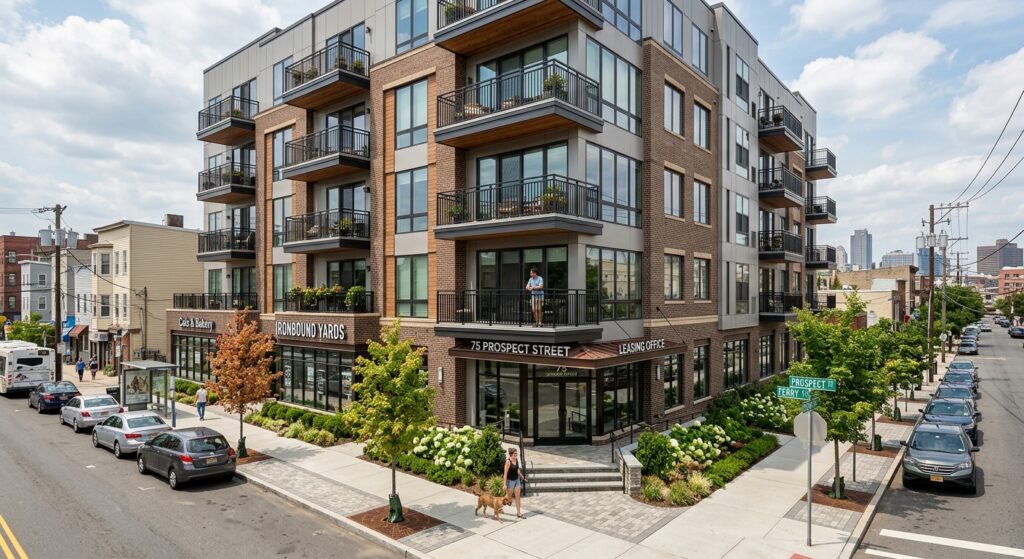
Cost Segregation in Newark for 2026: A Complete Tax Strategy Guide for Real Estate Investors
Cost segregation in Newark has become one of the most valuable tax strategies for real estate investors looking to accelerate depreciation and maximize deductions for the 2026 tax year. With the One Big Beautiful Bill Act (OBBBA) enacted in July 2025 restoring permanent full expensing for qualified business investments, cost segregation strategies have never been more powerful. Whether you’re investing in industrial properties near the Port of Newark, multifamily units in the Ironbound district, or commercial buildings in downtown Newark, understanding how cost segregation in Newark works can unlock significant tax savings and improve your cash flow in 2026. This comprehensive guide explains everything you need to know about implementing this strategy as a Newark property owner.

Table of Contents
- Key Takeaways
- What Is Cost Segregation and How Does It Work?
- Why 2026 Is a Critical Year for Cost Segregation Strategies
- What Types of Newark Properties Qualify for Cost Segregation?
- How Much Can You Save with Cost Segregation in Newark?
- What Is the Timeline for Implementing Cost Segregation in Newark?
- How Does Entity Structure Affect Cost Segregation Benefits?
- Uncle Kam in Action: Newark Multifamily Cost Segregation Case Study
- Next Steps
- Frequently Asked Questions
Key Takeaways
- Cost segregation allows you to reclassify building components to accelerate depreciation deductions in 2026.
- The OBBBA’s permanent full expensing rule means qualified assets can be deducted 100% in the year acquired.
- Newark industrial, multifamily, and commercial properties are ideal candidates for cost segregation studies.
- A typical cost segregation study generates six figures in tax savings for Newark investors over five years.
- Timing your cost segregation study before year-end 2026 ensures you capture all deductions on your 2026 return.
What Is Cost Segregation and How Does It Work?
Quick Answer: Cost segregation is an IRS-approved strategy that reclassifies components of real property into personal property or land improvements to accelerate depreciation deductions, converting 39-year depreciation into 5-, 7-, or 15-year schedules.
Cost segregation is fundamentally a depreciation acceleration strategy that allows property owners to reclassify certain building components from real property (which typically has a 39-year depreciation schedule) into shorter-lived asset categories like personal property (5-year), land improvements (15-year), or qualified improvement property (15-year under current tax law). The process involves a detailed engineering cost segregation study that identifies every component of your property and assigns it to the correct depreciation category based on IRS guidelines and the Modified Accelerated Cost Recovery System (MACRS).
The study itself is conducted by a professional cost segregation engineer who physically inspects your Newark property and reviews all construction documents, blueprints, and contracts. The engineer then creates a detailed report that allocates your property’s basis among different asset classes. For example, instead of depreciating a $2 million building equally over 39 years, you might reclassify 40% of the cost into 5-year property, 20% into 15-year property, and 40% into 39-year property. This reclassification dramatically accelerates your tax deductions in years one through five.
The Mechanics of Cost Segregation Component Classification
A typical cost segregation study for a Newark property breaks down building components into specific categories. Personal property (5-year MACRS) includes items like carpeting, appliances, fixtures, and certain systems. Land improvements (15-year) include parking lots, landscaping, sidewalks, and exterior structures. Qualified improvement property includes tenant improvements, interior walls, flooring, and built-in cabinetry that qualify under Section 168(e)(6) of the tax code. The remaining 39-year property includes the building structure itself, foundation, and permanent systems.
How MACRS Depreciation Works for Your Reclassified Assets
Once components are reclassified, they follow MACRS depreciation schedules. For 5-year property, you deduct approximately 20% of the cost basis each year using the half-year convention. This means in year one, you deduct 10% of the basis, then full years of 20% each. For 15-year property, annual deductions are approximately 5-7%, and 39-year property is about 2.6% annually. The compressed depreciation schedule in early years creates substantial tax deductions that can offset rental income, reduce taxable income, and generate tax losses that shelter other income.
Why 2026 Is a Critical Year for Cost Segregation Strategies
Quick Answer: The One Big Beautiful Bill Act permanently restores 100% bonus depreciation for qualified business property acquired from January 2025 forward, allowing you to expense entire asset categories in the year acquired rather than depreciating them over multiple years.
For 2026, cost segregation strategies have become dramatically more valuable due to significant changes in federal tax law. The OBBBA, enacted in July 2025, restored permanent full expensing for qualified business property. Under the previous Tax Cuts and Jobs Act (TCJA) enacted in 2017, bonus depreciation was scheduled to phase out starting in 2024, decreasing each year until it expired entirely in 2028. The OBBBA retroactively restored 100% bonus depreciation for all assets acquired from mid-January 2025 onward, fundamentally changing how cost segregation operates for Newark investors.
This means that for 2026 acquisitions or improvements to Newark properties, you can now immediately deduct entire categories of reclassified property in the year acquired. Personal property (5-year assets) identified in your cost segregation study can be expensed 100% in 2026 instead of depreciated over five years. Land improvements can be expensed immediately. This is a monumental shift for real estate investors because it accelerates tax benefits by years, allowing you to claim six figures in deductions on your 2026 return rather than spreading them across five tax years.
Pro Tip: Investors who acquire or significantly improve Newark properties before December 31, 2026, can capture full 2026 expensing benefits on their 2026 tax return. This creates a compressed window to maximize deductions before the year closes.
How 2026 Tax Law Changes Accelerate Depreciation Timing
Under prior law, a $1 million cost segregation study might generate $200,000 in reclassified personal property that depreciated at roughly 20% annually. Your year-one deduction was approximately $40,000, with additional deductions in years two through five totaling approximately $200,000 across five years. Under 2026 rules with permanent expensing, that same $1 million study generates a $200,000 deduction entirely in 2026. Your entire five-year depreciation schedule collapses into one tax year, dramatically accelerating tax benefits and improving cash flow immediately.
What Types of Newark Properties Qualify for Cost Segregation?
Quick Answer: Newark industrial properties, multifamily residential buildings, office buildings, mixed-use developments, and hospitality properties (hotels, short-term rentals) all qualify for cost segregation studies if acquired or substantially improved in 2026.
Not all Newark properties qualify equally for cost segregation, but a surprisingly wide range of investment properties benefit from this strategy. The fundamental requirement is that the property must be placed in service (acquired or substantially improved) in 2026 for you to claim 2026 deductions. Properties that were placed in service in previous years can still benefit from cost segregation through amended returns in certain circumstances, but new acquisitions and improvements generate the most immediate tax benefits.
Newark Industrial and Warehouse Properties
Industrial properties and warehouses near the Port of Newark are excellent candidates for cost segregation studies. These facilities typically contain significant amounts of equipment, conveyor systems, electrical infrastructure, HVAC systems, and specialized flooring that classify as personal property or land improvements rather than the building structure itself. The recent wave of JLL-arranged construction loans for industrial properties in New Jersey indicates strong investor activity, and these newly constructed or renovated facilities are prime candidates for cost segregation analysis.
Multifamily Residential Buildings and Apartments
Multifamily properties in Newark neighborhoods including the Ironbound, Downtown, and Central Ward districts generate substantial cost segregation benefits. Each unit in a multifamily building contains appliances, fixtures, carpeting, and built-in cabinetry that qualify for accelerated depreciation. A 50-unit apartment complex with a $5 million cost basis might identify $750,000 in 5-year property through cost segregation, allowing significant first-year deductions.
How Much Can You Save with Cost Segregation in Newark?
 Free Tax Write-Off Finder
Quick Answer: A typical $2 million Newark property generates $100,000-$200,000 in accelerated deductions over the first five years, potentially saving $25,000-$70,000 in federal income taxes depending on your tax bracket.
The dollar magnitude of cost segregation savings depends entirely on your property’s cost basis, the percentage of costs allocated to accelerated components, and your effective federal tax rate. For a realistic example, consider a Newark investor who acquires a 20,000 square-foot industrial property for $3 million in 2026. A cost segregation study typically identifies 35-45% of the cost basis as reclassified personal property and land improvements.
If the study identifies $1.2 million in 5-year personal property, under 2026 tax law with permanent expensing, the investor can deduct the entire $1.2 million on their 2026 return. At a 37% federal tax bracket (applicable to high-income investors), this generates $444,000 in federal tax savings in year one. Additionally, 15-year land improvements identified at $400,000 can also be expensed under Section 168(i)(8), generating another $148,000 in federal tax savings. The cumulative first-year federal tax benefit exceeds $590,000 for this single property investment.
| Property Type | Typical Cost Basis | Reclassified Amount | Year 1 Tax Savings (37% Bracket) |
|---|---|---|---|
| Industrial Warehouse | $3,000,000 | $1,200,000 | $444,000 |
| Multifamily (40 units) | $4,000,000 | $1,600,000 | $592,000 |
| Office Building | $2,500,000 | $900,000 | $333,000 |
These figures represent conservative estimates based on typical cost allocations. Individual results vary significantly based on property-specific factors including construction year, renovation scope, and component classification by the cost segregation engineer.
Did You Know? The cost of the cost segregation study itself (typically $5,000-$15,000) is fully deductible as a professional service expense, making the net cost of implementing this strategy often less than $10,000 after the tax deduction.
What Is the Timeline for Implementing Cost Segregation in Newark?
Quick Answer: A typical cost segregation study takes 6-12 weeks from initiation to completion, requiring property inspection, analysis, and documentation before you file your 2026 return.
Timing is critical for cost segregation in Newark because you must claim the deduction on the tax return for the year the property was placed in service. If you acquire a property in September 2026, you have only a few months to commission, complete, and file the cost segregation study before your 2026 tax return deadline (April 15, 2027, or extended deadline of October 15, 2027 if you file an extension).
The process begins with your selection of a qualified cost segregation engineer. This professional must have technical expertise in both engineering and tax law. The engineer will typically schedule a property inspection within 1-2 weeks, taking photographs, measurements, and detailed notes of all building systems and components. They will request construction documents, architectural plans, contractor invoices, and any property improvement records.
Analysis and report preparation takes 4-8 weeks depending on property complexity. The engineer allocates costs among asset categories, prepares detailed schedules of reclassified components, and documents the methodology. A formal report is delivered to your tax advisor or accountant, who incorporates the findings into your 2026 tax return. The entire timeline from initiation to tax filing typically spans 8-14 weeks, which is why early action (ideally by September 2026 for properties acquired earlier that year) is essential.
How Does Entity Structure Affect Cost Segregation Benefits?
Quick Answer: Your entity structure (S Corp, LLC taxed as partnership, C Corp, or sole proprietorship) determines how cost segregation deductions flow to your personal return and whether passive loss limitations apply.
Cost segregation benefits are available regardless of business structure, but entity choice dramatically impacts how deductions affect your overall tax liability. If you own your Newark property through an LLC taxed as a partnership or S Corporation, cost segregation deductions flow to your personal return as rental real estate losses. These losses can offset other passive income like dividends, capital gains, or additional rental income from other properties. However, if you have no passive income, unused passive losses are suspended until future years when you generate passive income or dispose of the property.
Real estate professionals with more than 50% time devoted to real property operations can potentially claim unlimited passive losses against active income. If you operate multiple Newark properties and meet the real estate professional test, cost segregation deductions from one property can offset W-2 wages or business income from other activities, dramatically increasing tax savings.
For high-income investors, entity structure also affects alternative minimum tax (AMT) liability. Cost segregation deductions reduce regular taxable income but may increase AMT income if you’re subject to AMT. C Corporations face different rules because corporate-level depreciation deductions don’t flow to personal returns. If you own property through a C Corp, cost segregation benefits reduce corporate taxable income directly, saving federal corporate tax at a 21% rate rather than individual rates.
Investors considering cost segregation should evaluate their overall entity structure. Many find that converting a single-member LLC to an S Corp or restructuring a C Corp real estate holding company optimizes cost segregation benefits. Using our LLC vs S-Corp Tax Calculator for Newark, Delaware can help you model how entity elections affect your specific situation with 2026 tax data.
Uncle Kam in Action: Newark Multifamily Cost Segregation Case Study
Marcus is a Newark real estate investor who acquired a 45-unit multifamily property in the Ironbound neighborhood in March 2026 for $4.2 million. The property, originally constructed in 1998 and significantly renovated, included new flooring, kitchen appliances, bathroom fixtures, interior walls, and HVAC systems. Marcus’s cost basis breakdown was: $3.5 million in building structure, $500,000 in site improvements (parking lot, landscaping), and $200,000 in building systems and equipment.
In June 2026, Marcus commissioned a cost segregation study. The engineer’s detailed analysis identified that of the $4.2 million total cost, approximately $1.4 million qualified as 5-year personal property (appliances, carpeting, fixtures) and $600,000 as 15-year land improvements (parking lot redesign, new landscaping). The remaining $2.2 million was classified as 39-year building property.
Using 2026 permanent expensing rules, Marcus claimed a first-year deduction of $1.4 million (100% of 5-year property) plus $600,000 (100% of 15-year property) totaling $2 million in first-year deductions. At Marcus’s 37% federal bracket as a real estate professional, this generated $740,000 in federal tax savings. When combined with New Jersey state income tax at approximately 8.97%, Marcus’s total first-year tax savings exceeded $918,000. The cost segregation study itself cost $8,500, making the return on investment approximately 10,700% in year one.
Marcus’s depreciation schedule for remaining years would have been: Year 2-4: approximately $25,000 annually from 39-year property. Over a five-year hold, Marcus’s total depreciation deductions from the property exceeded $2.15 million, significantly deferring taxes and improving cash flow. When Marcus eventually sold the property, he would recapture depreciation at the 25% recapture tax rate, but the time value of deferring nearly $1 million in taxes created exceptional value.
Next Steps
If you own or plan to acquire Newark real estate in 2026, take action immediately. First, evaluate your portfolio of properties to identify candidates that haven’t had cost segregation studies. Any property acquired or substantially improved in 2026 is a strong candidate. Second, consult with a tax advisor familiar with real estate investment strategies to determine whether cost segregation aligns with your overall tax plan and entity structure. Third, commission a cost segregation study from a qualified engineer before year-end 2026 to ensure deductions appear on your 2026 return. Finally, explore our Newark tax preparation services to ensure your cost segregation study is properly documented and filed for maximum IRS compliance and audit protection.
Frequently Asked Questions
Can I do a cost segregation study on a property I bought more than one year ago?
Yes, you can file an amended return to claim cost segregation benefits for property placed in service in prior years. If your property was acquired in 2023 or 2024, you can file Form 1040-X (amended individual return) for those years. However, you’re limited to the statute of limitations, typically three years unless you had a substantial underreporting of income. The process is more complex than claiming the deduction on a 2026 return for current-year acquisitions, so consult your tax advisor about the specific timeline for your property.
Will cost segregation trigger an IRS audit of my tax return?
Cost segregation is an IRS-approved depreciation strategy with strong legal precedent. When properly documented by a qualified engineer and filed with comprehensive supporting documentation, cost segregation substantially reduces audit risk rather than increasing it. The IRS has published guidance acknowledging cost segregation’s validity. However, improperly classified components or unreasonable allocations increase audit risk. Working with experienced professionals (engineers and tax advisors) who understand IRS expectations minimizes audit exposure while maximizing deductions.
How do passive loss limitations affect cost segregation deductions for my Newark property?
If you’re not classified as a real estate professional, passive loss limitations restrict your ability to deduct rental real estate losses against active income like wages or business income. Cost segregation deductions from your Newark property create rental real estate losses that are subject to these limitations. However, passive losses can offset passive income from other rental properties, and they carry forward indefinitely to offset future years’ passive income. Qualifying as a real estate professional (more than 50% of your working time in real property operations) allows you to deduct unlimited passive losses against any income.
What is the cost of a cost segregation study for a Newark property?
Cost segregation studies for Newark properties typically range from $5,000 to $15,000 depending on property complexity and square footage. Smaller properties or straightforward structures (simple warehouses) cost less. Larger or more complex properties (mixed-use developments, properties with specialized equipment) cost more. The study cost itself is fully deductible as a professional service expense, and the return on investment is typically exceptional given the hundreds of thousands of dollars in tax deductions generated.
Can I claim cost segregation deductions for personal use properties or vacation homes?
No. Cost segregation deductions are available only for business or investment properties. Personal residences, vacation homes, and properties you live in do not qualify. The property must be held for the production of income through rental, leasing, or other commercial use. Newark investment properties, short-term rental properties, commercial buildings, and industrial facilities all qualify, but your personal residence does not.
How does the 179D deduction for energy-efficient commercial buildings interact with cost segregation?
The 179D deduction allows up to $5 per square foot in deductions for energy-efficient commercial building property placed in service during 2026. This deduction is separate from cost segregation but can work in tandem. If your Newark commercial property qualifies for 179D (energy efficient HVAC, lighting, insulation), you can claim both the 179D deduction and cost segregation benefits on the same property. The two strategies are complementary and can generate even larger first-year tax deductions.
What happens to my cost segregation deductions if I sell my Newark property before five years?
Cost segregation deductions claimed in prior years are permanent. If you sell the property, you must recapture the depreciation taken. All residential rental property depreciation (39-year) is recaptured at your long-term capital gains rate (up to 20% federal). Accelerated depreciation from cost segregation is recaptured at Section 1250 rates, which for nonresidential real property means recapture up to 25% of the excess depreciation over straight-line depreciation. Even with recapture, the time value of deferring taxes by claiming large first-year deductions typically creates substantial net benefits.
Are there New Jersey state tax benefits to cost segregation beyond federal deductions?
New Jersey recognizes federal depreciation deductions on state returns, so cost segregation generates state tax savings in addition to federal benefits. However, New Jersey does not provide additional state-specific incentives for cost segregation itself. Your federal depreciation deductions flow through to your New Jersey return, generating savings at New Jersey’s income tax rates (currently up to 10.75% for high-income taxpayers). Additionally, if your Newark property generates passive losses through cost segregation, verify that you can use those losses against your other New Jersey sources of income.
This information is current as of 4/27/2026. Tax laws change frequently. Verify updates with the IRS or your tax advisor if reading this after the current date.
Last updated: April, 2026

