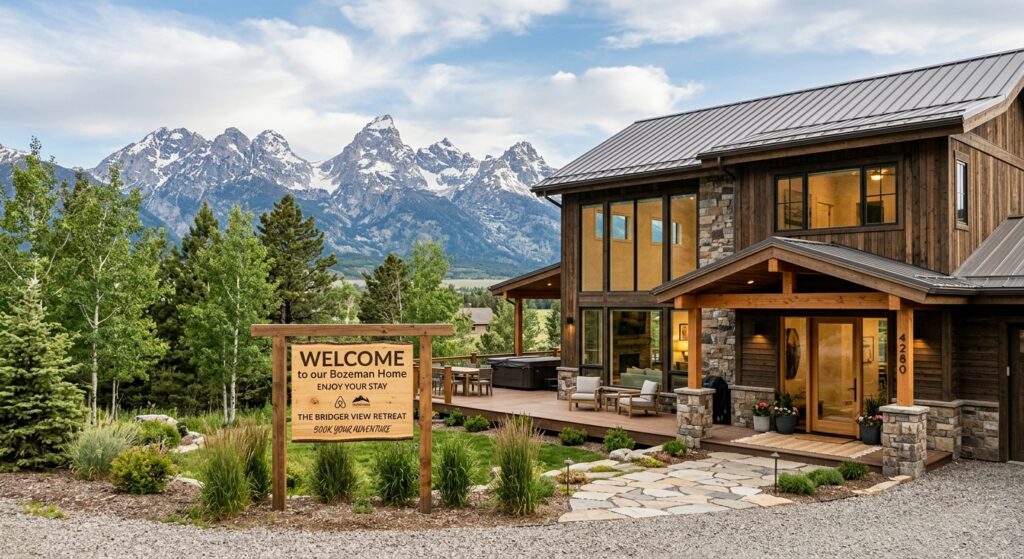
Complete 2026 Guide to Bozeman Airbnb Taxes: Deductions, Rates & Compliance
Bozeman Airbnb taxes in 2026 present both opportunities and obligations for real estate investors looking to capitalize on Montana’s booming short-term rental market. With median home prices reaching nearly $800,000 in Bozeman, many property owners are turning to platforms like Airbnb to generate substantial rental income. However, understanding the federal, state, and local tax implications is critical to maximizing your profits while staying compliant. Our Bozeman tax preparation services help real estate investors navigate these complex requirements and optimize their tax positions for 2026.
Table of Contents
- Key Takeaways
- What Are the Current Bozeman Airbnb Regulations in 2026?
- What Taxes Apply to Bozeman Airbnb Income?
- What are the Tax Brackets and Rates for Bozeman Airbnb Income in 2026?
- How Do You Report Airbnb Income on Your 2026 Tax Return?
- What Deductions Are Available for Bozeman Airbnb Rental Properties?
- What About Self-Employment Tax on Airbnb Income?
- Uncle Kam in Action
- Next Steps
- Frequently Asked Questions
Key Takeaways
- Montana’s 6% state lodging tax applies to all short-term rentals, including Airbnb properties in Bozeman.
- Airbnb rental income is reported on Schedule C as self-employment business income for 2026.
- Federal income tax applies based on 2026 tax brackets (12% to 37% depending on total income).
- You can deduct mortgage interest, property taxes, insurance, utilities, cleaning, repairs, and depreciation.
- Self-employment tax of 15.3% applies if you have net business income of $400 or more.
What Are the Current Bozeman Airbnb Regulations in 2026?
Quick Answer: Bozeman currently has no specific Airbnb or short-term rental regulations. However, properties must comply with state business registration requirements and local zoning laws.
As of May 2026, Bozeman does not have city-specific regulations targeting Airbnb or vacation rentals. This differs from many major cities like Los Angeles, which is actively expanding short-term rental opportunities to generate tax revenue for the 2026 FIFA World Cup and upcoming 2028 Olympics. The lack of specific Bozeman regulations creates both opportunity and uncertainty for property owners.
Business Registration and Licensing Requirements
While Bozeman doesn’t have Airbnb-specific rules, hosts must still register their rental business with the Montana Department of Revenue. You’ll need a business license and should register for tax preparation in Montana to ensure proper handling of lodging tax collection. As a self-employed business owner, you’re responsible for collecting and remitting the 6% Montana lodging tax to the state, even though Bozeman itself doesn’t impose an additional local tax.
Future Regulatory Changes to Watch
The lack of current regulation doesn’t guarantee future stability. Nearby West Yellowstone is currently reviewing business licensing amendments scheduled for a May 18, 2026 hearing, which could signal regulatory movement across Montana. Additionally, cities like Los Angeles are actively considering expansions of short-term rental licenses to capture tax revenue. Bozeman property owners should monitor city council meetings and stay prepared for potential new ordinances.
Pro Tip: Subscribe to Bozeman Daily Chronicle updates and attend city council meetings to stay informed about any proposed short-term rental regulations that could affect your 2026 tax obligations.
What Taxes Apply to Bozeman Airbnb Income?
Quick Answer: Bozeman Airbnb owners face federal income tax, self-employment tax, and Montana’s 6% state lodging tax on all rental income.
Understanding the complete tax picture for your Bozeman Airbnb operation is essential for accurate profit forecasting and tax planning. Multiple tax layers apply to your rental income, and each has specific filing requirements and deadlines for 2026.
Montana Lodging Tax (6% State Tax)
Montana imposes a 6% transient occupancy tax on all short-term rental income, including Airbnb properties. Unlike some states that leave tax collection to platforms, Montana requires individual hosts to collect and remit this tax to the Montana Department of Revenue. If you receive $100 in rental income, you’re responsible for collecting and sending $6 to the state. This is a pass-through tax—you don’t pay it from your own pocket, but you must track it separately and remit it monthly or quarterly depending on your registration status.
Federal Income Tax
Your Airbnb rental income is subject to federal income tax after deductions. The amount you owe depends on your total household income and which tax bracket you fall into for 2026. Unlike the lodging tax, federal income tax is assessed on your net profit (after business expenses), not your gross revenue. If you earned $50,000 in Airbnb revenue but had $20,000 in deductible expenses, you’d pay federal income tax on the $30,000 net profit.
| Tax Type | Rate/Applies To | Collected By | Due Date |
|---|---|---|---|
| Montana Lodging Tax | 6% of gross rental income | You (host) | Monthly/Quarterly |
| Federal Income Tax | 12%-37% (based on bracket) | Quarterly estimates/Annual return | April 15, 2027 |
| Self-Employment Tax | 15.3% on net profit | Quarterly estimates | Quarterly (Jan 15, Apr 15, Jun 15, Sep 15) |
What are the Tax Brackets and Rates for Bozeman Airbnb Income in 2026?
Quick Answer: 2026 federal tax brackets range from 10% for the lowest income to 37% for the highest earners, with your Airbnb income added to any other income you have.
Your Airbnb business income is taxed at federal rates determined by your total household income for 2026. The more you earn from all sources combined, the higher percentage of tax you’ll pay. For example, if you’re a single filer with $50,000 in Airbnb profit and no other income, you fall into the 12% bracket (income between $24,801-$100,800). But if you add a spouse’s $40,000 W-2 income, your combined income pushes into higher brackets.
Using our small business tax calculator, you can estimate your 2026 federal income tax liability based on your expected Airbnb profit. This helps you plan quarterly estimated tax payments and avoid underpayment penalties.
Did You Know? Tax brackets are progressive, meaning only income within each bracket is taxed at that rate. If you earn $100,000, you don’t pay 22% on all of it—you pay lower rates on the first portion and 22% only on income above the threshold.
How Do You Report Airbnb Income on Your 2026 Tax Return?
Quick Answer: Airbnb income is reported on Schedule C (Form 1040) as business income, along with all deductible business expenses.
Schedule C is the primary IRS form for reporting self-employed business income and expenses. This is where you’ll detail your Bozeman Airbnb rental business performance for 2026. Airbnb may send you a Form 1099-NEC if you earned more than $600 through the platform, though you must report all income regardless of whether you receive a 1099.
Step-by-Step Reporting Process for 2026
- Download all Airbnb transaction records for 2026, including gross rental income and any platform fees paid.
- Compile a complete list of all business expenses (rent, utilities, insurance, repairs, cleaning, supplies).
- Calculate total gross revenue and subtract all deductible expenses to determine net profit or loss.
- Report net profit/loss on Schedule C (Part III) of your Form 1040 for tax year 2026.
- Include Schedule C results in your overall income calculations to determine your federal tax bracket.
- File Form 1040 and Schedule C by April 15, 2027 (or request an extension by October 15, 2027).
What Deductions Are Available for Bozeman Airbnb Rental Properties?
 Free Tax Write-Off Finder
Quick Answer: Deductible expenses include mortgage interest, property taxes, insurance, utilities, cleaning, repairs, and depreciation—reducing your taxable income significantly.
One of the biggest tax advantages of owning an Airbnb is the ability to deduct legitimate business expenses. These deductions reduce your taxable income, meaning you pay federal income tax only on net profit, not gross revenue. Given Bozeman’s high property values (median price $800,000), leveraging all available deductions is critical to tax efficiency.
Primary Deductible Expense Categories for 2026
- Mortgage Interest: Deduct interest on loans used to purchase or improve the rental property (note: principal payments are not deductible).
- Property Taxes: All local and state property taxes paid on the Airbnb property are fully deductible.
- Insurance Premiums: Landlord/rental property insurance, liability coverage, and loss-of-rent insurance.
- Utilities: Electric, gas, water, sewer, trash, internet used for guest services.
- Cleaning and Maintenance: Professional cleaning between guests, landscaping, yard maintenance, regular repairs.
- Depreciation: Annual depreciation on the building and furnishings (residential property depreciates over 27.5 years).
- Airbnb Fees: Platform fees charged by Airbnb for listing, payment processing, and host protection.
- Advertising and Marketing: Professional photos, listing optimization services, and promotional expenses.
- Professional Services: CPA/tax preparation fees, property management, legal consultation, bookkeeping.
- Office Supplies and Software: Property management software subscriptions, supplies for managing the business.
Pro Tip: Keep meticulous records of all expenses. Use separate credit cards for business purchases and save receipts. The IRS specifically scrutinizes home-based businesses, so documentation is essential if you’re ever audited for your 2026 Airbnb income.
What About Self-Employment Tax on Airbnb Income?
Quick Answer: If net Airbnb profit exceeds $400, you owe self-employment tax (15.3%) covering Social Security and Medicare for self-employed individuals.
In addition to federal income tax, Bozeman Airbnb hosts must pay self-employment tax if their net business income is $400 or more. This 15.3% tax covers Social Security (12.4%) and Medicare (2.9%) contributions that self-employed individuals must pay themselves (unlike W-2 employees, where employers match these contributions).
Example: Self-Employment Tax Calculation
Imagine your 2026 Airbnb operation generates $60,000 in gross revenue with $18,000 in deductible expenses, leaving $42,000 net profit. You would owe approximately $5,940 in self-employment tax (15.3% × $42,000 × 92.35% = $5,940). This is in addition to your federal income tax. Schedule SE (Self-Employment Tax) is filed along with your 1040 and Schedule C. Quarterly estimated tax payments are essential to avoid penalties.

Uncle Kam in Action: Real Estate Investor Success Story
When Sarah, a real estate investor from Denver, purchased a $750,000 Bozeman vacation home in early 2026, she knew it was a sound investment. The median home price had climbed to nearly $800,000, and tourism was booming. However, Sarah was uncertain about her tax obligations. Would she owe Montana state income tax? How would federal tax work? What about all those business expenses she’d incur?
She connected with Uncle Kam for comprehensive tax strategy services. Over six months of 2026, Sarah’s Airbnb operation generated $42,000 in gross revenue. Working with Uncle Kam’s team, she documented every deductible expense: mortgage interest ($18,500), property taxes ($4,200), insurance ($2,100), utilities ($1,800), professional cleaning ($3,600), Airbnb fees ($2,520), and property management software ($480). These deductions totaled $33,200, leaving net profit of $8,800.
Without the Uncle Kam strategy, Sarah would have paid federal income tax on the full $42,000. Instead, by properly documenting and deducting $33,200 in legitimate business expenses, her taxable income was reduced to $8,800. The savings? Approximately $4,620 in federal income tax (assuming the 22% bracket). Additionally, Sarah needed to remit Montana’s 6% lodging tax on her $42,000 revenue ($2,520) to the state. Uncle Kam helped her establish quarterly payment schedules and maintain proper documentation for both federal and state compliance.
By structuring her business correctly and leveraging available deductions, Sarah reduced her 2026 tax liability by over $4,600 while avoiding penalties and audit risk. She’s now prepared for the 2027 filing season with complete records and a clear understanding of her ongoing tax obligations.
Next Steps
- Register Your Business: Contact the Montana Department of Revenue to register your Airbnb rental business and obtain a business license for Bozeman operations.
- Set Up Expense Tracking: Implement a system (spreadsheet, accounting software, or accountant) to track all 2026 Airbnb income and business expenses monthly.
- Plan Quarterly Tax Payments: Calculate estimated quarterly taxes due January 15, April 15, June 15, and September 15 for self-employment and federal income tax.
- Monitor Regulations: Subscribe to Bozeman city updates to stay informed about any new Airbnb regulations that might affect 2026 or future tax filings.
- Consult a Tax Professional: Work with an Uncle Kam Montana tax specialist to develop a comprehensive tax strategy for your Bozeman Airbnb business.
Frequently Asked Questions
Do I owe Montana state income tax on my Bozeman Airbnb income?
Montana does not impose a state income tax on residents or non-residents. This is a significant advantage for Bozeman Airbnb owners. You’ll owe federal income tax based on your net profit and self-employment tax, but Montana itself doesn’t tax your rental income. You are, however, required to collect and remit the 6% Montana lodging tax on gross rental revenue.
Can I deduct depreciation on my Bozeman Airbnb property?
Yes, depreciation is one of the most valuable deductions for Airbnb owners. Residential rental property depreciates over 27.5 years, and you can deduct approximately 3.64% of the property’s basis annually (excluding land). For a $750,000 Bozeman property where $600,000 is allocable to the building, you’d deduct roughly $21,840 per year ($600,000 ÷ 27.5 years). This is a “paper” deduction—you don’t spend cash, but it reduces taxable income significantly. Note that when you sell, depreciation recapture taxes may apply at 25%.
What if my Airbnb generates a loss in 2026?
If your 2026 Airbnb business expenses exceed your rental income, you have a loss. This loss can offset other income on your tax return, potentially resulting in a refund or reduced tax liability. However, the IRS limits loss deductions for “passive activities” to $25,000 per year if your modified adjusted gross income (MAGI) is under $150,000 (with phase-outs above that). If you’re actively involved in managing the property, you may qualify as a “material participant,” allowing unlimited loss deductions. This is a complex determination worth discussing with a tax professional.
Do I need to make quarterly estimated tax payments for 2026?
Yes, if you expect to owe $1,000 or more in federal income tax and self-employment tax for 2026, you should make quarterly estimated payments. Failure to pay estimated taxes can result in penalties and interest. Estimated payment due dates are January 15, April 15, June 15, and September 15. Use Form 1040-ES to calculate your required quarterly payment amounts based on your expected 2026 Airbnb profit.
What happens if Bozeman implements local Airbnb regulations in late 2026?
If Bozeman adopts specific Airbnb regulations during 2026, those rules would likely take effect in 2027 unless otherwise specified. However, any new regulations could include retroactive requirements or affect your 2026 tax filing. For example, if licensing requirements are imposed, you’d need to ensure your 2026 income reporting aligns with new city rules. This is why monitoring local government developments is critical. Any changes would be communicated through the Bozeman Daily Chronicle and city council meetings.
Can I deduct my mortgage principal payments as a business expense?
No. While mortgage interest is deductible, the principal portion of your monthly mortgage payment is not. Only the interest portion qualifies as a business expense. Your mortgage statement shows interest and principal separately, so it’s easy to deduct only the interest portion on Schedule C for 2026. Principal payments represent equity buildup in the property, not business expense.
Should I form an LLC or S-Corp for my Bozeman Airbnb business in 2026?
Entity selection depends on your specific situation, including income level, liability concerns, and state tax implications. Most single-property owners operate as sole proprietors initially. However, if you plan to expand to multiple properties or have significant assets, an LLC may provide liability protection. An S-Corp election can potentially save self-employment taxes for some owners. Consult with a tax professional to determine the best structure for your specific Bozeman Airbnb operation. The decision should be made early in 2026 to maximize 2026 tax planning benefits.
How does Airbnb’s net settlement model affect my tax reporting for 2026?
Airbnb uses a “net settlement” model, meaning they deduct their fees from your payout. You report the gross rental income (before Airbnb’s fees) as revenue on Schedule C, then deduct the Airbnb fees as a business expense. Many hosts mistakenly report only their net payout, which understates both revenue and deductions. The IRS expects you to report gross revenue received by Airbnb and separately list fees paid. Keeping detailed Airbnb transaction records ensures accurate 2026 reporting.
This information is current as of 5/4/2026. Tax laws change frequently. Verify updates with the IRS or a Montana tax professional if reading this later.
Related Resources
- Complete 2026 Tax Strategy Services for Real Estate Investors
- Specialized Tax Planning for Real Estate Investment Portfolios
- Bookkeeping and Expense Tracking Systems for Short-Term Rental Businesses
- View Real Client Results and Tax Savings Stories
- 2026 Tax Preparation and Filing Services
Last updated: May, 2026

