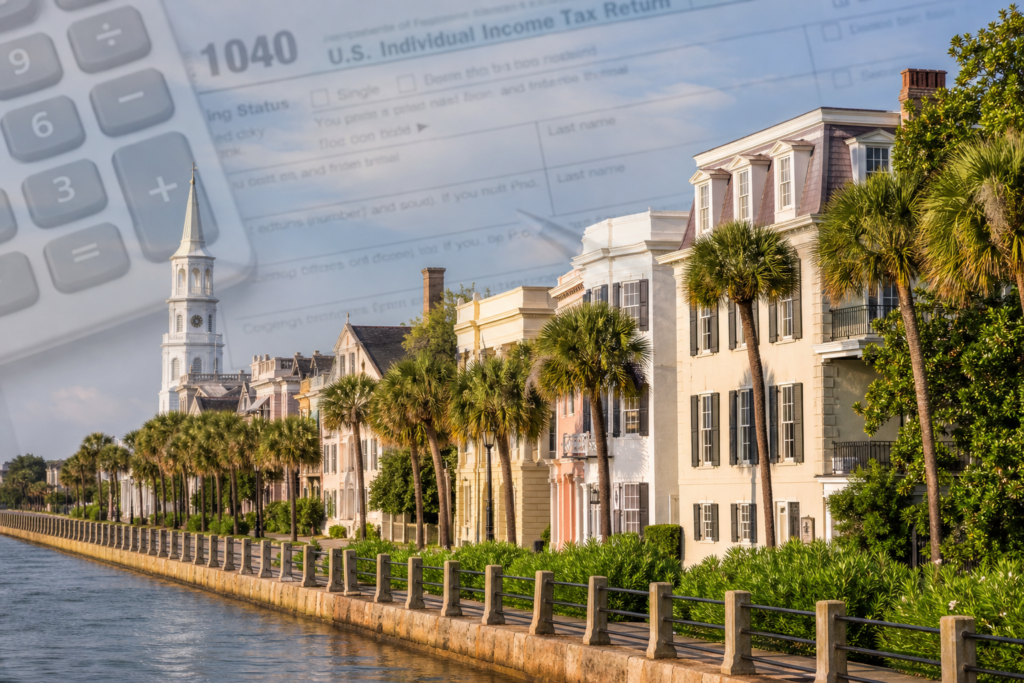
Charleston Real Estate Taxes in 2026: Complete Guide for Homeowners and Investors
Charleston Real Estate Taxes in 2026: Complete Guide for Homeowners and Investors
Understanding charleston real estate taxes is essential for anyone buying, selling, or investing in property in South Carolina’s fastest-growing market. Whether you’re relocating from a high-tax state, building a rental portfolio, or planning your first home purchase in Charleston, the property tax landscape in 2026 directly impacts your long-term financial strategy. This guide breaks down the structure, rates, exemptions, and planning strategies that could save you thousands of dollars annually.
Table of Contents
- Key Takeaways
- How Property Taxes Work in Charleston
- Charleston Property Tax Rates in 2026
- Key Exemptions and Deductions
- How Do Charleston Property Taxes Affect Investment Returns?
- Charleston vs. Florida: A Tax Comparison for Relocating Investors
- Tax Planning Strategies for Charleston Real Estate Investors
- Frequently Asked Questions
Key Takeaways
- Charleston real estate taxes combine county, city, and school district levies on assessed property values.
- South Carolina’s 4% property assessment cap limits annual increases, protecting long-term homeowners.
- Owner-occupied homes receive preferential tax treatment versus investment and vacation properties.
- Investment properties and short-term rentals face higher effective tax rates than primary residences.
- Strategic entity structuring and timing can significantly reduce tax liability on real estate income.
How Property Taxes Work in Charleston, SC
Quick Answer: Charleston property taxes combine assessed value with local millage rates set by county, city, and school district officials, resulting in a total effective tax rate that varies by location and property classification.
Charleston real estate taxes operate through a three-layer system. First, the Charleston County Assessor determines your property’s assessed value, which is typically 4% to 6% of fair market value in South Carolina. Next, the county, city of Charleston, and Charleston County School District each set millage rates that apply to your assessed value. A millage rate of 100 mills means you pay $100 in property taxes per $100,000 of assessed value. Finally, these three tax rates combine to create your total property tax bill.
For example, if your home’s assessed value is $250,000 and the combined millage rate is 250 mills, your annual property tax would be approximately $6,250 (before any exemptions). Understanding this structure is crucial because different property classifications receive different tax treatment.
Owner-Occupied vs. Investment Properties
South Carolina distinguishes between owner-occupied properties and investment properties for tax assessment purposes. Owner-occupied homes typically receive a lower assessment ratio, meaning less of your home’s value is subject to taxation. Investment properties, vacation homes, and commercial real estate face higher assessment ratios and different millage rates in certain jurisdictions.
- Owner-occupied primary residences: Lower assessment ratio, residential millage rates.
- Investment rental properties: Higher assessment ratio, investment property millage rates.
- Short-term rentals (Airbnb, VRBO): Subject to local hospitality taxes in addition to property taxes.
- Commercial properties: Highest assessment ratios with specialized millage rates set by local jurisdictions.
The Assessment Process and 4% Cap
South Carolina law limits annual assessment increases to 4% per year for owner-occupied homes, which protects long-term homeowners from dramatic tax spikes due to market appreciation. However, when a property changes ownership, the new assessment is based on current market value. This means first-time buyers and relocating homeowners often face higher initial property taxes than neighbors who purchased years earlier.
Pro Tip: When budgeting for a Charleston home purchase, calculate taxes based on current market value, not previous owner’s assessed value. After ownership transfer, your annual increases will cap at 4% per year unless you make significant improvements.
What Are the Actual Charleston Property Tax Rates in 2026?
Quick Answer: Charleston’s effective property tax rates range from 0.57% to 0.75% of assessed value for owner-occupied homes, making it moderately competitive nationally, though higher than Florida’s proposed 2028 rates.
The actual effective tax rate you pay in Charleston depends on your specific location within Charleston County, the city of Charleston, or surrounding municipalities. Each jurisdiction sets its own millage rates annually. For 2026, combined millage rates for owner-occupied residential property typically range from 240 to 280 mills across Charleston County, translating to effective tax rates between 0.57% and 0.67% of assessed value.
Investment properties face significantly higher millage rates. Non-owner-occupied rental properties are typically assessed at higher ratios and face combined millage rates of 300 to 350 mills, creating effective rates of 0.72% to 0.84% of assessed value. This differential is critical for real estate investors calculating cap rates and cash-on-cash returns.
| Property Type | Assessment Ratio | Typical Millage | Effective Rate (2026) |
|---|---|---|---|
| Owner-Occupied Home | 4% – 6% | 240-280 mills | 0.57% – 0.67% |
| Rental Investment Property | 5% – 7% | 300-350 mills | 0.72% – 0.84% |
| Vacation/Second Home | 5% – 7% | 300-350 mills | 0.72% – 0.84% |
| Commercial Property | 6% – 8% | 320-380 mills | 0.81% – 1.02% |
Calculating Your 2026 Property Tax Estimate
To estimate your annual property tax in Charleston, follow this simple formula: (Market Value × Assessment Ratio) × Millage Rate ÷ 1,000. For example, a $400,000 owner-occupied home with a 5% assessment ratio and 260 mills millage rate would be taxed as follows: ($400,000 × 0.05) × 260 ÷ 1,000 = $5,200 per year.
For investment properties, the same calculation applies, but with higher assessment ratios and millage rates. A $400,000 rental property at 6% assessment and 320 mills would cost: ($400,000 × 0.06) × 320 ÷ 1,000 = $7,680 annually. This $2,480 annual difference highlights why property classification is critical for investment analysis.
What Exemptions and Deductions Reduce Charleston Real Estate Taxes?
Quick Answer: South Carolina offers homestead exemptions, senior exemptions, disabled person exemptions, and agricultural exemptions that can significantly reduce property tax liability for qualifying homeowners.
South Carolina’s homestead exemption is one of the most valuable property tax benefits available in the state. A qualified owner-occupied primary residence receives a homestead exemption on the first $50,000 of fair market value. This means if your home’s fair market value is $300,000, only the value above $50,000 is subject to property taxation, providing automatic savings regardless of millage rates.
Available South Carolina Property Tax Exemptions
- Homestead Exemption: $50,000 exemption on first $50,000 of fair market value for owner-occupied primary residence.
- Age 65 Exemption: Additional $50,000 exemption for homeowners age 65 and older on their primary residence.
- Disability Exemption: Up to $50,000 exemption for homeowners with service-connected disabilities rated 100%.
- Agricultural Exemption: Special assessment for agricultural properties, valued based on income-producing capability rather than market value.
- Special Assessment Agriculture: For properties in active agricultural use, assessed at agricultural value rather than development potential.
Investment properties and vacation homes do not qualify for homestead exemptions, making them significantly more expensive from a tax perspective. However, real estate investors can offset property taxes through income-generating deductions available on their federal tax returns.
Pro Tip: Ensure you apply for available exemptions by the deadline each year. Homestead exemptions are not automatic and must be claimed through the Charleston County Assessor’s office. Missing the application deadline could cost you thousands in unnecessary taxes.
How Do Charleston Property Taxes Affect Investment Returns?
 Free Tax Write-Off Finder
Quick Answer: Property taxes directly reduce cash-on-cash returns and cap rates on investment properties. A 1% difference in effective tax rate can reduce annual returns by 15-25% on highly leveraged investments.
For real estate investors, Charleston property taxes significantly impact profitability. When calculating your cap rate (annual net operating income divided by purchase price), property taxes are a major operating expense. Consider this scenario: a $400,000 rental property generating $32,000 in annual gross rental income with $8,000 in other operating expenses (insurance, maintenance, management) has $24,000 in operating income before property taxes.
At 0.75% effective tax rate, annual property taxes are approximately $3,000, leaving $21,000 in net operating income. This produces a 5.25% cap rate. If you reduce taxes by relocating to Florida (post-2028 with higher exemptions), your $400,000 investment could be worth purchasing at a lower cap rate due to tax efficiency.
Use our tax planning calculator to estimate how property taxes impact your specific investment scenarios for 2026.
Short-Term Rental Tax Considerations
Short-term rentals (Airbnb, VRBO, vacation rentals) face additional taxes beyond standard property taxes. Charleston and surrounding areas impose hospitality taxes on nightly rental income, typically ranging from 11% to 13%. Combined with property taxes, insurance, maintenance, and cleaning costs, short-term rentals require detailed financial analysis to ensure profitability. A property generating $40,000 in annual rental revenue loses $5,200 to hospitality taxes alone, plus $3,000-$4,000 in property taxes.
Charleston vs. Florida: A Tax Comparison for Relocating Investors
Quick Answer: Florida’s proposed 2026 ballot initiative (if approved) would create a $250,000 homestead exemption by 2028, potentially making Florida more tax-efficient for homeowners, while Charleston remains competitive for investors seeking rental income opportunities.
The 2026 landscape has changed significantly for Americans choosing between Charleston and Florida. Governor Ron DeSantis backed a constitutional amendment that voters will decide on in November 2026. If approved, Florida’s homestead exemption would increase from $50,000 to $150,000 on January 1, 2027, and further to $250,000 on January 1, 2028. This phased approach could dramatically reduce Florida property taxes compared to South Carolina’s current structure.
| Factor | Charleston, SC | Florida (2028 Proposed) |
|---|---|---|
| Homestead Exemption | $50,000 (current) | $250,000 (if approved) |
| Owner-Occupied Effective Rate | 0.57% – 0.67% | ~0.3% (estimated) |
| Investment Property Rate | 0.72% – 0.84% | 0.65% – 0.75% |
| Income Tax on Rental Income | South Carolina state tax applies | No state income tax |
| 4% Assessment Cap | Yes (owner-occupied) | No caps on residential |
For primary homeowners, Florida’s proposed expansion would be substantially more attractive than Charleston by 2028. However, Florida’s lack of state income tax advantage only applies to non-employment income for non-residents. South Carolina residents pay state income tax on all income sources.
For real estate investors, Charleston remains competitive because investment properties don’t qualify for homestead exemptions in either state. The key difference is South Carolina’s 4% annual assessment cap for all properties (owner-occupied or not) versus Florida’s reassessment on each sale. Charleston may be more attractive for long-term investment property holders due to assessment stability.
Tax Planning Strategies for Charleston Real Estate Investors
Quick Answer: Strategic property classification, timing purchases around assessment cycles, maximizing depreciation deductions, and structuring investments through entities can reduce Charleston real estate taxes by 20-40% annually.
Successful real estate investors in Charleston use proven tax strategies to maximize after-tax returns. Understanding the timing of assessments, properly classifying properties, and utilizing federal depreciation rules create tax-efficient investments that compound wealth over time.
Timing Your Property Purchase Around Assessment Cycles
South Carolina’s 4% assessment cap means that timing your property purchase significantly affects your tax burden over the next decade. Purchasing in January gives you the 4% cap for the entire first year. Purchasing in December creates a new assessment immediately. Understanding your local jurisdiction’s assessment schedule can save thousands.
- Purchase at the beginning of the assessment year for maximum benefit from 4% cap.
- Negotiate purchase price reductions by explaining higher buyer’s tax burden for mid-year purchases.
- Plan renovations after closing to trigger property revaluations intentionally when strategic.
Maximizing Federal Depreciation Deductions
Federal tax law allows investors to depreciate rental property over 27.5 years, creating deductions that offset rental income. On a $400,000 investment property, depreciation deductions of approximately $14,545 annually completely shield a significant portion of rental income from federal taxation. Combined with property tax deductions and other business expenses, investors can often show minimal taxable income despite strong cash flow.
Pro Tip: Work with a tax professional during the closing process to establish proper cost segregation studies on investment properties. This advanced strategy accelerates depreciation deductions by separating land from building value and further dividing building components, potentially increasing deductions by 30-50% in early years.
Entity Structure Optimization for Real Estate
Charleston investors should evaluate whether holding properties individually or through LLCs, partnerships, or S-Corporations makes strategic sense. While property taxes are assessed the same regardless of entity type, the structure affects liability protection, pass-through taxation, and your ability to manage depreciation recapture when selling. Consult with a Charleston tax preparation professional before structuring your real estate portfolio.

Uncle Kam in Action: Charleston Real Estate Investor Tax Optimization
Sarah, a 45-year-old accountant relocating from New York, purchased a $500,000 primary residence in Charleston in January 2026. She also planned to purchase a $400,000 rental property in the same market. Her initial analysis showed $28,000 in combined annual property taxes on both properties, creating an effective tax burden of 3.5% on her total investment—seemingly high compared to her upstate New York experience.
However, working with Uncle Kam’s real estate tax advisory team, Sarah discovered several optimization opportunities. First, she properly applied for the South Carolina homestead exemption on her primary residence, reducing her tax basis from $500,000 to $450,000. Second, she structured her rental property through a properly classified LLC to ensure clean depreciation records. Third, she cost-segregated her $400,000 rental property, identifying $60,000 in personal property improvements depreciable over 5 years rather than 27.5 years.
The results were transformative: Sarah’s primary residence property taxes dropped from $12,500 to $11,250 annually. On her rental property, the aggressive cost segregation combined with full depreciation deductions shelter $45,000 of the $80,000 annual rental income from federal taxation. Her after-tax cash flow improved by $12,500 in year one alone, a 44.6% return on the consulting fee she paid. As the investment compounds over 10 years with the 4% assessment cap, her total tax savings exceed $180,000.
Next Steps
Take these immediate actions to optimize your Charleston real estate tax strategy for 2026:
- Verify your homestead exemption application with Charleston County Assessor before the 2026 tax year deadline.
- Request a property assessment review if your tax bill increased more than 4% and you haven’t made major improvements.
- Consult with a tax professional about cost segregation studies if you own investment properties valued above $300,000.
- Schedule a free tax strategy consultation to evaluate your specific real estate portfolio and identify optimization opportunities.
Frequently Asked Questions About Charleston Real Estate Taxes
Are Charleston property taxes high compared to Florida in 2026?
For primary homeowners, Charleston’s current effective rates (0.57%-0.67%) are moderately higher than Florida’s anticipated 2028 rates (approximately 0.3% with the proposed exemption expansion). However, for investment property owners, Charleston remains competitive at 0.72%-0.84% effective rates compared to Florida’s 0.65%-0.75%. Additionally, Charleston benefits from the 4% assessment cap, providing tax predictability that Florida doesn’t offer. The true answer depends on whether you’re buying a primary residence or investment property.
How do Charleston property taxes work for out-of-state investors?
Out-of-state investors pay identical property taxes to South Carolina residents, assessed at the same rates by property classification. However, non-residents cannot claim South Carolina’s homestead exemption, so investment property taxation is standardized regardless of owner residence. The primary difference is state income taxation on rental income; non-South Carolina residents don’t owe South Carolina income tax on rental revenue, only federal taxes and their home state’s taxes if applicable.
Will my Charleston property taxes go up in 2027-2028?
For owner-occupied properties, yes, but they’re limited to 4% annual increases per South Carolina law. For investment properties purchased before 2026, expect similar modest increases. However, if you purchase an investment property in 2026, taxes will reassess to current market value at purchase and then cap at 4% growth. Potential changes to local millage rates could affect all properties proportionally, though millage adjustments are typically minimal year-to-year.
Can I appeal my Charleston property tax assessment?
Yes, South Carolina allows property owners to appeal assessments through the Charleston County Assessor’s office if they believe their property is overvalued. The appeals process typically involves submitting comparable sales data or hiring an independent appraisal to challenge the assessed value. Appeals must be filed within specific timeframes, usually within 90 days of the assessment notice. Successful appeals can reduce your assessed value by 10-20%, creating ongoing tax savings.
What’s the difference between assessed value and fair market value in Charleston?
Fair market value is what your property would sell for on the open market today. Assessed value is the value the county uses for tax purposes, typically 4-6% of fair market value for owner-occupied homes. This creates significant tax efficiency. A home worth $400,000 (fair market value) might be assessed at $20,000-$24,000 (assessed value), meaning property taxes are calculated on only 5-6% of actual home value. However, this ratio increases for investment properties assessed at 5-7% of fair market value.
How do short-term rental taxes impact my Charleston real estate investment?
Short-term rentals (Airbnb, VRBO) in Charleston face property taxes plus hospitality taxes (11-13%) on nightly rental revenue. A $400,000 property generating $50,000 annually in short-term rental income will pay approximately $4,000-$5,000 in hospitality taxes plus $3,000-$4,000 in property taxes, totaling 14-18% of gross revenue in taxes alone before insurance, maintenance, and cleaning costs. This makes short-term rentals viable only at premium nightly rates ($150+) in high-demand seasons.
Should I structure my Charleston real estate investment as an LLC or S-Corporation?
Property taxes are identical regardless of entity type—the property is taxed the same whether held individually or through an LLC. However, entity structure affects liability protection, self-employment tax on rental income (S-Corps can reduce self-employment taxes, LLCs cannot without additional elections), and depreciation recapture. Most Charleston investors benefit from LLC structures for liability protection without self-employment tax complications, but this requires individualized analysis based on your specific portfolio and income situation.
This information is current as of 6/8/2026. Tax laws change frequently. Verify updates with the South Carolina Department of Revenue or Charleston County Assessor if reading this later.
Related Resources
- Tax Strategy Services for Real Estate Investors
- Real Estate Investor Tax Planning Guide
- Tax Preparation Near Me in South Carolina
- Entity Structuring for Optimal Tax Efficiency
- Business Tax Solutions and Accounting Services
Last updated: June, 2026

