Billings QOZ Investment: 2026 Guide to Opportunity Zones in Montana
A smart billings qoz investment can defer capital gains, build tax-free wealth, and revitalize local neighborhoods. For the 2026 tax year, the Opportunity Zone program looks very different than before. The One Big Beautiful Bill Act (OBBBA) made these incentives permanent. Therefore, Montana investors now have a durable tool. This guide explains the current rules, local zones, and a clear step-by-step plan.
Table of Contents
- Key Takeaways
- What Is a Qualified Opportunity Zone?
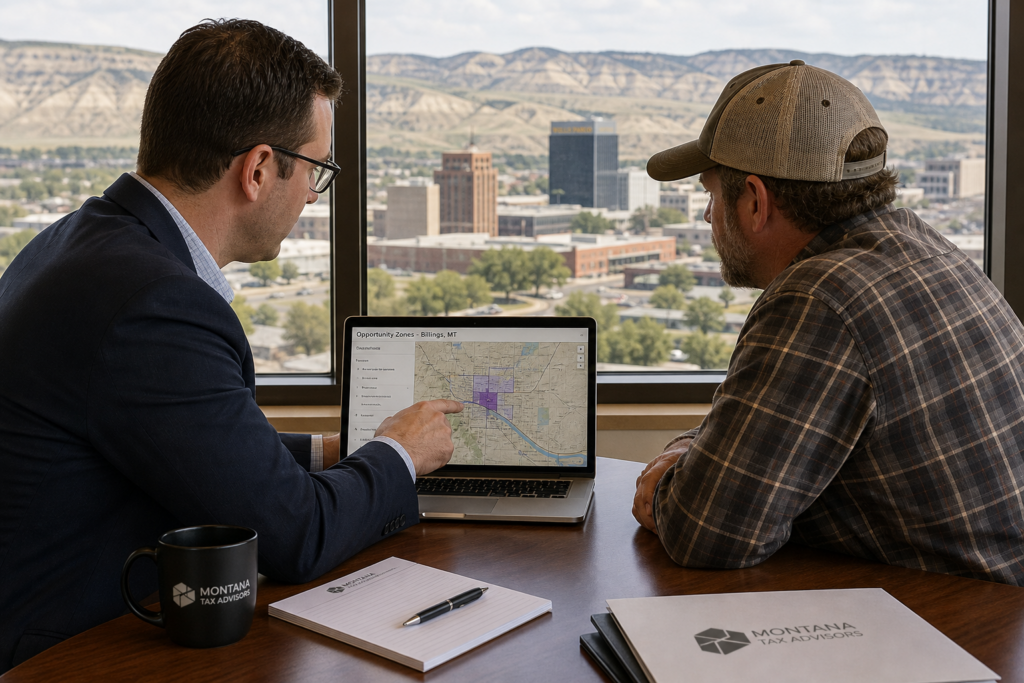
- Where Are the Opportunity Zones in Billings?
- What Are the Tax Benefits of a Billings QOZ Investment?
- How Do Billings QOZ Investments Work in Practice?
- How Do You Make a QOZ Investment Step by Step?
- What Are the Risks and Compliance Rules?
- Uncle Kam in Action
- Related Resources
- Next Steps
- Frequently Asked Questions
Key Takeaways
- OBBBA made Opportunity Zones permanent, starting with new rules on January 1, 2027.
- A Billings QOZ investment defers capital gains and can grow tax-free after ten years.
- You must reinvest eligible gains within 180 days through a Qualified Opportunity Fund.
- Rural zones near Billings may qualify for enhanced 30% basis benefits under new rules.
- Professional guidance helps you avoid costly compliance mistakes with Forms 8996, 8949, and 8997.
What Is a Qualified Opportunity Zone?
Quick Answer: A Qualified Opportunity Zone is a distressed area designated for tax-advantaged investment. Investors defer capital gains by funding projects there.
A Qualified Opportunity Zone (QOZ) is a low-income census tract nominated by a governor and certified by the U.S. Treasury. The program launched under the 2017 Tax Cuts and Jobs Act. However, OBBBA reshaped it in 2025. As a result, the incentive is now permanent rather than temporary. This change gives Montana investors long-term confidence.
The goal is simple. Congress wants private capital flowing into underserved communities. In exchange, investors receive powerful federal tax breaks. Consequently, a well-planned billings qoz investment supports local growth while cutting your tax bill. You can learn the official framework on the IRS Opportunity Zones page.
How the Program Works
You do not invest directly in a zone. Instead, you invest through a Qualified Opportunity Fund (QOF). This fund holds property or businesses inside the zone. Furthermore, the fund must meet strict asset tests. Many Montana real estate investors use these funds for development projects.
What Changed Under OBBBA in 2026
OBBBA introduced rolling zone designations and fresh investor benefits. Notably, Treasury opened a new designation cycle in mid-2026. Therefore, the map of eligible tracts will refresh over time. In addition, the law created enhanced incentives for rural funds. These updates make 2026 a key planning year.
Pro Tip: Confirm your target tract is currently designated before investing. Designations can change under the new cycle.
Where Are the Opportunity Zones in Billings?
Quick Answer: Billings sits in Yellowstone County. Several census tracts there have carried Opportunity Zone designations, especially older commercial and industrial corridors.
Billings is Montana’s largest city and its economic engine. Because of that role, several Yellowstone County tracts have qualified as Opportunity Zones. These areas often include downtown edges, the rail corridor, and older industrial districts. Therefore, a billings qoz investment frequently targets redevelopment and infill projects.
You should always verify the exact boundaries. Zone maps shift as Treasury refreshes designations. The HUD Opportunity Zones resources and Treasury CDFI Fund tools help you confirm current tracts. In addition, the Montana Department of Commerce tracks local economic development programs.
Common Billings Zone Areas
- Older downtown and near-downtown commercial blocks ripe for mixed-use projects.
- Industrial corridors along rail lines suited for warehousing and light manufacturing.
- Aging residential tracts where workforce housing demand keeps rising.
Rural Zones Near Billings
Montana includes many rural tracts outside city limits. Under OBBBA, rural funds gain sweeter benefits. Consequently, ranch-adjacent land and small-town projects deserve a close look. Investors comparing options often connect with a trusted Tax Preparation Near Me in Montana team to confirm eligibility.
Did You Know? Treasury opened a new Opportunity Zone designation cycle in mid-2026. So Montana’s zone map may soon expand.
What Are the Tax Benefits of a Billings QOZ Investment?
Quick Answer: You defer tax on reinvested gains, earn a basis step-up over time, and pay zero tax on QOF growth after ten years.
The tax benefits sit at the heart of every billings qoz investment. There are three core advantages. Together, they can transform your after-tax returns. Business owners and real estate investors both benefit. Moreover, high-net-worth families use these zones for long-term wealth transfer. Review your broader plan on our tax strategy planning services page.
Capital Gains Deferral
First, you defer tax on eligible capital gains. You must roll those gains into a QOF within 180 days. As a result, your cash stays invested instead of paying the IRS immediately. This deferral applies to gains from stocks, real estate, or a business sale.
Basis Step-Up After Five Years
Second, OBBBA restored a meaningful basis step-up. Under the new permanent structure, investments held five years receive a 10% basis increase. Furthermore, qualified rural funds can earn a larger 30% step-up. Therefore, part of your deferred gain escapes tax entirely.
Tax-Free Growth After Ten Years
Third, the biggest prize comes at year ten. If you hold your QOF interest for at least ten years, appreciation becomes tax-free. Consequently, all new gains inside the fund avoid federal capital gains tax. This exclusion drives most serious Opportunity Zone strategies.
QOZ Holding Period vs. Benefit
| Holding Period | Primary Benefit (2026 Framework) |
|---|---|
| Under 5 years | Gain deferral only, no basis step-up |
| 5+ years | 10% basis step-up (30% for rural funds) |
| 10+ years | Full exclusion of QOF appreciation |
Pro Tip: Rural Montana projects may unlock the enhanced 30% step-up. Verify rural fund status early.
How Do Billings QOZ Investments Work in Practice?
Quick Answer: You realize a gain, reinvest it within 180 days into a QOF, and the fund deploys capital into Billings-area property or businesses.
In practice, the mechanics feel straightforward with the right team. First, you trigger a capital gain. Next, you move that gain into a Qualified Opportunity Fund. Then, the fund invests in qualifying Billings assets. Timing matters greatly, so track your deadlines carefully. Many investors pair this with smart business entity structuring guidance.
Eligible Gains and the 180-Day Rule
Only capital gains qualify for deferral. You generally have 180 days from the sale to reinvest. Miss that window, and you lose the deferral. Therefore, plan your reinvestment before you sell. The IRS Opportunity Zones FAQ outlines these timing rules clearly.
QOZ Funds vs. Direct Investments
You cannot claim benefits by buying property directly. Instead, the investment must flow through a QOF. Some investors form their own single-project fund. Others join a larger managed fund. Business owners weighing entity choices can use our LLC vs S-Corp Tax Calculator for Billings to model 2026 outcomes.
Fund vs. Direct Approach
| Approach | Pros | Cons |
|---|---|---|
| Self-formed QOF | Full control of the Billings project | Heavy compliance and reporting duties |
| Managed QOF | Professional management, diversification | Fees and less direct control |
Real estate investors especially favor the self-formed route. It offers control and upside. However, it demands disciplined recordkeeping. Learn more about strategies for real estate investors and property owners.
How Do You Make a QOZ Investment Step by Step?
 Free Tax Write-Off Finder
Quick Answer: Realize a gain, choose a designated Billings tract, form or select a QOF, reinvest within 180 days, then file the right IRS forms.
A successful billings qoz investment follows a clear sequence. Each step protects your deferral and long-term exclusion. Skipping steps creates costly errors. Therefore, follow this roadmap carefully. Self-employed founders selling a business often start here after reviewing our self-employed tax planning resources.
The Five-Step Process
- Realize an eligible capital gain from stock, real estate, or a business sale.
- Confirm your target Billings census tract holds a current designation.
- Form a QOF using Form 8996, or invest in an existing fund.
- Reinvest the gain into the QOF within the 180-day window.
- File Form 8949 to elect deferral and Form 8997 each year.
Reporting and IRS Forms
Reporting drives compliance. You self-certify your fund with Form 8996. You elect deferral on Form 8949. In addition, you report holdings annually on Form 8997. Proper filing keeps your benefits intact. Our team handles this through tax preparation and filing support.
Pro Tip: Calendar your 180-day deadline the moment you sell. Late reinvestment kills the deferral.
What Are the Risks and Compliance Rules?
Quick Answer: QOZ investments carry market risk, illiquidity, and strict testing rules. The 90% asset test and substantial improvement rules matter most.
No tax break removes investment risk. A billings qoz investment still depends on real project performance. Moreover, funds face ongoing compliance tests. Failure can trigger penalties and lost benefits. Therefore, you must understand these rules before committing capital.
Key Compliance Tests
- The 90% asset test requires most fund assets to sit inside the zone.
- Substantial improvement rules require doubling the basis of used property.
- Working capital safe harbors demand a written plan and schedule.
Common Pitfalls to Avoid
Many investors stumble on simple mistakes. For example, they miss the 180-day window. Others invest in the wrong entity type. Additionally, some ignore annual Form 8997 filing. Consequently, they lose valuable deferral. The U.S. Treasury Department and IRS both stress accurate documentation.
Did You Know? The IRS issued transitional Opportunity Zone rules in 2026. So professional guidance matters more than ever.
High-net-worth families also weigh estate planning angles. For 2026, the federal estate and gift exclusion sits at $15 million. Therefore, QOZ holdings can align with broader wealth transfer goals. Explore options for high-net-worth individuals and families. Before you move forward, connect with a knowledgeable Billings tax preparation team to confirm your plan.

Uncle Kam in Action: A Billings Investor Defers a Six-Figure Gain
Client Snapshot: Meet “Dana,” a Billings real estate investor and small business owner. She sold an appreciated rental portfolio in early 2026.
Financial Profile: Dana realized a $600,000 long-term capital gain. Without planning, she faced a large combined federal tax hit. She also worried about reinvesting quickly enough.
The Challenge: Dana wanted to defer her gain and keep building local wealth. However, she did not understand the 180-day rule. Furthermore, she had no compliant fund structure. She feared missing the window entirely.
The Uncle Kam Solution: Our team mapped a clear billings qoz investment plan. First, we confirmed a designated Yellowstone County tract. Next, we formed a single-project Qualified Opportunity Fund using Form 8996. Then, we timed her reinvestment inside the 180-day window. In addition, we set up annual Form 8997 reporting. We also modeled a five-year and ten-year hold.
The Results: Dana deferred federal tax on the full $600,000 gain. As a result, she kept roughly $120,000 in cash working inside her Billings project. That deferred capital now funds a workforce housing renovation. Moreover, she positioned for a 10% basis step-up at year five. If she holds ten years, her new appreciation escapes federal capital gains tax.
Investment and ROI: Dana paid Uncle Kam $9,500 for planning, fund setup, and filing. Her first-year deferral benefit exceeded $100,000 in retained capital. Therefore, her return on our fee topped a 10x first-year ROI. See more outcomes on our client results and case studies page.
Related Resources
- Ongoing tax advisory services
- Tax strategies for business owners
- Uncle Kam tax strategy blog
- Free tax planning calculators
Next Steps
- Confirm your Billings target tract holds a current 2026 designation.
- Calendar your 180-day reinvestment deadline right after any sale.
- Choose between a self-formed or managed Qualified Opportunity Fund.
- Book a review through our business financial solutions team.
Frequently Asked Questions
Where are the Opportunity Zones in Billings, Montana?
Billings sits in Yellowstone County. Several tracts there have carried Opportunity Zone status, mainly older commercial and industrial areas. Always verify current designations, since Treasury opened a new cycle in 2026.
How long do I have to invest my capital gains?
You generally have 180 days from the sale date. You must reinvest the gain into a Qualified Opportunity Fund. Missing this window forfeits the deferral, so plan ahead.
What did OBBBA change for Opportunity Zones in 2026?
OBBBA made the program permanent. It added rolling designations and a fresh benefit schedule for investments starting January 1, 2027. Rural funds also gained an enhanced 30% basis step-up.
Can I combine QOZ benefits with other tax strategies?
Yes, many investors pair QOZ investing with entity planning and estate strategies. However, you cannot double up on some deferrals like a 1031 exchange for the same dollars. Coordinate carefully with an advisor.
How much does professional QOZ planning cost?
Fees vary by complexity and fund structure. Many Billings investors invest a few thousand dollars in planning. That cost often returns many times over through deferred and excluded gains.
Which forms do I need to file for a QOF?
You self-certify the fund with Form 8996. You elect deferral on Form 8949. In addition, you report holdings annually on Form 8997 to stay compliant.
This information is current as of 7/20/2026. Tax laws change frequently. Verify updates with the IRS or a qualified advisor if reading this later. This article covers federal Opportunity Zone rules; confirm any Montana state treatment separately.
Last updated: July, 2026

