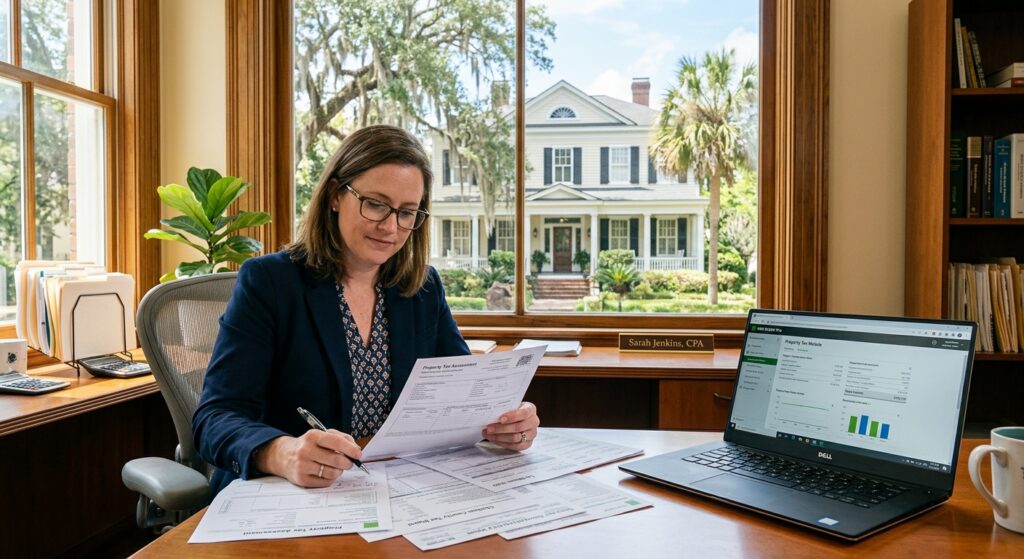
Ardsley Park Tax Preparation: Your 2026 Savannah Filing Guide
Ardsley Park Tax Preparation: Your 2026 Savannah Filing Guide
Smart Ardsley Park tax preparation starts with expert Georgia tax preparation services that connect federal, state, and Chatham County property rules. Updated for the 2026 tax filing season, this guide helps Savannah homeowners, business owners, and investors file accurately. Moreover, it shows how local property assessments shape your overall tax strategy. Therefore, you avoid missed deductions, penalties, and costly assessment errors near this historic district.
Table of Contents
- Key Takeaways
- Why Does Professional Ardsley Park Tax Preparation Matter?
- How Do Property Taxes Work in Ardsley Park and Chatham County?
- What Documents Do You Need for 2026 Tax Preparation?
- Which Deductions and Credits Help Ardsley Park Taxpayers?
- How Do You Review and Appeal Your Property Assessment?
- What’s New for the 2026 Tax Year?
- Uncle Kam in Action
- Next Steps
- Related Resources
- Frequently Asked Questions
Key Takeaways
- The federal filing deadline for 2026 returns is April 15, 2026.
- Ardsley Park sits in Savannah, within Chatham County, Georgia.
- Local property assessments affect your itemized deductions and overall strategy.
- Gather documents early to avoid penalties and missed credits.
- Coordinate federal, Georgia state, and county filings for maximum savings.
Why Does Professional Ardsley Park Tax Preparation Matter?
Quick Answer: Professional Ardsley Park tax preparation matters because it coordinates federal, Georgia, and Chatham County rules. As a result, you reduce errors, lower audit risk, and claim every legal deduction.
Ardsley Park remains one of Savannah’s most desirable historic neighborhoods. Consequently, its homeowners often face rising property values and layered tax obligations. A skilled preparer understands how these three layers interact. Furthermore, local expertise helps you avoid mistakes that generic software misses. Working with a knowledgeable tax team for local business owners keeps your filings compliant and efficient.
Many residents assume filing is simple. However, Savannah’s mix of historic homes, rental properties, and small businesses creates real complexity. Therefore, professional guidance often pays for itself through recovered deductions. In addition, proactive planning prevents surprises when the April 15, 2026 deadline arrives.
The Three-Layer Savannah Tax Strategy
Every Ardsley Park taxpayer faces three connected layers. First, federal rules govern income, deductions, and credits. Second, Georgia state rules add their own brackets and filing forms. Third, Chatham County assessments drive your property tax bill. Because these layers overlap, a coordinated plan protects your money. You can explore deeper planning through proactive tax strategy services.
- Federal: income tax, deductions, and credits filed with the IRS.
- State: Georgia income tax and applicable credits.
- Local: Chatham County property assessment and millage rates.
Who Benefits Most From Local Expertise?
Homeowners, landlords, freelancers, and small business owners all benefit. Real estate investors in particular gain from careful depreciation planning. Meanwhile, self-employed residents must manage quarterly estimates and Schedule C deductions. Savannah’s Tax Preparation Near Me in Georgia resources connect you with preparers who know these local nuances. As a result, you file with confidence.
Pro Tip: Start your 2026 tax prep in January. Early filers catch missing documents and avoid last-minute stress.
How Do Property Taxes Work in Ardsley Park and Chatham County?
Quick Answer: Chatham County assesses your home’s fair market value, then applies an assessment ratio and millage rate. Your bill reflects value minus exemptions.
Georgia assesses residential property at 40% of fair market value. Therefore, a home valued at $500,000 carries an assessed value of $200,000. Next, the county applies exemptions and the local millage rate. Consequently, your final bill depends on both value and available exemptions. The Georgia Department of Revenue property tax page explains these mechanics in detail.
Understanding this system helps you plan. For instance, homeowners who qualify for a homestead exemption reduce their taxable value. Moreover, seniors may qualify for additional relief. Because assessments change over time, annual review matters. A local preparer connects these property figures to your income tax picture.
Key Property Tax Definitions
- Fair market value: what your property would sell for today.
- Assessed value: 40% of fair market value in Georgia.
- Millage rate: the tax rate applied per $1,000 of assessed value.
- Homestead exemption: a reduction for owner-occupied primary homes.
A Simple Property Tax Calculation
Assume an Ardsley Park home valued at $600,000. First, multiply by 40% for a $240,000 assessed value. Next, subtract a homestead exemption of roughly $10,000, leaving $230,000. Then apply a sample combined millage rate. As a result, small changes in assessment or exemptions shift your bill meaningfully. This is why annual assessment review protects your budget.
Did You Know? Georgia lets you file a homestead exemption application with your county, often by early April. Missing that window costs real money.
What Documents Do You Need for 2026 Tax Preparation?
Quick Answer: You need income statements, deduction records, property tax bills, and prior returns. Organize them by category before your appointment.
Good preparation begins with organized records. Therefore, gather every income and expense document early. Missing forms delay filing and increase errors. In addition, complete records help your preparer find deductions you might overlook. The IRS Get Ready to File page offers a helpful federal checklist.
Document Checklist by Client Type
Different taxpayers need different documents. Consequently, use the table below to match your situation. Self-employed residents and landlords need extra records. Meanwhile, W-2 employees keep it simpler.
| Client Type | Key Documents for 2026 |
|---|---|
| W-2 Employee | W-2, 1098 mortgage interest, property tax bill, charitable receipts |
| Freelancer / 1099 | 1099-NEC, expense logs, mileage records, home office details |
| Landlord / Investor | Rental income, repair receipts, depreciation schedules, closing statements |
| Small Business Owner | Profit and loss statement, payroll records, asset purchases, prior returns |
Steps to Prepare for Your Appointment
- Collect all income forms, including W-2s and 1099s.
- Gather deduction records and your Chatham County property tax bill.
- Pull last year’s federal and Georgia returns.
- Schedule your consultation and share documents securely.
- Review the draft return, then e-file before April 15, 2026.
Freelancers and contractors should track expenses year-round. In fact, ongoing recordkeeping supports stronger self-employed tax planning. As a result, quarterly estimates stay accurate and refunds improve.
Which Deductions and Credits Help Ardsley Park Taxpayers?
 Free Tax Write-Off Finder
Quick Answer: Common deductions include mortgage interest, state and local taxes, and business expenses. Credits may include energy, child, and education incentives.
Ardsley Park homeowners often itemize because of property values. However, the choice between itemizing and the standard deduction depends on your numbers. Therefore, a preparer runs both scenarios to find the larger benefit. The IRS credits and deductions overview lists options available to individuals.
The state and local tax deduction, known as SALT, remains important locally. Because property taxes and Georgia income tax count toward that deduction, high earners benefit from careful timing. Moreover, real estate investors gain from depreciation and expense strategies. A dedicated team for real estate investors and landlords maximizes these opportunities.
Common Deductions for Local Homeowners
- Mortgage interest reported on Form 1098.
- State and local taxes, subject to the SALT cap.
- Charitable contributions with proper receipts.
- Qualified home office expenses for the self-employed.
Credits Worth Reviewing
Credits reduce your tax dollar for dollar. Consequently, they often beat deductions in value. Families should review the Child Tax Credit. In addition, homeowners who add energy-efficient improvements may qualify for residential energy credits. Furthermore, students and parents should check education credits. A high-income household benefits from advanced planning through services for high-net-worth individuals.
Pro Tip: Keep energy upgrade receipts and manufacturer certifications. They support home energy credit claims if audited.
How Do You Review and Appeal Your Property Assessment?
Quick Answer: Compare your assessment notice to recent sales. If it seems too high, file an appeal with the county board within the deadline.
Assessments are not always accurate. Therefore, reviewing your annual notice protects your money. When Chatham County mails your assessment, compare it to nearby sales. If comparable homes sold for less, you may have grounds to appeal. In Georgia, you generally file an appeal within 45 days of the notice date.
Steps to Review Your Ardsley Park Assessment
- Obtain your annual assessment notice from the county.
- Compare the assessed value to recent neighborhood sales.
- Document differences with photos and market data.
- File your appeal before the 45-day deadline.
- Present your evidence to the county board of equalization.
A successful appeal lowers your taxable value. As a result, your annual bill drops, and your SALT deduction adjusts accordingly. Because appeals require evidence, professional support strengthens your case. Working with a dedicated tax advisory partner keeps your strategy organized year-round.
How Assessments Connect to Income Taxes
Property taxes feed directly into your itemized deductions. Consequently, an accurate assessment supports an accurate return. Landlords also depreciate property, so purchase price and improvements matter. Moreover, the IRS Schedule A guidance shows how property taxes flow into itemized deductions. Therefore, local and federal filings truly connect.
What’s New for the 2026 Tax Year?
Quick Answer: For 2026, the federal filing deadline is April 15, 2026. Verify current IRS and Georgia figures, since inflation adjustments update annually.
Tax rules change every year. Therefore, relying on outdated figures creates risk. For the 2026 tax year, confirm all brackets, standard deductions, and contribution limits with official sources. The IRS publishes annual inflation adjustments through revenue procedures. Consequently, you should verify each figure before filing.
| 2026 Item | Action Required |
|---|---|
| Federal filing deadline | File by April 15, 2026 |
| Standard deduction | Confirm the 2026 amount on IRS.gov before filing |
| Retirement limits | Verify 2026 401(k) and IRA limits with the IRS |
| Georgia income tax | Check the Georgia Department of Revenue for current rates |
Why Verifying 2026 Figures Protects You
Filing with last year’s numbers causes errors and delays. In addition, incorrect figures may trigger IRS notices. Therefore, always confirm the current standard deduction and contribution limits. Because Georgia adjusts its own rules too, check the Georgia Department of Revenue site directly. As a result, your 2026 return stays accurate and defensible.
Did You Know? Final 2026 IRS inflation figures publish in official revenue procedures. Confirm each amount before you file.

Uncle Kam in Action: How an Ardsley Park Homeowner Saved Big
Client Snapshot: Meet “Denise,” a self-employed marketing consultant who owns a historic home in Ardsley Park. She also rents a small carriage-house unit for extra income.
Financial Profile: Denise earned about $185,000 in 2026, split between consulting income and rental revenue. Her home carried a rising Chatham County assessment.
The Challenge: Denise felt overwhelmed. Her prior preparer used generic software and missed key deductions. Furthermore, her property assessment jumped sharply, inflating her tax bill. She worried about quarterly estimates and audit risk. As a result, she overpaid across all three tax layers.
The Uncle Kam Solution: Our team built a coordinated 2026 plan. First, we reviewed her assessment and identified strong appeal grounds using neighborhood sales. Next, we optimized her home office and rental depreciation deductions. In addition, we structured accurate quarterly estimates to avoid penalties. Then we aligned her federal, Georgia, and county filings into one clear strategy. Consequently, nothing fell through the cracks.
The Results: The assessment appeal reduced her taxable property value meaningfully. Meanwhile, recovered business and rental deductions lowered her federal and state liability. In total, Denise saved approximately $11,400 in her first year. She paid Uncle Kam a $3,800 fee for planning and preparation. Therefore, her first-year ROI reached roughly 3x. Moreover, she gained a year-round advisor instead of a once-a-year filer. See more outcomes on our client results page.
Denise’s story shows the power of integrated planning. Because her preparer connected local assessments to federal deductions, she captured savings others miss. As a result, she now files with confidence every year.
Next Steps
Ready to simplify your filing? If you live near this historic district, professional support pays off. Explore trusted tax preparation services across Georgia and take action before the April 15, 2026 deadline.
- Gather your 2026 income, deduction, and property records now.
- Review your Chatham County assessment for appeal opportunities.
- Confirm all 2026 IRS and Georgia figures before filing.
- Schedule a consultation with an experienced local preparer.
- Set up year-round planning through tax prep and filing support.
This information is current as of 8/3/2026. Tax laws change frequently. Verify updates with the IRS or the Georgia Department of Revenue if reading this later.
Related Resources
- Business Entity Structuring Guidance
- Uncle Kam Tax Strategy Blog
- Important Tax Deadlines Calendar
- General Tax Questions and Answers
Frequently Asked Questions
When should I start my 2026 tax preparation?
Start in January. Early preparation gives you time to gather documents. Moreover, it prevents last-minute stress before the April 15, 2026 deadline. Year-round planning delivers even better results.
Can I deduct my Ardsley Park property taxes on my federal return?
Yes, if you itemize. Property taxes count toward the state and local tax deduction. However, that deduction has a cap. Therefore, your preparer compares itemizing to the standard deduction.
What if I disagree with my Chatham County property assessment?
You can appeal. Compare your assessment to recent neighborhood sales first. Then file within 45 days of the notice. Strong evidence and market data improve your chances significantly.
Do freelancers in Savannah need to pay quarterly taxes?
Usually yes. Self-employed residents typically owe estimated taxes four times a year. Consequently, accurate quarterly payments prevent underpayment penalties. A preparer calculates these estimates for you.
Should I use software or a professional preparer?
Software works for simple returns. However, Ardsley Park often involves property, business, or rental complexity. Therefore, a local professional usually recovers more savings than the fee costs.
Can a preparer help with both IRS and Georgia filings?
Absolutely. A skilled preparer coordinates federal, Georgia, and county obligations. As a result, your filings align and errors decline. This integrated approach defines quality Ardsley Park tax preparation.
This article is for informational purposes only and does not constitute legal or tax advice. Consult a qualified professional for guidance specific to your situation.
Last updated: August, 2026

