
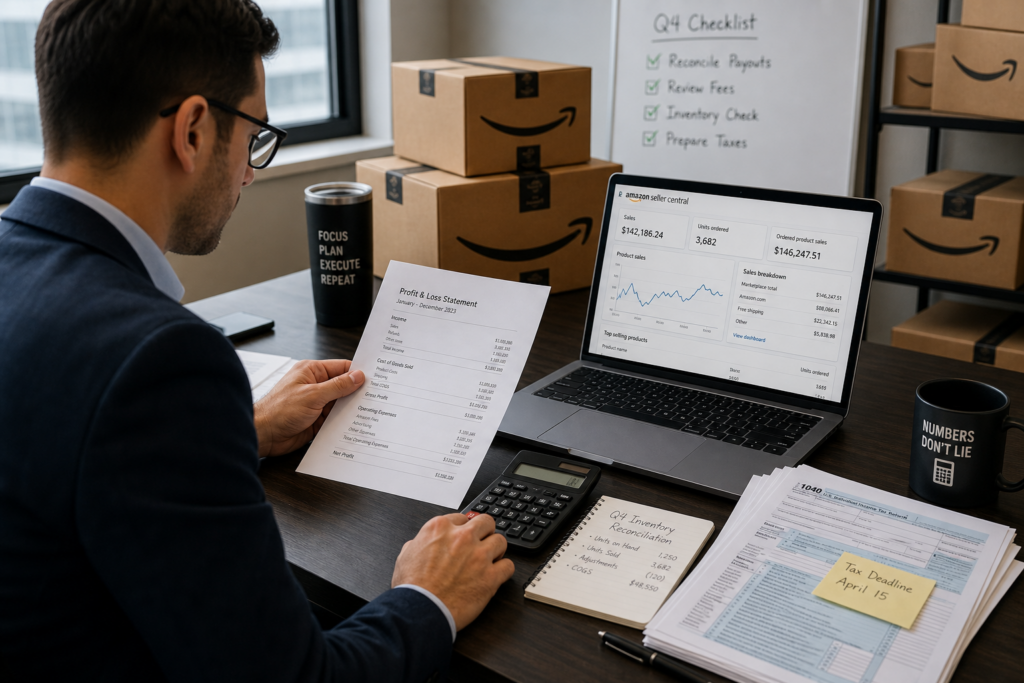
Amazon Seller Accounting: Essential Guide for Tax Professionals
As e-commerce continues to grow, tax professionals are encountering a rising number of clients who operate as Amazon sellers. Understanding the nuances of Amazon seller accounting is essential for accurate tax filing, business strategy, and client success. This guide aims to address the key areas every accountant or solo practitioner must know when working with Amazon-based businesses.
Why Is Accounting Different for Amazon Sellers?
Used by 2,400+ tax professionals
Amazon sellers face unique accounting challenges compared to traditional businesses. These include:
- Multiple revenue streams (FBA, FBM, Amazon Handmade, etc.)
- Inventory held in multiple warehouses
- Frequent transactions and refunds
- Sales taxes across multiple jurisdictions
- Fees and chargebacks deducted directly by Amazon

1. Setting Up the Accounting System
- Choose an e-commerce-friendly accounting software (e.g., QuickBooks Online, Xero, or A2X).
- Automate data entry using Amazon’s transaction reports and integration apps.
2. Income Recognition & 1099-K Reporting
- Amazon issues Form 1099-K for gross sales (see IRS guidance).
- Deductions (returns, fees) must be recorded separately for net income calculation.
Sample Amazon Seller P&L Breakdown
| Revenue Item | Description |
|---|---|
| Gross Sales | Total sales revenue reported by Amazon |
| Refunds/Returns | Amounts refunded to customers |
| Amazon Fees | Referral, FBA, storage, and miscellaneous fees |
| Net Income | Result after deducting above expenses from gross sales |
3. Inventory Tracking and Cost of Goods Sold (COGS)
Inventory accounting is the cornerstone of Amazon seller tax compliance:
- Use inventory management software that syncs with Amazon Seller Central.
- Apply the correct inventory costing method (FIFO, LIFO, or weighted average).
- Track beginning inventory, purchases, and ending balances for accurate COGS:
| Inventory Accounting Steps | Details |
|---|---|
| Beginning Inventory | Value of unsold stock at the start of the year |
| + Purchases | New inventory bought during the year |
| – Ending Inventory | Value of inventory remaining at year-end |
| = Cost of Goods Sold | Total deductible inventory used to fulfill orders |
4. Managing Amazon Fees & Expense Tracking
- Categorize Amazon FBA and referral fees as selling expenses.
- Track shipping, packaging, advertising, and storage costs separately.
- Keep detailed supporting documentation for each category.
5. Sales Tax Complexity
Amazon automatically collects and remits sales tax in many states. However, sellers are responsible for:
- Registering for sales tax permits where required
- Tracking nexus as inventory is stored in Amazon warehouses in multiple states
- Filing sales tax returns, even if no tax is due (to maintain compliance)
Refer to Sales Tax Institute for state-by-state guidance.
6. Reconciling Amazon Disbursements

- Record payouts from Amazon to business bank accounts.
- Reconcile against daily or bi-weekly reports for accurate bookkeeping.
- Watch for timing differences: sales may be reported before actual payout.
7. Common Pitfalls and How to Avoid Them
- Poor inventory tracking leading to COGS errors
- Ignoring sales tax obligations in new states
- Commingling business and personal funds
- Forgetting to track small expenses that add up (e.g., Amazon advertising)
8. Best Practices for Tax Pros Serving Amazon Sellers
- Educate clients about recordkeeping and the importance of separating personal and business expenses.
- Set up integrations (e.g., A2X with QuickBooks) to save time and reduce manual data entry.
- Stay informed: Amazon’s policies and state nexus laws frequently change.
Top Questions Tax Pros Should Ask New Amazon Seller Clients
- What Amazon seller programs do you participate in (FBA, FBM, Handmade, etc.)?
- Which states do you have inventory stored in?
- Are you registered to collect sales tax in those states?
- Do you maintain accurate inventory records?
- How are returns, refunds, and fees tracked in your books?
- Is your income tracking based on gross sales or payout amounts?
- Which accounting method do you use for inventory: FIFO, LIFO, or weighted average?
- Do you advertise on Amazon, and are those expenses tracked separately?
- Is your personal and business activity kept in separate bank accounts?
- Have you received a 1099-K from Amazon?
- Do you sell on channels other than Amazon?
Recommended Resources
- Amazon Seller Central Help
- A2X for Amazon Accounting
- Integrating Amazon with QuickBooks
- Amazon FBA Inventory Management Best Practices
- E-commerce Sales Tax: What Accountants Need to Know
- Tax Filing Tips for E-commerce Sellers
Conclusion
Successfully supporting Amazon seller clients is all about process and detail. With the right systems in place, solo practitioners and tax professionals can help clients avoid costly mistakes, maximize deductibles, and scale their businesses with peace of mind. Stay current with e-commerce accounting technology and emerging tax laws to provide the best possible advice.

