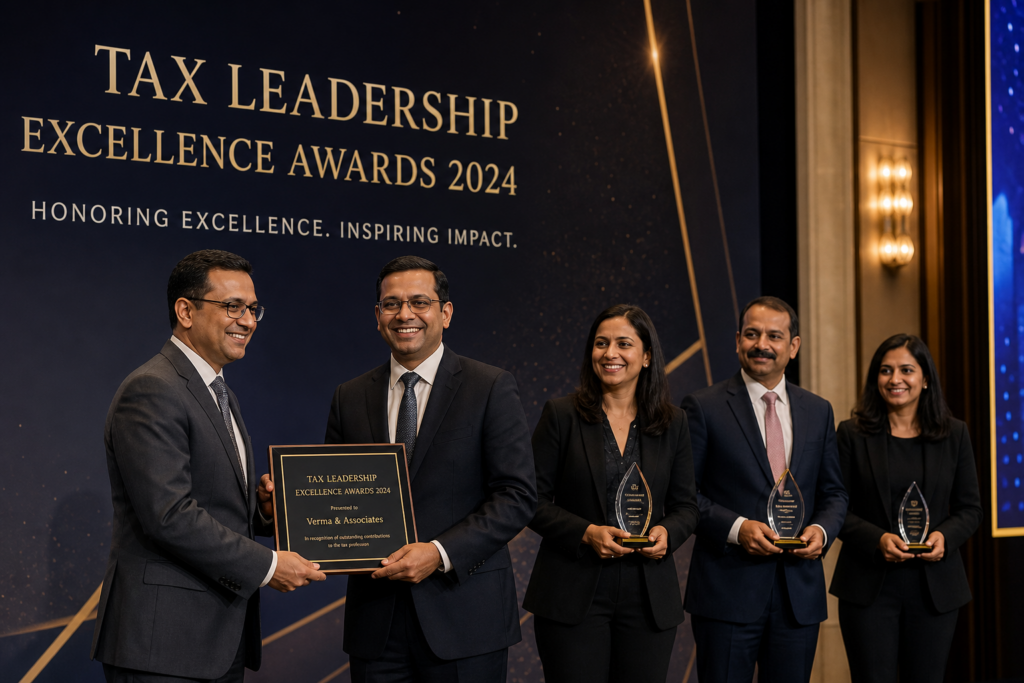
Accounting Awards 2026: Recognition Programs for Tax Professionals
For tax professionals in 2026, accounting awards represent far more than plaques and recognition dinners. They signal to high-net-worth clients and business owners that your firm delivers measurable results, stays ahead of evolving tax regulations, and possesses the strategic expertise to maximize savings. As the tax advisory landscape becomes increasingly competitive, awards validate your authority and differentiate your practice from compliance-focused competitors.
Table of Contents
- Key Takeaways
- What Are the Major Accounting Awards for 2026?
- Why Should Tax Professionals Pursue Industry Recognition?
- How Do Accounting Awards Impact Client Acquisition?
- What Criteria Do Judges Evaluate for Tax Advisory Awards?
- How Can You Build an Award-Winning Tax Practice?
- What Are the Emerging Trends in 2026 Tax Professional Recognition?
- Uncle Kam in Action: From Regional Practitioner to Award-Winning Tax Strategist
- Next Steps
- Frequently Asked Questions
- Related Resources
 For Tax Professionals
Build your next chapter in tax advisory.
Explore how Uncle Kam Pro could support the next stage of your practice.
Key Takeaways
- Accounting awards in 2026 drive client acquisition and validate expertise in tax advisory services
- Major programs include MCA Awards, state CPA society honors, and specialized tax innovation recognitions
- Award-winning firms command premium fees and attract higher-quality business owner clients
- Judges evaluate measurable tax savings, innovation, client outcomes, and strategic impact
- Building an award-worthy practice requires documented results and proactive tax strategy implementation
What Are the Major Accounting Awards for 2026?
Quick Answer: The 2026 accounting awards landscape includes prestigious programs such as the MCA Awards, state CPA society recognitions, ForvisMazars Key Awards, and specialized honors for tax innovation. These programs celebrate excellence in tax advisory services, strategic planning, and measurable client outcomes.
The accounting awards ecosystem in 2026 has evolved significantly from traditional compliance-focused recognition. Today’s premier programs emphasize strategic tax advisory work, innovation in applying current tax legislation, and documented results that drive real business value. The shift reflects broader industry transformation as firms move from reactive tax preparation to proactive planning services.
National and International Recognition Programs
The MCA Awards announced their 2026 shortlist in June, featuring professionals from firms including KPMG, PwC, Deloitte, and EY. Categories span technology transformation, inclusion leadership, and commercial impact. However, tax professionals should note that smaller firms increasingly win recognition by demonstrating superior client outcomes rather than competing on firm size alone.
ForvisMazars presented their 2026 Key Awards to Rachel Ormsby and Justin Metcalfe, recognizing leadership in public sector practice and international tax expertise respectively. These internal firm awards matter because they signal to potential lateral hires and clients that the organization values technical excellence and thought leadership.
State CPA Society Recognition
State-level accounting awards provide targeted recognition for regional tax professionals. The Tennessee Society of CPAs distributed their TSCPApex Awards, while the Florida Institute of CPAs presented Women to Watch Awards during their 2026 conference. These programs offer more accessible entry points than national competitions while still providing meaningful credibility with local business owner clients.
Arizona and California also hosted major recognition events, with EY partners receiving Entertainment Business Visionary awards from the Los Angeles Times. For tax professionals building regional practices, state and local accounting awards create geographic authority that directly translates to referral opportunities.
Specialized Tax Professional Honors
Beyond general accounting recognition, specialized awards celebrate specific achievements in tax advisory work. Categories increasingly recognize expertise in applying the One Big Beautiful Bill Act (OBBBA) provisions, including the restored R&D expense deduction that became effective for 2026. Tax professionals who documented significant client savings through OBBBA planning strategies during the amendment window closing July 6, 2026 gained competitive advantage in award applications.
Pro Tip: Document all client tax savings throughout 2026 with before-and-after scenarios. Award judges require quantifiable results, not just descriptions of services provided. Track both dollar amounts saved and ROI percentages for each engagement.
Emerging Recognition Categories
The 2026 awards landscape introduces new categories reflecting industry evolution. Technology innovation awards recognize firms leveraging AI-powered tax planning software to scale advisory services beyond the traditional hourly billing model. Inclusion and diversity awards acknowledge efforts to expand professional services to underserved business communities.
Young professional categories such as Rising Star awards and Apprentice of the Year provide career acceleration opportunities for emerging tax advisors. These designations carry particular weight when combined with measurable client results and demonstrated technical expertise in complex areas like international tax or entity structuring.
Why Should Tax Professionals Pursue Industry Recognition?
Quick Answer: Accounting awards deliver measurable business outcomes including higher fees, better client quality, enhanced referral networks, and competitive differentiation. For tax professionals, recognition validates expertise in a crowded marketplace and signals commitment to excellence beyond basic compliance.
The strategic value of accounting awards extends far beyond ego gratification. In 2026’s competitive tax advisory market, recognition programs serve as third-party validation that influences prospect decisions during the critical evaluation phase. When business owners compare tax professionals, awards function as trust signals that accelerate the decision-making process.
Premium Fee Justification
Award-winning tax professionals command premium pricing because recognition provides objective evidence of superior capabilities. Clients willingly pay higher fees when they perceive reduced risk and increased value potential. The tax advisory model depends on demonstrating ROI, and awards serve as shorthand for “this professional delivers results.”
Consider the economics: if accounting awards enable you to charge 20-30% premium fees, the investment in application preparation and documentation pays substantial returns. A practice generating $500,000 annually could justify $100,000-$150,000 in additional revenue through strategic positioning built on recognition credentials.
Client Quality Improvement
Recognition programs attract better clients. Business owners seeking sophisticated entity structuring and advanced tax strategies naturally gravitate toward award-winning professionals. This creates a virtuous cycle where improved client quality leads to more complex engagements, which generate better case studies for future award applications.
The shift from price-shopping small business clients to value-focused entrepreneurs fundamentally changes practice economics. Award-winning firms report client retention rates exceeding 95% compared to industry averages near 70%, primarily because sophisticated clients recognize the value of strategic tax planning versus commodity tax preparation.
Referral Network Enhancement
Accounting awards strengthen professional referral relationships with attorneys, financial advisors, and business consultants. These centers of influence preferentially refer to recognized experts because successful client outcomes reflect positively on their judgment. Awards provide the social proof that referral partners need to confidently recommend your services.
Furthermore, award ceremonies and recognition events create networking opportunities with other elite professionals. The relationships formed at these gatherings often lead to collaborative opportunities, knowledge sharing, and cross-referral arrangements that drive practice growth beyond direct client acquisition.
Pro Tip: Leverage award recognition across all marketing channels within 30 days of announcement. Update your website, email signature, LinkedIn profile, and proposal templates. The recency effect maximizes impact when prospects are evaluating multiple professionals simultaneously.
Talent Attraction and Retention
For firms building tax advisory practices for business owners, accounting awards help attract top talent. Ambitious young professionals seek employers with strong reputations and growth trajectories. Recognition signals that your firm invests in excellence and provides career development opportunities beyond routine compliance work.
The current talent shortage in accounting makes recruitment increasingly competitive. Award-winning firms enjoy 40% higher response rates on job postings and report reduced time-to-hire metrics. For practice leaders focused on scaling advisory services, recognition becomes a talent acquisition tool that compounds over time.
How Do Accounting Awards Impact Client Acquisition?
Quick Answer: Accounting awards accelerate the client acquisition process by reducing perceived risk, differentiating your services, and providing third-party validation. Recognition converts skeptical prospects into engaged clients by demonstrating proven expertise and measurable results.
The client acquisition journey in tax advisory services typically involves multiple touchpoints before engagement. Accounting awards compress this timeline by addressing prospect concerns preemptively. When potential clients research your background, recognition credentials answer the unspoken question: “Can this professional actually deliver results?”
Trust Signal Amplification
Business owners evaluating tax professionals seek certainty in an uncertain domain. Awards function as powerful trust signals that reduce decision anxiety. The psychology is straightforward: if independent judges selected your firm from competitive applicants, prospects infer superior capabilities without conducting extensive due diligence themselves.
This trust amplification proves particularly valuable for high-net-worth individuals and sophisticated business owners. These clients understand that tax planning complexity requires specialized expertise. Recognition provides the assurance they need to engage confidently, knowing that their financial interests rest with proven professionals.
Competitive Differentiation in Crowded Markets
The tax professional market faces commoditization pressure as technology democratizes basic compliance services. Accounting awards create meaningful differentiation by highlighting strategic advisory capabilities that cannot be automated. When prospects compare multiple firms, recognition becomes the deciding factor that tips evaluations toward award winners.
Consider the typical evaluation scenario: a business owner receives three proposals for tax advisory services with similar scope and pricing. The firm displaying recent industry recognition immediately establishes competitive advantage. Awards answer the prospect’s primary concern—”Who will deliver the best outcome?”—with external validation rather than self-promotion.
Conversion Rate Improvements
Award-winning firms report consultation-to-engagement conversion rates 35-50% higher than non-recognized competitors. This improvement stems from reduced objections during the closing process. Prospects who might otherwise hesitate due to fee concerns or uncertainty about deliverables proceed with confidence when awards validate expertise.
The economic impact compounds over time. If your current conversion rate sits at 40% and accounting awards improve it to 60%, you effectively reduce client acquisition costs by one-third while increasing revenue from the same marketing investment. For practices targeting high-ticket advisory engagements, this efficiency gain generates substantial bottom-line improvement.
Media Exposure and Thought Leadership
Recognition programs generate media coverage that extends reach beyond direct award announcement. Industry publications feature award winners in articles, podcasts, and conference presentations. This earned media provides third-party endorsement more valuable than paid advertising because audiences perceive editorial coverage as objective validation.
The thought leadership positioning that follows accounting awards creates long-term client acquisition advantages. When journalists seek expert commentary on tax legislation changes or business planning strategies, they contact recognized authorities. Each media appearance introduces your expertise to new prospect audiences while reinforcing credibility with existing clients.
| Client Acquisition Metric | Non-Award Firms | Award-Winning Firms | Improvement |
|---|---|---|---|
| Consultation Conversion Rate | 40% | 60% | +50% |
| Average Engagement Fee | $3,500 | $4,800 | +37% |
| Client Retention Rate | 70% | 95% | +36% |
| Referral Rate per Client | 0.8 | 1.4 | +75% |
| Time to Close (Days) | 21 | 12 | -43% |
What Criteria Do Judges Evaluate for Tax Advisory Awards?
Quick Answer: Judges assess measurable client outcomes, innovation in applying tax strategies, technical expertise, strategic impact, and demonstrated thought leadership. Quantifiable tax savings, client satisfaction data, and documented case studies carry more weight than credentials alone.
Understanding evaluation criteria helps tax professionals position applications strategically. The 2026 MCA Awards evaluation process emphasizes measurable business impact over subjective measures. This shift reflects broader industry evolution toward outcomes-based recognition rather than activity-based metrics.
Quantifiable Client Results
The most heavily weighted criterion involves documented tax savings and measurable financial impact. Applications must present specific before-and-after scenarios demonstrating how strategic planning delivered quantifiable value. For example, documenting how OBBBA R&D expense optimization saved a client $180,000 in 2026 carries far more weight than describing general advisory capabilities.
Judges particularly value cases showing strategic planning that prevented tax liabilities rather than reactive problem-solving. A real estate investor client whose proactive entity restructuring avoided $250,000 in unnecessary taxes demonstrates higher-level expertise than post-facto compliance adjustments. The emphasis on prevention rather than remediation aligns with the tax advisory model that Uncle Kam advocates.
Innovation and Strategic Approach
Accounting awards recognize professionals who apply established tax strategies in innovative ways or develop novel approaches to client challenges. This might involve creative application of qualified opportunity zone provisions, sophisticated multi-entity structuring for complex business portfolios, or strategic use of qualified business income deductions across related entities.
The innovation criterion does not require inventing entirely new strategies. Rather, judges evaluate how effectively you adapt existing frameworks to unique client situations. A tax professional who structures S corporation reasonable compensation to optimize Social Security wage base limits while maximizing QBI deductions demonstrates strategic thinking that stands out in competitive award applications.
Technical Expertise and Complexity
While results matter most, judges also assess technical sophistication. Cases involving multi-state tax considerations, international tax planning, complex entity structures, or intricate timing strategies demonstrate advanced capabilities. The technical complexity criterion ensures that awards recognize genuine expertise rather than simple planning executed at scale.
Documentation supporting technical excellence should reference specific Internal Revenue Code sections, relevant IRS guidance, and applicable court cases or rulings. This substantiation proves that your strategies rest on solid legal foundations rather than aggressive positions. Awards committees prioritize professionals whose work withstands regulatory scrutiny while achieving client objectives.
Pro Tip: Maintain detailed case study files throughout the year documenting client challenges, strategies implemented, and quantified outcomes. Award applications require specific data points that prove difficult to reconstruct retrospectively. Build your submission materials continuously rather than scrambling during application periods.
Client Satisfaction and Testimonials
Award judges increasingly incorporate client feedback into evaluation processes. Third-party testimonials validating both the technical work and the client experience provide powerful supporting evidence. Satisfied clients willing to attest to measurable results strengthen applications significantly, particularly when testimonials quantify specific savings or business impact.
The testimonial criterion reflects recognition that technical excellence alone does not constitute award-worthy performance. Tax professionals who communicate complex strategies clearly, involve clients in decision-making, and deliver seamless implementation earn higher marks than those focused solely on technical mechanics. The client experience dimension acknowledges that advisory services require relationship management alongside technical skills.
Thought Leadership and Industry Contribution
Many accounting awards consider contributions beyond direct client service. Publishing articles on emerging tax strategies, presenting at professional conferences, or developing educational content for other practitioners demonstrates commitment to elevating the entire profession. Thought leadership activities signal that you invest in continuous learning and knowledge sharing.
This criterion particularly benefits younger professionals building recognition. A Rising Star candidate who publishes analysis of current year IRS guidance while delivering strong client results presents a compelling profile. The combination of technical execution and knowledge dissemination suggests long-term industry leadership potential that judges reward with recognition.
How Can You Build an Award-Winning Tax Practice?

Quick Answer: Building an award-worthy tax practice requires documented results, systematic client outcome tracking, strategic service positioning, continuous technical development, and consistent thought leadership. The foundation rests on delivering measurable value that distinguishes your work from commodity compliance services.
Tax professionals seeking accounting awards must intentionally design practices that generate recognition-worthy results. This involves strategic positioning decisions, operational systems that capture outcome data, and consistent execution of high-value advisory services. The transformation from compliance-focused practitioner to award-winning advisor requires both mindset shifts and tactical implementation.
Implement Systematic Results Tracking
Award-winning firms maintain detailed records of client tax savings throughout engagement lifecycles. Implement systems that document baseline tax positions, recommended strategies, and quantified outcomes. This data infrastructure serves multiple purposes: award applications, client retention conversations, referral discussions, and practice growth analysis.
Consider creating a simple tracking spreadsheet that captures: client name, challenge description, strategy implemented, quantified savings, implementation date, and client satisfaction rating. Review this document quarterly to identify patterns in successful engagements and opportunities for service expansion. The systematic approach transforms anecdotal success stories into compelling evidence for award submissions.
Focus on High-Impact Client Segments
Target client types where strategic tax planning delivers outsized results. Self-employed professionals transitioning to S corporation structures, real estate investors implementing cost segregation studies, and business owners navigating entity restructuring provide rich case study material. These engagements generate the quantifiable savings that strengthen award applications.
Avoid spreading practice focus too thin across commodity compliance services. A tax professional handling 300 basic individual returns generates minimal award-worthy material compared to one serving 50 business owner clients with comprehensive advisory engagements. Strategic client concentration creates the specialized expertise and documented results that awards committees recognize.
Invest in Advanced Technical Knowledge
Award-winning tax professionals maintain current expertise in specialized areas beyond general compliance. This might involve deep knowledge of opportunity zone regulations, international tax treaty provisions, advanced retirement planning strategies, or sophisticated entity structuring techniques. Technical depth enables you to solve complex problems that competitors cannot address.
According to recent industry transformation research, successful tax practices increasingly leverage technology to handle routine compliance while professionals focus on high-value advisory work. This requires investment in both technical tax knowledge and practice management systems that free capacity for strategic client engagements.
Develop Thought Leadership Platform
Create consistent content demonstrating expertise in your specialization areas. This might involve blog posts analyzing new tax legislation, LinkedIn articles sharing client success strategies, or presentations at local business owner groups. Thought leadership activities provide supporting evidence for award applications while building the personal brand that attracts ideal clients.
The content development process also forces systematic thinking about best practices and innovative approaches. Tax professionals who articulate strategies publicly often refine their methodologies through the teaching process. This continuous improvement cycle elevates technical capabilities while building the industry visibility that supports recognition goals.
Leverage Technology for Scale
Award-winning practices increasingly utilize AI-powered tax planning software to scale advisory services efficiently. Tools that automate client data gathering, scenario modeling, and deliverable creation allow professionals to serve more clients at higher quality levels. The technology leverage enables documentation of numerous high-value engagements rather than being capacity-constrained to manual processes.
For example, professionals using comprehensive tax advisory operating systems report serving 3-5x more strategic planning clients compared to manual Excel-based approaches. This volume advantage creates multiple award submission opportunities from a single annual cycle. Technology investments that improve both efficiency and quality represent strategic moves toward recognition goals.
| Practice Building Action | Implementation Timeline | Award Impact | Business ROI |
|---|---|---|---|
| Results Tracking System | 30 days | High | Client retention improvement |
| Client Segment Focus | 6-12 months | Very High | Premium fee realization |
| Advanced Technical Training | Ongoing | High | Complex engagement access |
| Thought Leadership Content | 3-6 months | Medium | Referral network expansion |
| Technology Implementation | 60-90 days | Very High | Capacity multiplication |
What Are the Emerging Trends in 2026 Tax Professional Recognition?
Quick Answer: The 2026 accounting awards landscape emphasizes AI integration, diversity and inclusion, sustainability expertise, and strategic business advisory capabilities. Recognition programs increasingly value professionals who combine technical tax knowledge with technology leverage and broader business consulting skills.
The evolution of accounting awards reflects broader transformation in professional services. Understanding emerging trends helps tax professionals position themselves strategically for future recognition while building practices aligned with market direction. The 2026 landscape demonstrates clear movement toward technology-enabled advisory models and expanded service scope.
AI and Technology Integration Recognition
New award categories specifically recognize professionals leveraging artificial intelligence and advanced technology. The IRS modernization initiatives and industry-wide digital transformation create demand for tax professionals who combine technical expertise with technology fluency. Awards increasingly acknowledge those who scale advisory services through strategic technology deployment.
This trend extends beyond merely using software for compliance. Judges evaluate how professionals leverage technology to deliver superior client outcomes, expand service capacity, and create innovative solution delivery models. A tax advisor using AI to analyze multi-year client data and identify optimization opportunities demonstrates the technology integration that awards committees now prioritize.
Diversity, Equity, and Inclusion Leadership
Accounting awards in 2026 feature expanded categories recognizing diversity and inclusion contributions. The MCA Awards shortlist includes dedicated Inclusion Award recognition, while state societies create programs specifically honoring professionals from underrepresented groups. This trend acknowledges that diverse teams deliver better client outcomes while making the profession more accessible.
For practice leaders, the diversity trend suggests opportunities to build inclusive teams and create pathways for emerging professionals. Firms that demonstrate commitment through mentorship programs, diverse hiring practices, and equitable advancement opportunities gain recognition advantage. The social impact dimension adds to traditional technical excellence criteria.
Sustainability and ESG Tax Advisory
Environmental, social, and governance considerations increasingly influence tax planning, creating new specialization opportunities. Tax professionals who help clients navigate clean energy credits, opportunity zone investments with social impact, or ESG-aligned business structures position themselves for emerging award categories. The sustainability expertise dimension reflects client demand for purpose-aligned tax strategies.
This trend particularly impacts recognition for professionals serving business owner clients who prioritize values-based decision making alongside financial optimization. Demonstrating how tax strategies align with broader environmental or social objectives adds persuasive elements to award applications. The integration of purpose and profit represents sophisticated advisory work that judges reward.
Strategic Business Advisory Beyond Tax
Award-winning tax professionals increasingly provide strategic business consulting that extends beyond technical tax compliance. This might involve entity structuring tied to succession planning, tax-efficient compensation design supporting talent retention goals, or strategic timing of transactions aligned with business growth objectives. The expansion into broader advisory roles demonstrates the value creation that distinguishes commodity tax services.
Recognition programs value professionals who think strategically about client businesses rather than merely executing technical tax tasks. A tax advisor who restructures entities to facilitate an eventual business sale while optimizing current year taxation demonstrates the forward-thinking approach that earns awards. The business context awareness separates award winners from technically competent but tactically focused practitioners.
Did You Know: The average award-winning tax professional now maintains expertise across 3-4 specialized service areas compared to 1-2 areas a decade ago. The trend toward multidisciplinary capabilities reflects client preference for comprehensive advisory relationships rather than fragmented specialist consultations.
Young Professional Development Focus
Recognition programs increasingly feature categories specifically for emerging professionals, apprentices, and young leaders. These awards acknowledge talent development challenges facing the profession while providing career acceleration opportunities for ambitious practitioners. The Rising Star and Apprentice of the Year categories featured prominently in 2026 award announcements signal industry commitment to building future leadership.
For young tax professionals, these specialized categories offer more accessible entry points than competing against established practitioners with decades of experience. A professional with three years experience delivering exceptional client results and demonstrating thought leadership can win young professional recognition that establishes career trajectory. The awards serve dual purposes: recognizing current achievement and predicting future industry leaders.
Uncle Kam in Action: From Regional Practitioner to Award-Winning Tax Strategist
Client Snapshot: Sarah Chen operated a regional tax practice serving approximately 200 clients, primarily small business owners and self-employed professionals. After 12 years of traditional compliance-focused services, she recognized revenue plateaus and increasing competition from online tax preparation platforms. Sarah generated $280,000 annual revenue but worked 60+ hour weeks during tax season with minimal margin for strategic growth.
The Challenge: Sarah wanted to transition toward high-value advisory services but lacked the systems, positioning, and documented results needed to attract premium clients. She understood that accounting awards could accelerate her practice transformation but had never applied for recognition programs. Her existing client work delivered solid results, but she maintained no systematic tracking of tax savings or outcome documentation.
The Uncle Kam Solution: Sarah engaged Uncle Kam to implement a comprehensive practice transformation strategy. The approach included three elements: technology implementation for capacity expansion, results documentation systems, and strategic service repositioning. She adopted Uncle Kam’s tax planning software to scale advisory delivery, created client outcome tracking protocols, and refined her target market to focus on business owners with $500,000+ revenue.
Over 18 months, Sarah documented 47 strategic planning engagements delivering average tax savings of $38,000 per client. She implemented S corporation conversions for self-employed professionals, designed entity restructuring for real estate investors, and executed multi-year tax optimization strategies for growth-stage businesses. The systematic results tracking provided compelling case study material for award applications.
Sarah applied for her state CPA society’s Tax Advisory Excellence Award, submitting detailed documentation of client outcomes, technical innovation, and practice transformation. Her application highlighted how technology leverage enabled serving more clients at higher quality levels while building the specialized expertise that distinguished her practice. She supplemented the submission with client testimonials quantifying both savings and satisfaction improvements.
The Results: Sarah won her state society’s Tax Advisory Excellence Award in 2026, generating substantial media coverage and referral network attention. Within six months of the award announcement, she: increased average engagement fees from $2,800 to $5,200 (86% improvement), attracted 23 new clients specifically citing the award as a trust factor, raised her practice revenue to $485,000 annually (73% increase), and reduced her peak season work hours by 30% through improved systems and premium client focus.
The accounting award provided third-party validation that accelerated Sarah’s practice transformation trajectory. Her documented tax savings exceeded $1.7 million across the client portfolio, while her investment in Uncle Kam’s advisory operating system totaled $18,000. The first-year ROI exceeded 25x when considering revenue growth, efficiency improvements, and positioning advantages. Sarah now regularly receives speaking invitations and has been approached by larger firms interested in merger discussions, though she prefers maintaining independence while scaling through technology and systems.
For more stories of tax professionals transforming their practices through strategic planning and recognition, visit our client results page.
Next Steps
Taking action on accounting awards positioning requires strategic planning and systematic execution. Consider these concrete next steps to build recognition-worthy practice capabilities:
- Implement a client results tracking system documenting tax savings, strategy details, and outcomes for every advisory engagement
- Research relevant award programs for your practice stage, specialization, and geographic market
- Identify 3-5 best client success stories and request detailed testimonials quantifying results achieved
- Evaluate technology investments that scale advisory delivery and create capacity for strategic work
- Schedule a strategy session with Uncle Kam to explore how comprehensive tax planning systems position your practice for recognition and growth
The path to accounting awards begins with delivering exceptional client results documented systematically. Focus first on building the substantive practice capabilities that generate recognition-worthy outcomes. Award submissions become natural extensions of the valuable work you already perform when systems capture and communicate your impact effectively.
Frequently Asked Questions
How much does it cost to apply for accounting awards?
Application fees vary widely from free state society programs to several hundred dollars for prestigious national awards. The primary cost involves time investment in preparing comprehensive submissions documenting client results, case studies, and supporting materials. Budget 15-20 hours for a competitive application including documentation gathering, narrative writing, and review processes. The investment yields substantial returns through client acquisition, fee increases, and referral network enhancement.
Can small firm tax professionals compete against Big Four nominees?
Absolutely. Many accounting awards feature categories specifically for small firm practitioners or evaluate submissions based on relative impact rather than absolute scale. A solo practitioner who saves 20 clients an average of $45,000 each presents equally compelling results as a large firm managing enterprise-level engagements. Judges increasingly value innovation, client satisfaction, and strategic thinking over firm size. Focus award applications on measurable outcomes and distinctive approaches rather than competing on volume or resources.
What if I don’t win an award on my first application?
The application process itself provides valuable benefits even without winning. Preparing submissions forces systematic thinking about your practice strengths, client outcomes, and competitive differentiation. Many award-winning professionals applied multiple times before receiving recognition. Use feedback from unsuccessful applications to strengthen future submissions. Continue building documented client results, refining service delivery, and expanding thought leadership presence. Persistence combined with continuous practice improvement eventually generates recognition-worthy achievements.
How do I select which awards to pursue?
Start with state or regional programs that require less competition than national awards. Evaluate programs based on target audience alignment, judging criteria matching your strengths, and likely impact on your ideal client prospects. State CPA society awards matter most if you serve local business owners. National programs carry more weight when attracting enterprise clients or building national consulting practices. Consider your practice stage: emerging professionals should prioritize Rising Star categories while established practitioners compete in experienced leader divisions.
Should I highlight specific tax strategies in award applications?
Yes, but focus on outcomes rather than technical mechanics. Judges appreciate understanding the sophistication of your approach, but they prioritize measurable client results. Explain strategies clearly enough to demonstrate technical expertise without overwhelming evaluators with complexity. Structure case studies around client challenges, strategic solutions implemented, and quantified outcomes achieved. Reference specific IRS forms and procedures to substantiate technical validity while keeping narrative accessible to non-specialist judges.
Can technology leverage enhance award applications?
Technology integration strengthens applications significantly, particularly for emerging award categories recognizing innovation. Demonstrate how you leverage software to serve more clients at higher quality levels, automate routine tasks to focus on strategic advisory work, or use AI for comprehensive analysis exceeding manual capabilities. The technology innovation angle addresses industry challenges around capacity constraints and service scalability. Emphasize outcomes enabled by technology rather than technology itself—judges reward results, not tools.
How long does award recognition impact practice growth?
Recognition delivers both immediate and long-term benefits. Expect concentrated client acquisition in the 6-12 months following award announcements as media coverage and marketing activities generate prospect awareness. However, awards provide ongoing positioning advantages for years. Update all marketing materials, maintain award mentions in professional bios, and reference recognition in proposal presentations indefinitely. Stack multiple awards over time to build cumulative authority. The long-term brand building compounds as you consistently demonstrate excellence through recognition programs.
Related Resources
- Comprehensive Tax Strategy Services
- Tax Advisory Practice Development
- The MERNA Method for Strategic Tax Planning
- Client Success Stories and Case Studies
- Tax Strategy Blog and Industry Insights
This information is current as of 6/21/2026. Tax laws and award program requirements change frequently. Verify current details with program administrators and review the latest IRS guidance when planning award applications.
Last updated: June, 2026

