
Tax Preparation Services in New York City, New York
New York City CPA Services
Most NYC clients manage:
● High W-2 income + annual bonuses
● RSUs, ISOs, ESPPs & stock liquidation
● Multi-state W-2 filing (NY, NJ, CT, CA, TX)
● LLCs, S-Corps & multi-entity structures
● Rental portfolios across multiple boroughs
● K-1s, dividends & investment-heavy returns
● Crypto, capital gains & multi-year carryovers
● Complex financial statements & reconciliations

Why NYC Clients Choose Our CPAs
- Licensed CPAs & EAs with 40+ years combined experience
- Specialists in equity compensation + multi-state filings
- Rental property & depreciation optimization
- Multi-entity bookkeeping + year-end cleanup
- Founder income, distributions & owner payroll
- Crypto, investment & capital gains accuracy
- IRS notices, audits & historical corrections
- Flat-rate CPA services — no hourly billing
- Year-round support & transparent communication

CPA Services for Individuals in NYC
Individual CPA services include:
● Federal & NY state tax return preparation
● Multi-state remote-worker filings
● RSU, ISO, NSO & ESPP stock comp reporting
● AMT strategy & mitigation
● Rental property accounting + depreciation schedules
● Investment portfolio reconciliation (K-1s, gains, dividends)
● Crypto accounting & tax reporting
● IRS notices, audits & compliance corrections
● Quarterly estimated tax planning
CPA Services for NYC Business Owners
Business CPA services include:
● S-Corp, LLC, C-Corp & Partnership filings
● Full monthly bookkeeping + year-end cleanup
● Payroll setup, support & compliance
● Multi-entity planning (business + rentals + investments)
● Founder equity & stock-based compensation planning
● Depreciation, asset strategy & write-off optimization
● Quarterly forecasting & tax projections
● Cash-flow planning + long-term profit strategy
● Audit-ready financial statements


What Sets Our NYC CPAs Apart
● Complex RSU/ESPP vesting & sale timing
● Multi-state income and allocation rules
● High-income deduction limitations
● Rental portfolios across boroughs
● K-1 structures from investing & partnerships
● Multi-LLC consolidation & entity mapping
● Capital gains planning & harvesting
● Founder equity + compensation strategy
Areas We Serve Across New York City
Manhattan
Brooklyn
Queens
Bronx
Staten Island
Jersey City
Hoboken
Long Island (Nassau + Suffolk)
What NYC Clients Say About Our CPAs

Real Client Case Study — New York City, NY
Client: L. Howard — Executive + Multi-Entity Investor
Financial Mix: W-2 + RSUs + Partnership K-1s + 3 rentals + S-Corp income
Problem: Inaccurate stock basis, messy books, and inefficient entity setup
What We Did:
● Reconciled multi-entity bookkeeping
● Corrected RSU taxation & cost basis
● Rebuilt depreciation for all rentals
● Optimized S-Corp owner payroll
● Implemented quarterly CPA oversight
Result:
$32,900 in annual tax savings.
Saved $32,900 Through Multi-Entity Cleanup, Equity Correction & Strategic Restructuring
This is what an elite NYC CPA delivers.
Flat-Rate NYC CPA Pricing — Transparent & High-Value
● Predictable flat-rate fees
● No surprise invoices
● Clients consistently see ROI from optimized accounting and strategy
Your financial life deserves clarity and precision.
Model Your Taxes by State- Before You File

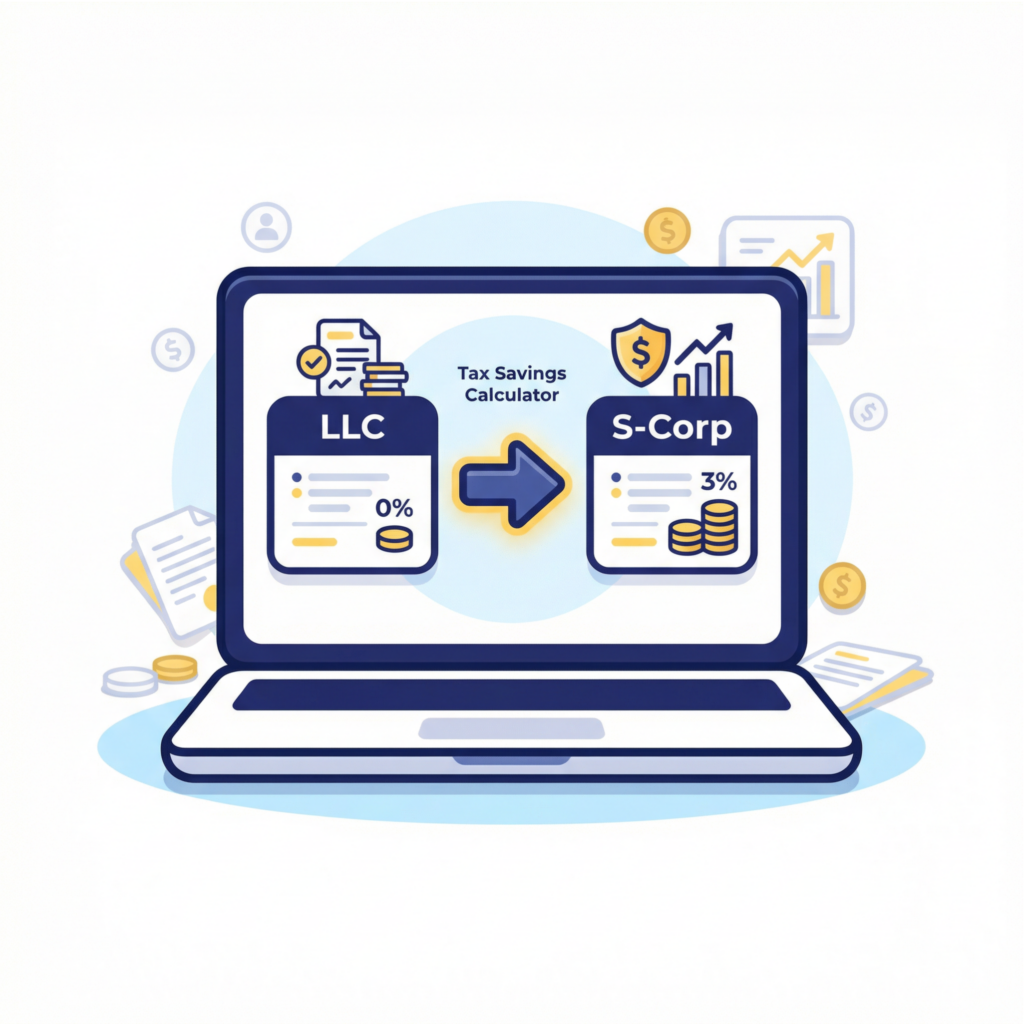
LLC vs S-Corp Tax Calculator
Self-Employment tax Calculator
Small Business Tax Calculator
Not TurboTax. Not H&R Block. A Real Strategy.
Software files your taxes. We engineer your tax strategy. There’s a difference — and it’s worth thousands.
We Find What They Miss
TurboTax asks questions. H&R Block fills out forms. Our MERNA™-certified strategists dig into your income, entity structure, and lifestyle to uncover deductions most CPAs overlook — legally saving clients $15K–$150K+ per year.
Strategy, Not Just Filing
Filing your return is the last step. We start months earlier — restructuring entities, layering write-offs, and building a tax plan that works year-round. By the time we file, you’ve already won.
A Real Strategist in Your Corner
No chatbots. No call centers. You get a dedicated, MERNA™-certified tax strategist who knows your situation, answers your questions, and fights for every dollar — every year.
Work With a New York City CPA Who Understands Your Entire Financial Picture
Book a Free Strategy Call and Meet Your Match.
Professional, Licensed, and Vetted MERNA™ Certified Tax Strategists Who Will Save You Money.
FAQ — TAX PREPARATION IN NEW YORK CITY CPA
As a freelancer or independent contractor operating out of a co-working space in Manhattan (e.g., WeWork in Midtown or a Regus in the Financial District), what specific NYC-centric deductions can I claim beyond federal home office deductions, and how does the Unincorporated Business Tax (UBT) factor in?
NYC freelancers can deduct a pro-rata share of their co-working space fees as a legitimate business expense. While federal home office rules are strict, the NYC Unincorporated Business Tax (UBT) applies to self-employed individuals and partnerships with gross income exceeding $95,000, levying a 4% tax on net earnings from self-employment attributed to NYC activities, allowing for additional local business deductions that might not strictly qualify for federal home office write-offs. We can help ensure you maximize these deductions and navigate the UBT filing requirements (Form NYC-202).
I own a small retail boutique in SoHo and am considering expanding to a second location in Brooklyn (e.g., Williamsburg). What are the key differences in local business tax obligations and potential incentives I should be aware of, especially concerning the NYC Commercial Rent Tax (CRT) and possible zone-specific deductions?
Expanding within NYC requires understanding the Commercial Rent Tax (CRT), which applies to tenants paying annual rents over $250,000 for premises south of 96th Street in Manhattan. While Williamsburg wouldn’t incur CRT, you might qualify for property tax abatements or business improvement district (BID) specific grants depending on the exact Brooklyn location. We’ll analyze your projected rents and location to optimize for CRT exemptions or credits and identify any applicable local economic development incentives.
My tech startup, based in Silicon Alley, just secured angel investment. What are the specific New York State and City tax implications for my investors regarding their capital gains, and are there any local incentive programs like the Empire State Development (ESD) programs that could offer tax credits?
New York State imposes a top capital gains tax rate of 8.82% and New York City adds a local income tax of up to 3.876% on top of federal rates for resident investors. However, your startup might qualify for programs like the Excelsior Jobs Program or the START-UP NY initiative, which offer significant tax credits and exemptions (including corporate franchise tax, sales tax, and property tax) to businesses meeting specific job creation and investment criteria, benefiting both the company and its investors. We can assess your eligibility for these valuable state and city incentives.
I'm a real estate investor with multiple rental properties in different NYC boroughs (e.g., a brownstone in Park Slope, a condo in Long Island City, and a multi-family in The Bronx). How does the NYC Property Tax system’s class structure (Class 1, 2, 3, 4) impact my tax liability and potential deductions, and what local deadlines are critical?
NYC’s property tax system is complex, with Class 1 (1-3 family homes) taxed differently from Class 2 (co-ops, condos, rental buildings) and Class 4 (commercial properties). Your properties will fall into different classes, affecting assessment methods and effective tax rates. Key deadlines include the Annual Notice of Property Value (NOPV) in January, giving you a limited window to challenge assessments, and the payment due dates typically in July and January. We specialize in navigating these intricacies to ensure accurate assessments and identify all eligible deductions, such as depreciation and mortgage interest.
My restaurant in the West Village frequently hosts events and has high employee turnover. What are the specific NYC payroll tax requirements, including the Metropolitan Commuter Transportation Mobility Tax (MCTMT), and are there any unique local credits for hiring or training I should be aware of?
As a NYC employer, you’re responsible for the Metropolitan Commuter Transportation Mobility Tax (MCTMT) if your payroll expense exceeds $312,500 in the MTA commuter district, currently at a rate of 0.34% of payroll. Beyond federal and state unemployment insurance, NYC also has specific wage and hour laws that can impact payroll. While direct NYC hiring credits are limited, certain state programs like the Empire State Apprenticeship Tax Credit or federal Work Opportunity Tax Credit (WOTC) can apply to your NYC-based hires, reducing your overall tax burden.
I'm a high-net-worth individual living in a luxury apartment in Tribeca and receive income from various sources, including stock options and partnership distributions. How do the NYC resident income tax rates (up to 3.876%) interact with the New York State income tax, and what specific strategies can I employ to minimize my overall tax liability, especially regarding pass-through entity tax (PTET) elections?
For NYC residents, your New York State income tax (up to 10.9%) and NYC resident income tax (up to 3.876%) are both levied on your taxable income, creating a combined state and local rate that can exceed 14%. To mitigate this, consider the New York State Pass-Through Entity Tax (PTET) election for eligible partnership distributions, which can provide a federal deduction for state and local taxes (SALT) that might otherwise be capped at $10,000 at the individual level. We can analyze your income streams to optimize PTET elections and explore other strategies like charitable giving or tax-efficient investment vehicles.
Tax Strategists Serving All of New York
Uncle Kam’s MERNA™-certified strategists serve cities across New York. Find your nearest location.
View all New York locations →