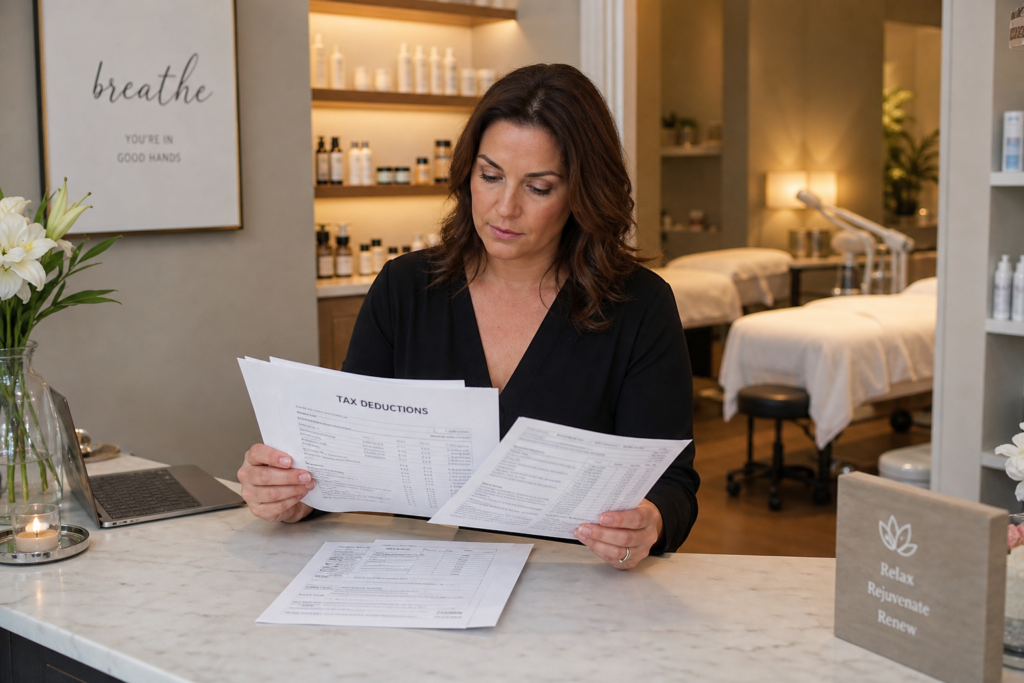
What Expenses Can a Spa Owner Deduct? 2026 Tax Deduction Guide for Day & Medical Spas
If you run a wellness business, understanding what expenses can a spa owner deduct is the fastest way to cut your 2026 tax bill. Spa owners face high equipment costs, thin margins, and constant product spending. Fortunately, the IRS lets you deduct most ordinary and necessary business costs. This guide breaks down every major deduction category for day spas, medical spas, and massage studios. As a result, you keep more of what you earn.
Table of Contents
- Key Takeaways
- What Everyday Operating Expenses Can a Spa Owner Deduct?
- How Do You Deduct Big-Ticket Spa Equipment?
- Are Skincare Products and Retail Inventory Deductible?
- What Staff and Contractor Costs Can a Spa Deduct?
- Can You Deduct Marketing, Memberships, and Gift Cards?
- Which Licenses, Training, and Professional Fees Are Deductible?
- Uncle Kam in Action
- Related Resources
- Next Steps
- Frequently Asked Questions
Key Takeaways
- Spa owners deduct ordinary, necessary costs like rent, products, and payroll.
- For 2026, Section 179 lets you expense up to $1.25 million in equipment.
- The OBBBA made 100% bonus depreciation permanent for qualifying assets.
- Most spa profits also qualify for the permanent 20% QBI deduction.
- Good records protect every deduction if the IRS reviews your return.
What Everyday Operating Expenses Can a Spa Owner Deduct?
Quick Answer: Spa owners can deduct rent, utilities, supplies, insurance, and software. These count as ordinary, necessary business costs under IRS rules.
Every spa runs on daily operating expenses. Therefore, these costs form the backbone of your deductions. The IRS defines a deductible business expense as one that is both ordinary and necessary. In other words, the cost must be common in the spa industry and helpful to your business. Most day-to-day spending easily clears this bar. You can review the official standard in IRS Publication 535 on business expenses.
Understanding what expenses a spa owner can deduct starts with your recurring bills. Rent for your treatment rooms is fully deductible. Likewise, utilities such as electricity, water, and heating count. Many owners also overlook software and payment processing fees. However, these add up quickly across a busy year. As a small business, your spa shares many deductions with other small business owners and entrepreneurs.
Common Recurring Deductions for Spas
Below are the most common operating costs spa owners write off each year. Furthermore, these apply whether you run a day spa or a medical spa.
- Rent or lease payments for your commercial space
- Utilities, including water, power, and internet service
- Booking, CRM, and membership management software
- Business insurance and professional liability coverage
- Laundry, linens, robes, and towel cleaning services
- Credit card and payment processing fees
Home-Based and Solo Practitioner Deductions
Do you run a solo massage or facial studio from home? If so, you may claim the home office deduction. However, the space must be used regularly and exclusively for business. The IRS explains the rules in its home office deduction guidance. As a result, solo therapists often save hundreds each year. Many solo owners also count as self-employed independent professionals for tax purposes.
Pro Tip: Track every operating cost monthly. Consistent records make tax season faster and audit-proof your deductions.
How Do You Deduct Big-Ticket Spa Equipment?
Quick Answer: For 2026, Section 179 lets spas expense up to $1.25 million in equipment. Bonus depreciation also allows a full 100% write-off.
Spa equipment is expensive, and that is where big savings hide. Massage tables, saunas, and laser machines cost thousands each. Fortunately, the tax code offers two powerful tools. First, Section 179 lets you expense qualifying equipment immediately. For 2026, the Section 179 limit is $1.25 million under the One Big Beautiful Bill Act. Learn the mechanics in the IRS Publication 946 depreciation guide.
Second, the OBBBA made 100% bonus depreciation permanent in 2026. Therefore, you can deduct the full cost of many short-lived assets right away. This matters most for medical spas buying lasers or body-contouring devices. Choosing the right method requires careful proactive tax strategy and planning. Consequently, timing your purchases can dramatically lower your bill.
Which Spa Equipment Qualifies?
Most durable treatment equipment qualifies for accelerated write-offs. For example, consider these common purchases:
- Massage tables, facial beds, and treatment chairs
- Saunas, steam rooms, and hydrotherapy tubs
- Laser, microdermabrasion, and body-contouring machines
- Sterilizers, hot towel cabinets, and steamers
- Front desk computers, tablets, and point-of-sale hardware
A Simple Equipment Deduction Example
Imagine a medical spa buys a $90,000 laser system in 2026. Using Section 179, the owner expenses the full $90,000 that year. If the spa sits in the 24% federal bracket, that deduction saves roughly $21,600. Therefore, smart timing turns a large purchase into immediate savings. St. Petersburg spa owners can estimate their savings using our Small Business Tax Calculator for St. Petersburg for 2026.
| Deduction Method | 2026 Limit or Rule | Best For |
|---|---|---|
| Section 179 | Up to $1.25 million | Controlled, targeted expensing |
| Bonus Depreciation | 100% permanent | Large asset purchases |
| Standard Depreciation | Spread over asset life | Smoothing income over years |
Did You Know? Leased equipment can also be deductible. Lease payments often qualify as ordinary business expenses.
Are Skincare Products and Retail Inventory Deductible?
Quick Answer: Yes. Back-bar products used in treatments are deductible supplies. Retail inventory is deducted as cost of goods sold when sold.
Products drive a large share of spa spending. Consequently, they represent major deductions when tracked well. However, the treatment differs between back-bar and retail items. Back-bar products are consumed during services. Therefore, you deduct them as supplies in the year used. Retail products for resale follow inventory rules instead.
Retail inventory is deducted through cost of goods sold. In short, you deduct the product cost when you sell it. The IRS explains this in its Tax Guide for Small Business, Publication 334. As a result, accurate inventory counts matter at year-end. Working with a trusted tax preparation team in Delaware can keep these numbers clean.
Deductible Product and Supply Categories
- Back-bar skincare used during facials and treatments
- Massage oils, lotions, waxes, and masks
- Disposable items like gloves, sheets, and applicators
- Sample and tester products for clients
- Retail skincare inventory held for resale
Tracking Inventory the Right Way
Good inventory tracking protects your deductions. Moreover, it prevents overstating or understating profit. Use software to record purchases and sales in real time. Streamlined bookkeeping and expense tracking systems make this simple. Consequently, you enter tax season with clean, defensible numbers.
Pro Tip: Separate back-bar and retail purchases at checkout. This split simplifies your year-end deduction math.
What Staff and Contractor Costs Can a Spa Deduct?
Quick Answer: Spas deduct wages, payroll taxes, benefits, and contractor payments. You must classify workers correctly to protect these deductions.
Labor is often a spa’s largest cost. Fortunately, most staff spending is deductible. Wages, salaries, and bonuses reduce your taxable income. In addition, your share of payroll taxes counts as a deduction. However, worker classification matters greatly. Misclassifying employees as contractors can trigger penalties.
The IRS provides clear rules on this topic. Review its worker classification guidance before hiring. Employees receive a W-2, while contractors receive a 1099-NEC. Therefore, choosing correctly protects both your deductions and your compliance. Proper structure often pairs with sound business entity structuring choices.
Deductible Payroll and Labor Costs
- Wages and salaries for estheticians and therapists
- Employer payroll taxes and unemployment insurance
- Commissions and performance bonuses
- Health benefits and retirement plan contributions
- Payments to independent contractor therapists
Employee vs. Contractor: Why It Matters
Many spas use booth-renting or contract therapists. However, the label alone does not decide classification. The IRS looks at control, financial arrangement, and relationship. As a result, you must document each working relationship. Owners who employ staff often qualify as busy entrepreneurs and company founders managing complex payroll.
Did You Know? Employee uniforms and required work attire are deductible. Keep receipts and a clear business purpose.
Can You Deduct Marketing, Memberships, and Gift Cards?
 Free Tax Write-Off Finder
Quick Answer: Yes. Advertising, social media, and website costs are fully deductible. Gift card and membership rules follow specific income timing.
Marketing keeps your treatment rooms full. Therefore, most promotion costs are deductible. Advertising, social media ads, and website fees all qualify. In addition, photography and branding expenses count. These costs help you attract and retain clients.
Gift cards and memberships create timing questions. Generally, you report gift card income when redeemed, not when sold. Membership fees follow similar income recognition rules. Consequently, tracking redemptions carefully matters. The IRS covers advertising deductions in Publication 535. Ongoing personalized tax advisory support helps you handle these nuances.
Deductible Marketing Expenses
- Social media and search engine advertising
- Website design, hosting, and maintenance
- Printed flyers, signage, and business cards
- Email marketing and loyalty program software
- Photography and professional branding services
What About Complimentary Services?
Free services to influencers can raise questions. You cannot deduct the value of your own time. However, the products used during that service are deductible supplies. Therefore, track the product cost, not the retail service price. This distinction keeps your deductions accurate and defensible.
Pro Tip: Log every promotional service with a note. Record the products used and the marketing purpose.
Which Licenses, Training, and Professional Fees Are Deductible?
Quick Answer: Spa owners deduct licenses, continuing education, and professional fees. These costs keep your business compliant and current.
The spa industry runs on licenses and training. Fortunately, most of these costs are deductible. State licensing fees for the business qualify. In addition, continuing education for you and your staff counts. These courses maintain skills and meet legal requirements.
Professional fees also reduce your taxable income. Accounting, legal, and consulting costs all qualify. Moreover, industry association dues are deductible. The SBA business tax guidance reinforces these rules. Many spa owners also benefit from a proven MERNA tax planning method.
Deductible Licensing and Education Costs
- State and local business license fees
- Esthetician and massage therapy license renewals
- Continuing education courses and certifications
- Industry conference registration and travel
- Professional association memberships and dues
Professional Service Fees and QBI
Fees paid to accountants and attorneys are deductible. Furthermore, most spa profits qualify for the 20% QBI deduction. The OBBBA made this Section 199A deduction permanent for 2026. Therefore, eligible owners deduct one-fifth of qualified business income. Clean filing supported by accurate tax prep and filing keeps you compliant. As a result, you capture every dollar of deduction available.
Did You Know? For 2026, the standard deduction is $32,200 for joint filers. That is up from $31,500 in 2025.

Uncle Kam in Action: How a Day Spa Owner Saved $38,000
Client Snapshot: Maria owns a growing five-room day spa. She employs eight therapists and estheticians. Her spa offers facials, massage, and retail skincare.
Financial Profile: Maria’s spa generated $620,000 in 2026 revenue. However, her margins felt tight after payroll and product costs. She worried about a large tax bill.
The Challenge: Maria had been guessing at her deductions. She missed equipment write-offs and mixed personal and business spending. In addition, she never claimed the QBI deduction. As a result, she overpaid for two straight years.
The Uncle Kam Solution: Our team rebuilt her records first. Next, we applied Section 179 to a new $70,000 equipment purchase. We separated back-bar and retail inventory correctly. Furthermore, we confirmed her eligibility for the permanent 20% QBI deduction. Finally, we implemented monthly bookkeeping to track every expense.
The Results: Maria captured deductions she had missed for years. The equipment expensing, inventory fix, and QBI deduction combined for major savings. Consequently, her 2026 tax bill dropped sharply.
- Tax Savings: $38,000 in the first year
- Investment: $6,500 in Uncle Kam fees
- Return on Investment: Roughly 5.8x in year one
Maria now enters tax season with confidence. She keeps clean records and plans purchases strategically. See more outcomes on our client results and case studies page. Therefore, her story shows how proactive planning pays off.
Related Resources
- Uncle Kam Tax Strategy Blog
- Free Tax Calculators for Business Owners
- In-Depth Tax Guides Library
- About the Uncle Kam Team
Next Steps
Ready to lower your 2026 spa tax bill? Understanding your salon and spa tax write-offs is the first step. Then take these concrete actions to protect every deduction.
- Separate personal and business bank accounts immediately.
- Track back-bar and retail inventory in dedicated software.
- Time equipment purchases to maximize 2026 Section 179 savings.
- Book a review with our expert tax strategy team today.
Frequently Asked Questions
Can I deduct robes, linens, and laundry for my spa?
Yes. Robes, linens, and towels are deductible business supplies. In addition, laundry and cleaning services qualify as ordinary expenses. Keep receipts and note the business use for each purchase.
How do I deduct leased laser or facial equipment?
Lease payments generally count as ordinary business expenses. Therefore, you deduct them in the year you pay. However, some leases act like purchases for tax purposes. As a result, confirm the lease type with your advisor.
Can I deduct my own spa treatments as a business expense?
Usually not. Personal treatments are personal expenses, not business costs. However, products used to test new services may qualify. Consequently, document any legitimate business testing purpose.
Do spa owners qualify for the 20% QBI deduction in 2026?
Most non-medical spa owners qualify for the QBI deduction. The OBBBA made this 20% deduction permanent for 2026. However, income limits and business type can affect eligibility. Therefore, review your situation with a tax professional.
What records do I need to protect my spa deductions?
Keep receipts, invoices, and bank statements for every expense. In addition, note the business purpose for each cost. The IRS may review deductions, so contemporaneous records matter. As a result, monthly bookkeeping is your strongest defense.
How are gift cards and membership discounts treated?
You generally report gift card income when a client redeems it. Membership fees follow similar income timing rules. Discounts simply reduce revenue rather than create a deduction. Therefore, track redemptions carefully in your software.
This information is current as of 7/9/2026. Tax laws change frequently. Verify updates with the IRS if reading this later. This article is informational only and not individualized tax advice.
Last updated: July, 2026

