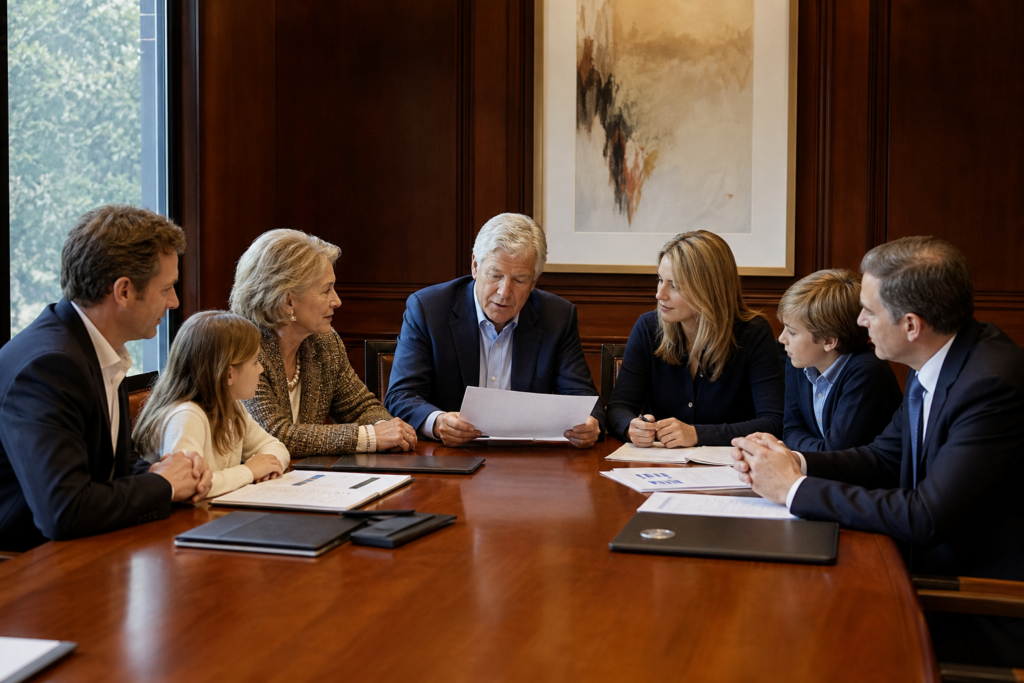
Wealthy Individual Family Councils: A 2026 Tax and Governance Blueprint
Wealthy individual family councils give high-net-worth families a clear way to govern shared assets and plan taxes together. For the 2026 tax year, these councils matter more than ever. The One Big Beautiful Bill Act made the $15 million estate tax exemption permanent. As a result, smart families now build formal governance around their advanced wealth strategies. This guide shows how family councils protect legacy wealth and cut taxes.
Table of Contents
- Key Takeaways
- What Are Wealthy Individual Family Councils?
- How Do Family Councils Support Entity and Tax Planning?
- What Are the 2026 Estate and Gift Tax Rules?
- How Do You Build a Family Council Step by Step?
- What Tax Strategies Should Family Councils Review?
- Uncle Kam in Action
- Next Steps
- Related Resources
- Frequently Asked Questions
Key Takeaways
- Family councils give wealthy families a shared voice on money and legacy decisions.
- The 2026 estate and gift tax exemption is $15 million per person.
- The 2026 annual gift exclusion is $19,000 per recipient, or $38,000 per couple.
- Good governance pairs with trusts, entities, and yearly gifting to cut taxes.
- Written charters help families avoid conflict during major liquidity events.
What Are Wealthy Individual Family Councils?
Quick Answer: Wealthy individual family councils are formal groups where family members meet to guide shared wealth, values, and long-term planning decisions together.
A family council is a governing body for a wealthy family. It sets rules for how the family handles money, businesses, and legacy assets. Moreover, it creates a clear space for honest talks about the future. These councils often support a broader proactive tax strategy that spans many years. In short, they turn scattered decisions into one shared plan.
Wealthy individual family councils differ from a family office. A family office handles daily operations, like accounting and investments. A council, however, focuses on people, values, and direction. Therefore, the two work best side by side. Together, they keep the family aligned across generations.
Why Do High-Net-Worth Families Need Them?
Wealth without structure often fades fast. In fact, many fortunes disappear by the third generation. A council slows that decline. It gives each member a voice and a role. As a result, trust grows and conflict shrinks.
Consider a family with $40 million in assets. They own a business, real estate, and a stock portfolio. Without a council, heirs may clash over control. With one, they follow agreed rules instead.
What Roles Does a Council Fill?
A council handles several key jobs for the family. For example, it may set gifting policy or approve big investments. In addition, it educates younger members about money. The IRS gift tax guidance often shapes those gifting rules directly.
- Set the family mission and shared values.
- Approve major spending and charitable gifts.
- Guide succession and leadership choices.
- Coordinate tax and estate planning yearly.
How Do Family Councils Support Entity and Tax Planning?
Quick Answer: Family councils align entity choices, trusts, and gifting into one plan, which lowers taxes and keeps assets in the family.
Wealthy families often own many entities. They may hold LLCs, S corps, and holding companies. A council reviews these structures each year. Furthermore, it checks that each entity still fits the plan. Good entity structuring for families can save large sums over time.
For business owners, entity choice drives tax outcomes. An S corp, for instance, can lower self-employment tax. Many families also run operating businesses through these structures. As a result, the council must understand each option clearly. The SBA business structure guide offers a helpful overview.
Orlando business owners weighing S corp election can use our LLC vs S-Corp Tax Calculator for Orlando to estimate 2026 tax savings.
How Do Councils Coordinate Trusts?
Trusts move wealth while cutting taxes. A council sets clear goals for each trust. It also names who benefits and when. Consequently, heirs know the rules well in advance. This clarity reduces fights later.
Families should note recent 2026 rule changes too. The IRS and Treasury now label certain Charitable Remainder Annuity Trusts as “listed transactions.” Therefore, families must disclose those deals or face penalties. A council helps track these shifting compliance duties.
Pro Tip: Review every trust each year with your council and advisor. Rules change often, and 2026 brought several updates.
Who Should Sit on the Council?
A strong council mixes family and outside voices. Family members bring values and history. Advisors bring tax and legal skill. Together, they make balanced choices. This blend mirrors best practices for successful business owners everywhere.
What Are the 2026 Estate and Gift Tax Rules?
Quick Answer: For 2026, each person can shield $15 million from estate and gift tax. The annual gift exclusion is $19,000 per recipient.
The 2026 rules favor wealthy families greatly. The One Big Beautiful Bill Act set the lifetime exemption at $15 million per person. Married couples can shield up to $30 million combined. Moreover, this exemption is now permanent, not set to expire. That change removes years of planning uncertainty.
The annual gift exclusion also helps families move wealth. For 2026, you can give $19,000 per person tax-free. A married couple can give $38,000 per recipient. In addition, these gifts do not touch the lifetime exemption. You can review current details on the IRS gift tax FAQ page.
2026 Estate and Gift Tax Snapshot
| Item | 2025 (Prior Year) | 2026 (Current) |
|---|---|---|
| Lifetime exemption (per person) | ~$13.99 million | $15 million |
| Married couple exemption | ~$27.98 million | $30 million |
| Annual gift exclusion | $19,000 | $19,000 |
| Gift tax form | Form 709 | Form 709 |
Did You Know? Estate and gift returns (Forms 706 and 709) are not eligible for the new 2026 Automatic Exemption from Penalty program.
How Can Councils Use These Limits?
A council can set a yearly gifting policy. For example, it may fund gifts to each child and grandchild. Over time, these small gifts shift large sums. Consequently, the taxable estate shrinks each year. This steady approach beats a rushed transfer.
How Do You Build a Family Council Step by Step?
 Free Tax Write-Off Finder
Quick Answer: Start with a shared mission, write a charter, set meeting rules, and add trusted advisors. Then review the plan each year.
Building a council takes clear, careful steps. First, the family agrees on why it exists. Next, it writes down rules and roles. Finally, it meets on a set schedule. This structure keeps everyone accountable. It also mirrors advice on strong ongoing advisory relationships.
Step 1: Define Your Mission
Start with a simple mission statement. Ask what the family wants to protect. Then ask what it hopes to build. This mission guides every later choice. Without it, the council drifts.
Step 2: Write a Charter
A charter is the council’s rulebook. It names members, terms, and voting rules. It also sets how the group solves disputes. As a result, decisions feel fair and clear. A good charter prevents most family conflict.
- List who serves and for how long.
- Explain how the group makes decisions.
- Set a meeting schedule and agenda rules.
- Describe how to handle disagreements.
Step 3: Add Advisors and Review Yearly
Bring in tax and legal experts early. They spot risks the family may miss. Furthermore, they keep the plan current with new law. In 2026, for example, permanent estate rules changed many strategies. A yearly review keeps the council sharp. You can compare planning ideas on the CFPB consumer tools hub as well.
Pro Tip: Rotate meeting leadership among family members. This builds skills and shared ownership across generations.
What Tax Strategies Should Family Councils Review?
Quick Answer: Councils should review gifting, trusts, entity choices, Opportunity Zones, and new 2026 savings tools like Trump Accounts.
Wealthy individual family councils should review many tax tools each year. Some tools shift income to younger family members. Others defer gains or grow money tax-free. Together, they lower the family’s total tax bill. A skilled advisor ties these tools into one plan.
Yearly Gifting and Trusts
Yearly gifting stays the simplest strategy. Each parent gives $19,000 per child in 2026. A married couple gives $38,000 per child. Over ten years, that moves hundreds of thousands tax-free. Trusts then hold and protect those gifts.
Opportunity Zones and Trump Accounts
In 2026, Opportunity Zones became a permanent regime. Families with capital gains can defer and reduce taxes. Held long enough, gains may face no federal income tax. Councils should study these zones with care. The IRS Notice 2026-40 guides the transition.
Trump Accounts also offer a new gifting lever. Each child born from 2025 to 2028 gets $1,000 in seed funding. Families and friends can add up to $5,000 yearly. Moreover, employers can contribute up to $2,500. These accounts shift income to the next generation cleanly.
Strategy Comparison Table
| Strategy | Main 2026 Benefit | Best For |
|---|---|---|
| Annual gifting | $19,000 tax-free per recipient | Steady wealth transfer |
| Dynasty trust | Long-term estate tax shield | Multi-generation legacy |
| Opportunity Zone fund | Capital gains deferral | Investors with large gains |
| Trump Account | Tax-deferred growth for kids | Young families |
Families who own rental or investment property should also review depreciation and 1031 exchanges. Our team helps real estate investors fit those tools into a council plan. Before your next meeting, gather all entity and trust documents together for review.

Uncle Kam in Action: A Multi-Generation Family Preserves $40M
Client Snapshot: The Reyes family owned a Florida real estate portfolio and a manufacturing business. Three generations shared the assets, yet no formal governance existed. Tension grew as the founders aged.
Financial Profile: The family held about $40 million in combined assets. This included $18 million in real estate and a $12 million operating business. The rest sat in stocks and cash.
The Challenge: The founders worried about estate taxes and family conflict. They had no gifting plan and no clear succession path. Heirs disagreed on who would lead the business. As a result, decisions stalled for months.
The Uncle Kam Solution: Our team helped the Reyes family form a formal council. First, we wrote a charter with clear voting rules. Next, we built a yearly gifting plan using the 2026 exclusion. Each parent gave $19,000 per child and grandchild. We also created a dynasty trust to hold the business shares. Furthermore, we reviewed the family’s entities to cut ongoing taxes.
The Results: The council reduced the projected estate tax bill sharply. Yearly gifting alone moved over $300,000 tax-free in the first year. The dynasty trust locked in the permanent $15 million exemption for the founders. Estimated first-year tax savings reached $210,000. The Reyes family paid Uncle Kam $45,000 for the full plan. That produced a first-year return of nearly 4.7x on the fee. More importantly, the family gained a clear, shared path forward. See more outcomes on our client results page.
Next Steps
Ready to build or improve your family council? Take these clear steps this quarter to protect your legacy.
- Draft a one-page family mission statement together.
- List all entities, trusts, and major assets.
- Set a 2026 gifting plan using the $19,000 exclusion.
- Book a review with our tax strategy team.
Related Resources
- Wealth Strategies for High-Net-Worth Families
- The MERNA Method Explained
- In-Depth Tax Planning Guides
- Latest Tax Strategy Blog Posts
Frequently Asked Questions
Are wealthy individual family councils only for billionaires?
No, they help many families with shared wealth. Families with several million dollars often benefit greatly. A council brings order and clear rules. As a result, even smaller fortunes stay protected across generations.
How much can I gift tax-free in 2026?
In 2026, you can give $19,000 per recipient tax-free. A married couple can give $38,000 per person. These gifts do not use your lifetime exemption. Verify current limits at IRS.gov before you plan.
What is the 2026 estate tax exemption?
The 2026 exemption is $15 million per person. Married couples can shield up to $30 million. The One Big Beautiful Bill Act made this permanent. Therefore, families gain long-term planning certainty.
How long does it take to set up a family council?
Most families need three to six months. First, they agree on a mission and charter. Then they add advisors and set meetings. A skilled team speeds this process greatly.
Do family councils replace a family office?
No, the two serve different roles. A family office runs daily operations and investments. A council guides values and big decisions. In fact, they work best together as partners.
This information is current as of 7/12/2026. Tax laws change frequently. Verify updates with the IRS or your advisor if reading this later.
Last updated: July, 2026

