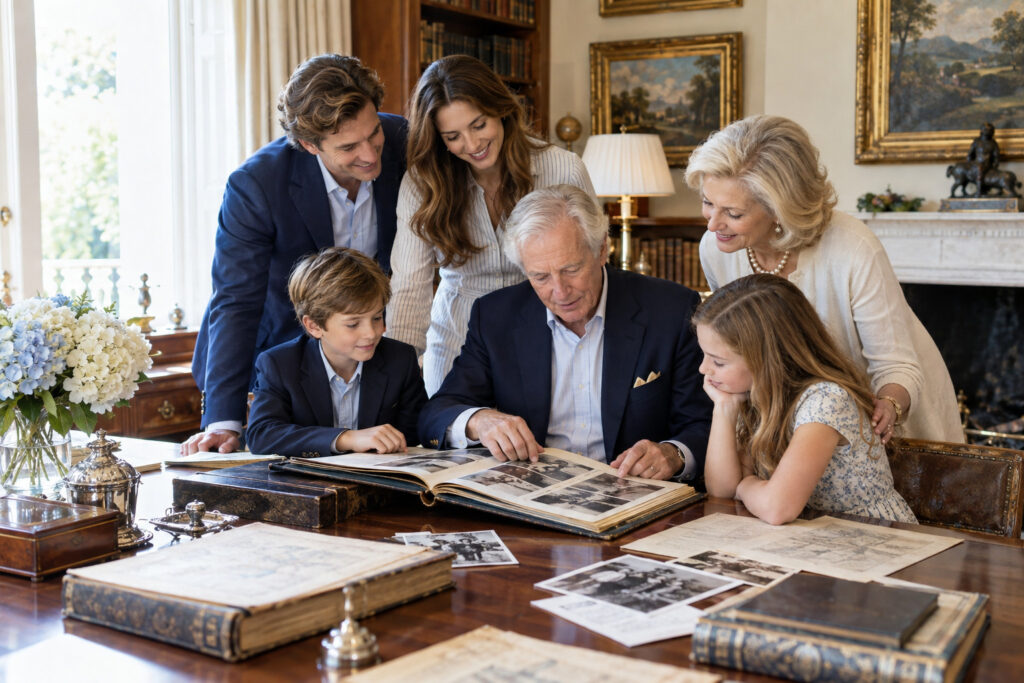
Ultra Wealthy Family History Preservation: 2026 Guide
Ultra wealthy family history preservation blends storytelling with serious planning. For the 2026 tax year, wealthy families protect more than money. They protect values, records, and legacy. In fact, strong families pair memory with smart structure. As a result, their story survives for generations. This guide shows how to combine history, trusts, and tax strategy. Moreover, it explains the 2026 rules that make this work. Learn more about our advanced strategies for wealthy individuals today.
Quick Answer: Ultra wealthy family history preservation protects both family stories and assets. In 2026, families use trusts, archives, and the $15 million estate tax exemption together.
Table of Contents
- Key Takeaways
- What Is Ultra Wealthy Family History Preservation?
- Why Does Family History Preservation Matter in 2026?
- How Do Entity Structures Support Family Legacy Preservation?
- What 2026 Tax Rules Affect Family Wealth Transfer?
- How Do Families Record and Protect Their History?
- Uncle Kam in Action
- Next Steps
- Related Resources
- Frequently Asked Questions
Key Takeaways
- Family history preservation protects both stories and assets together.
- The 2026 estate tax exemption rose to $15 million per person.
- Trusts and family entities hold both wealth and legacy records.
- Annual gifting helps families transfer wealth tax-free each year.
- A written family mission guides every planning choice.
What Is Ultra Wealthy Family History Preservation?
Quick Answer: It is the practice of saving family stories, records, and values alongside wealth. In 2026, families combine archives with trusts and tax planning.
Ultra wealthy family history preservation means more than saving old photos. Instead, it ties your family story to your long-term wealth plan. Wealthy families know that money alone rarely survives three generations. Therefore, they capture values, lessons, and milestones. Then they link those stories to legal and tax structures. As a result, the next generation inherits both meaning and money.
This idea grew popular as family offices expanded in 2026. Many banks and advisory firms added family legacy services. For example, these teams now help with succession, archives, and tax planning. Our team helps clients with proactive tax strategy planning that protects legacy goals.
Key Terms Defined
- UHNW: Ultra-high-net-worth means assets above $30 million.
- Family office: A private team that manages a family’s wealth and affairs.
- Succession planning: The plan for passing wealth and leadership to heirs.
- Fiduciary services: Trusted management of assets for another’s benefit.
Why Families Treat History as an Asset
History shapes how heirs view money. Moreover, it teaches them why the family built its wealth. Families with a clear story stay united longer. Consequently, they avoid many common inheritance disputes. The Federal Reserve Survey of Consumer Finances shows wealth often concentrates among a few households. Preserving that wealth requires both structure and shared purpose.
Pro Tip: Start a family archive early. Record stories while elders can still share them.
Why Does Family History Preservation Matter in 2026?
Quick Answer: A large wealth transfer is underway in 2026. Families preserve history now to guide heirs and reduce future conflict.
The 2026 wealth landscape makes preservation urgent. Trillions of dollars are moving between generations. Furthermore, many firms expanded family office services this year. These moves signal rising demand from wealthy families. As a result, legacy planning has become a mainstream priority.
Industry data supports this trend. For example, a 2026 UBS report found that 61% of surveyed Latin American family offices planned strategic allocation changes. Likewise, RBC Wealth Management noted renewed confidence tied to easing wealth-transfer pressure. These shifts show families acting with purpose. Our high-net-worth tax planning services help families act with the same discipline.
The Three-Generation Problem
Many families lose their wealth by the third generation. Often, heirs do not share the founder’s values. Therefore, they spend without a plan. Preserving history fixes this gap. It passes down lessons, not just assets. Consequently, heirs understand their duty to protect the legacy.
Firms Investing in Family Legacy Services
Several firms expanded UHNW services in 2026. The table below shows this broad industry shift. Notably, these moves all point to the same goal.
| Firm | 2026 Move | Strategic Focus |
|---|---|---|
| F.N.B. Corporation | Expanded Private Family Wealth unit | Succession and wealth preservation |
| Wealth Enhancement | Launched Reserve brand, RWA partnership | Family office capabilities |
| UBS | Published family office survey | Global diversification |
| RBC Wealth Management | Reported confidence trends | Wealth-transfer planning |
Did You Know? Life insurance can add flexibility to wealth plans. Experts call this feature “optionality” for changing family needs.
How Do Entity Structures Support Family Legacy Preservation?
Quick Answer: Trusts and family entities hold both assets and legacy records. They control how wealth passes to the next generation.
Entity structures form the backbone of legacy plans. For example, a family limited partnership holds shared assets. Likewise, a dynasty trust can last for generations. These tools protect wealth and set clear rules. As a result, heirs follow the founder’s wishes. Our entity structuring services help families choose the right setup.
Common Legacy Structures
- Dynasty trust: Passes wealth across many generations with GST planning.
- Family limited partnership: Pools assets and may allow valuation discounts.
- Private foundation: Supports charitable giving and shared family values.
- Holding company: Centralizes control of businesses and investments.
Delaware remains a top state for these structures. It offers strong trust laws and privacy. Therefore, many families form entities there. Delaware business owners weighing entity choices can use our LLC vs S-Corp Tax Calculator for Delaware to estimate 2026 tax savings.
Linking Structure to Story
Smart families tie governance to history. For example, a trust can state the family mission. Moreover, a family charter can guide heirs. These documents preserve values along with assets. Consequently, the next generation knows the purpose behind the plan. The IRS private foundation rules explain how charitable entities must operate.
Pro Tip: Name a family historian within your trust. Give them a small annual budget for archives.
What 2026 Tax Rules Affect Family Wealth Transfer?
 Free Tax Write-Off Finder
Quick Answer: For 2026, the estate tax exemption is $15 million per person. The top estate tax rate stays at 40%.
Tax rules shape every legacy plan. For 2026, recent legislation raised the estate and gift tax exemption. It now stands at $15 million per individual. Married couples can shield up to $30 million combined. This figure reflects changes made permanent under 2026 law. Please verify current limits at IRS.gov estate tax guidance.
The generation-skipping transfer (GST) tax matters too. It applies when wealth skips a generation. For 2026, the GST exemption aligns with the estate exemption at $15 million. Smart families use this exemption to fund dynasty trusts. As a result, wealth can grow tax-free for decades.
2026 Transfer Tax Figures
| Tax Feature | 2026 Amount | Notes |
|---|---|---|
| Estate tax exemption (individual) | $15 million | Verify at IRS.gov |
| Exemption (married couple) | $30 million | With portability election |
| GST exemption | $15 million | Aligned with estate exemption |
| Annual gift exclusion | ~$19,000 per recipient | Verify 2026 figure at IRS.gov |
| Top transfer tax rate | 40% | Applies above exemption |
Annual Gifting Strategy
Annual gifting moves wealth tax-free each year. For 2026, each person can give about $19,000 per recipient. A couple with three children can give far more. For example, they could gift roughly $114,000 across all three children yearly. Over time, this shrinks the taxable estate. Please confirm the exact 2026 exclusion at IRS gift tax guidance. Our ongoing tax advisory services help time these gifts well.
Pro Tip: Pay tuition or medical bills directly. These payments avoid gift tax entirely.
How Do Families Record and Protect Their History?
Quick Answer: Families build archives, record interviews, and write mission statements. They store these records in trusts and family offices.
Recording history takes intention and care. First, families gather documents and photos. Next, they interview elders on video. Then, they write down values and lessons. Finally, they store everything in a secure archive. As a result, the family story lives on. This process pairs well with our financial systems and automation support.
A Simple Preservation Framework
- Collect: Gather photos, letters, and key documents.
- Record: Interview elders and capture their stories.
- Write: Draft a family mission and charter.
- Store: Keep records in a trust or family office.
- Share: Teach the story at family meetings.
Digital Preservation Tools
Technology makes preservation easier today. For example, cloud storage protects digital files. Likewise, oral history projects capture spoken memories. Universities also offer guidance on archiving. The Cornell University oral history guide offers helpful tips. Families can adapt these methods for their own records.
Governance and Family Meetings
Regular meetings keep the story alive. Furthermore, they teach heirs how to lead. Many families meet once or twice a year. During these meetings, they review the plan and the history. As a result, the next generation feels ownership. Our team at Uncle Kam tax experts supports this process.
Did You Know? Nonprofit historical bodies archive family and business records. They can guide your preservation effort.

Uncle Kam in Action: A Multigenerational Family Plan
Here is a hypothetical example of how this works in practice. Consider a wealthy founding family in Delaware with a $40 million estate. The family wants to preserve both wealth and history. Moreover, they want heirs to understand their values.
The Challenge: Without a plan, a large estate could face heavy transfer tax. The top rate reaches 40% above the exemption. Furthermore, the family story risks fading over time. The heirs lack clear guidance about the founder’s goals.
How Uncle Kam Would Approach It: First, we would help structure a dynasty trust in Delaware. Then, we would apply the 2026 estate and GST exemptions. Next, we would set up annual gifting to children and grandchildren. Finally, we would embed a family mission into the trust documents.
Illustrative Numbers: Suppose the couple uses $30 million in combined exemption. That leaves about $10 million potentially exposed to tax. However, annual gifting could shift more wealth over time. For example, gifting roughly $114,000 yearly to three children adds up fast. Over a decade, that moves more than $1 million tax-free. As a result, the family could save a meaningful share of the 40% tax on reduced amounts. These figures are estimates only. Please verify current limits at IRS.gov.
Beyond the numbers, the plan preserves the family story. The trust funds a yearly family history project. Therefore, heirs learn the founder’s values. See real outcomes on our client results page.
Next Steps
Ready to protect your family legacy? Take these steps now to move forward with confidence. Our wealth preservation specialists can guide each step.
- Start a family archive and record elder stories.
- Review your estate plan against 2026 exemption limits.
- Set up an annual gifting schedule for heirs.
- Draft a written family mission statement.
- Schedule a planning call to build your strategy.
This information is current as of 10/1/2026. Tax laws change frequently. Verify updates with the IRS if reading this later.
Related Resources
- High-Net-Worth Tax Planning
- Entity Structuring Services
- Proactive Tax Strategy
- Tax Guides and Resources
Frequently Asked Questions
What is a family office?
A family office is a private team that manages a wealthy family’s affairs. It handles investments, taxes, and legacy planning. Moreover, it often stores the family archive. Many single-family offices serve one household only. Others serve several families together.
Who qualifies as ultra-high-net-worth?
Ultra-high-net-worth usually means assets above $30 million. However, some firms set the bar even higher. These families often need family office services. Furthermore, they face complex tax and succession issues. As a result, they plan with great care.
How does ultra wealthy family history preservation reduce taxes?
Preservation itself does not reduce taxes directly. However, it pairs with trusts and gifting that do. For 2026, families use the $15 million exemption wisely. They also gift assets each year tax-free. Consequently, they shrink the taxable estate over time.
Why are firms expanding family wealth services in 2026?
A huge wealth transfer is underway in 2026. Therefore, demand for legacy services is rising. Firms like F.N.B. and Wealth Enhancement responded quickly. They added specialized teams and partnerships. As a result, families now have more support options.
When should families start preservation planning?
Families should start as early as possible. Elders can share stories only while they are here. Likewise, early gifting saves more tax over time. Therefore, waiting reduces your options. Start this year to protect both wealth and history.
Last updated: October, 2026

