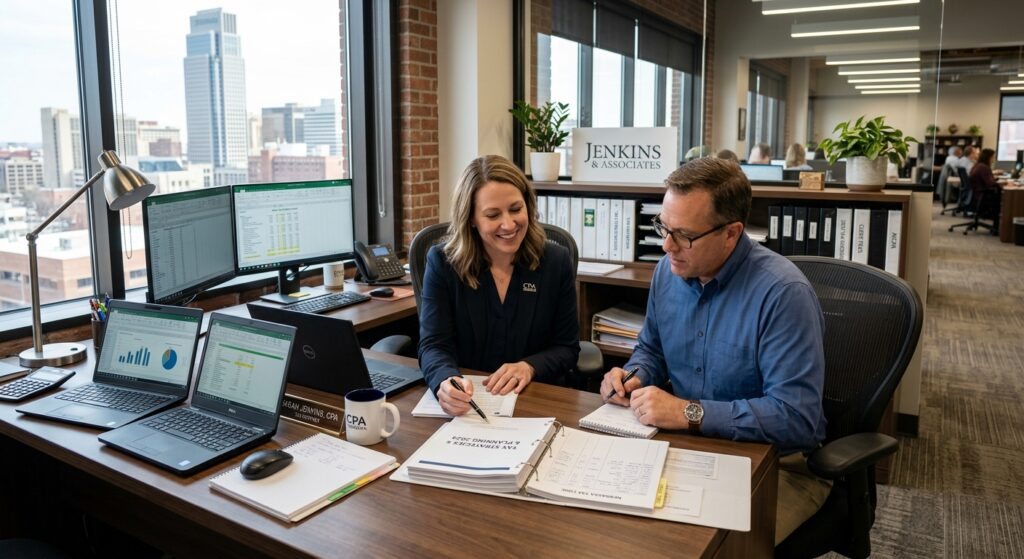
The Complete 2026 Nebraska CPA Guide: Licensure, Tax Strategies & Professional Advantages
Becoming a Nebraska CPA requires strategic planning, education, and professional expertise. Whether you’re building an accounting career in Omaha, Lincoln, or throughout Nebraska, understanding the current Nebraska CPA requirements and licensure pathways is essential for tax professionals and business owners seeking to optimize their credentials and tax positioning for 2026. This comprehensive guide walks you through the essential steps, financial implications, and professional advantages of pursuing Nebraska CPA licensure in the evolving accounting landscape.
Table of Contents
- Key Takeaways
- What Are Nebraska CPA Education Requirements for 2026?
- How Do You Meet the 150-Hour Requirement?
- What Does the CPA Exam Process Involve?
- How Much Work Experience Is Required?
- What Tax Benefits Do CPAs Enjoy?
- What Alternative Pathways Are Emerging in 2026?
- Uncle Kam in Action
- Next Steps
- Frequently Asked Questions
Key Takeaways
- Nebraska requires 150 semester hours of college education to become a CPA in 2026, including 24 upper-division accounting courses.
- CPAs must pass the Uniform CPA Exam and complete one year of relevant accounting work experience.
- 31 states have modernized their licensure requirements to allow for licensure at 120 hours, but Nebraska still uses the traditional 150-hour standard.
- Self-employed CPAs can deduct professional licenses, continuing education, and office expenses on Schedule C.
- CPA designation opens doors to higher earning potential, tax strategy partnerships, and professional credibility.

What Are Nebraska CPA Education Requirements for 2026?
 Free Tax Write-Off Finder
Quick Answer: Nebraska CPAs must complete 150 semester hours of college education, including a bachelor’s degree with significant accounting and business coursework requirements.
The Nebraska CPA …

