
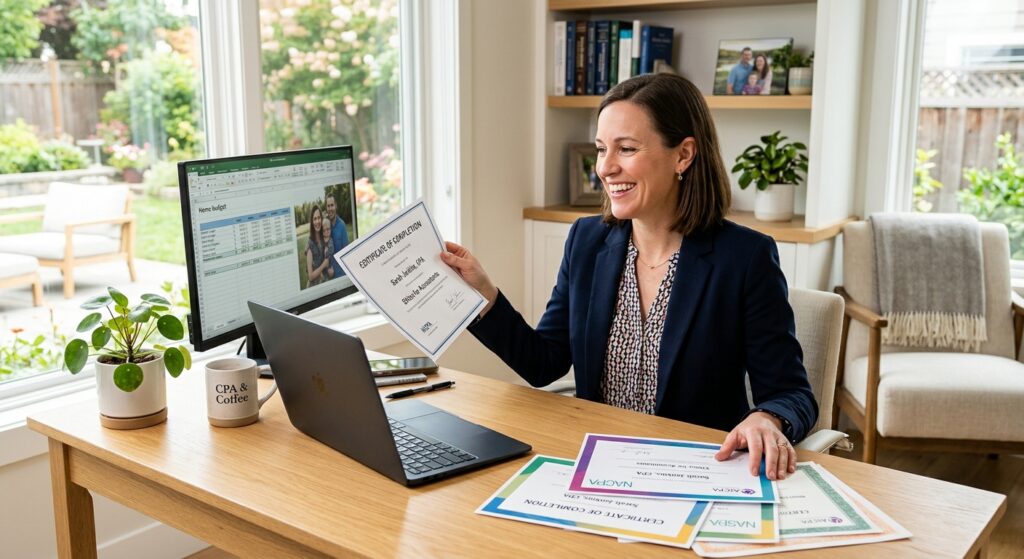
Free CPE for CPAs: 2026 Guide to Quality Education
For the 2026 tax year, CPAs face an unprecedented challenge. Following the most damaging tax season on record where 78% of accountants reported measurable harm to their health, sleep, and relationships, finding affordable free CPE for CPAs has become more critical than ever. This guide shows you exactly where to access high-quality continuing education without adding financial stress to professional burnout.
Table of Contents
Used by 2,400+ tax professionals
- Key Takeaways
- Why Do CPAs Need Free CPE in 2026?
- Where Can You Find Quality Free CPE for CPAs?
- How Can You Maximize Free CPE Value?
- What Are the 2026 CPE Requirements by State?
- How Can Free CPE Help You Transition to Advisory?
- Uncle Kam in Action: From Burnout to Breakthrough
- Next Steps
- Frequently Asked Questions
- Related Resources

Key Takeaways
- The 2026 tax season damaged 78% of CPAs, making cost-effective education essential.
- Quality free CPE for CPAs exists through government agencies, professional organizations, and tech providers.
- Strategic CPE selection can position you for high-margin advisory work beyond tax prep.
- Most states require 40 hours of CPE every two years with specific ethics requirements.
- Combining free technical CPE with advisory training creates the highest ROI career path.
Why Do CPAs Need Free CPE in 2026?
Quick Answer: The 2026 tax season created unprecedented burnout among CPAs. With 78% reporting measurable damage and firms cutting budgets, free CPE for CPAs offers vital professional development without adding financial stress.
The accounting profession entered 2026 in crisis mode. According to the Tax Season Survival Index published in May 2026, the recent filing season left deep scars across the profession.
The 2026 Burnout Crisis: By the Numbers
The data paints a sobering picture. Of 438 accountants surveyed immediately after the April 15 deadline:
- 78% scored in the “Survived” tier with real damage to sleep, health, and relationships
- Average stress score: 55.6 out of 100 (above 70 indicates long-term compounding damage)
- 50% experienced less than six hours of sleep per night during tax season
- 44% reported strained personal relationships requiring repair
- 50% suffered caffeine withdrawal symptoms after the deadline
This burnout epidemic coincides with a fundamental transformation at the IRS. The agency reduced staffing from approximately 102,000 employees in early 2025 to roughly 74,000 by year-end—a staggering 27% reduction concentrated among experienced enforcement and technical staff. This creates both challenges and opportunities for tax professionals who must adapt rapidly.
Why Budget-Friendly Education Matters Now
Many CPA firms entered 2026 with tightened training budgets. Inflation remained at 3.8% for the 12 months ending April 2026, squeezing both personal and firm finances. Meanwhile, the complexity of tax strategy work has escalated dramatically.
The One Big Beautiful Bill Act, signed July 4, 2025, introduced over 100 Code changes—many retroactive to 2025. CPAs must master new SALT cap adjustments, no-tax-on-tips provisions, expanded overtime deductions, and modified child tax credits. However, they need this knowledge without depleting professional development budgets already strained by economic pressures.
Pro Tip: The most successful CPAs in 2026 strategically combine free technical CPE with paid advisory training. This approach maintains compliance while building skills that command premium fees and reduce burnout.
The Shift from Prep to Planning
Smart CPAs recognize that continuing education serves dual purposes in 2026. First, it satisfies state licensing requirements. Second—and more importantly—it positions practitioners to escape the compliance treadmill that destroys health and relationships every spring.
Forward-thinking professionals use free CPE for CPAs to cover baseline technical requirements while investing in high-value advisory skills that transform their business model. This strategic approach allows CPAs to reduce seasonal workload chaos while dramatically increasing revenue per client through year-round planning engagements.
Where Can You Find Quality Free CPE for CPAs?
Quick Answer: Legitimate sources of free CPE for CPAs include IRS webinars, state CPA society offerings, software vendor training, professional publication platforms, and university extension programs that meet NASBA standards.
Finding quality continuing education at no cost requires knowing where to look. The following sources consistently deliver valuable content that meets state board requirements.
Government and Regulatory Sources
The IRS News Room regularly publishes webinars and virtual training sessions at no charge. These sessions cover current-year tax law changes, filing procedures, and compliance updates. For 2026, particularly valuable content addresses the One Big Beautiful Bill Act implications and the agency’s new digital-first enforcement approach.
State boards of accountancy often host free seminars on ethics and regulatory updates. Since ethics requirements vary by state, these sessions serve double duty—meeting mandatory ethics CPE while ensuring compliance with jurisdiction-specific rules.
Professional Organizations and State Societies
Many state CPA societies provide free webinars to members. Topics range from technical tax updates to practice management and technology implementation. Even non-members can sometimes access selected free content, though membership typically unlocks the full library.
The AICPA occasionally offers complimentary webcasts on emerging issues affecting the profession. In 2026, expect coverage of AI ethics, automation in audit workflows, and advisory service transformation.
Software Vendors and Technology Platforms
Major tax software providers host free training sessions throughout the year. These sessions teach software functionality but often include substantive tax content that qualifies for CPE credit. Thomson Reuters, CCH, and other vendors maintain extensive free training calendars.
Emerging AI platforms also offer free education. As the profession grapples with artificial intelligence integration, these training sessions become increasingly valuable. They help CPAs understand due diligence requirements under Circular 230 when using AI tools for client work.
Pro Tip: When attending vendor training, verify that the session qualifies for CPE credit in your state. Look for programs approved by NASBA or your state board before investing time.
Industry Publications and Media Platforms
Accounting Today, Journal of Accountancy, and similar publications host free webinars featuring industry experts. These sessions often qualify for CPE credit and cover timely topics affecting practice management and technical competence.
Some platforms like Law360 Tax Authority offer free access to tax law analysis and case updates. While not always structured as formal CPE courses, staying current with tax law developments through these resources enhances professional competence.
University Extension Programs
Several universities offer free or low-cost continuing education for accounting professionals. These programs often feature academic research combined with practical application. Topics may include emerging technologies, behavioral economics in client advisory, or advanced tax planning techniques.
| Free CPE Source | Type of Content | Best For | 2026 Focus Areas |
|---|---|---|---|
| IRS Webinars | Technical tax updates | Current year compliance | One Big Beautiful Bill Act, digital enforcement |
| State CPA Societies | Ethics, practice management | Meeting state-specific requirements | Professional standards, firm growth |
| Software Vendors | Technology and application | Practical workflow efficiency | AI integration, automation strategies |
| Professional Publications | Thought leadership, trends | Strategic positioning | Advisory transformation, market insights |
| University Programs | Academic research, advanced topics | Deep expertise development | Behavioral finance, emerging tech |
How Can You Maximize Free CPE Value?
Quick Answer: Maximize free CPE value by creating a strategic learning plan that covers mandatory credits through free sources while reserving paid education budgets for high-ROI advisory skills training.
Not all CPE delivers equal value. Strategic practitioners approach continuing education with a clear hierarchy of learning objectives aligned with both compliance requirements and career advancement goals.
Create a Strategic CPE Plan
Begin by auditing your state’s specific requirements. Most states mandate approximately 40 hours of CPE every two years, with specific ethics hour requirements. Document these baseline needs first.
Next, identify your career objectives. Are you building expertise in a specific industry? Transitioning to business advisory services? Developing technology implementation skills? Your free CPE strategy should satisfy mandatory requirements while advancing these professional goals.
The Strategic Allocation Model
Top-performing CPAs follow this allocation framework:
- Use free CPE for mandatory technical updates (50-60% of total hours)
- Invest in paid training for client advisory skills (25-35% of hours)
- Reserve budget for specialized certifications or credentials (10-20% of hours)
This model ensures compliance while building capabilities that increase revenue per client and reduce seasonal workload concentration.
Track and Document Ruthlessly
Many CPAs lose CPE credit because they fail to maintain proper documentation. Create a simple tracking system that records:
- Date and provider of each CPE activity
- Number of credits earned (separate technical vs. non-technical)
- Certificates of completion
- Field of study categorization
Many states conduct random CPE audits. Proper documentation prevents license suspension and demonstrates professional commitment during state board reviews.
Pro Tip: Schedule CPE throughout the year rather than cramming before renewal deadlines. Distributed learning improves retention and reduces stress during already-busy periods.
Leverage Group Learning
Organize informal study groups with colleagues to discuss free webinar content. This amplifies learning value through peer discussion and practical application brainstorming. Group learning also provides accountability and makes technical content more engaging.
What Are the 2026 CPE Requirements by State?

Quick Answer: Most states require CPAs to complete 40 hours of continuing education every two years, with typical ethics requirements of 2-4 hours. However, specific requirements vary significantly by jurisdiction.
CPE requirements remain jurisdiction-specific in 2026. Understanding your state’s exact mandates prevents compliance gaps that could jeopardize your license.
General Requirements Framework
The majority of state boards follow the NASBA model, which recommends 120 hours of CPE over a rolling three-year period (equivalent to 40 hours every two years). Within this framework, most states require:
- Minimum annual CPE hours (typically 20 hours per year)
- Specific ethics education (2-4 hours within each reporting period)
- Minimum technical subject matter hours
- Limits on self-study or nano-learning credits
Notable State Variations
Several states maintain unique requirements. For example, California mandates specific course content on regulatory ethics and professional conduct. New York requires CPAs to complete 4 hours of professional ethics every 3 years. Texas distinguishes between technical and non-technical CPE with separate hour requirements.
Some states also mandate specialized training. As of 2026, data privacy and cybersecurity topics have become common requirements given the profession’s handling of sensitive financial information.
| State Category | Total Hours | Ethics Requirement | Special Notes |
|---|---|---|---|
| Standard Model (Most States) | 40 hours/2 years | 2-4 hours | Follows NASBA guidelines |
| California | 80 hours/2 years | 4 hours regulatory review | Higher total requirement, specific ethics content |
| Texas | 120 hours/3 years | 4 hours/year | Distinguishes technical vs. non-technical hours |
| New York | 40 hours/year | 4 hours/3 years | Annual requirement, specific ethics cycle |
Verify Your Specific Requirements
Always confirm current requirements with your state board of accountancy. Requirements occasionally change, and relying on outdated information creates compliance risk. Most state boards maintain detailed CPE guidance on their websites, including approved provider lists and field of study specifications.
How Can Free CPE Help You Transition to Advisory?
Quick Answer: Free CPE for CPAs covers baseline compliance needs, freeing resources to invest in advisory skills training that commands premium fees and eliminates seasonal burnout cycles.
The 2026 burnout data reveals a fundamental truth: the traditional compliance-only CPA model is broken. Forward-thinking professionals use strategic CPE allocation to pivot toward year-round advisory relationships that generate predictable revenue without the seasonal chaos.
The Advisory Opportunity
Business owners increasingly seek proactive tax planning rather than reactive compliance. They understand that strategic planning throughout the year delivers far greater value than a once-annual tax return. This shift creates enormous opportunity for CPAs willing to transform their service model.
Advisory services typically command 3-5 times higher fees per hour than traditional preparation work. More importantly, they distribute workload throughout the year, eliminating the brutal March-April crunch that damages health and relationships. Real estate investors, business owners, and high-net-worth individuals willingly pay premium fees for strategic guidance that minimizes tax liability.
Building Advisory Competence Strategically
Use free CPE for CPAs to maintain technical currency in core tax law. Meanwhile, invest professional development budget in specialized advisory training:
- Advanced planning techniques and multi-entity strategies
- Client communication and value articulation skills
- Industry-specific expertise (real estate, professional services, etc.)
- Technology platforms that scale advisory delivery
This strategic allocation allows you to satisfy state board requirements while building capabilities that command premium compensation. The result: higher income, better work-life balance, and far less seasonal stress.
Technology as a Force Multiplier
Modern tax planning software enables solo practitioners and small firms to deliver enterprise-level advisory services. Platforms now offer unlimited free client assessments, entity-aware scenario modeling, and professional deliverables—capabilities previously available only to large firms with extensive resources.
Investing in technology training through free vendor CPE provides immediate practical value. You learn systems that improve efficiency while simultaneously earning continuing education credit. This dual benefit makes technology-focused free CPE particularly valuable in 2026.
Pro Tip: Combine free IRS technical training with paid advisory methodology courses. This combination satisfies CPE requirements while building a sustainable, scalable practice model that eliminates seasonal burnout.
Uncle Kam in Action: From Burnout to Breakthrough
Client Snapshot: Jennifer Martinez, a solo CPA in Phoenix with 15 years of experience, ran a traditional tax preparation practice. By April 2026, she was working 80-hour weeks, had gained 15 pounds, and was seriously considering leaving the profession.
Financial Profile: Jennifer’s practice generated approximately $240,000 in annual revenue, with 85% concentrated between February and April. She had 180 individual and small business clients, all focused on compliance-only services.
The Challenge: Jennifer scored a concerning 68 on the Tax Season Survival Index—approaching the threshold for long-term compounding damage. She recognized that another season like 2026 would force her to exit the profession entirely. However, she lacked the budget and bandwidth to pursue expensive training programs during her limited downtime.
The Uncle Kam Solution: Jennifer implemented a strategic CPE allocation model. She used free CPE for CPAs from the IRS, Arizona Society of CPAs, and software vendors to satisfy her 60-hour biennial requirement at zero cost. This freed up $3,000 in professional development budget.
She invested those savings in Uncle Kam’s advisory transformation program, which included training on the MERNA™ methodology (Maximize Deductions, Entity Structure, Retirement, Niche, Advanced strategies) and access to professional planning software with unlimited free client assessments.
Jennifer identified 25 high-potential clients earning over $200,000 annually who received only tax preparation services. She offered each a complimentary strategy assessment—which her new platform provided at no incremental cost. Eighteen clients accepted.
The Results: Within 8 months, Jennifer converted 15 of those 18 clients to year-round advisory relationships at $6,000 annually per client. Her results included:
- Additional Revenue: $90,000 in new advisory fees
- Client Tax Savings: Average $28,000 per client through strategic planning
- Investment: $3,000 in advisory training (funded by free CPE strategy)
- ROI: 3,000% first-year return on training investment
- Workload Distribution: Peak season hours reduced from 80 to 55 per week
Jennifer’s Tax Season Survival Index score for the following year dropped to 42—well into the healthy range. More importantly, she now views her practice as sustainable long-term rather than a career she needs to escape. By strategically using free CPE for CPAs to cover baseline requirements, she found the resources to transform her entire business model.
See more success stories at Uncle Kam Client Results.
Next Steps
If you’re ready to escape the compliance treadmill and build a sustainable advisory practice, take these immediate actions:
- Audit your state’s specific CPE requirements and identify which hours you can satisfy through free sources
- Create a 12-month CPE calendar that distributes learning throughout the year
- Identify 10-20 high-potential clients who would benefit from proactive planning
- Explore entity structuring strategies that deliver immediate client value
- Book a strategy session to learn how to scale advisory services systematically
The 2026 tax season proved that the traditional CPA model damages professionals’ health and relationships. Don’t wait until next April to make a change. Strategic use of free CPE for CPAs creates the foundation for practice transformation that increases both income and quality of life.
Ready to build a practice that serves you as well as your clients? Book your strategy session today to explore how advisory services can eliminate seasonal burnout while dramatically increasing your revenue.
Frequently Asked Questions
Is free CPE for CPAs actually legitimate and accepted by state boards?
Yes, when obtained from approved providers. State boards accept CPE from sources meeting NASBA standards or specific state approval criteria. IRS webinars, state CPA society programs, and vendor training from established firms consistently meet these requirements. Always verify that the specific program displays proper approval credentials before attending.
How much can I realistically save using free CPE sources in 2026?
Substantial amounts. Paid CPE typically costs $30-80 per credit hour. For a state requiring 40 hours biennially, that represents $1,200-3,200 in costs. By strategically sourcing 50-75% of requirements through legitimate free options, you can save $600-2,400 every two years—funds better invested in high-value advisory skills training.
What’s the biggest mistake CPAs make with free CPE?
Taking courses that don’t advance career goals simply because they’re free. Strategic practitioners focus free CPE on mandatory technical updates while investing paid training budget on advisory skills that command premium fees. Random free courses satisfy hour requirements but don’t build revenue-generating capabilities or reduce seasonal stress.
Can I complete all my CPE requirements for free?
Potentially, yes, but you shouldn’t. While it’s possible to satisfy state hour requirements entirely through free sources, this approach misses the strategic opportunity. Use free CPE to cover baseline compliance, then invest in paid specialized training that transforms your practice model and income potential. The goal isn’t minimizing CPE spending—it’s maximizing career ROI.
How do I know if a free CPE program meets my state’s requirements?
Check three things before attending. First, verify the provider displays NASBA Registry approval or your specific state board’s endorsement. Second, confirm the field of study aligns with your state’s technical vs. non-technical hour requirements. Third, ensure the format (live webinar, self-study, etc.) qualifies under your jurisdiction’s rules. Most provider websites clearly indicate state approvals.
What’s the connection between free CPE and escaping tax season burnout?
Free CPE creates financial room to invest in advisory transformation. The 2026 data shows compliance-only practices destroy practitioner health. By covering mandatory CPE requirements at zero cost, you free up thousands of dollars to invest in training that builds year-round advisory capabilities. This transition eliminates seasonal chaos while increasing income—the only sustainable solution to professional burnout.
Are there quality differences between free and paid CPE programs?
Sometimes, but not always. IRS webinars and state society programs often match or exceed paid course quality for technical content. However, specialized advisory training, advanced planning techniques, and practice transformation methodologies typically require paid programs. Think of free CPE as covering fundamentals excellently while paid education builds premium capabilities.
Related Resources
- Tax Strategy Services for Growing Practices
- Tax Advisory: Build Recurring Revenue Streams
- The MERNA Method: Strategic Tax Planning Framework
- Self-Employed Tax Strategies CPAs Should Master
- Comprehensive Tax Planning Guides
Last updated: May, 2026
This information is current as of 5/29/2026. Tax laws and CPE requirements change frequently. Verify current standards with your state board of accountancy and the IRS when reading this content.

