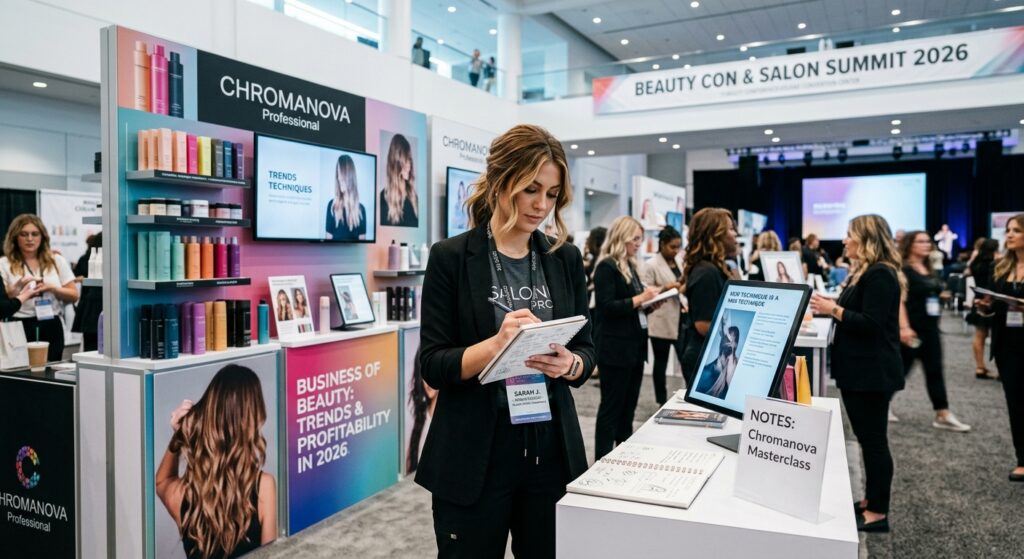
Cosmetology License Renewal, CEUs & Hair Shows Tax Rules 2026: Complete Guide for Beauty Professionals
For the 2026 tax year, cosmetology professionals face unique challenges when managing license renewal, CEUs, and hair show expenses. Whether you’re a booth renter, salon owner, or independent stylist, understanding which professional development costs are tax-deductible can save you thousands in 2026 taxes. This comprehensive guide explains the tax treatment of continuing education units, hair show attendance, and license renewal fees—and shows you exactly how to document everything for IRS compliance.
Table of Contents
- Key Takeaways
- What Are CEUs in Cosmetology and Why Do They Matter?
- Which CEU Costs Are Tax-Deductible for Cosmetologists?
- Can You Write Off Hair Show and Beauty Conference Attendance?
- Is Your Cosmetology License Renewal Fee Tax-Deductible?
- How Much Self-Employment Tax Will You Owe on Salon Income?
- What Documentation and Records Do You Need?
- Uncle Kam in Action
- Next Steps
- Frequently Asked Questions
Key Takeaways
- CEU course fees, materials, and travel are typically deductible business expenses for self-employed cosmetologists on Schedule C.
- Hair shows and professional beauty conferences may be tax-deductible if directly related to your salon business.
- License renewal fees are generally deductible as professional licensing costs on your tax return.
- Self-employment tax on salon income is 15.3% in 2026 (Social Security plus Medicare).
- Detailed documentation and receipts are essential for all professional development expenses.
What Are CEUs in Cosmetology and Why Do They Matter?
Quick Answer: CEUs (Continuing Education Units) are required hours of professional training that cosmetologists must complete to renew their licenses in 2026. These courses keep your skills current and protect your salon license.
Cosmetology license renewal requirements vary significantly by state, but nearly all states require cosmetologists to complete continuing education hours before license renewal. For the 2026 license renewal cycle, most states require between 12 and 24 CEU hours annually, depending on your license type and state regulations.
CEUs cover essential topics including health and safety, sanitation, infection control, new techniques, color theory, advanced chemical treatments, and business management. These courses are approved by your state’s board of cosmetology and must be completed at accredited schools or approved providers.
Types of CEU Training for Cosmetologists in 2026
- In-person classroom courses at beauty schools or training centers
- Online or virtual learning programs (increasingly popular for flexibility)
- Hair shows and professional conferences that offer CEU credit
- Manufacturer-sponsored product training sessions
- Webinars and seminars from professional associations
Pro Tip: Always verify that your chosen CEU provider is approved by your state board before enrolling. Taking courses from unapproved providers will not count toward renewal requirements and wastes money and time.
Which CEU Costs Are Tax-Deductible for Cosmetologists?
Quick Answer: For 2026, CEU course fees, materials, textbooks, and related travel expenses are deductible as Schedule C business expenses if you’re self-employed or own a salon.
The IRS allows self-employed cosmetologists and salon owners to deduct professional education expenses that maintain or improve skills directly used in your business. This is a powerful tax benefit that many beauty professionals overlook. For the 2026 tax year, here’s exactly what qualifies.
Deductible CEU and Professional Education Expenses
Direct course costs are the most obvious deduction. If you pay $300 for a state-approved advanced color techniques course, that entire $300 is deductible on Schedule C (Form 1040) as a business education expense. This includes tuition, registration fees, and course materials provided by the school.
Textbooks and educational materials purchased for CEU courses are fully deductible. Many states require you to purchase study guides, practice materials, or certification exam prep books. Keep all receipts—these add up quickly and reduce your taxable income for 2026.
Travel expenses to attend out-of-state CEU courses are deductible. If you drive to a neighboring state for a specialized training, you can deduct mileage at the 2026 IRS rate, or actual vehicle expenses. Parking and tolls also qualify.
Lodging for courses requiring overnight travel is deductible. If your state-board-approved training course requires you to stay overnight, hotel costs are deductible business expenses. Meals during business travel are also deductible (at the 2026 federal meal and entertainment rate).
Pro Tip: Keep receipts separated by category (tuition, books, travel, meals). When filing your 2026 taxes, this documentation proves your deductions are legitimate business expenses, not personal education.
Can You Write Off Hair Show and Beauty Conference Attendance?
Quick Answer: Yes, hair shows and beauty conferences are tax-deductible if they directly benefit your salon business. In 2026, major events like Cosmoprof CBE ASEAN and L’Oréal Transformation Day qualify.
Hair shows and professional beauty conferences serve dual purposes: they provide CEU credits AND expose you to new techniques, products, and business trends. For 2026 tax purposes, these events are deductible under IRS rules for business-related travel and education.
What Hair Show Expenses Are Deductible in 2026?
- Conference registration fees and admission costs
- Travel expenses (airfare, gas, mileage, rideshare)
- Hotel lodging during the event
- Meals and entertainment at the conference
- Products purchased for business research or salon use
- Educational materials and samples related to your profession
Major 2026 beauty events include Cosmoprof CBE ASEAN (June 24-26, Bangkok) and professional development days hosted by major product lines. These events provide legitimate business value because you’re learning techniques, discovering new products, and networking with suppliers—all directly benefiting your salon.
The key test for deductibility is whether the hair show is directly related to your salon business. A show focusing on advanced coloring techniques is deductible. A show primarily for entertainment or personal enjoyment would not be. Keep receipts and take notes at the event explaining the business purpose.
Pro Tip: Photograph your conference schedule, take notes on sessions attended, and save product samples or materials you acquire. This documentation proves the business purpose if audited.
Is Your Cosmetology License Renewal Fee Tax-Deductible?
Quick Answer: Yes, your state cosmetology license renewal fee is deductible as a professional licensing cost on Schedule C for 2026.
License renewal fees are clearly business expenses for self-employed cosmetologists. Whether you pay $100 or $300 to renew your license, the entire amount is deductible on your 2026 tax return. This applies to individual stylist licenses and salon owner/operator licenses.
However, license exams to initially obtain your cosmetology license are NOT deductible. The IRS treats initial licensing as a personal credential expense, not a business deduction. Only renewal fees (which occur annually or biennially, depending on your state) are deductible for 2026.
Related Professional Licensing Costs That Are Also Deductible
- Salon owner/operator license renewal fees
- Specialty license renewals (esthetics, nail technician if offering those services)
- Professional association membership dues
- State board compliance fees or background check fees
When you file your 2026 taxes, report all these costs on Schedule C (Profit or Loss from Business). Most accountants put them in the “Professional Services” or “Licenses and Permits” category.
How Much Self-Employment Tax Will You Owe on Salon Income?
 Free Tax Write-Off Finder
Quick Answer: In 2026, self-employed cosmetologists pay 15.3% self-employment tax on net business income (Social Security 12.4% plus Medicare 2.9%).
Self-employment tax is one of the biggest unexpected costs for beauty professionals transitioning from salon W-2 employment to independent contractor status. When you’re self-employed, you pay both the employee and employer portions of Social Security and Medicare taxes.
The 2026 self-employment tax rate remains 15.3% total: 12.4% for Social Security (on income up to $184,500 in 2026) and 2.9% for Medicare. You calculate this on Schedule SE (Self-Employment Tax), filed with your 1040.
Here’s a practical example: If your salon net income is $60,000 for 2026, your self-employment tax would be approximately $8,478 (before considering the self-employment tax deduction). This is in addition to your regular income tax.
One major benefit is that you can deduct half of your self-employment tax on your 2026 income tax return. This reduces your adjusted gross income. Use our Self-Employment Tax Calculator for New Jersey to estimate your exact 2026 liability based on your projected income.
Pro Tip: Maximize Schedule C deductions (like the CEU and hair show expenses covered here) to lower your net income and reduce self-employment tax in 2026.
What Documentation and Records Do You Need?
Quick Answer: Keep receipts, invoices, and detailed records for all CEU courses, hair shows, license renewals, and travel. The IRS requires proof of business deductions in case of audit.
Documentation is critical for defending any Schedule C deductions during an IRS audit. Beauty professionals face higher audit rates than many industries, partly because there’s significant cash income. For your 2026 tax year, maintain meticulous records.
Required Documentation for Each Type of Deduction
| Expense Type | Required Documentation for 2026 |
|---|---|
| CEU Course Fees | Receipt or invoice from course provider, course completion certificate, course description |
| Hair Show Registration | Conference receipt, program schedule, badge or registration confirmation |
| Travel (Airfare/Gas) | Receipts, credit card statements, mileage log with dates and business purpose |
| Hotel/Lodging | Hotel receipt showing dates, nightly rate, location |
| License Renewal | State board receipt, renewal confirmation, license document |
| Meals (at conferences) | Receipt showing vendor, date, and meal cost |
For all expenses, create a simple spreadsheet tracking the date, vendor, amount, and business purpose. This spreadsheet plus receipts provides complete protection if audited on your 2026 return.
Store receipts digitally by photographing them or scanning. Use cloud storage (Google Drive, Dropbox, OneDrive) to back up your documentation. Keep files organized by category and tax year. The IRS can request records for 3 years (or longer if income is underreported).
Pro Tip: Use accounting software like QuickBooks Self-Employed, Wave, or FreshBooks to track expenses automatically in 2026. Photographing receipts as you receive them takes 10 seconds and prevents last-minute scrambling at tax time.

Uncle Kam in Action: How Sarah Saved $2,840 on Her 2026 Salon Taxes
Client Profile: Sarah is a self-employed booth renter in New Jersey operating a luxury hair salon. She generates $85,000 in annual salon income and had been paying full self-employment taxes without maximizing deductions.
The Challenge: Sarah spent significant money on professional development throughout 2026 but wasn’t tracking or deducting these expenses. She attended Cosmoprof Miami ($2,100 for registration, airfare, and hotel), completed two CEU courses ($600 total), renewed her license ($250), and purchased $300 in educational materials. Total professional development spending: $3,250. She was about to file her 2026 return and pay self-employment tax on income that should have been reduced by these deductions.
The Uncle Kam Solution: Our tax strategist reviewed Sarah’s 2026 expenses and properly documented all professional education costs on her Schedule C. The $3,250 in deductions reduced her net self-employment income from $85,000 to $81,750. At the 2026 self-employment tax rate of 15.3%, this reduced her SE tax liability by approximately $498 (15.3% × $3,250). Combined with income tax savings at her 24% bracket, total federal tax savings reached $2,840 in 2026.
The Results: Sarah’s 2026 tax bill dropped by $2,840 simply by properly tracking and deducting expenses she was already spending. For the 2027 tax year and beyond, she implemented a monthly expense tracking system using professional tax strategy planning to maximize deductions proactively. Her investment in professional development now directly reduces her tax liability.
Investment & ROI: Sarah invested $1,200 in Uncle Kam’s tax consulting and planning service. Her first-year tax savings of $2,840 delivered a 237% return on investment before her 2027 taxes.
Next Steps
- Audit your 2026 expenses immediately. Gather all receipts from CEU courses, hair shows, and license renewals completed year-to-date. If your 2026 return hasn’t been filed yet, ensure these deductions are included.
- Set up expense tracking systems. Create a simple spreadsheet or use accounting software to track professional development expenses automatically going forward.
- Calculate your potential self-employment tax savings. Use the math here—multiply your annual professional development spending by 15.3% to see your SE tax savings, then multiply by your income tax bracket for total federal tax reduction.
- Document everything moving forward. Photograph receipts as you receive them. Create a file folder (physical or digital) for each tax year’s professional development expenses.
- Plan your 2026 and 2027 professional development strategically. Consider tax-efficient education strategies to maximize deductions while improving your salon business skills.
Frequently Asked Questions
Can I deduct online CEU courses if I complete them at home?
Yes, for 2026 and beyond, online CEU courses from state-approved providers are fully deductible. The location (home, salon, classroom) doesn’t matter. Only the course provider’s approval matters. Always verify the course is listed on your state board’s approved provider directory before enrolling.
What if I attended a hair show primarily for fun but also learned business skills?
The IRS requires that the primary purpose be business-related. If the show offers education sessions, CEU credits, and product research opportunities, it’s deductible even if you also socialize. However, purely personal enjoyment expenses (entertainment at evening parties, meals not part of the conference) should be separated from deductible business costs.
Do I have to report CEU expenses separately on my 2026 tax return?
No, CEU and professional education expenses are lumped into your Schedule C deductions. They don’t appear as separate line items. Your accountant includes them in categories like “Professional Services,” “Licenses and Permits,” or “Education Expenses.” Keep your documentation organized by category, but they all reduce your bottom-line net profit calculation.
If my salon owner reimburses my CEU costs, can I still deduct them?
If you’re a salon employee (W-2 employee, not self-employed), and your employer reimburses CEU costs, you cannot deduct them again. The deduction belongs to the business that paid. However, if the salon owner reimburses only part of your costs, the unreimbursed portion is deductible if you’re self-employed.
Are hair styling products I purchase for salon use deductible?
Yes, products purchased for salon use (shampoo, conditioner, treatments, colorants) are deductible as “Supplies” on Schedule C. Products purchased specifically for professional development or demonstration at a hair show are also deductible. Keep receipts organized by category to track product costs separately from education expenses.
If I miss deducting an expense on my 2026 return, can I amend it later?
Yes, you can file an amended 2026 return (Form 1040-X) within 3 years of the original filing date to add missed deductions. However, it’s better to get it right the first time. If you’re still gathering 2026 documentation, request a filing extension before the April deadline so you have time to organize receipts properly.
What’s the difference between a business deduction and a personal expense for hair shows?
A business deduction is any expense that directly maintains or improves your salon skills. Hair show registration, educational sessions, product demonstrations, and business meetings are deductible. Personal entertainment, shopping for personal use, or purely social activities are not. Keep a brief note explaining the business purpose (“Attended advanced coloring techniques demonstration,” “Met with 3 potential product suppliers”) to justify the deduction if audited.
This information is current as of 4/30/2026. Tax laws change frequently. Verify updates with the IRS or consult a tax professional if reading this later.
Related Resources
- Complete Self-Employed Tax Guide for Independent Contractors
- Tax Strategy Planning for Small Business Owners
- IRS Publication 587: Business Use of Your Home
- Bookkeeping and Business Accounting Solutions
- View How We’ve Helped Beauty Professionals Save on Taxes
Last updated: April, 2026

