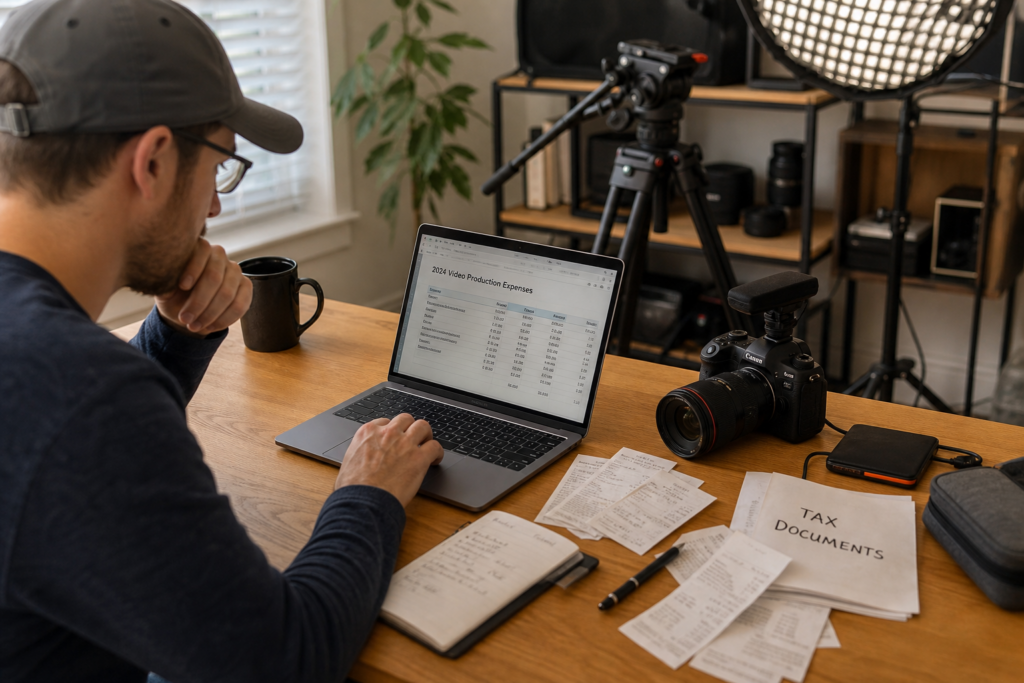
Contractor Video Production Expenses: 2026 Tax Guide for Self-Employed Creators
Managing contractor video production expenses well can save you thousands at tax time. As a self-employed videographer, you buy cameras, lenses, and editing software. You also pay for travel, storage, and software subscriptions. Most of these costs are deductible in 2026. However, you must track them right. This guide breaks down every major expense. Moreover, it shows you how to turn those costs into real tax savings.
Table of Contents
- Key Takeaways
- What Are Contractor Video Production Expenses?
- What Equipment Costs Can You Deduct in 2026?
- How Do Software and Subscription Costs Work?
- How Can You Cut Taxes on Contractor Video Production Expenses?
- What Travel and Vehicle Costs Qualify?
- What Startup Costs Can New Videographers Deduct?
- Uncle Kam in Action
- Related Resources
- Next Steps
- Frequently Asked Questions
Key Takeaways
- Most contractor video production expenses are fully deductible on Schedule C in 2026.
- Section 179 lets you deduct up to $2,560,000 in gear in 2026.
- Bonus depreciation stays at 100% for qualified property in 2026.
- The business mileage rate rose to 76 cents on July 1, 2026.
- Good records protect your deductions if the IRS asks questions.
What Are Contractor Video Production Expenses?
Quick Answer: Contractor video production expenses are the ordinary costs you pay to run a video business. They include gear, software, travel, and studio space. Most are fully deductible in 2026.
As a self-employed videographer, you wear many hats. You shoot, edit, and market your work. Each task creates costs. The IRS lets you deduct expenses that are both ordinary and necessary. In other words, the cost must be common in your field. It must also help your business. Therefore, tracking these costs matters a lot. Smart tracking turns everyday spending into tax savings. For more help, our team of tax experts for self-employed creators can guide you.
Why These Deductions Matter So Much
Self-employed videographers pay two kinds of tax. First, they pay income tax. Second, they pay self-employment tax at 15.3% in 2026. That rate covers Social Security and Medicare. As a result, every dollar you deduct lowers both taxes. For example, a $2,000 camera deduction can save far more than it seems. Consequently, careful expense tracking protects your bottom line. The IRS explains deductible business costs in IRS Publication 535 on business expenses.
Common Categories to Track
You should group your spending into clear buckets. This makes tax time simple. Furthermore, it helps you spot missed deductions.
- Cameras, lenses, drones, and lighting gear
- Editing software and cloud storage plans
- Travel, mileage, and lodging for shoots
- Studio rent, props, and set materials
- Marketing, website, and contractor labor
Pro Tip: Open a separate business bank account. Then run every business cost through it. This keeps records clean and audit-proof.
What Equipment Costs Can You Deduct in 2026?
Quick Answer: You can deduct cameras, lenses, lights, and computers. In 2026, Section 179 covers up to $2,560,000. Bonus depreciation also stays at 100%.
Gear is often the biggest chunk of contractor video production expenses. A single cinema camera can cost thousands. Luckily, the tax code helps. You have two fast-write-off tools in 2026. First, Section 179 lets you expense gear right away. Second, bonus depreciation covers the rest. Both let you skip slow, multi-year depreciation. As a result, you get the deduction the same year you buy.
Section 179 vs. Bonus Depreciation in 2026
Both tools speed up your deduction. However, they work in different ways. Section 179 has a dollar cap and an income limit. Bonus depreciation has no cap and can create a loss. The IRS depreciation rules in Publication 946 explain the details. Here is a simple comparison for 2026.
| Feature | Section 179 (2026) | Bonus Depreciation (2026) |
|---|---|---|
| Max deduction | $2,560,000 | No dollar limit |
| Deduction rate | 100% up to limit | 100% |
| Can create a loss? | No | Yes |
| Used gear eligible? | Yes | Yes (new to you) |
Typical Gear Costs and Deductions
New videographers often ask what gear costs. Prices vary by quality. Still, this table shows common 2026 ranges. Each item is a deductible business asset.
| Equipment | Typical Cost Range | Deductible? |
|---|---|---|
| 4K camera or camcorder | $1,000 – $6,000 | Yes |
| Lenses (each) | $400 – $2,500 | Yes |
| Lighting kit | $300 – $2,000 | Yes |
| Editing computer | $1,500 – $5,000 | Yes |
| Drone | $500 – $3,000 | Yes |
Do you also need help choosing a business structure? Our entity structuring services for creators can help you decide. The right setup can boost your gear write-offs too.
Pro Tip: Buy big gear before December 31 to claim the deduction this year. Place it in service the same year.
How Do Software and Subscription Costs Work?
Quick Answer: Editing software, cloud storage, and monthly apps are fully deductible. You claim them as business expenses on Schedule C.
Modern video work runs on software. You edit, color grade, and mix sound with paid tools. These costs add up fast each month. Fortunately, they are ordinary business expenses. Therefore, you deduct them in the year you pay. Monthly plans are easy to track. Annual plans work the same way. In addition, you can deduct plug-ins and music licenses.
Common Deductible Software Costs
Video creators use many tools. Each one supports the business. As a result, each is deductible. Here are common examples.
- Editing suites like Premiere Pro or Final Cut
- Cloud storage for large video files
- Stock music and sound effect libraries
- Client review and delivery platforms
- Invoicing and bookkeeping apps
Mixed-Use Subscriptions
Some tools serve both work and home. In that case, you deduct only the business share. For example, say you use a storage plan 80% for work. Then you deduct 80% of the cost. Keep a simple note of how you split it. Good tools help here too. Our bookkeeping and automation solutions make tracking easy. The SBA finance management guide also offers helpful tips.
Did You Know? Many creators forget to deduct music and font licenses. These small costs add up to big savings each year.
How Can You Cut Taxes on Contractor Video Production Expenses?
Quick Answer: Track every cost, use Section 179, and claim the QBI deduction. An S-Corp election can also cut self-employment tax.
Deductions are just the start. Smart planning cuts taxes even more. First, claim the 20% Qualified Business Income deduction. It stays available in 2026. Second, time your gear buys to match high-income years. Third, consider an S-Corp if profits are strong. This can lower your 15.3% self-employment tax. A solid proactive tax strategy plan ties these moves together.
The QBI Deduction for Videographers
The QBI deduction is powerful. It lets you deduct 20% of net business income. For example, say you earn $80,000 in profit. Then you may deduct up to $16,000. That deduction is separate from your gear write-offs. As a result, your taxable income drops sharply. The IRS QBI deduction overview explains the income limits.
Should You Elect S-Corp Status?
An S-Corp can save real money at higher income. You pay yourself a fair salary. Then you take the rest as distributions. Distributions avoid the 15.3% self-employment tax. However, this only helps once profits are steady. Denver-based videographers can compare options with our LLC vs S-Corp Tax Calculator for Denver to estimate 2026 savings.
Pro Tip: Pay quarterly estimated taxes on time. The 2026 due dates are April 15, June 15, September 15, and January 15, 2027.
What Travel and Vehicle Costs Qualify?
 Free Tax Write-Off Finder
Quick Answer: Business mileage, lodging, and shoot travel are deductible. In 2026, the mileage rate is 72.5 cents early, then 76 cents from July 1.
Video work takes you on the road. You drive to shoots, client meetings, and rentals. Those business miles are deductible. However, 2026 has a twist. The IRS raised the mileage rate midyear. The IRS standard mileage rates page confirms the change. As a result, you must track two rates this year.
The 2026 Mileage Rate Split
The rate changed on July 1, 2026. Miles before that date use the lower rate. Miles after use the higher rate. Therefore, split your log by date. For example, say you drove 5,000 business miles each half. Your first half is 5,000 times 72.5 cents. That equals $3,625. Your second half is 5,000 times 76 cents. That equals $3,800. In total, you deduct $7,425 in mileage.
Other Deductible Travel Costs
Travel is more than miles. Overnight shoots create many costs. Each of these is deductible when tied to work.
- Hotel stays during out-of-town shoots
- Airfare and baggage fees for gear
- Rental cars and parking at venues
- 50% of meals during business travel
If you file across states or cities, get local help. Our tax prep and filing services keep you compliant. Need ongoing advisory support for your video business? We offer that too.
Did You Know? The IRS raised the midyear rate due to higher fuel prices. This was the first midyear change since 2022.
What Startup Costs Can New Videographers Deduct?
Quick Answer: You can deduct up to $5,000 in startup costs the first year. You then amortize the rest over 15 years.
Starting a video business costs money before your first paid job. You may buy gear, build a website, or run ads. These pre-launch costs count as startup expenses. The IRS lets you deduct up to $5,000 in year one. Then you spread the rest over 15 years. This rule helps new creators reduce early tax bills. It also rewards you for investing in growth.
Common Startup Expenses
Many first-year costs qualify. You should track them from day one. As a result, you capture every possible deduction.
- Website design and domain fees
- Business registration and legal costs
- Early marketing and social media ads
- Market research and training courses
Home Office and Studio Space
Many videographers edit from home. In that case, you may claim the home office deduction. You deduct a share of rent, power, and internet. The share matches your office size. The IRS home office deduction rules explain the two methods. Learn more about deductions for small business owners like videographers on our site. If you rent a studio, that rent is fully deductible too.
Pro Tip: Keep receipts for every pre-launch cost. Startup deductions are easy to miss without clear records.

Uncle Kam in Action: Freelance Videographer Saves Big
Client Snapshot: Maya is a self-employed wedding and event videographer. She works alone and travels often. She came to Uncle Kam after a stressful tax season.
Financial Profile: Maya earned $145,000 in net profit in 2026. She spent heavily on gear and travel. Yet she had never tracked expenses well.
The Challenge: Maya faced a huge self-employment tax bill. She filed as a sole proprietor. As a result, all her profit faced the 15.3% self-employment tax. Moreover, she missed thousands in deductions. She had no system for gear, mileage, or software costs.
The Uncle Kam Solution: First, we captured every contractor video production expense she had missed. We claimed Section 179 on her new cinema camera and computer. We also fixed her split mileage log for the 2026 rate change. Next, we helped her elect S-Corp status for future years. We set a fair salary and planned her distributions. Finally, we secured her full 20% QBI deduction.
The Results: Maya cut her federal tax bill by $18,400 in the first year. Her gear and mileage deductions alone saved thousands. The S-Corp plan will save even more going forward.
- Tax Savings: $18,400 in year one
- Investment: $4,800 in Uncle Kam fees
- First-Year ROI: About 3.8x her investment
Maya now feels calm at tax time. See more wins like hers on our client results and case studies page. Her story shows what smart planning can do.
Related Resources
Next Steps
Ready to lower your tax bill? Take these steps today.
- Open a business bank account and track every expense.
- Split your 2026 mileage log by the July 1 rate change.
- Review your gear buys for Section 179 savings.
- Book a call with our tax advisory team for creators.
This information is current as of 7/22/2026. Tax laws change often. Verify updates with the IRS if reading this later.
Frequently Asked Questions
Are contractor video production expenses fully deductible in 2026?
Yes, most are fully deductible. The cost must be ordinary and necessary for your work. You claim these expenses on Schedule C. Mixed-use items need a business-use split.
Can I deduct a camera I use for both work and fun?
Yes, but only the business share. Say you use the camera 90% for work. Then you deduct 90% of the cost. Keep a simple usage log for proof.
How much can I deduct for equipment under Section 179?
In 2026, the Section 179 limit is $2,560,000. That covers nearly all video gear you buy. However, the deduction cannot exceed your business income. Bonus depreciation can cover the rest.
When are my quarterly taxes due in 2026?
The 2026 due dates are April 15, June 15, and September 15. The final payment is due January 15, 2027. Pay on time to avoid penalties.
Should I form an LLC or S-Corp for my video business?
It depends on your profit level. An LLC is simple and flexible. An S-Corp can cut self-employment tax at higher income. A tax pro can help you choose the best fit.
Last updated: July, 2026

