BLS Certification Write-Off 2026: How Healthcare Pros Deduct It
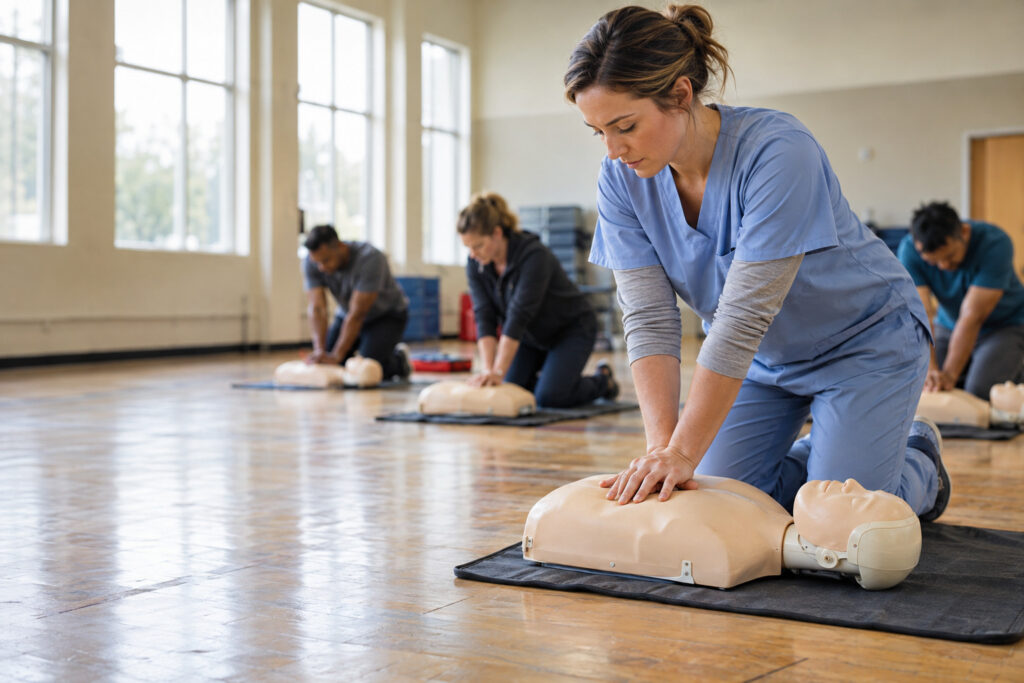
The BLS certification write-off for nurses and healthcare pros in 2026 can trim your taxable income when you qualify. Basic Life Support (BLS) certification is the CPR credential required for nurses, EMTs, and many medical staff. For the 2026 tax year, whether you can deduct this cost depends on your worker status. Self-employed healthcare professionals often win here. Below, we break down the rules clearly.
Table of Contents
- Key Takeaways
- Is BLS Certification Tax Deductible in 2026?
- Who Qualifies for the BLS Certification Write-Off?
- How Do You Claim the BLS Certification Write-Off?
- What Related Costs Can You Deduct Too?
- How Much Can You Save With This Deduction?
- Uncle Kam in Action
- Next Steps
- Related Resources
- Frequently Asked Questions
Key Takeaways
- Self-employed healthcare pros deduct BLS costs on Schedule C in 2026.
- W-2 employees generally cannot deduct unreimbursed BLS costs federally.
- The cost must maintain or improve skills in your current job.
- Keep receipts, course records, and employer reimbursement details.
- The BLS certification write-off 2026 requires an ordinary, necessary expense.
Is BLS Certification Tax Deductible in 2026?
Quick Answer: Yes, if you are self-employed. The BLS certification write-off 2026 applies as a work-related education expense when it maintains skills for your current healthcare role.
Basic Life Support, or BLS, is the CPR and emergency-response credential required across healthcare. Nurses, EMTs, dentists, and medical techs renew it regularly. Therefore, the cost feels like a recurring professional burden. For 2026, the deductibility of this expense hinges on one key factor: your tax status. Self-employed professionals generally win here. However, W-2 employees face tighter rules. Let us explain why this matters so much for your return.
The IRS treats BLS renewal as a work-related education or professional expense. Under Section 162, an expense must be “ordinary and necessary” for your trade or business. A required CPR credential clearly fits that standard. As a result, self-employed healthcare pros can deduct it. Smart proactive tax planning strategies help you capture every eligible dollar. Moreover, these small deductions add up quickly across a career.
What the IRS Education Rule Requires
The IRS allows work-related education deductions under specific conditions. First, the education must maintain or improve skills in your current work. Second, your employer or law must require it to keep your status. BLS satisfies both tests for most clinicians. However, education that qualifies you for a new trade does not count. Therefore, an entry-level CPR course for a career change may be excluded. Review the official IRS Topic No. 513 work-related education guidance for the exact criteria.
Federal vs. State Treatment
Federal law limits employee deductions, yet some states differ. California, for example, still permits certain unreimbursed employee expenses on the state return. Consequently, a W-2 nurse there may deduct BLS costs at the state level. Nevertheless, the federal rules remain strict for 2026. Always check both layers before filing. For most self-employed filers, the federal Schedule C path offers the cleanest outcome.
Pro Tip: Bundle BLS renewal with other required CE courses. You deduct them together on one Schedule C line for 2026.
Who Qualifies for the BLS Certification Write-Off?
Quick Answer: Self-employed nurses, travel contractors, and 1099 healthcare pros qualify. W-2 employees generally cannot deduct these federally for 2026.
Your worker classification decides everything here. Self-employed and 1099 healthcare professionals have the broadest access. In contrast, W-2 employees lost most unreimbursed expense deductions after the Tax Cuts and Jobs Act. Therefore, understanding your status is the first step. Many travel nurses and per-diem clinicians operate as independent contractors. As a result, they can deduct BLS costs directly against their income.
Self-Employed and 1099 Healthcare Workers
If you receive 1099 income, you file Schedule C. Consequently, your BLS renewal becomes a business expense. This group includes travel nurses, locum physicians, and independent therapists. Furthermore, the deduction reduces both income tax and self-employment tax. Our resources for self-employed tax filers explain this in depth. Many contractors also benefit from entity planning. You can model options using our free tax calculators for 2026.
W-2 Employees and Reimbursement
W-2 nurses face a tougher path federally. The IRS suspended miscellaneous itemized deductions through 2025 law. For 2026, most employees still cannot deduct unreimbursed BLS costs. However, there is a better route. Ask your employer to reimburse the cost under an accountable plan. As a result, you pay nothing and your employer deducts it. This approach beats any lost personal deduction. Learn more from the IRS Publication 529 on miscellaneous deductions.
Pro Tip: W-2 healthcare workers should request employer reimbursement. An accountable plan makes BLS costs tax-free for 2026.
Common Qualifying Professionals
- Travel nurses and per-diem RNs filing Schedule C
- Independent EMTs and paramedics
- Locum physicians and 1099 physician assistants
- Self-employed dental hygienists and therapists
How Do You Claim the BLS Certification Write-Off?
Quick Answer: Self-employed filers report BLS costs on Schedule C under education or professional expenses. Keep receipts and course completion records.
Claiming the deduction is simple once you know the right form. Self-employed professionals use Schedule C, Part II. There, you list BLS costs as an “other expense” or under education. Therefore, the deduction flows straight to your net profit. This lowers your taxable income and self-employment tax base. Proper records make the process audit-proof. Let us walk through the exact steps for 2026.
Step-by-Step Filing Process
- Confirm your self-employed or 1099 status for the year
- Gather your BLS course receipt and completion certificate
- Enter the amount on Schedule C, Part II
- Add related CE costs on the same line
- Retain records for at least three tax years
Nurses and clinicians can estimate their total deductible credentials quickly. Use our dedicated nurse license and certification write-off tool to organize 2026 costs. Furthermore, accurate tax preparation and filing support ensures nothing slips through. Good documentation protects you if the IRS asks questions later.
Documentation You Must Keep
The IRS expects proof for every business deduction. Therefore, keep a clean paper trail. Save the course invoice, your payment record, and the certification card. In addition, note the date and provider name. Digital copies are acceptable and easier to store. For broader guidance, review the IRS Publication 334 small business tax guide. Strong records turn a gray area into a confident deduction.
Did You Know? Mileage driven to your BLS course may also be deductible. The 2026 business mileage rate applies to that travel.
What Related Costs Can You Deduct Too?
 Free Tax Write-Off Finder
Quick Answer: You can also deduct license renewals, CE courses, professional dues, and travel to training when self-employed for 2026.
BLS is rarely your only professional cost. Healthcare careers demand many ongoing expenses. Fortunately, most follow the same deduction rules. Therefore, you should capture them all together. Continuing education, licensing, and association dues often qualify. Moreover, travel and supplies tied to your work may count. Let us review the full picture so you never leave money behind.
Deductible vs. Non-Deductible Scenarios
| Scenario | 2026 Status |
|---|---|
| Self-employed nurse renews BLS | Deductible on Schedule C |
| W-2 nurse pays BLS, no reimbursement | Generally not deductible federally |
| Employer reimburses BLS cost | Tax-free to employee |
| First BLS for a new career field | Not deductible (new trade) |
Other Common Healthcare Write-Offs
- State nursing or medical license renewal fees
- ACLS, PALS, and other required certifications
- Professional association dues and memberships
- Scrubs and specialized medical equipment
- Subscriptions to clinical journals and resources
Independent clinicians often overlook these smaller items. Nevertheless, they add up across a year. For a wider list, explore our guide to common tax write-offs for professionals. In addition, our ongoing tax advisory services help you track them all. Consistent habits produce the biggest savings over time.
How Much Can You Save With This Deduction?
Quick Answer: Savings equal your tax rate times the cost. A self-employed nurse can save income tax plus 15.3% self-employment tax.
The dollar savings depend on your tax bracket. However, self-employed filers get a bonus. Their deduction also reduces self-employment tax. That rate runs 15.3% on net earnings. Therefore, every deductible dollar saves more than it would for an employee. Let us run a simple example to show the math clearly for 2026.
Sample Savings Calculation
| Item | Amount (2026) |
|---|---|
| BLS renewal cost | $120 |
| Related CE and license fees | $680 |
| Total deductible credentials | $800 |
| Self-employment tax saved (15.3%) | $122 |
| Income tax saved (22% bracket) | $176 |
| Total estimated savings | ~$298 |
This example shows real value from modest costs. A self-employed nurse could save roughly $298 on $800 in credentials. Verify the 15.3% rate through the official IRS self-employment tax guidance. Furthermore, high earners in top brackets save even more per dollar. Those with complex income may benefit from advanced tax strategies for high earners.
Why Self-Employment Status Boosts Savings
Self-employed filers deduct against two taxes at once. First, the deduction cuts regular income tax. Second, it lowers the self-employment tax base. Consequently, the combined benefit often exceeds 30%. In contrast, an employee reimbursement simply avoids the cost entirely. Both outcomes beat a lost deduction. Therefore, plan your worker status carefully with a professional before year-end.

Uncle Kam in Action: The Travel Nurse’s Credential Stack
Here is a hypothetical example of how this works in practice.
The Scenario: Imagine a self-employed travel nurse working on 1099 contracts across several states. She renews her BLS certification every two years. In addition, she maintains ACLS and PALS credentials. She also pays multiple state license fees each year. These costs feel like pure overhead. However, she never tracked them for taxes before.
The Challenge: This nurse files a Schedule C but misses many small deductions. As a result, she overpays both income tax and self-employment tax. Each missed credential costs her real money. Furthermore, she lacks organized receipts. Therefore, she feels unsure about claiming anything at all.
How Uncle Kam Would Approach It: First, we would confirm her 1099 status and Schedule C eligibility. Next, we would list every required credential for her role. BLS, ACLS, and PALS all qualify as skill-maintaining education. Then, we would add state license renewals and professional dues. Finally, we would capture mileage driven to in-person training at the 2026 business rate.
Illustrative Numbers: Suppose her total qualifying credentials reach $1,400 for 2026. In the 24% income tax bracket, she could save roughly $336 in income tax. In addition, she could save about $214 in self-employment tax. Combined, she could save roughly $550 for the year. These are estimates, not guaranteed results. See real outcomes on our documented client results page.
Next Steps
You can act on the BLS certification write-off 2026 today. Smart planning before year-end protects every eligible dollar. Our team helps healthcare pros maximize these deductions. Consider connecting with a dedicated tax strategy team to review your situation.
- Confirm your 1099 or W-2 status for 2026 filing
- Gather all BLS and certification receipts now
- Ask your employer about accountable plan reimbursement
- Explore entity structuring options for contractors
- Schedule a planning review before the 2026 deadline
This information is current as of 11/2/2026. Tax laws change frequently. Verify updates with the IRS if reading this later.
Related Resources
- Self-Employed Tax Guidance
- Common Professional Tax Write-Offs
- Proactive Tax Strategy Services
- Free Tax Calculators
Frequently Asked Questions
Can W-2 nurses deduct BLS certification in 2026?
Generally no at the federal level. The IRS suspended unreimbursed employee deductions through 2025 law. Therefore, most W-2 nurses cannot claim BLS costs in 2026. However, employer reimbursement under an accountable plan makes the cost tax-free. Some states also permit employee deductions on state returns.
Which IRS form do I use for the BLS write-off?
Self-employed filers use Schedule C, Part II. There, you report BLS and related education costs. The deduction then reduces your net business profit. As a result, it lowers both income and self-employment tax. Keep receipts and completion records to support the claim.
Is a first-time BLS course deductible?
Not always. Education that qualifies you for a new trade is not deductible. Therefore, a first BLS course for a career change fails the test. However, renewal to maintain your current role does qualify. The skill-maintenance rule drives this distinction for 2026.
Can I deduct mileage to my BLS class?
Yes, if you are self-employed. Travel to required in-person training counts as business mileage. Apply the 2026 business mileage rate to that travel. In addition, parking and tolls may qualify. Keep a mileage log with dates and destinations.
How long should I keep BLS deduction records?
Keep records for at least three years after filing. The IRS can audit most returns within that window. Therefore, save receipts, certificates, and payment proof. Digital copies are fully acceptable. Organized records make any future review simple and stress-free.
Last updated: November, 2026

