
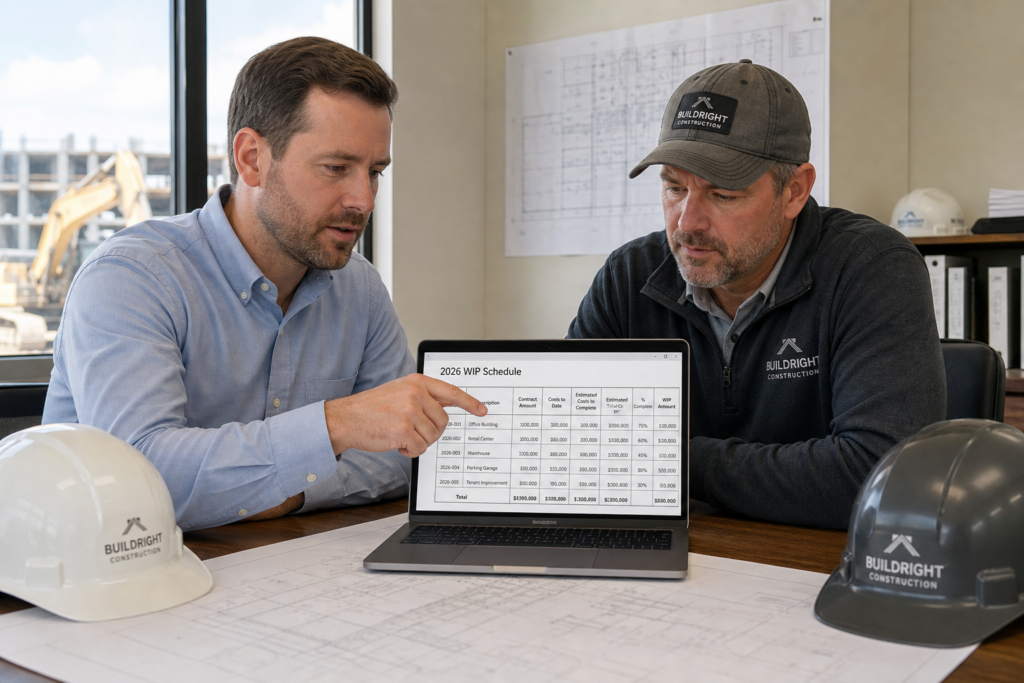
2026 WIP Schedule Guide: Tax Rules for Contractors
The 2026 WIP schedule is one of the most powerful tools a tax pro can use with construction clients. A strong 2026 WIP schedule shows exactly how much profit sits inside open contracts. It also drives smart tax timing under Section 460. In this guide, you will learn the rules, the math, and the advisory moves. As a result, you can turn a boring worksheet into real client savings.
Table of Contents
- Key Takeaways
- What Is a 2026 WIP Schedule?
- How Do You Build a WIP Schedule?
- What Are the 2026 Section 460 Tax Rules?
- How Do Over and Under Billings Affect Taxes?
- How Can Tax Pros Use WIP for Planning?
- Uncle Kam in Action: The Growing Contractor
- Related Resources
- Next Steps
- Frequently Asked Questions

Key Takeaways
- A 2026 WIP schedule tracks profit inside open construction contracts.
- Section 460 requires the percentage-of-completion method for large contracts.
- The 2026 small contractor exception uses a $31 million gross receipts test.
- Over and under billings shift taxable income between years.
- Tax pros can turn WIP review into high-value advisory revenue.
What Is a 2026 WIP Schedule?
Quick Answer: A 2026 WIP schedule is a report that tracks costs, billings, and profit on open contracts. It shows how far along each job is.
A WIP schedule stands for a work-in-process schedule. It lists every open construction contract in one place. For each job, it shows the contract price and the total estimated cost. It also shows costs to date and amounts billed. Therefore, it reveals how much profit each job has earned so far. For tax pros, this report is gold. It drives income recognition, cash flow talks, and smart planning for busy construction business owners.
Contractors do not earn income in a clean, even line. Instead, they collect deposits, hit milestones, and finish jobs across many months. As a result, cash and profit rarely match. The WIP schedule fixes this gap. It ties revenue to actual progress. Consequently, the numbers on the return reflect real work performed.
Why Tax Pros Should Care About WIP
Many preparers treat WIP as an audit-only item. That view leaves money on the table. In fact, the WIP schedule drives taxable income for most mid-size contractors. Moreover, it flags year-end planning chances. For example, a job that is 45% done tells a very different tax story than one at 90%. You can spot these gaps early. Then you can guide clients before the year closes.
Key Terms You Must Define
- Percentage of completion: costs incurred divided by total estimated costs.
- Earned revenue: contract price times the completion percentage.
- Over billing: billings that exceed earned revenue to date.
- Under billing: earned revenue that exceeds billings to date.
Pro Tip: Ask clients for the WIP schedule before year-end, not after. Early access unlocks real planning power.
How Do You Build a WIP Schedule?
Quick Answer: Build a WIP schedule by listing each contract’s price, total cost estimate, costs to date, and billings. Then compute the completion percentage.
Building a WIP schedule follows a simple flow. First, gather the signed contract price for each job. Next, pull the total estimated cost from the project manager. Then record costs incurred to date. Finally, list total amounts billed. With these four inputs, you can compute everything else. The IRS accounting methods guidance in Publication 538 explains how these numbers flow to the return.
The Core WIP Formula
The math is short and clean. Divide costs to date by total estimated costs. That gives the completion percentage. Then multiply that percentage by the contract price. That gives earned revenue. Here is a quick example. A job has a $1,000,000 contract price. Total estimated cost is $800,000. Costs to date are $400,000.
- Completion: $400,000 ÷ $800,000 = 50%
- Earned revenue: $1,000,000 × 50% = $500,000
- Earned gross profit: $500,000 − $400,000 = $100,000
Sample WIP Schedule Layout
A clean layout makes the schedule easy to read. The table below shows a simple two-job example. Notice how each column feeds the next. This structure supports both books and the tax return.
| Column | Job A | Job B |
|---|---|---|
| Contract price | $1,000,000 | $600,000 |
| Estimated cost | $800,000 | $450,000 |
| Cost to date | $400,000 | $405,000 |
| % complete | 50% | 90% |
| Earned revenue | $500,000 | $540,000 |
| Billed to date | $550,000 | $500,000 |
Did You Know? Bad cost estimates ruin a WIP schedule. Always confirm estimates with the field team before filing.
Good entity structure also affects how WIP profit gets taxed. For instance, an S corp owner may split income differently than a sole proprietor. Explore smart entity structuring for contractors before you finalize the year. The right structure can compound the savings you find in the WIP report.
What Are the 2026 Section 460 Tax Rules?
Quick Answer: Section 460 requires the percentage-of-completion method for most long-term contracts. Small contractors under the $31 million 2026 test can skip it.
Section 460 of the tax code controls long-term contract accounting. A long-term contract spans more than one tax year. Under the general rule, contractors must use the percentage-of-completion method (PCM). This method ties income to actual progress, just like the WIP schedule. You can read the statute directly at Cornell’s legal text of Section 460. The rule keeps income tied to real economic activity.
The 2026 Small Contractor Exception
Not every contractor must use PCM. A key exception applies to small contractors. For 2026, the gross receipts test sits at $31 million, up from $30 million in 2025. A contractor meets the test if average gross receipts over three years stay under that threshold. In addition, the contract must be expected to finish within two years. The IRS Form 8697 instructions outline related look-back rules. Verify current limits at IRS.gov before filing.
Methods Small Contractors Can Choose
When the exception applies, contractors gain real choices. Each method shifts income timing in a different way. As a result, method selection becomes a planning tool. The table below compares the main options for 2026.
| Method | Income Timing | Best For |
|---|---|---|
| Completed contract | At job finish | Deferral seekers |
| Percentage of completion | As work is done | Steady income firms |
| Cash method | When paid | Small, simple jobs |
Strategies like these should never run in isolation. Uncle Kam uses the MERNA framework and entity-aware architecture to model each choice across 1040s, 1120-S returns, and K-1s at once. That is why many firms rely on entity-aware tax planning software with scenario modeling. It shows the full ripple effect before you commit to a method.
How Do Over and Under Billings Affect Taxes?

Quick Answer: Over billings defer income, while under billings pull income forward. Both shift taxable profit between years.
Over and under billings sit at the heart of the WIP schedule. An over billing means the client billed more than the job earned. An under billing means the job earned more than it billed. Under PCM, only earned revenue counts as income. Therefore, billing patterns do not change taxable income under that method. However, they still reveal cash flow risk and planning gaps.
Reading the Signals in a WIP Report
Billing patterns tell a story about a firm’s health. Heavy over billings can mean the firm is borrowing from future work. In contrast, large under billings can strain cash flow today. Both signals matter for advisory talks. For example, a contractor with big under billings may need a line of credit. Meanwhile, an over-billed firm might face a profit fade later.
A Year-End Timing Example
Consider a small contractor using the completed contract method. One large job will finish in either December 2026 or January 2027. If it finishes in 2026, all profit hits the 2026 return. If it slips to 2027, the profit defers a full year. As a result, a few days can move six figures of income. Smart tax pros spot this window early. Then they help clients plan the finish date with intent.
Pro Tip: Track completion dates each quarter. A slight schedule shift can save thousands in current-year tax.
These moves work best inside a full plan, not a one-off tip. That is where a proactive tax strategy for construction clients pays off. Ready to build one? You can book a strategy session with Uncle Kam to map it out.
How Can Tax Pros Use WIP for Planning?
Quick Answer: Tax pros can use the WIP schedule to time income, pick methods, and price high-value advisory work.
The WIP schedule is more than a compliance form. It is a launchpad for advisory revenue. When you read it well, you can find real savings. Then you can charge for that insight. Tax prep pays once a year. In contrast, advisory pays all year long. As a result, WIP review can anchor a recurring engagement with growing contractors and high-net-worth business owners.
Turn WIP Review Into Advisory Fees
Start with a simple quarterly WIP review call. Walk the client through each open job. Then flag timing chances and method options. Clients pay for clarity, not spreadsheets. Therefore, present your findings as a clear action plan. A branded, client-ready deliverable makes the value obvious. It also justifies a premium fee for your ongoing tax advisory services.
A Quick ROI Calculation for Your Firm
Advisory math is simple and strong. Suppose you charge $6,000 for a yearly WIP advisory plan. Say the plan saves the client $30,000 in tax. That is a 5x return for the client. Furthermore, you add high-margin revenue with little extra cost. Now scale that across ten contractor clients. As a result, you add $60,000 in yearly advisory income.
Did You Know? Many firms leave advisory revenue unclaimed. They already do the WIP work, but they never charge for the insight.
Filing still matters, of course. Make sure every method change flows to a clean return through solid tax prep and filing support. Compliance and advisory should work together, not apart.
Uncle Kam in Action: The Growing Contractor
Client Snapshot: Meet Marcus, a general contractor who runs a fast-growing commercial build firm. He came to Uncle Kam through a referral.
Financial Profile: His firm posts about $12 million in annual gross receipts. He operates as an S corporation with three open long-term contracts.
The Challenge: Marcus faced a big tax bill in 2026. His prior preparer used percentage-of-completion on every job. As a result, income piled up fast on his 2026 return. Yet Marcus had major under billings and tight cash flow. He needed relief without breaking any rules.
The Uncle Kam Solution: The team built a full 2026 WIP schedule for every job. Then they checked the small contractor exception. His firm passed the $31 million gross receipts test with room to spare. His largest job also fit the two-year completion rule. Therefore, the team moved that contract to the completed contract method. In addition, they timed one job’s finish into early 2027. Finally, they modeled the shift across his 1120-S and personal 1040 together.
The Results: The plan deferred a large chunk of profit into the next year. It also matched income to real cash flow. You can see similar wins on the Uncle Kam client results page.
- Tax Savings: $48,000 in current-year federal tax deferred.
- Investment: $9,000 advisory and planning fee.
- First-Year ROI: More than 5x on his investment.
Marcus now runs a quarterly WIP review with his advisor. As a result, he plans each job finish with tax in mind. Moreover, he sleeps better knowing his method fits the rules.
Related Resources
- Uncle Kam Tax Strategy Blog
- The MERNA Method Framework
- Business Solutions for Contractors
- 2026 Tax Calendar and Deadlines
Next Steps
- Request a current 2026 WIP schedule from each contractor client.
- Check each client against the $31 million gross receipts test.
- Model completed contract versus PCM using proactive advisory support.
- Price a quarterly WIP review as a recurring engagement.
- Book your Uncle Kam strategy session to scale advisory revenue.
Frequently Asked Questions
Is a 2026 WIP schedule required for tax?
A WIP schedule is not a filed IRS form. However, it supports the income you report under Section 460. Therefore, most contractors need one to compute earned revenue. Auditors and lenders often request it too. Keep it current all year.
What is the 2026 small contractor exception threshold?
For 2026, the gross receipts test is $31 million. This rose from $30 million in 2025. A contractor must average under that limit over three years. The contract must also finish within two years. Verify the current figure at IRS.gov before filing.
Does the completed contract method always save tax?
Not always. The completed contract method defers income until a job finishes. That helps when a client wants to push income forward. Yet it can bunch profit into one big year. As a result, it may push income into a higher bracket. Model both methods first.
How often should tax pros review a WIP schedule?
A quarterly review works best for most firms. Quarterly checks catch timing chances early. In addition, they support strong cash flow talks. This cadence also builds a recurring advisory engagement. Monthly review fits very large contractors.
Can changing accounting methods trigger extra filings?
Yes, a method change often needs Form 3115. This form requests IRS consent for the change. It also computes any adjustment amount. Therefore, plan method changes with care. Review the current filing steps at IRS.gov each year.
This information is current as of 7/4/2026. Tax laws change frequently. Verify updates with the IRS if reading this later.
Last updated: July, 2026
Tax pros who want to plug into a complete advisory system can leverage the Uncle Kam marketplace. The platform provides AI-powered tax strategy software, MERNA certification, and a steady flow of pre-sold business owners who already value proactive planning. Learn how the Uncle Kam marketplace helps tax pros transition to advisory without rebuilding everything from scratch.
Ready to map out a personalized growth plan? Book a free strategy session with an Uncle Kam growth strategist to get a clear roadmap for launching or scaling a high-margin advisory firm that serves construction clients year-round.

