
Hawaii 2026 Tax Changes — What the One Big Beautiful Bill Act (OBBBA ) Means for Residents

On January 1, 2026, the federal tax landscape shifted in a positive and historic way. The One Big Beautiful Bill Act (OBBBA), signed into law on July 4, 2025, made permanent the major tax cuts from the 2017 Tax Cuts and Jobs Act (TCJA) and introduced new, taxpayer-friendly benefits. The long-dreaded 2026 “tax cliff” has been averted.
Planning ahead? Read the 2027 Hawaii Tax Changes Guide to see what business owners and investors should prepare for next.
For Hawaii residents, who navigate both a high cost of living and a state income tax, these permanent federal changes provide significant and welcome relief. This guide breaks down exactly how the new OBBBA tax law impacts every Hawaii taxpayer—from W-2 earners in Honolulu and tourism professionals in Maui to business owners in Kona and retirees across the islands.
Federal Changes Bring Relief to Hawaii Taxpayers
Lower Federal Tax Brackets are PERMANENT
The biggest news is that the lower individual income tax rates from the TCJA are now permanent. The anticipated jump in federal tax rates has been avoided.
This is a crucial win for Hawaii’s working families. In a state with such
a high cost of living, having lower, predictable federal tax rates provides much-needed breathing room. Dual-income households in Honolulu, military families, and professionals in the healthcare and tourism sectors will all benefit from keeping more of their hard-earned money.
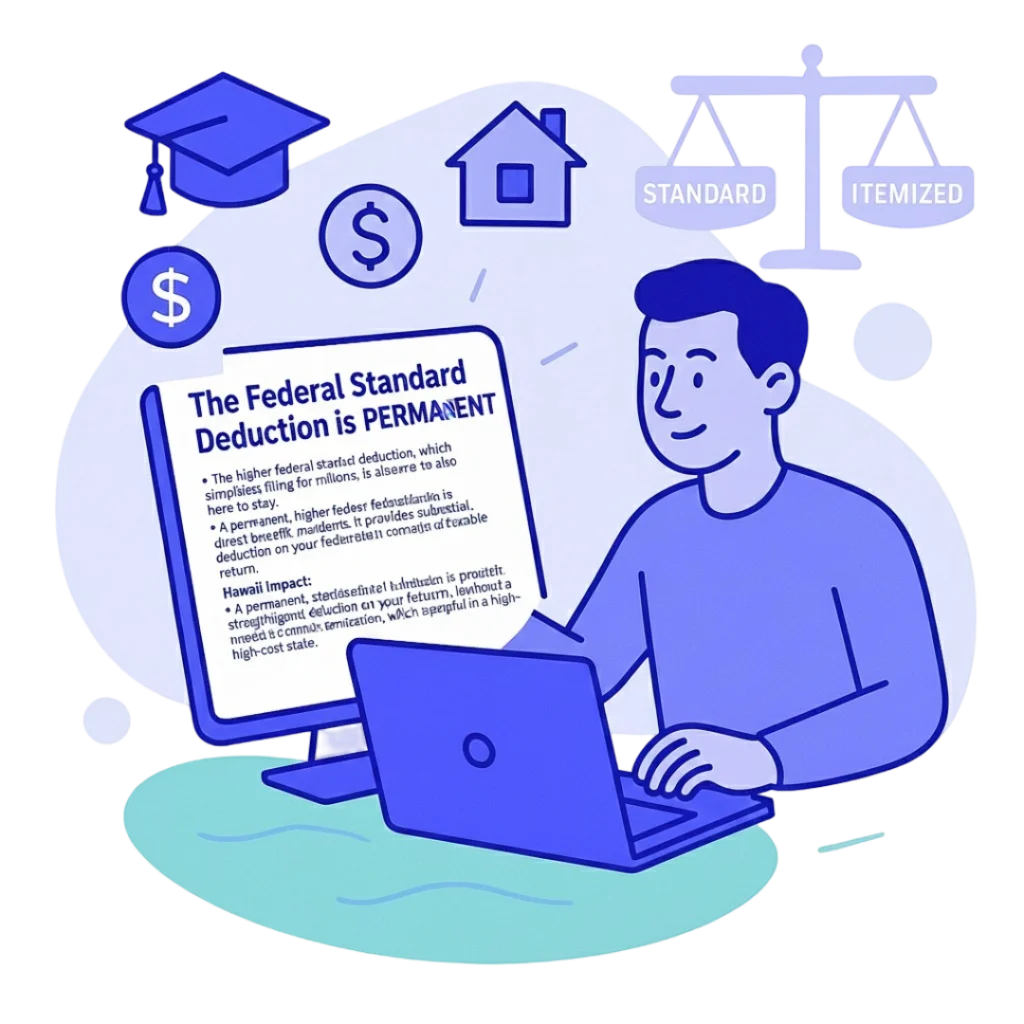
The Federal Standard Deduction is PERMANENT
Hawaii Impact:
The QBI Deduction is PERMANENT and ENHANCED (Federal Level)
The 20% Qualified Business Income (QBI) Deduction is not expiring. OBBBA made it a
permanent part of the federal tax code and even improved it.
Important Note for Hawaii: Hawaii is a non-conforming state, meaning it does not offer a
state-level QBI deduction. However, this powerful 20% deduction remains fully available on your federal tax return.
- LLCs, S-Corps, and Sole Proprietors
- Real estate investors and STR operators
- Independent contractors and gig economy workers
Key OBBBA Enhancements to QBI:
- Permanence: The 20% federal deduction is locked in for 2026 and beyond.
- Minimum Deduction: A new $400 minimum federal deduction is available for any business with at least $1,000 of qualified income.
For the thousands of small businesses that drive Hawaii’s economy, the permanent federal QBI deduction provides certainty and significant federal tax savings. Strategic planning to maximize this federal benefit is more important than ever.
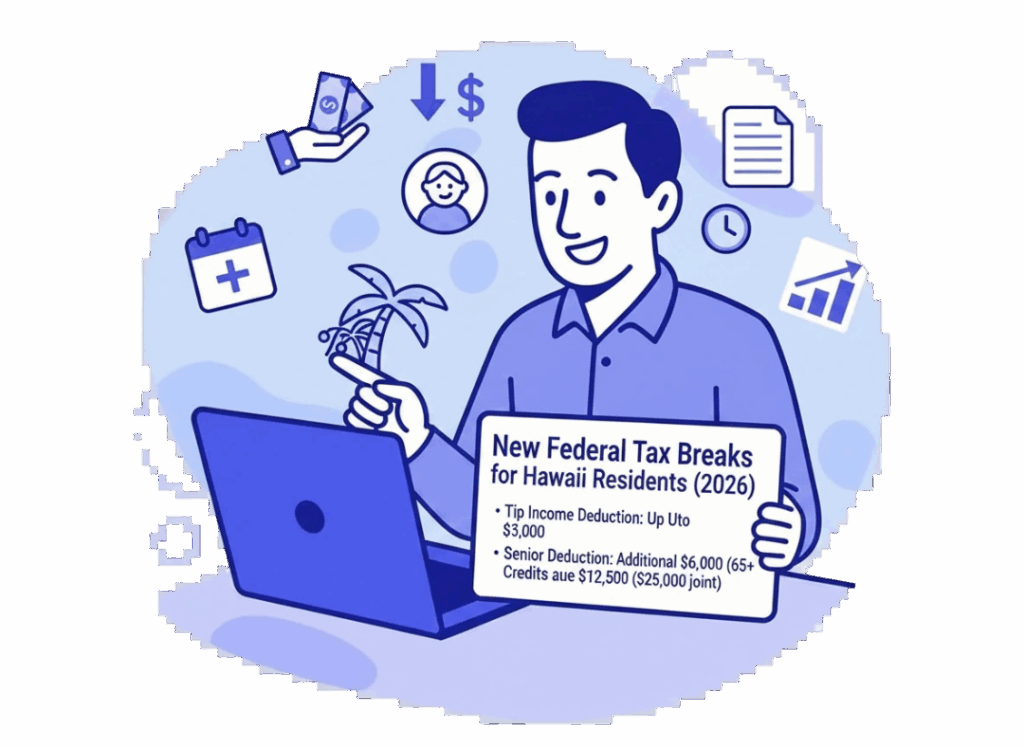
New Federal Tax Breaks for Hawaii Residents
- Tip Income Deduction: Deduct up to $25,000 in tip income—a massive benefit for workers in Hawaii’s world-class tourism and hospitality industry.
- Senior Deduction:An additional $6,000 deduction for individuals 65 and older, providing federal tax relief for Hawaii’s kupuna (subject to phase-out).
- Overtime Deduction: Deduct up to $12,500 ($25,000 for joint filers) of qualified overtime pay.
Hawaii-Specific Tax Considerations for 2026
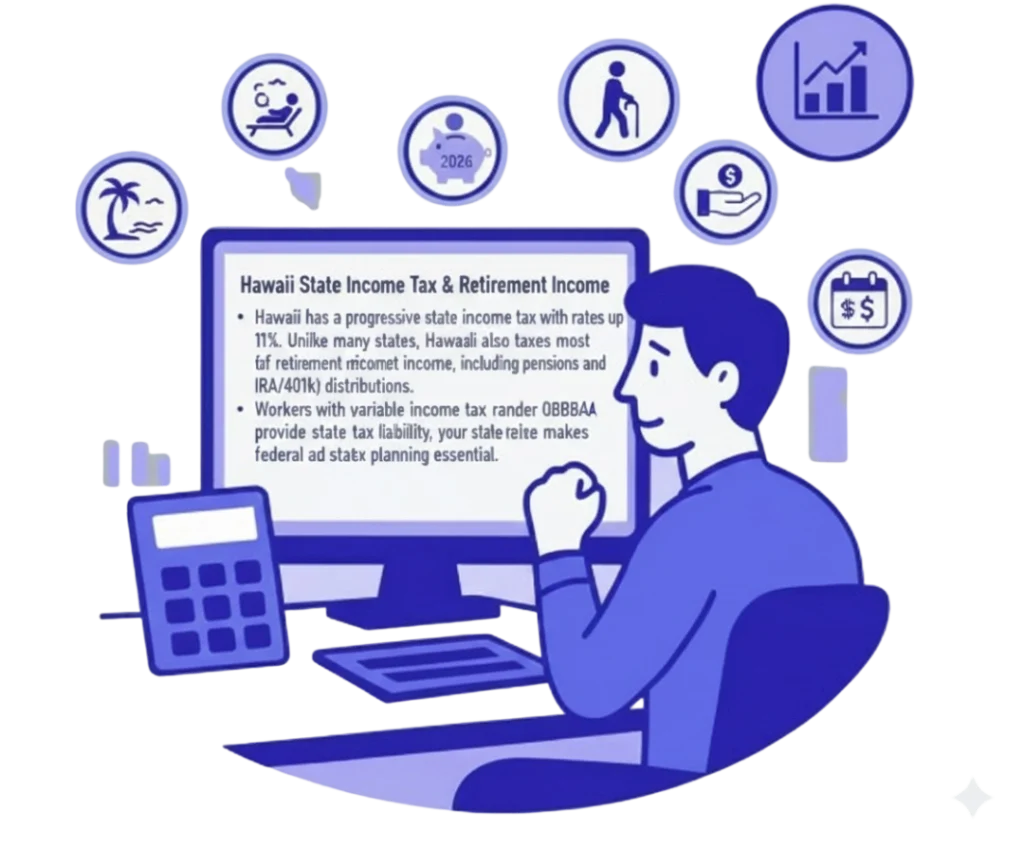
Hawaii State Income Tax & Retirement Income
Hawaii has a progressive state income tax with rates up to 11%. Unlike many states, Hawaii also taxes most forms of retirement income, including pensions and IRA/401(k)
distributions.
Real Estate in a High-Value Market

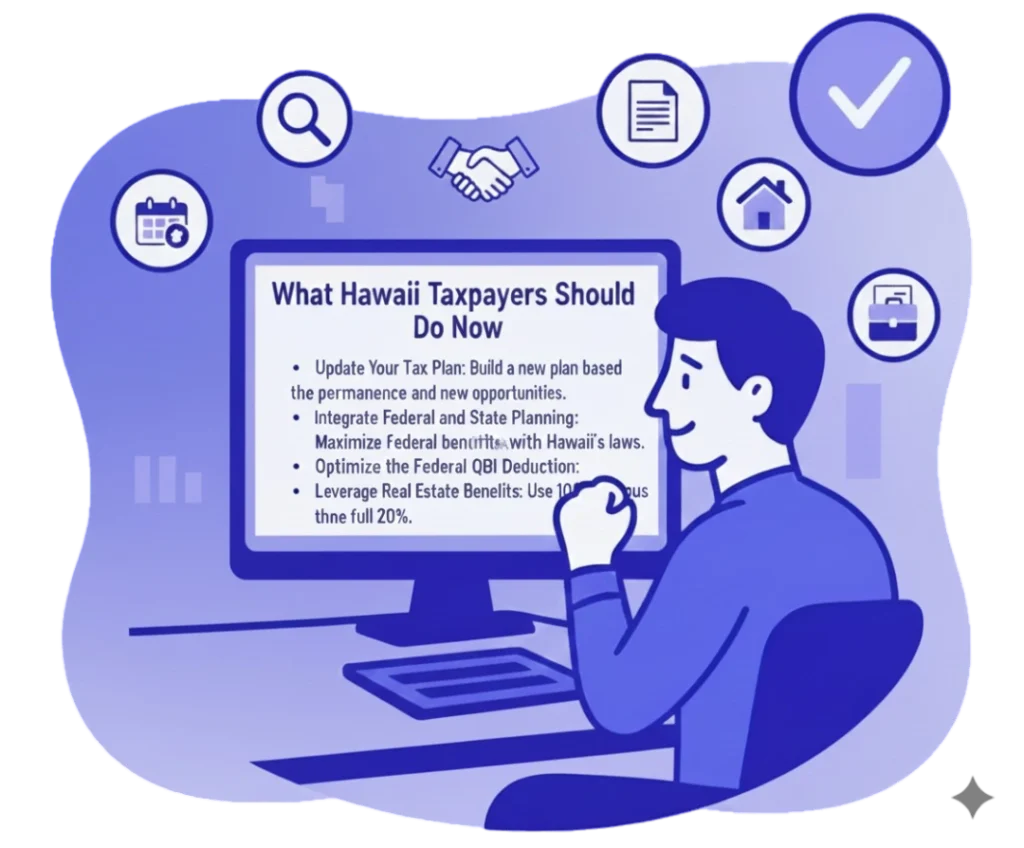
What Hawaii Taxpayers Should Do Now
- Update Your Tax Plan: Your old strategy, based on the fear of expiring tax cuts, is obsolete. It’s time to build a new plan based on permanence and new federal opportunities.
- Integrate Federal and State Planning: Work with a professional who understands how to maximize permanent federal benefits while navigating Hawaii’s state tax laws.
- Maximize the Federal QBI Deduction: If you own a business, ensure your structure and bookkeeping are optimized to claim the full 20% federal QBI deduction.
- Leverage Real Estate Benefits: Plan your real estate investments to take full advantage of permanent 100% bonus depreciation on your federal return
Hawaii 2026 Tax FAQ
Does Hawaii conform to the QBI deduction?
No — QBI is federal-only.
Will my federal taxes go up?
Most Hawaii residents will see higher federal taxable income due to deduction and bracket changes.
Are families affected?
Yes — reduced credits will affect many Hawaii families.
Are STR owners impacted?
Yes — reduced depreciation and stricter rules apply.
Are retirees affected?
Yes — federal changes also influence Hawaii state taxation of retirement income.
Get Your Personalized 2026 Hawaii Tax Plan
Living in paradise comes with a unique financial landscape. The new, permanent federal tax
laws under OBBBA provide a powerful tailwind for Hawaii residents. To make the most of it,
you need a strategy that aligns these federal benefits with your specific situation in Hawaii.
A personalized strategy session will ensure you are structured to capture every new and
permanent advantage.
Because tax situations vary by individual and business, many Hawaii residents choose to work with a qualified tax professional. You can explore available Hawaii tax services here: