
Washington, D.C. Tax Preparation Services
Elite Tax Support for DC’s Professionals, Government Staff, Contractors & Business Owners
Washington, D.C. is one of the most financially complex regions in the nation — federal employees, government contractors, attorneys, analysts, consultants, nonprofit executives, educators, tech workers, real estate investors, and hybrid W-2/1099 earners. These individuals need precision tax preparation, multi-state expertise, and strategic tax planning that goes far beyond simple filing.
Most Washington, D.C. tax preparation clients manage:
● W-2 income (federal, legal, consulting, nonprofit, tech)
● 1099 contractor or consulting income
● Multi-state exposure (DC, MD, VA + remote state filings)
● Rental properties (Capitol Hill, Georgetown, Shaw, Logan Circle)
● RSUs, ISOs, ESPPs & stock compensation
● K-1 income from partnerships & funds
● LLC + S-Corp ownership
● Investment-heavy portfolios
● Pension, TSP & Social Security income
● Short-term rentals (Airbnb & VRBO)
Our Washington, D.C. tax preparation team provides accuracy, clarity, and long-term financial structure.

Why Washington, D.C. Residents Choose Our Tax Preparation Firm
● Licensed CPAs & EAs with 40+ years combined experience
● Specialists in federal employee income, contractor pay & legal compensation
● Multi-state filing expertise for DC–MD–VA and relocations
● Rental depreciation, STR strategy & K-1 optimization
● RSU and stock compensation reporting accuracy
● Full-service bookkeeping + multi-year cleanup
● IRS notices, audits & prior-year corrections
● Transparent flat-rate tax preparation pricing
● Year-round financial oversight
Your tax preparer must understand Washington’s government-driven, professional, and investment-heavy income patterns — ours do.

Tax Preparation Services for Individuals in Washington, D.C.
We support professionals, families, investors, federal workers, and relocators with full-spectrum tax preparation services.
Individual tax preparation services include:
● Federal & DC filing
● Multi-state W-2/1099 corrections & allocation
● RSU/ISO/ESPP stock compensation reporting
● Rental property accounting + depreciation schedules
● K-1 reconciliation for partnership/fund income
● Pension, TSP & SSA income planning
● Investment & capital gains reporting
● IRS audits, notices & amended returns
● Estimated tax planning
We ensure your entire financial profile is accurate, compliant, and optimized.
Tax Preparation Services for Washington, D.C. Business Owners
Washington’s business ecosystem includes law firms, consultants, real estate investors, contractors, medical practices, nonprofits, agencies, and startups.
Business tax preparation services include:
● S-Corp, LLC, C-Corp & partnership filings
● Monthly bookkeeping + cleanup
● Payroll setup, support & compliance
● Multi-entity bookkeeping (business + rentals + investments)
● Depreciation & fixed asset management
● Quarterly projections + financial forecasting
● Audit-ready financial statements
● Multi-state business filing support
We help Washington, D.C. business owners stay scalable, compliant, and financially strong.


What Sets Our Washington, D.C. Tax Preparers Apart
Washington, D.C. residents often manage multiple high-volume income sources and complex financial layers.
We understand:
● Government salaries + contractor income
● Legal & consulting income cycles
● Multi-state relocations (VA/MD ⇄ DC)
● Rental property & STR depreciation
● K-1 income + private fund investments
● Equity compensation for tech & consulting
● Multi-LLC structuring
● W-2 + 1099 blended careers
● Capital gains optimization
● Retirement-phase planning (TSP + pensions)
We don’t just file — we fix, reconcile, and elevate your financial systems.
Areas We Serve Across Washington, D.C. & The DMV
Washington, D.C.
Capitol Hill
Georgetown
Dupont Circle
Shaw
Logan Circle
Adams Morgan
Navy Yard
Columbia Heights
Foggy Bottom
NoMa
Petworth
Southwest Waterfront
Wherever you live across the DC Metro, our tax preparation team supports your entire financial life.
What Washington, D.C. Clients Say About Our Tax Preparers

Real Client Case Study — Washington, D.C.
Client: D. Ramirez — Federal Contractor + Multi-Property Investor
Financial Mix: W-2 + multi-state wages + rental income + RSUs + dividends
Problem:
Multi-state tax errors, incorrect depreciation, messy bookkeeping, stock compensation mistakes.
What We Did:
● Corrected DC/VA/MD multi-state filings
● Rebuilt depreciation across two rentals
● Cleaned multi-year RSU basis reporting
● Organized and reconciled bookkeeping
● Cleaned K-1 and investment reporting
Result:
$19,450 in annual tax savings.
Model Your Taxes by State- Before You File

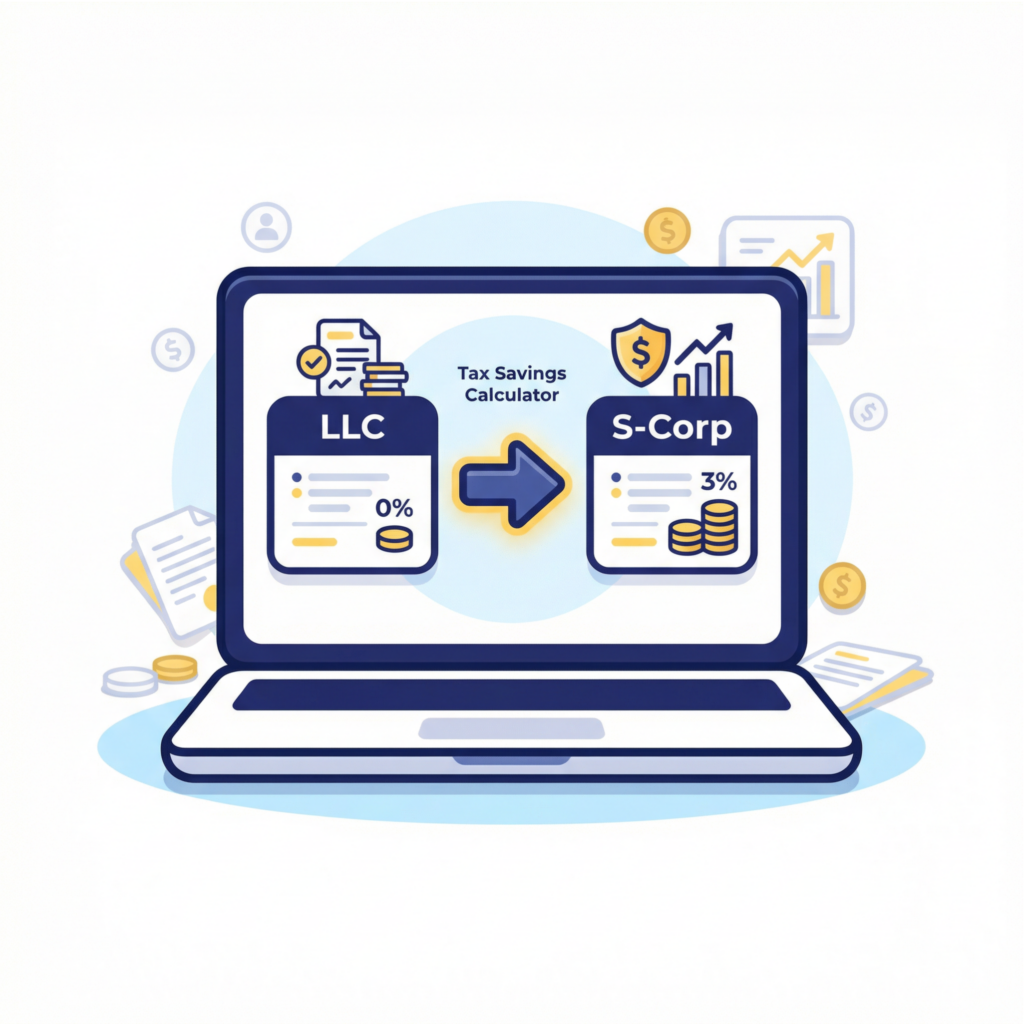
LLC vs S-Corp Tax Calculator
Self-Employment tax Calculator

Small Business Tax Calculator

Not TurboTax. Not H&R Block. A Real Strategy.
Software files your taxes. We engineer your tax strategy. There’s a difference — and it’s worth thousands.
We Find What They Miss
TurboTax asks questions. H&R Block fills out forms. Our MERNA™-certified strategists dig into your income, entity structure, and lifestyle to uncover deductions most CPAs overlook — legally saving clients $15K–$150K+ per year.
Strategy, Not Just Filing
Filing your return is the last step. We start months earlier — restructuring entities, layering write-offs, and building a tax plan that works year-round. By the time we file, you’ve already won.
A Real Strategist in Your Corner
No chatbots. No call centers. You get a dedicated, MERNA™-certified tax strategist who knows your situation, answers your questions, and fights for every dollar — every year.
Work With a Washington, D.C. Tax Preparation Firm That Understands Multi-Source, Multi-State Financial Lives
We offer a free tax preparation consultation for Washington, D.C. residents.
We’ll analyze your income, equity, rentals, multi-state exposure, and business structure to uncover immediate tax-saving opportunities.
Book a Free Strategy Call and Meet Your Match.
Professional, Licensed, and Vetted MERNA™ Certified Tax Strategists Who Will Save You Money.
FAQ — TAX PREPARATION IN WASHINGTON DC
As a self-employed consultant based in Georgetown, Washington Dc, can I deduct my home office expenses, particularly if I occasionally meet clients at local coffee shops like The Roasted Boon?
Yes, if your home office is your principal place of business and used exclusively and regularly for business, you can deduct qualified home office expenses. This includes a portion of utilities, rent/mortgage interest, and depreciation. Even with client meetings at external locations like The Roasted Boon, if your primary administrative and management tasks occur at home, the deduction is generally permissible, subject to IRS Publication 587 guidelines.
I own a small business operating out of a storefront in Adams Morgan, Washington Dc. What are the key local business taxes I need to be aware of beyond federal and state income taxes, and what are their typical filing deadlines?
Beyond federal income tax, your Washington Dc business will likely be subject to the Unincorporated Business Franchise Tax if your gross receipts exceed $12,000 annually, with a rate of 8.25% of taxable income. Additionally, you’ll need to consider the Washington Dc Sales and Use Tax (currently 6%) if you sell tangible personal property or certain services, with monthly or quarterly filing deadlines. Don’t forget the annual Basic Business License renewal, which varies by endorsement.
I'm a new resident of Washington Dc, having moved from Maryland for a job on Capitol Hill. Do I need to file a part-year Washington Dc tax return, and what are the implications for my Maryland income earned before moving?
Yes, as a new resident, you’ll file a part-year Washington Dc Form D-40. You’ll report all income earned while a Washington Dc resident. For income earned while a Maryland resident, you’ll file a Maryland state tax return (Form 502). Washington Dc does not have a state income tax, but its municipal income tax rates range from 4% to 8.95% depending on your income level, ensuring you only pay Washington Dc taxes on income earned during your residency here.
My Washington Dc-based tech startup recently received a grant from the Washington Dc Department of Small and Local Business Development (DSLBD). Is this grant taxable income for federal and local tax purposes, and are there any specific Washington Dc tax credits I should explore?
Generally, most grants, including those from DSLBD, are considered taxable income for both federal and Washington Dc tax purposes unless specifically excluded by law. However, Washington Dc offers several local tax credits that your startup might qualify for, such as the High Technology Company Tax Credit (if you meet specific criteria) or the Qualified High Technology Company (QHTC) tax incentives, which can include credits for wages paid to qualified employees.
I'm a landlord with rental properties in Columbia Heights and Shaw, Washington Dc. Are there any specific Washington Dc property tax deductions or considerations unique to the district that I should be aware of, especially regarding property tax assessments?
Beyond federal deductions like mortgage interest and depreciation, Washington Dc offers a Homestead Deduction that reduces your property’s assessed value by $99,350 for owner-occupied primary residences. While your rental properties won’t qualify for the Homestead Deduction, it’s crucial to be aware of Washington Dc’s triennial assessment cycle and the appeal process through the Office of Tax and Revenue (OTR) if you dispute your property’s assessed value, as this directly impacts your property tax liability.
What are the specific Washington Dc tax filing deadlines for individuals, especially if I need an extension, and how do these align with federal deadlines? I often find myself juggling multiple deadlines.
For individual Washington Dc residents, the income tax filing deadline for Form D-40 is typically April 15th, aligning with the federal deadline. If you need an extension, you can file Form FR-127 to extend your filing deadline to October 15th. However, remember that an extension to file is not an extension to pay; any estimated taxes due must still be paid by April 15th to avoid penalties and interest on underpayments.