
Cincinnati Tax Advisor Services
Strategic Tax Planning for Cincinnati’s Professionals, Executives, Investors & Business Owners
Cincinnati’s economy blends corporate headquarters, finance, engineering, healthcare, logistics, manufacturing, education, and real estate. High-income earners, multi-state commuters, blended W-2/1099 professionals, and investors require strategic tax planning far beyond annual filing.
Most Cincinnati tax advisory clients manage:
● High-income W-2 (corporate, medical, government, finance, engineering)
● 1099 contractor or consulting income
● Multi-state exposure (OH, KY, IN + remote states)
● Rental properties (Hyde Park, Mt. Adams, Oakley, OTR, Clifton)
● RSUs, ISOs, ESPPs & stock compensation
● K-1 income from partnerships & private funds
● LLC + S-Corp ownership
● Multi-entity investments
● Pension, retirement & SSA income
● Short-term rentals (Airbnb)
Our Cincinnati tax advisors help clients reduce taxes ethically, structurally, and long-term.
Why Cincinnati Residents Choose Our Tax Advisory Firm
● Senior tax strategists with 40+ years combined experience
● Specialists in corporate, medical, engineering, finance & logistics income
● Advanced multi-state planning for OH–KY–IN residents and relocators
● Rental property strategy, depreciation planning & optimization
● RSU/ISO/ESPP equity compensation planning
● K-1 optimization for private investments & partnerships
● Entity structuring (LLC, S-Corp, multi-LLC systems)
● IRS representation & complex case cleanup
● Transparent tax advisory pricing
● Year-round strategic support
Your tax advisor must understand Cincinnati’s corporate, healthcare, and supply-chain-driven income patterns — ours do.

Tax Advisor Services for Individuals in Cincinnati
We support executives, professionals, investors, and multi-state commuters with proactive high-level tax strategy.
Individual advisory services include:
● Multi-state strategy for OH–KY–IN residents
● RSU/ISO/ESPP tax optimization
● Rental property depreciation & tax planning
● K-1 review + private fund strategy
● Capital gains timing & planning
● High-income W-2/1099 blended income strategy
● Retirement tax planning (pensions, SSA, investments)
● Tax bracket & AGI management
● IRS notices, audits & amended returns
We help Cincinnati residents keep more of what they earn, year after year.

Tax Advisor Services for Cincinnati Business Owners
Cincinnati’s business community includes logistics firms, construction companies, medical practices, professional services, manufacturers, agencies, real estate investors, and startups.
Business advisory services include:
● S-Corp tax optimization
● LLC restructuring + multi-LLC strategy
● C-Corp planning for agencies & startups
● Multi-state nexus & allocation planning
● Real estate investor planning + cost segregation
● Quarterly projections & CFO-level oversight
● Owner distribution & compensation strategy
● Audit protection & compliance systems
● Tax-efficient business structuring
We help Cincinnati business owners reduce taxes while increasing operational strength.
What Sets Our Cincinnati Tax Advisors Apart
Cincinnati residents often juggle income, investments, and multi-state exposure that require advanced planning.
We understand:
● Corporate & engineering compensation
● Healthcare & government pay structures
● Multi-state relocations (KY/IN ⇄ OH)
● Equity compensation for corporate & finance roles
● Rental property tax planning & STR strategy
● Fund income, K-1s & private investments
● Multi-LLC systems & tax engineering
● Capital gains optimization
● High-income retirement planning
● Blended W-2 + 1099 careers
We don’t just reduce taxes — we build long-term tax systems.

Areas We Serve Across Cincinnati & Southwest Ohio
Cincinnati
Hyde Park
Over-the-Rhine (OTR)
Mt. Adams
Clifton
Oakley
Blue Ash
Madeira
Anderson Township
West Chester
Kenwood
Loveland
Norwood
Our advisors support clients across the entire Cincinnati metro.
What Cincinnati Clients Say About Our Tax Advisors

Real Client Case Study — Cincinnati, OH
Client: S. Morales — Corporate Analyst + Multi-State Earner + Investor
Financial Mix: W-2 corporate income + RSUs + rental income + K-1s + OH–KY wages
Problem:
Overpayment due to multi-state misalignment, rental depreciation issues, and equity compensation errors.
What We Did:
● Corrected OH/KY multi-state allocation
● Built RSU liquidation schedule to minimize tax
● Reconstructed depreciation schedules
● Cleaned multi-year capital gains reporting
● Optimized K-1 allocations
Result:
$20,700 in projected annual tax savings.
Model Your Taxes by State- Before You File

LLC vs S-Corp Tax Calculator
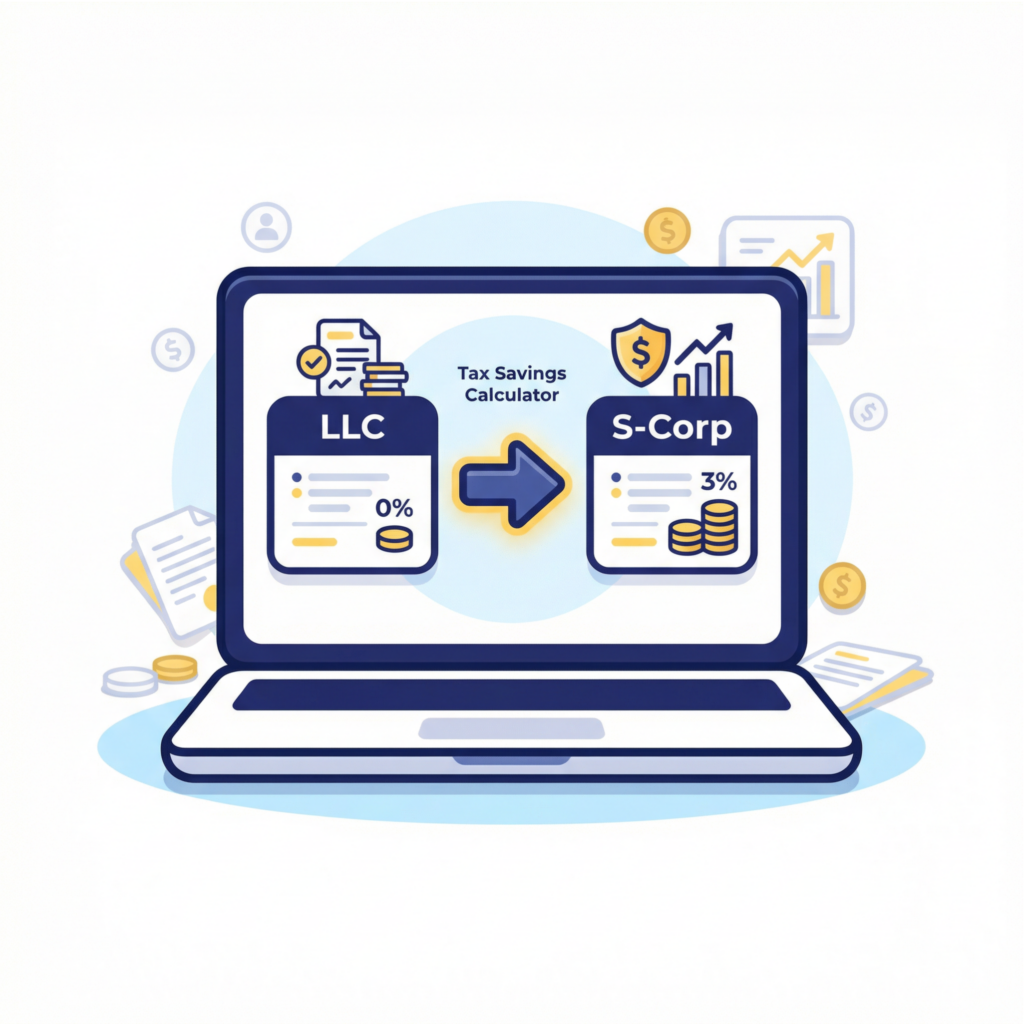
Self-Employment tax Calculator

Small Business Tax Calculator

Not TurboTax. Not H&R Block. A Real Strategy.
Software files your taxes. We engineer your tax strategy. There’s a difference — and it’s worth thousands.
We Find What They Miss
TurboTax asks questions. H&R Block fills out forms. Our MERNA™-certified strategists dig into your income, entity structure, and lifestyle to uncover deductions most CPAs overlook — legally saving clients $15K–$150K+ per year.
Strategy, Not Just Filing
Filing your return is the last step. We start months earlier — restructuring entities, layering write-offs, and building a tax plan that works year-round. By the time we file, you’ve already won.
A Real Strategist in Your Corner
No chatbots. No call centers. You get a dedicated, MERNA™-certified tax strategist who knows your situation, answers your questions, and fights for every dollar — every year.
Work With a Cincinnati Tax Advisory Firm That Understands Complex Financial Lives
We offer a free tax advisory consultation for Cincinnati residents.
We’ll review your income, equity, rentals, entity structure, and multi-state exposure to uncover immediate tax-saving opportunities.
Book a Free Strategy Call and Meet Your Match.
Professional, Licensed, and Vetted MERNA™ Certified Tax Strategists Who Will Save You Money.
FAQ — TAX PREPARATION IN CINCINNATI TAX ADVISOR
As a small business owner operating out of Over-the-Rhine, what are the key municipal tax obligations I need to be aware of beyond federal and state income taxes, especially concerning Cincinnati's earnings tax?
Cincinnati imposes a 1.8% earnings tax on all gross wages and net profits of businesses and residents working within city limits. This is separate from Ohio state income tax and often requires quarterly estimated payments if you’re not an employee. We can help ensure compliance with Cincinnati’s Form R1 and avoid penalties, particularly for new ventures in OTR experiencing fluctuating income.
I'm a freelance graphic designer based in Clifton, working for clients both locally and out-of-state. Can I deduct my home office expenses, and are there any specific Ohio or Cincinnati rules I should know about for this deduction?
Yes, you can likely deduct home office expenses if your home is your principal place of business. While the IRS offers both simplified and regular methods (Form 8829), Ohio doesn’t have specific state-level home office deductions beyond federal conformity. We’ll help you navigate the ‘exclusive and regular use’ test and ensure you’re maximizing deductions like utilities, depreciation, and internet, especially crucial for creative professionals in Clifton.
My manufacturing business, located near Lunken Airport, recently purchased new machinery. What are the best strategies to depreciate these assets for Ohio state tax purposes, and how does Ohio's Commercial Activity Tax (CAT) factor into this?
For Ohio state tax, you generally follow federal depreciation rules (e.g., Section 179 or bonus depreciation) which can significantly reduce your taxable income. However, the Ohio Commercial Activity Tax (CAT) is a gross receipts tax (0.26% on taxable gross receipts over $150,000 annually) and is not directly affected by depreciation deductions, as it’s levied on revenue, not profit. We’ll help optimize your asset depreciation to reduce your Ohio adjusted gross income, while also ensuring accurate CAT reporting for your manufacturing operations.
I'm a real estate investor with rental properties in Hyde Park and Oakley. What are the critical deadlines for property tax payments in Hamilton County, and are there any specific deductions unique to Ohio landlords I should consider?
In Hamilton County, property taxes are typically due in two installments: around January/February and June/July. While specific dates can vary, missing them incurs penalties. As an Ohio landlord, you can deduct standard expenses like mortgage interest, property taxes (already paid!), repairs, and insurance. Ohio doesn’t have unique landlord deductions beyond federal, but we can ensure you’re capitalizing on all eligible federal deductions like depreciation (IRS Publication 527) for your Hyde Park and Oakley properties.
My spouse works for a company outside Cincinnati but we live in Montgomery. We're confused about which city's earnings tax applies to their income, and if we need to file a separate municipal return for Cincinnati.
If your spouse lives in Montgomery (which has its own municipal income tax) and works for a company outside Cincinnati city limits, they would generally owe municipal tax to their work city (if applicable) and/or their residence city, Montgomery. They would NOT owe Cincinnati earnings tax unless their employer is physically located within Cincinnati proper. We’ll help you accurately determine municipal tax reciprocity and avoid double taxation or unnecessary Cincinnati filings.
I'm a healthcare professional working at Cincinnati Children's Hospital. Are there any specific professional development or continuing education expenses that are particularly advantageous to deduct under federal or Ohio tax law, especially given the new TCJA limitations on unreimbursed employee expenses?
Under the Tax Cuts and Jobs Act (TCJA), unreimbursed employee business expenses are generally no longer deductible on your federal Schedule A. However, if you are a self-employed contractor or own your practice, professional development, continuing education units (CEUs), and professional licensure fees are fully deductible business expenses on Schedule C. We can review your employment structure to identify any potential deductions for your vital work at institutions like Cincinnati Children’s.