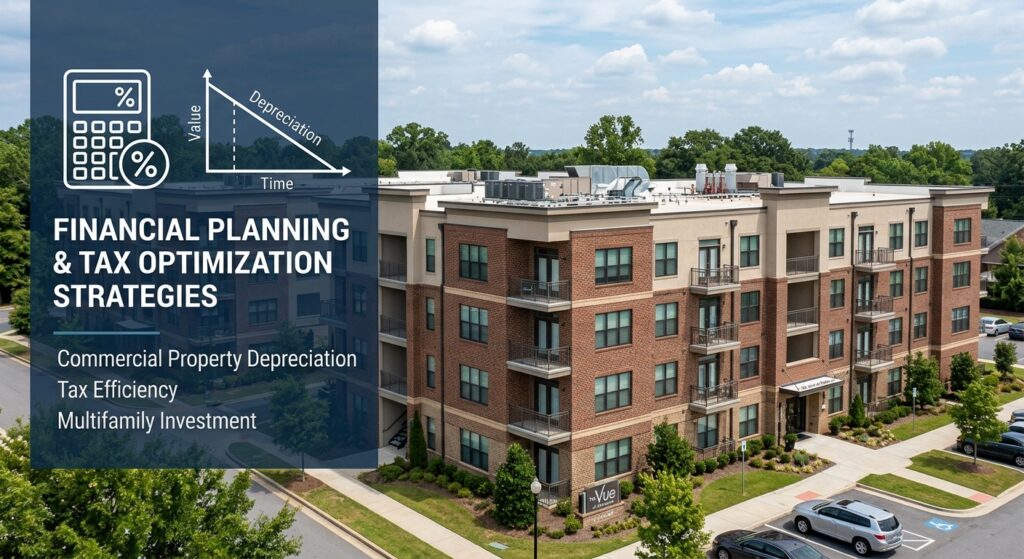
Alabama Cost Segregation Tax Deduction 2026: Complete Guide for Real Estate Investors
For real estate investors in Alabama, 2026 marks a significant opportunity to leverage Alabama cost segregation strategies that can dramatically reduce your federal taxable income and accelerate depreciation deductions. Cost segregation has emerged as one of the most effective tax planning tools for high-net-worth property owners, allowing you to break down real estate assets into shorter depreciation periods and unlock substantial tax savings in the current year.
Table of Contents
- Key Takeaways
- What Is Cost Segregation and How Does It Work?
- Alabama Cost Segregation: Unique State Advantages in 2026
- What Are the Real Tax Benefits of Cost Segregation?
- How Much Can You Save With Alabama Cost Segregation in 2026?
- How to Implement Cost Segregation: Step-by-Step Process
- IRS Compliance and Cost Segregation Studies: What You Must Know
- Uncle Kam in Action
- Next Steps
- Frequently Asked Questions
Key Takeaways
- Alabama now allows cost segregation deductions for the 2026 tax year, enabling faster depreciation of real property components.
- Cost segregation breaks commercial and multifamily properties into components with depreciation lives ranging from 5 to 39 years.
- Real estate investors can defer taxes significantly while maintaining full IRS compliance through properly documented cost segregation studies.
- A professional cost segregation study by a qualified CPA typically costs 0.5% to 1% of property value but generates 10-20x return on investment in year one.
- The deadline to implement cost segregation for 2026 tax year is critical—positioning must occur before year-end filing deadlines.
What Is Cost Segregation and How Does It Work?
Quick Answer: Cost segregation is an IRS-approved tax strategy that breaks real property into individual components, each depreciating over different timeframes ranging from 5 to 39 years, dramatically accelerating your deductions and reducing current-year taxes.
Cost segregation represents one of the most powerful yet underutilized tax strategies available to real estate investors. Under standard depreciation rules (Section 168 of the Internal Revenue Code), most commercial and multifamily properties depreciate over 39 years using the Modified Accelerated Cost Recovery System (MACRS). This means you spread your depreciation deduction across four decades, significantly reducing your annual tax savings.
Cost segregation fundamentally changes this approach. By hiring a qualified engineering firm or CPA to conduct a detailed cost segregation study, you identify and categorize property components with shorter useful lives. These components—ranging from specialized equipment to land improvements—can be depreciated over 5, 7, or 15-year periods instead of 39 years, compressing your depreciation deductions into the early years of ownership.
The Three Core Components of Real Property
A comprehensive cost segregation study classifies building components into three categories:
- 5-Year Property: Includes carpeting, HVAC equipment, specialized machinery, and other removable fixtures that don’t become part of the building structure. These items depreciate under the 200% declining balance method over five years.
- 7-Year and 15-Year Property: Includes certain equipment, land improvements like parking areas and sidewalks, and site infrastructure. These items bridge between the shortest and longest depreciation timeframes.
- 39-Year Property: The remaining building structure and foundation components that must be depreciated over the full 39-year recovery period using the straight-line method.
By segregating these components during your 2026 tax year filing, you accelerate deductions for the shorter-lived assets while properly classifying the structural components. This creates a powerful first-year deduction that can offset other business or investment income.
How Depreciation Methods Amplify Your Deductions
The depreciation method applied to each component determines the timing and magnitude of your deductions. For 5-year property classified under MACRS, the IRS allows you to deduct a larger percentage in earlier years. Using the 200% declining balance method, your first-year deduction on a $500,000 segregated into 5-year property components could total approximately $200,000, compared to roughly $12,800 if depreciated over 39 years.
Pro Tip: The timing of your cost segregation study matters. For 2026, you must complete and implement the study before December 31, 2026, or file Form 3115 (Application for Change in Accounting Method) by the deadline to claim retroactive deductions from earlier acquisition years.
Alabama Cost Segregation: Unique State Advantages in 2026
Quick Answer: Alabama now permits cost segregation deductions at the state level for 2026, creating a dual-benefit scenario where investors save on both federal and Alabama state income taxes while maintaining full compliance with state regulations.
For decades, Alabama investors faced a challenge: federal cost segregation deductions didn’t receive recognition at the state level, forcing additional state income taxes on federally deductible amounts. This changed in 2026. Alabama’s updated tax code now aligns with federal cost segregation treatment, meaning investors who properly document their cost segregation studies receive full deductions at both the federal and state levels.
Alabama’s top state income tax rate applies to all brackets, making this alignment particularly valuable. For a high-net-worth real estate investor in Alabama, the combination of federal (up to 37%) and state tax savings (up to 5% Alabama income tax) creates a combined marginal tax rate that makes cost segregation exceptionally attractive in 2026.
Alabama’s Specific Requirements for Cost Segregation
To claim cost segregation deductions in Alabama for 2026, your study must meet these state-specific criteria:
- The cost segregation study must be conducted by a qualified engineering or accounting professional licensed to practice in the United States.
- Documentation must clearly separate federal and state deductions to ensure proper allocation.
- Your Form 1040 Schedule E (for individual filers) or corporate returns must include full disclosure of the cost segregation methodology.
- Alabama Form A (reconciliation to federal income) must clearly show the adjustment if any discrepancies exist between federal and state treatment.
Working with a qualified entity structuring expert ensures your Alabama properties are positioned correctly for maximum cost segregation benefits while avoiding any state compliance issues.
What Are the Real Tax Benefits of Cost Segregation?
Quick Answer: Cost segregation typically generates first-year deductions of 10-20% of your property value, creating immediate tax savings of 30-40% of those deductions through combined federal and state tax rate benefits.
The fundamental benefit of cost segregation is accelerating depreciation. Rather than spreading deductions over 39 years, cost segregation front-loads deductions into the first 5-7 years, fundamentally changing your real estate investment economics.
Immediate Tax Deferral Benefits
Consider a $2 million commercial property acquisition in Alabama. Under standard 39-year depreciation, your annual deduction equals approximately $51,282 ($2,000,000 ÷ 39 years). Through cost segregation, you might segregate $400,000 into 5-year property components. This creates a first-year deduction of approximately $160,000 on the segregated portion, versus just $10,256 under standard depreciation. The difference in year one: $149,744 in additional deductions. At a combined 42% federal and Alabama tax rate, this creates approximately $62,892 in direct tax savings for 2026 alone.
These deductions directly offset your other business or investment income, reducing your taxable income dollar-for-dollar. For business owners and real estate investors who generate substantial W-2 income or business profits, this deduction utilization is critical to comprehensive tax planning.
Long-Term Wealth Building Through Deferred Taxation
Beyond year-one deductions, cost segregation creates a strategic wealth-building advantage. Tax dollars saved through accelerated depreciation in years 1-5 can be immediately reinvested into additional properties, further increasing your real estate portfolio growth. Rather than paying taxes on that income, you deploy capital toward additional acquisitions. This compounding effect becomes particularly powerful for investors who maintain active acquisition programs.
Additionally, cost segregation benefits are fully available regardless of your passive activity loss limitations. Unlike some real estate deductions that phase out for high-income taxpayers, cost segregation deductions are treated as real property depreciation with full utilization rights, making them particularly valuable for high-net-worth real estate investors who often exceed passive activity thresholds.
How Much Can You Save With Alabama Cost Segregation in 2026?
Quick Answer: A typical cost segregation study on a $2 million property generates $60,000-$150,000 in first-year deductions, producing $21,000-$63,000 in immediate tax savings at combined federal and state rates.
The actual savings depend on several variables: your property value, the allocation between different depreciation categories, your personal tax bracket, and the timing of implementation. Let’s examine concrete scenarios.
| Property Value | 5-Year Component % | Year 1 Deduction | Tax Savings @ 42% |
|---|---|---|---|
| $1,000,000 | 15% | $42,000 | $17,640 |
| $2,000,000 | 20% | $160,000 | $67,200 |
| $5,000,000 | 18% | $360,000 | $151,200 |
These projections assume a qualified cost segregation study properly allocating components between 5-year, 7-year, 15-year, and 39-year categories. The study itself typically costs $1,500-$5,000 for commercial properties, representing less than 0.5% of property value. Given year-one tax savings of $17,000-$150,000, the cost segregation study pays for itself immediately, delivering ROI exceeding 300% in year one.
Most investors fail to account for the multi-year benefit. Over five years, cost segregation typically generates cumulative deductions of 40-60% of the property’s acquisition cost, representing ongoing tax advantages that extend throughout the depreciation period. Additionally, cost segregation deductions are available regardless of rental income levels, passive activity limitations, or income phase-outs, making them uniquely valuable for high-income earners.
Pro Tip: Use our Small Business Tax Calculator to estimate your specific savings based on your property value and expected depreciation allocation.
How to Implement Cost Segregation: Step-by-Step Process
 Free Tax Write-Off Finder
Quick Answer: Cost segregation implementation requires a phased approach: property analysis, qualified study engagement, documentation assembly, IRS study preparation, and final filing with proper depreciation schedules.
Successful cost segregation requires careful coordination between you, your tax professional, and a qualified engineering or accounting firm. Here’s the step-by-step process for Alabama real estate investors implementing cost segregation in 2026.
Phase 1: Determine Cost Segregation Eligibility
Not all properties benefit from cost segregation studies. Typically, properties valued below $1 million don’t justify the study cost. However, commercial properties, multifamily buildings (4+ units), hospitality properties, medical facilities, and mixed-use developments are ideal candidates. Residential rental properties with 1-3 units have limited segregation opportunities since residential property already uses a favorable 27.5-year depreciation life.
Evaluate these factors: property acquisition year (studies are most valuable for properties acquired in current or recent years), current depreciation methodology, your marginal tax bracket (42%+ marginal rates make cost segregation especially valuable), and whether you expect to utilize significant depreciation deductions against current-year income.
Phase 2: Engage a Qualified Cost Segregation Specialist
Partner with a CPA or engineering firm specializing in cost segregation studies. These professionals conduct detailed building component analysis, examining architectural plans, mechanical systems, finishes, fixtures, and land improvements. They use IRS-approved methodologies and produce documentation defensible in audit situations.
Your specialist should provide: comprehensive property analysis, detailed component categorization with supporting calculations, updated depreciation schedules reflecting cost segregation, and documentation for filing.
Phase 3: Documentation and Filing
Once your study is complete, your tax professional incorporates the new depreciation schedules into your Form 1040 Schedule E or corporate return. For properties acquired in prior years, you’ll typically file Form 3115 (Application for Change in Accounting Method) requesting retroactive cost segregation treatment, which allows you to claim back years of missed deductions.
Alabama-specific filing requirements demand clear documentation of state vs. federal treatment. Ensure your tax professional completes Form A reconciliation showing the cost segregation adjustment and its treatment at the state level. This transparency demonstrates full compliance and reduces audit risk.
IRS Compliance and Cost Segregation Studies: What You Must Know
Quick Answer: Cost segregation is fully IRS-approved when conducted by qualified professionals using proper methodology. Full documentation and transparent reporting ensures audit defensibility and maximum utilization of available deductions.
Cost segregation is a legitimate, fully legal tax strategy endorsed by the IRS. The IRS has issued specific guidance confirming that properly conducted cost segregation studies allow accelerated depreciation of identified building components. However, compliance requires meticulous documentation and professional execution.
Key compliance requirements: Your study must be conducted by a qualified CPA, engineer, or appraiser. The study must contain detailed analysis of building components with references to building plans and specifications. Your tax return must include full depreciation schedules showing both original and segregated components. If you claim prior-year deductions through Form 3115, you must document the justification for retroactive treatment.
Audit risk is minimal when cost segregation studies are properly documented. The IRS rarely challenges well-documented studies from qualified professionals. However, aggressive allocations or studies lacking proper engineering support can trigger examination. Working with an experienced tax advisor ensures your study withstands scrutiny.

Uncle Kam in Action: When Real Estate Investors Unlock Hidden Tax Deductions
Meet Marcus, a real estate investor from Birmingham, Alabama who owns a $3.5 million multifamily property (16-unit building) acquired three years ago. Like many investors, Marcus had taken standard 39-year depreciation of approximately $89,700 annually—failing to leverage cost segregation opportunities available in his state.
When Marcus engaged Uncle Kam’s team for tax strategy review, we immediately identified his cost segregation opportunity. His property contained significant HVAC systems, fixtures, flooring, parking lot improvements, and landscaping—all candidates for accelerated depreciation. We engaged a qualified cost segregation engineer to conduct a detailed study.
The results were remarkable. The study identified $875,000 in 5-year components, $420,000 in 7-year components, and $1,205,000 in 39-year building structure. Using accelerated depreciation on the segregated components, Marcus’s Year 1 deduction increased from $89,700 to $487,300—an additional $397,600 in tax deductions.
At Marcus’s marginal tax rate of 42% (combined federal and Alabama), this created $166,992 in immediate tax savings for the current year. Additionally, Uncle Kam filed Form 3115 for the prior two years, generating additional retroactive deductions of $794,800, worth $333,816 in back-year tax savings that Marcus claimed through an amended return. Combined with the current-year benefit, Marcus received over $500,000 in total tax relief through proper cost segregation implementation.
The cost? A $3,500 cost segregation study fee. Marcus achieved over 140x return on that investment in year one alone. More importantly, his portfolio now benefits from accelerated depreciation over the next five years, allowing him to reinvest preserved tax dollars into two additional properties, dramatically accelerating his wealth-building timeline. He’s also connected with Uncle Kam’s full client success program for ongoing optimization of his expanding portfolio.
Next Steps
Your Alabama cost segregation strategy requires immediate action. Here’s what we recommend:
- Schedule a Strategy Call: Meet with an Uncle Kam tax strategist to evaluate your portfolio for cost segregation opportunities. We’ll analyze your properties, estimate potential savings, and develop a timeline for implementation.
- Gather Property Documentation: Compile acquisition agreements, architectural plans, building inspections, and current depreciation schedules for all commercial properties. This information accelerates the cost segregation study process.
- Explore Alabama-specific tax optimization strategies: Beyond cost segregation, your portfolio may benefit from entity restructuring, depreciation recapture planning, and multi-state tax coordination.
- Act Before Year-End: Timing is critical. To claim cost segregation benefits on your 2026 return, implementation must occur before December 31, 2026.
- File Form 3115 for Prior Years: If you own properties acquired in prior years, determine retroactive filing eligibility to maximize total tax benefits across multiple years.
Frequently Asked Questions
Is cost segregation legal and IRS-approved?
Absolutely. Cost segregation is a legitimate, IRS-endorsed tax strategy when conducted by qualified professionals. The IRS has issued specific guidance confirming that properly documented cost segregation studies allow accelerated depreciation of identified components. Thousands of taxpayers claim cost segregation deductions annually with full IRS approval. The key is engaging qualified professionals and maintaining comprehensive documentation.
Can I claim cost segregation benefits for properties acquired in prior years?
Yes. Using Form 3115 (Application for Change in Accounting Method), you can claim retroactive cost segregation treatment for prior-year acquisitions. This allows you to restate depreciation schedules and claim accumulated back-year deductions through amended returns. Timing limitations apply—consult a tax professional about specific eligibility for your properties.
What property types are eligible for cost segregation?
Commercial buildings, multifamily properties (4+ units), industrial facilities, hospitality properties, medical offices, and mixed-use developments are ideal candidates. Single-family rental properties have limited opportunities since residential property already uses favorable depreciation. Properties valued below $1 million generally don’t justify study costs unless your tax bracket is exceptionally high.
How much does a cost segregation study cost, and how quickly does it pay for itself?
Professional cost segregation studies typically cost $1,500-$5,000 for commercial properties, representing less than 0.5% of property value. Most studies generate first-year deductions worth $17,000-$150,000 in direct tax savings, creating 10-100x return on investment in year one. The study essentially pays for itself within weeks of filing your return.
Will cost segregation trigger an IRS audit?
Audit risk is minimal for properly documented cost segregation studies. The IRS rarely challenges well-documented studies conducted by qualified professionals. To minimize audit risk, ensure your study includes detailed component analysis with building plan references, maintain comprehensive documentation, engage qualified professionals, and report consistently on tax returns.
How does cost segregation work alongside passive activity loss limitations?
Cost segregation deductions are treated as real property depreciation, making them fully deductible against your real estate income without passive activity loss limitations. Even high-income taxpayers who phase out real estate loss deductions can claim full cost segregation benefits. This makes cost segregation particularly valuable for investors exceeding passive activity thresholds.
What’s the difference between cost segregation and standard depreciation?
Standard depreciation treats the entire building as a single 39-year asset. Cost segregation breaks the building into components (5-year, 7-year, 15-year, and 39-year property), allowing accelerated depreciation on shorter-lived components. This frontloads deductions into early years rather than spreading them evenly over 39 years, dramatically increasing your first-year tax savings.
Are Alabama state deductions impacted differently than federal deductions?
For 2026, Alabama now recognizes cost segregation at the state level, creating dual-benefit treatment. Your federal and Alabama deductions align fully. Prior to 2026, Alabama didn’t recognize certain federal cost segregation benefits, forcing additional state taxation. The 2026 alignment represents a significant advantage for Alabama-based real estate investors.
Related Resources
- Real Estate Investor Tax Strategies and Planning
- Uncle Kam’s MERNA™ Method for Tax Optimization
- Entity Structuring for Multi-Property Portfolios
- Comprehensive Tax Strategy Services
- Tax Guides and Planning Resources
Last updated: April, 2026
Compliance Checkpoint: This information is current as of 4/27/2026. Tax laws change frequently. Verify updates with the IRS or a qualified tax professional if reading this later. Cost segregation benefits are subject to IRS regulations and may change based on legislative updates. This article is informational only and does not constitute tax or legal advice. Consult a qualified tax professional before implementing any cost segregation strategy.

