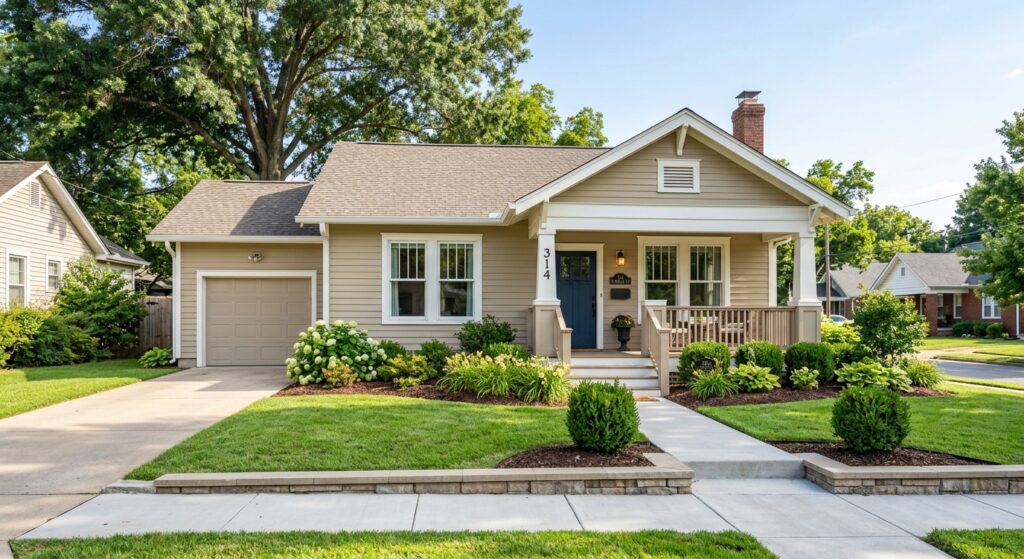
Fort Smith Rental Property Taxes 2026: Complete Tax Planning Guide for Arkansas Real Estate Investors
Understanding Fort Smith rental property taxes is essential for maximizing profit margins and ensuring compliance with both federal and state regulations. For the 2026 tax year, real estate investors in Fort Smith need a solid grasp of how rental income is taxed, which deductions are available, and what local assessments apply to their properties. Whether you’re managing a single-family rental, a multi-unit building, or a commercial property, strategic tax planning can dramatically reduce your tax liability while keeping you compliant with IRS requirements. This comprehensive guide breaks down every aspect of Fort Smith rental property taxes for 2026, from federal depreciation rules to Arkansas-specific regulations.
Table of Contents
- Key Takeaways
- How Is Rental Property Income Taxed in Fort Smith?
- What Rental Property Deductions Are Available for 2026?
- How Does Depreciation Strategy Maximize Tax Savings?
- What Are Fort Smith and Arkansas Property Tax Rules for Rental Properties?
- How Do Passive Loss Limitation Rules Affect Rental Income?
- Short-Term vs. Long-Term Rental Property Tax Treatment
- What Are the Most Common Rental Property Tax Mistakes?
- Uncle Kam in Action
- Next Steps
- Frequently Asked Questions
Key Takeaways
- All rental income must be reported on Schedule E (Form 1040), and deductions reduce your taxable rental income dollar-for-dollar.
- Depreciation deductions using the 27.5-year recovery period for residential rental properties can create significant annual tax savings.
- Property taxes, mortgage interest, repairs, maintenance, insurance, and utilities are all deductible rental property expenses.
- Fort Smith property tax increases average 3.7% annually, driven by local government funding needs for schools and infrastructure.
- Passive loss limitations may restrict your ability to deduct rental losses, but real estate professional status can unlock full deductions.
How Is Rental Property Income Taxed in Fort Smith?
Quick Answer: All rental income is taxed as ordinary income at your marginal federal tax rate. For 2026, you report rental income and expenses on Schedule E (Form 1040) and pay federal income tax, plus self-employment tax applies to net rental profits for certain investor types.
Rental property income taxation in Fort Smith follows federal IRS rules. Every dollar of rent you collect must be reported to the IRS on Schedule E. This includes rental income from long-term leases, short-term vacation rentals, and lease-option arrangements. The income is taxed at your ordinary income tax rates, which in 2026 range from 10% to 37% depending on your overall income level and filing status.
Arkansas does not impose a separate state income tax on rental property income, which provides a significant tax advantage for Fort Smith landlords. However, Arkansas does collect sales tax on certain services related to property management and repairs. Understanding this distinction is crucial for proper tax compliance and avoiding unnecessary state tax liability.
Federal Income Tax Treatment of Rental Income
The IRS treats rental income as ordinary income, meaning it’s subject to your marginal tax bracket. If you’re in the 24% federal tax bracket, each additional dollar of rental income adds $0.24 in federal income taxes. This is different from long-term capital gains, which receive preferential tax treatment. Strategic deductions on Schedule E directly reduce this taxable income, effectively lowering your tax bracket impact on rental activities.
For 2026, accurately tracking all rental expenses is essential because each deducted dollar reduces your taxable income. Keeping meticulous records of repairs, maintenance, property management fees, utilities, and property taxes ensures you capture every available deduction. Form 1040 Schedule E is where all this income and expense information flows for federal tax purposes.
Self-Employment Tax Implications for Rental Investors
Generally, passive rental income from long-term leases does not trigger self-employment tax. However, if you actively manage the property or generate income from short-term rentals (vacation rental model), self-employment tax may apply. This distinction is critical because self-employment tax adds an additional 15.3% tax burden (9.2% Social Security + 3.8% Medicare on net earnings). Real estate professionals can structure their rental activities to minimize or eliminate this tax.
Pro Tip: Document your rental property expenses meticulously throughout 2026. The IRS scrutinizes rental property returns more than any other income category. Maintaining organized records prevents audit complications and ensures you receive every deduction you’re entitled to claim.
What Rental Property Deductions Are Available for 2026?
Quick Answer: Deductible rental expenses include property taxes, mortgage interest, utilities, insurance, repairs, maintenance, property management fees, legal services, and depreciation—all reported on Schedule E.
The IRS allows rental property owners to deduct any ordinary and necessary expense incurred in generating rental income. This broad standard covers numerous categories of expenses. Every dollar in legitimate deductions directly reduces your taxable rental income for 2026, making expense tracking one of the most valuable tax planning strategies for real estate investors in Fort Smith.
Primary Deductible Rental Expenses
- Property Taxes: Full amount of property taxes paid to Fort Smith and Sebastian County is deductible.
- Mortgage Interest: Interest (not principal) on loans used to acquire or improve rental property is fully deductible.
- Utilities: All utility bills (electricity, gas, water, trash) if you pay them directly are deductible.
- Property Insurance: Landlord’s insurance, liability coverage, and flood insurance premiums are fully deductible.
- Repairs and Maintenance: Normal repairs (fixing a leaky roof, painting, replacing fixtures) are immediately deductible.
- Property Management Fees: If you hire a property manager, their fees are 100% deductible.
- Advertising and Leasing: Costs to advertise and screen tenants (online listings, credit checks) are deductible.
- Travel and Mileage: Travel to the property and related business mileage is deductible at IRS rates.
- Home Office Deduction: If you have a dedicated office for managing rentals, you can deduct related expenses.
Deductions That Don’t Apply
Mortgage principal payments are not deductible because they represent a return of your original investment rather than an expense. Capital improvements—upgrades that extend the property’s useful life or add value (new roof, foundation work, major renovations)—cannot be deducted immediately but must be depreciated over 27.5 years. Personal expenses, meals, and entertainment are not deductible unless directly tied to rental property management activities.
| Expense Type | 2026 Deductibility |
|---|---|
| Property taxes (Fort Smith) | Fully deductible |
| Mortgage interest | Fully deductible |
| Mortgage principal | Not deductible |
| Repairs and maintenance | Fully deductible |
| Capital improvements | Depreciated over time |
| Depreciation deduction | Fully deductible |
How Does Depreciation Strategy Maximize Tax Savings?
Quick Answer: Depreciation allows you to deduct a portion of your building’s cost annually over 27.5 years, creating substantial tax deductions even when the property actually appreciates in value.
Depreciation is the most powerful deduction available to rental property owners in Fort Smith. The IRS allows you to deduct the declining value of your building over its useful life through annual depreciation deductions. For residential rental properties placed in service in 2026, you depreciate the building (not the land) over a 27.5-year recovery period. This creates enormous tax savings because depreciation is a non-cash deduction—you’re reducing your taxable income without actually spending money.
Calculating Your Annual Depreciation Deduction
To calculate depreciation, first determine the depreciable basis—the purchase price minus the land value. Land does not depreciate. If you purchased a rental property in Fort Smith for $250,000 with $50,000 attributable to land, your depreciable basis is $200,000. Dividing this by 27.5 years yields an annual depreciation deduction of approximately $7,273.
For 2026, this $7,273 annual deduction flows directly to Schedule E and reduces your taxable rental income. If you’re in the 24% federal tax bracket, this single deduction saves you $1,745 annually in federal income taxes alone. Over 27.5 years, total depreciation deductions on that $200,000 building basis equal the full original building cost.
Section 179 Expense Election and Bonus Depreciation
For capital improvements and personal property (appliances, furnishings, carpeting), the Section 179 expense election allows you to immediately deduct qualified property up to specified limits rather than depreciating it. Bonus depreciation rules for 2026 permit 60% bonus depreciation on qualified property acquired and placed in service during the year. These accelerated deduction methods create front-loaded tax savings that dramatically improve first-year cash flow for rental property investors.
Pro Tip: When purchasing a rental property in Fort Smith, hire a cost segregation specialist to separate building components and allocate basis properly. This maximizes depreciable assets and accelerates deductions through bonus depreciation, significantly increasing 2026 tax savings.
What Are Fort Smith and Arkansas Property Tax Rules for Rental Properties?
Quick Answer: Fort Smith property taxes are assessed locally by Sebastian County, averaging increases of 3.7% annually. Property taxes are fully deductible on Schedule E, making them a critical expense for rental property math.
Property taxes in Fort Smith are determined by local government assessment and millage rates established by Sebastian County and Fort Smith city officials. Unlike many states, Arkansas has no state income tax, but property tax burdens remain significant for real estate investors. Property tax bills fund schools, infrastructure, police, and fire protection—driving 3.7% average annual increases as municipalities cover rising operational costs.
Understanding Fort Smith Property Tax Assessment
In Fort Smith, the Sebastian County Assessor determines property values annually based on comparable sales and market analysis. For rental properties, the assessed value affects your total property tax bill. The assessor typically values investment properties more conservatively than primary residences, but reassessments can adjust values upward in strong real estate markets. You have the right to appeal assessments you believe are incorrect.
Property Tax Deductibility on Schedule E
The entire amount of property taxes paid to Fort Smith and Sebastian County is deductible on Schedule E. If your annual property tax bill is $2,400 and you’re in the 24% federal tax bracket, this deduction saves you $576 in federal income taxes. Tracking and deducting these payments is non-negotiable for accurate 2026 rental property tax reporting.
| Tax Factor | Fort Smith / Arkansas Details |
|---|---|
| State income tax on rental income | None (major advantage) |
| Property tax assessment body | Sebastian County Assessor |
| Average annual property tax increase | 3.7% (national average) |
| Property tax deductibility | Fully deductible on Schedule E |
How Do Passive Loss Limitation Rules Affect Rental Income?
 Free Tax Write-Off Finder
Quick Answer: Passive loss limitations may prevent you from deducting rental losses against other income unless you qualify as a real estate professional, in which case full deduction of losses becomes possible.
The IRS imposes passive activity loss limitations preventing most investors from using rental property losses to offset wages, business income, or investment income. If your Fort Smith rental property generates a $10,000 loss in 2026 but you’re classified as a passive investor, you cannot deduct that loss against your W-2 wages. Instead, the loss suspends and can only be deducted against future passive rental income or when you sell the property.
Real Estate Professional Status Unlocks Full Deductions
If you qualify as a real estate professional (spending more than 750 hours annually in real property business activities), passive loss limitations do not apply. You can deduct all rental losses against other income sources. This status transforms Fort Smith rental properties from passive investments into active business operations for tax purposes. Real estate investor strategies frequently involve structuring rental holdings to achieve professional status and maximize loss deductions.
Short-Term vs. Long-Term Rental Property Tax Treatment
Quick Answer: Short-term rentals (Airbnb, vacation rentals) face self-employment tax and higher ordinary income rates. Long-term rentals avoid self-employment tax and may qualify for real estate professional status deductions.
The IRS treats short-term and long-term rental properties differently for tax purposes. Short-term vacation rentals in Fort Smith (properties rented fewer than 30 days in the year or fewer than 30 days average) are generally treated as active business income subject to self-employment tax. Long-term rentals (standard leases of 30+ days) typically receive passive treatment without self-employment tax liability, though this depends on your material participation level.
Short-term rental income generates an additional 15.3% self-employment tax burden on top of ordinary income tax rates. For a Fort Smith property generating $50,000 in short-term rental income, self-employment tax adds $7,065 in additional tax liability at minimum. This significantly impacts profitability compared to long-term rental strategies.
What Are the Most Common Rental Property Tax Mistakes?
Quick Answer: Common mistakes include failing to document expenses, misclassifying capital improvements as repairs, not tracking mileage, and missing depreciation opportunities that cost thousands in annual tax savings.
Fort Smith rental property investors frequently leave significant tax savings on the table by making avoidable errors. The IRS specifically scrutinizes rental property returns, making accuracy essential for avoiding audits and penalties. Understanding which mistakes trigger audit risk helps protect your investment and tax position for 2026.
Top Tax Mistakes Fort Smith Landlords Make
- Failing to separate land from building cost: Misallocating purchase price prevents proper depreciation calculations.
- Classifying improvements as repairs: Deducting capital improvements immediately instead of depreciating them triggers IRS challenges.
- Not tracking business mileage: Lost deductions of 67 cents per mile (2026 rate) for property-related travel.
- Mixing personal and rental use: Claiming deductions on properties rented to family members at below-market rates.
- Overlooking depreciation recapture: Forgetting that depreciation deductions create recapture tax liability when you sell the property.
- Poor record retention: Lacking documentation for deductions if IRS questions your return.
Pro Tip: Maintain a dedicated tax strategy method for rental properties that includes monthly expense tracking, quarterly property reviews, and annual depreciation recalculation. This disciplined approach prevents costly mistakes and maximizes 2026 tax savings.

Uncle Kam in Action: How Alex Transformed Fort Smith Rental Portfolio Tax Strategy
Alex, a Fort Smith-based real estate investor, owned three rental properties generating $180,000 in annual gross rental income. Despite healthy cash flow, his tax liability annually consumed $52,000 of profits. Alex struggled with understanding how depreciation worked and whether his recent roof replacement qualified as a deduction or capital improvement. He was also unsure if he should be tracking mileage for property management activities.
After consulting with Uncle Kam’s tax strategy experts, Alex implemented a comprehensive plan. First, a cost segregation study properly allocated building basis across components, creating $24,000 in bonus depreciation deductions for 2026. Second, the roof replacement was reclassified as a capital improvement and depreciated, preserving the deduction while extending the deduction timeline. Third, mileage tracking was implemented, adding $3,200 in annual deductions.
The combined strategy reduced Alex’s taxable rental income by $31,400 in the first year, saving him $7,536 in federal income taxes at his 24% bracket. Over the depreciation period, total tax savings exceeded $150,000. Alex’s properties now generate the same cash flow but with substantially reduced tax liability, effectively increasing his after-tax return on investment by 18%.
This transformation demonstrates why strategic real estate tax planning is essential for Fort Smith investors. The difference between haphazard record-keeping and systematic tax optimization literally amounts to tens of thousands of dollars in annual tax savings that flow directly to your bottom line.
Next Steps
Take action now to optimize your Fort Smith rental property tax position for 2026:
- Conduct a cost segregation analysis on your rental properties to maximize depreciation deductions.
- Implement monthly expense tracking using dedicated accounting software like QuickBooks or Xero.
- Document whether you qualify as a real estate professional to unlock passive loss deductions.
- Review recent capital improvements and properly classify them as repairs or depreciable assets.
- Schedule a consultation with a tax strategy professional to review your specific rental property situation and identify additional deductions.
Frequently Asked Questions
Can I deduct vacancy periods when my Fort Smith rental is not rented?
No. You cannot deduct the fair rental value of your property during vacancy periods as a loss deduction. However, you can continue deducting all operating expenses like property taxes, insurance, and utilities during vacancy. Additionally, expenses incurred preparing the property for rental (advertising, repairs, tenant screening) are deductible even if the property remains vacant.
Is Fort Smith property tax increase deductible on my federal return?
Yes, absolutely. All property taxes paid on Fort Smith rental properties are deductible on Schedule E. Given that property taxes increase approximately 3.7% annually, staying current on your deductions is critical. The increased tax bills directly reduce your taxable rental income dollar-for-dollar.
What is the difference between repair and improvement for tax purposes?
Repairs maintain a property’s current condition and are immediately deductible. Examples include replacing a broken window, patching drywall, or painting. Improvements add value or extend useful life and must be depreciated. Replacing an entire roof, adding a room, or installing a new HVAC system are improvements. The IRS closely examines this classification, so proper documentation is essential.
Can I deduct losses on my Fort Smith rental property against my W-2 wages?
Generally, no. Passive rental losses cannot be deducted against W-2 wages unless you qualify as a real estate professional. However, up to $25,000 of passive losses can be deducted against other income if your modified adjusted gross income is below $100,000 (phase-out applies). If you achieve real estate professional status, losses become fully deductible against all income types.
Should I hire a property manager for Fort Smith properties to increase deductions?
Property management fees are fully deductible, but you should base hiring decisions on business necessity rather than tax benefits alone. A property manager’s fee (typically 8-12% of rent) creates an immediate deduction. However, if you prefer self-managing and have capacity, the mileage deductions and convenience may outweigh management fees from a tax perspective.
What documentation must I maintain for rental property deductions?
The IRS requires you maintain contemporaneous written documentation substantiating all deductions. Keep receipts, invoices, canceled checks, credit card statements, and utility bills. For mileage, maintain a log showing dates, destinations, and business purpose. For major repairs, get written estimates and invoices. If audited, inability to produce documentation can result in denied deductions and penalties.
How does depreciation recapture work when I sell my Fort Smith rental property?
When you sell rental property, all accumulated depreciation deductions are recaptured and taxed at a 25% federal rate (plus any applicable state taxes). If you deducted $150,000 in total depreciation and the property has appreciated, you owe 25% recapture tax on that $150,000 ($37,500) regardless of whether you have an overall gain. Planning for depreciation recapture should factor into your long-term rental strategy.
Are water, sewer, and trash bill deductible for rental properties?
Yes, absolutely. All utility bills paid directly by you as the landlord are deductible as operating expenses. This includes water, sewer, trash service, electricity, gas, and internet. However, if tenants pay utilities directly, you cannot claim those deductions. Documenting who pays each utility prevents IRS confusion on your Schedule E reporting.
What happens if I convert my Fort Smith primary residence to a rental in 2026?
You can deduct depreciation beginning the month you rent it out, but only on the building value as of the conversion date (using fair market value at conversion, not original purchase price). You cannot depreciate the years you owned it as a primary residence. Additionally, when you sell, you may lose primary residence capital gains exclusion depending on use timing, making professional tax planning critical for conversion timing.
This information is current as of April 13, 2026. Tax laws change frequently. Verify updates with the IRS or a qualified tax professional if reading this later in the year.
Last updated: April, 2026

