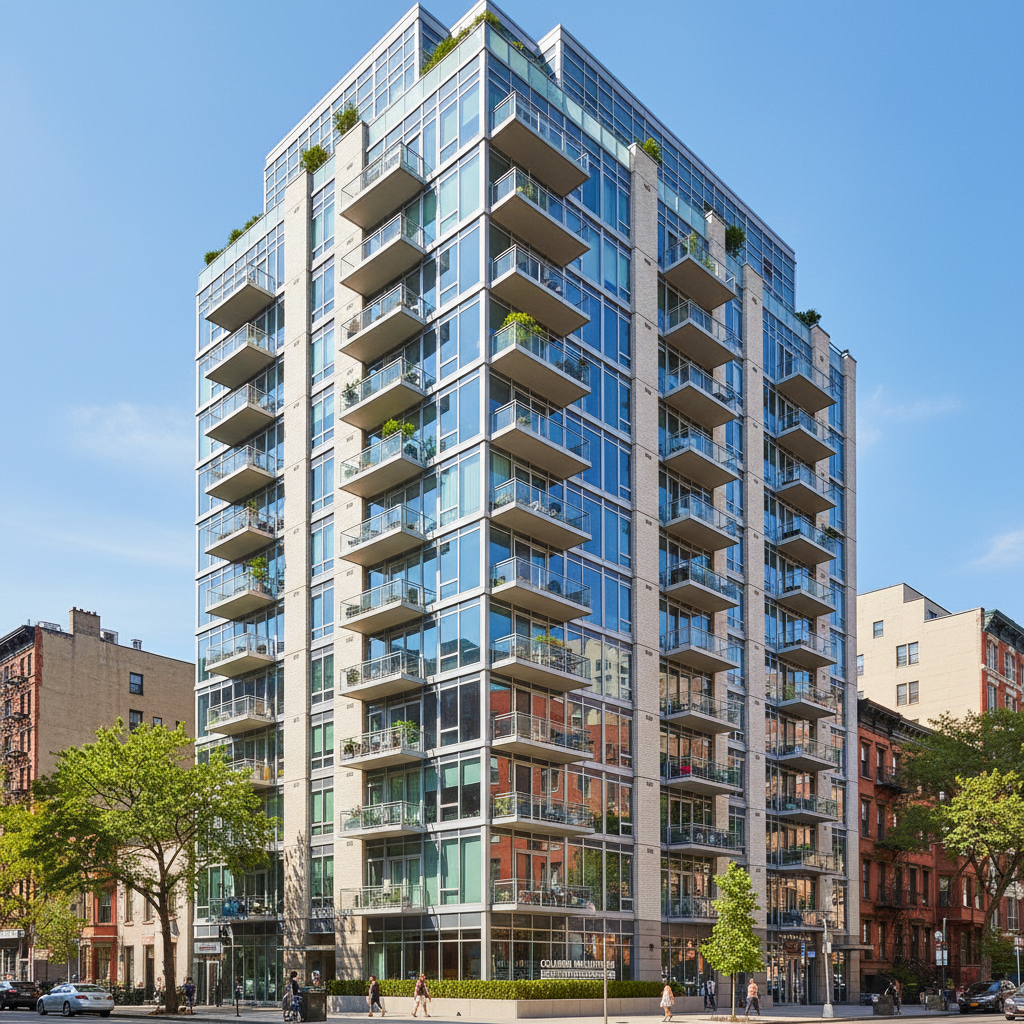
Columbia Multi-Family Property Taxes 2026: Tax Deductions and Planning Strategies for Real Estate Investors
For 2026, real estate investors managing columbia multi family property taxes face unprecedented challenges and opportunities. With Mayor Zohran Mamdani proposing a 9.5% property tax increase in New York City and historic federal tax benefits now permanent, understanding your tax obligations and strategic deductions is critical. This comprehensive guide explores the intersection of federal tax planning and local property tax management for multifamily property owners. Whether you’re concerned about the potential real estate investment strategies or seeking to minimize your tax burden, this article provides actionable intelligence for 2026.
Table of Contents
- Key Takeaways
- What Is the Impact of NYC Property Tax Changes on Multifamily Investors?
- How Do 100% Bonus Depreciation and 2026 Tax Laws Benefit Multifamily Owners?
- How Can You Maximize Depreciation Deductions on Multifamily Properties?
- What Section 179 Deduction Strategies Apply to Multifamily Property Improvements?
- How Does Cost Segregation Unlock Accelerated Depreciation for Multifamily Buildings?
- What Are the Qualified Business Income (QBI) Deduction Benefits for 2026?
- Uncle Kam in Action
- Next Steps
- Frequently Asked Questions
Key Takeaways
- NYC’s proposed 9.5% property tax increase would raise rates from 12.28% to 13.45%, adding approximately $700 annually for typical homeowners and significantly more for multifamily properties.
- For 2026, 100% bonus depreciation is now permanent, allowing immediate deduction of qualified property costs acquired after January 19, 2025.
- Section 179 deduction limits doubled to $2.5 million, enabling strategic deductions for qualified multifamily property improvements.
- Cost segregation studies can reclassify 20-40% of residential property value into accelerated depreciation schedules, generating immediate tax savings.
- The Section 199A Qualified Business Income deduction remains permanent at 20%, with new $400 minimum deduction for real estate professionals.
What Is the Impact of NYC Property Tax Changes on Multifamily Investors?
Quick Answer: NYC’s proposed 9.5% property tax increase would significantly impact multifamily investors, potentially adding hundreds to thousands of dollars in annual tax liability while threatening property profitability and increasing renter burden.
Columbia multi family property taxes are at a critical inflection point. As of 2026, New York City’s current property tax rate stands at 12.28% of assessed value. Mayor Zohran Mamdani has proposed raising this to 13.45%, representing a 9.5% increase across the board. This isn’t theoretical—it directly impacts your bottom line.
For context, median property tax bills in NYC already reach $12,441 based on the median home value of $800,000 (Q3 2025 data). New York’s effective property tax rate of 1.45% is nearly double the national average of 0.89%. If Mamdani’s proposal passes the City Council, the impact would be devastating for affordability and investor returns.
A typical owner-occupied one-to-three-family home paying approximately $8,000 annually would face an additional $760 per year under the proposed increase. For multifamily properties generating significant rental income, the impact multiplies exponentially. Property owners already provide 44% of NYC’s total tax revenue—any increase disproportionately affects multifamily investors who already shoulder outsized tax burdens.
Pro Tip: Document all property taxes separately by property and tax class. Multi-family properties often qualify for different assessment classifications than single-family homes, potentially offering strategic review opportunities under NYC’s assessment appeal process.
How Property Tax Increases Pass Through to Rents
The critical dynamic: property taxes directly impact rental rates. When landlords face higher property tax bills, they typically pass these costs to renters during lease renewal. For a $3,000 monthly rent, a 9.5% property tax increase could translate to an additional $285+ per month for tenants—roughly $3,420 per year in increased housing costs.
This creates a compounding problem for multifamily investors. Higher taxes reduce net operating income. Lower NOI makes properties less valuable and harder to refinance. Simultaneously, passing costs to renters risks tenant turnover and vacancies. Strategic tax planning becomes essential to maintain profitability despite rising property tax burdens.
How Do 100% Bonus Depreciation and 2026 Tax Laws Benefit Multifamily Owners?
Quick Answer: The One Big Beautiful Bill Act (OBBB) made 100% bonus depreciation permanent for qualified property, enabling multifamily owners to immediately deduct the full cost of equipment and certain improvements rather than spreading deductions over years.
Before the OBBB (passed July 4, 2025), bonus depreciation was scheduled to phase down. In 2024, it sat at 60%. By 2025, it would have dropped to 40% and disappeared entirely by 2027. This represented a significant cliff for real estate investors.
The OBBB reversed this trajectory completely. For 2026 and beyond, 100% bonus depreciation applies to qualified property acquired after January 19, 2025. For multifamily owners, this means any appliances, HVAC systems, fencing, flooring, security systems, or other qualifying improvements can be deducted in full during the year placed in service.
The distinction matters. Instead of depreciating a $50,000 roofing replacement over 39 years ($1,282 annually), you can now deduct the entire amount in year one if it qualifies for bonus depreciation. This generates immediate cash flow benefits and reduces taxable income when you need it most.
What Property Types Qualify for Maximum Depreciation Benefits?
For multifamily properties, qualifying property includes tangible assets with a recovery period of 20 years or less. Building structures themselves are still depreciated over 27.5 years (residential) or 39 years (commercial), and land never qualifies for depreciation.
However, components attached to the building do qualify. HVAC systems, electrical systems, plumbing fixtures (beyond structural pipes), roofing systems, flooring, appliances, security systems, fire suppression systems, and other equipment typically qualify for accelerated depreciation treatment.
Pro Tip: Work with a tax professional to properly capitalize versus expense improvements. The line between a deductible repair and a capitalized improvement is often unclear. Proper documentation supports audit defense and ensures you’re claiming every available deduction.
How Can You Maximize Depreciation Deductions on Multifamily Properties?
Quick Answer: Maximize depreciation through cost segregation studies and careful asset classification, enabling reclassification of up to 40% of property value into shorter depreciation periods.
The standard approach to multifamily depreciation is inefficient. Most investors simply depreciate the entire building cost (minus land) over 27.5 years. This means minimal deductions in early years when you need them most.
Cost segregation studies fundamentally change this calculus. These detailed engineering and tax analyses break down property components into shorter-lived asset categories. For a typical residential rental, 20-40% of total property value can be reclassified into five, seven, or fifteen-year categories.
Here’s the math: Assume a $5 million multifamily acquisition with $4 million building cost (excluding land). Standard depreciation yields $145,455 annually ($4M ÷ 27.5 years). Through cost segregation, suppose $1.2 million gets reclassified to seven-year property and $800,000 to five-year property.
| Asset Category | Amount | Depreciation Period | Year 1 Deduction |
|---|---|---|---|
| Building Structure | $2,000,000 | 27.5 years | $72,727 |
| 7-Year Property | $1,200,000 | 7 years | $171,429 |
| 5-Year Property | $800,000 | 5 years | $160,000 |
| Total | $4,000,000 | $404,156 |
Year 1 deductions jump from $145,455 to $404,156—nearly triple. When combined with 100% bonus depreciation on equipment purchased after January 19, 2025, the benefits become extraordinary. Use our Small Business Tax Calculator for Salt Lake City to estimate your property-specific tax impact.
 Free Tax Write-Off Finder
What Section 179 Deduction Strategies Apply to Multifamily Property Improvements?
Quick Answer: The 2026 Section 179 limit doubled to $2.5 million, allowing immediate deduction of qualifying multifamily property improvements like roofs, HVAC systems, and security upgrades if you qualify as a real estate professional.
Section 179 typically applies to equipment and machinery. For multifamily investors, it extends to certain building improvements when you qualify as a real estate professional. The One Big Beautiful Bill Act doubled Section 179 limits from $1.25 million to $2.5 million for 2026 and beyond.
Qualifying improvements include roofs, HVAC systems, fire protection systems, security systems, and certain other building components. To claim these deductions, you must qualify as a real estate professional under IRS Revenue Procedure 2019-38, which requires meeting three criteria:
- Maintain separate books and records for each rental enterprise
- Perform at least 250 hours of rental services annually
- Keep contemporaneous documentation of hours, dates, services performed, and who completed work
Qualifying rental services include maintenance and repairs, rent collection, tenant screening, advertising vacancies, property management, and property inspections. Time spent arranging financing or shopping for new properties does not count.
How Does Cost Segregation Unlock Accelerated Depreciation for Multifamily Buildings?
Quick Answer: Cost segregation studies reclassify building components into shorter depreciation schedules, accelerating deductions and maximizing 100% bonus depreciation benefits for qualified property acquired in 2026.
Cost segregation involves detailed engineering analysis and tax accounting to break multifamily properties into component systems and identify which qualify for accelerated depreciation. When combined with 2026’s permanent 100% bonus depreciation, this creates transformative tax benefits.
The study typically identifies three categories: land (never depreciable), building structure (27.5 years), and building components (five, seven, or fifteen years). For instance, mechanical systems, electrical systems, plumbing fixtures, roofing, flooring, windows, and doors might qualify for accelerated depreciation if properly classified.
For properties acquired after January 19, 2025, bonus depreciation acceleration is stunning. Assume a multifamily property cost segregation study identifies $600,000 in five-year property and $400,000 in seven-year property. Without bonus depreciation, these generate modest annual deductions. With 100% bonus depreciation available in 2026, the entire $1 million qualifies for immediate write-off.
Pro Tip: Cost segregation studies are highly technical and require engineering expertise combined with tax knowledge. Partner with qualified professionals—not just general CPAs. The investment in a proper study pays for itself multiple times through accelerated deductions.
What Are the Qualified Business Income (QBI) Deduction Benefits for 2026?
Quick Answer: The Section 199A QBI deduction is now permanent, providing 20% deduction on qualified business income plus a new $400 minimum deduction for real estate professionals with $1,000+ in QBI.
Previously, the Section 199A Qualified Business Income deduction was scheduled to expire after 2025. The One Big Beautiful Bill Act made it permanent, eliminating uncertainty for multifamily investors who structure holdings through pass-through entities.
The QBI deduction allows eligible taxpayers to deduct up to 20% of qualified business income from pass-through entities like S-Corps, LLCs, and partnerships. For a real estate professional generating $200,000 in net rental income from multifamily properties, this creates a potential $40,000 deduction.
Starting in 2026, a new minimum deduction of $400 applies for taxpayers with at least $1,000 in QBI from a business in which they materially participate. This $400 floor ensures meaningful deductions even for smaller-scale multifamily operations.
Qualification depends on material participation. Real estate professionals who meet the 250-hour annual service test automatically qualify. This makes proper documentation of rental services critical—it determines not just Section 179 eligibility but also QBI deduction access.

Uncle Kam in Action: MultiFamily Investment Strategy That Saved $187,000 in Taxes
Client Profile: Sarah, a real estate investor with a portfolio of three multifamily properties in the New York Metropolitan Area generating $425,000 in annual rental income.
Challenge: Sarah purchased a $3.2 million multifamily property in January 2026. She was treating the entire acquisition cost standardly—simple straight-line depreciation over 27.5 years. Rising property taxes from NYC’s proposed 9.5% increase threatened her already-tight margins. She needed aggressive tax planning to offset the tax burden.
Uncle Kam Solution: We implemented a comprehensive 2026 strategy combining cost segregation, Section 179 planning, QBI optimization, and property tax documentation:
- Cost segregation study identified $540,000 in five-year property and $380,000 in seven-year property, with remainder as 27.5-year structure.
- Applied 100% bonus depreciation to all qualified component purchases from acquisition date.
- Planned $450,000 in equipment/systems upgrades scheduled for Q2 2026 to maximize Section 179 and bonus depreciation.
- Documented 300+ annual hours meeting real estate professional safe harbor, qualifying for full Section 199A QBI deduction.
Results: Year 1 depreciation deductions totaled $1,847,400—compared to $116,364 under standard depreciation. Combined with $85,000 in Section 179 deductions and optimized QBI treatment, total first-year tax deductions reached $2,132,400. At a 39.6% marginal rate (federal + NIIT + state), this generated $187,000 in immediate tax relief, effectively funding the property’s acquisition closing costs.
Property tax liability was documented separately, allowing potential assessment appeals and ensuring full deductibility on Schedule E. The strategy positioned Sarah to weather the proposed NYC property tax increase while actually improving her overall tax position.
Key Learning: Timing matters enormously for multifamily investment. Acquisitions in January 2026 captured maximum bonus depreciation benefits. Later acquisitions in 2026 still qualify, but advanced planning ensures optimal structuring. Work with a tax strategy specialist before acquisition to design the optimal structure.
Next Steps
Take immediate action to optimize your 2026 columbia multi family property taxes situation:
- Schedule a property tax assessment review to understand your current liability and explore potential assessment appeals before the proposed NYC increase passes.
- Request a cost segregation study analysis for any multifamily properties acquired in 2025-2026 to unlock accelerated depreciation benefits.
- Document all rental service hours and maintenance activities to qualify for real estate professional status and Section 179/QBI benefits.
- Plan acquisition timing and equipment purchase schedules to maximize bonus depreciation and Section 179 deductions in 2026.
- Consult with Uncle Kam’s entity structuring specialists to optimize pass-through entity selection for your portfolio.
Frequently Asked Questions
Will NYC’s 9.5% property tax increase definitely pass in 2026?
No. While Mayor Mamdani proposed the increase as part of addressing NYC’s $5.4 billion budget shortfall, City Council approval is required and by no means certain. Gov. Hochul has stated opposition. However, you should plan conservatively assuming some increase may pass, even if modified from the 9.5% proposal.
Can I use 100% bonus depreciation on existing property I already owned before January 19, 2025?
No. The 100% bonus depreciation rule applies to property placed in service after January 19, 2025. For existing properties, standard depreciation schedules apply. However, cost segregation studies on existing property can still unlock significant accelerated depreciation benefits through component reclassification.
What is the benefit of a cost segregation study if I already have 100% bonus depreciation?
Cost segregation provides two benefits: First, it identifies which property components qualify for accelerated depreciation. Second, for bonus depreciation eligible property, it ensures maximum accuracy in classifying assets, preventing audit risk. The study also provides documentation supporting accelerated deduction claims.
Do I lose depreciation deductions if I later sell the property?
No, but depreciation recapture applies. Straight depreciation is recaptured at 25% tax rate at sale. This is less than ordinary income rates but greater than long-term capital gains rates. Factor this into your hold-period strategy when planning acquisitions and depreciation acceleration.
Can I claim property taxes as a deduction on my personal tax return for rental properties?
Yes. For rental properties, there is no SALT (State and Local Tax) deduction cap—unlike your personal residence. This means multifamily property owners can deduct 100% of property taxes on Schedule E, providing a meaningful deduction outside SALT limitations.
How do I qualify for the real estate professional status required for Section 179 and QBI benefits?
You must meet Revenue Procedure 2019-38 safe harbor criteria: maintain separate books for each rental, perform 250+ rental service hours annually, and document those hours contemporaneously. Qualifying services include maintenance, repairs, rent collection, tenant screening, advertising, management, and property inspections—but not financing or acquisition activities.
Related Resources
- Real Estate Investor Tax Strategies
- Entity Structuring for Multifamily Portfolios
- Ongoing Tax Advisory Services
- Comprehensive Tax Planning
- Business Accounting Solutions
Last updated: February, 2026
This information is current as of 2/23/2026. Tax laws change frequently. Verify updates with the IRS or tax professionals if reading this later.

