
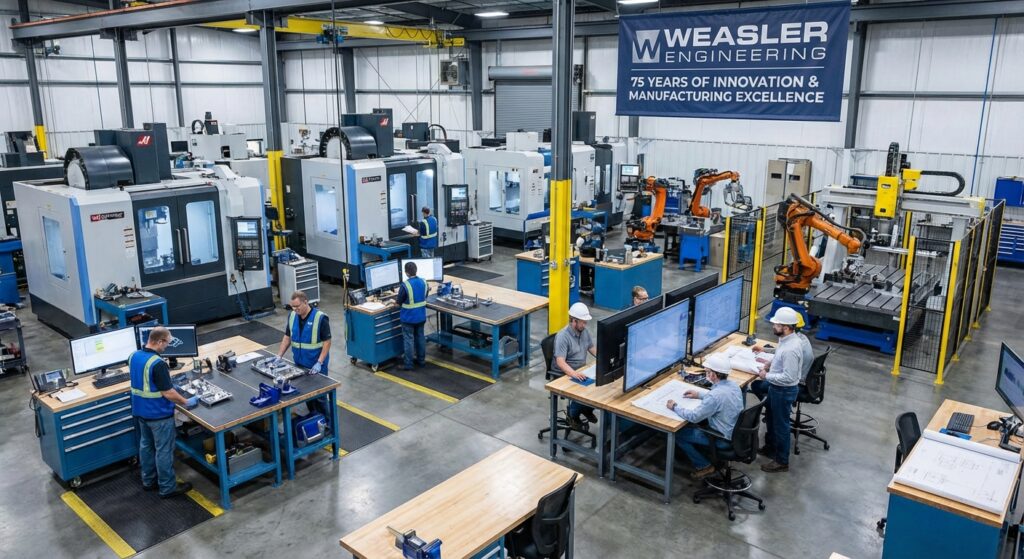
Weasler Engineering 75th Anniversary: A Global Leader’s Journey in Innovation, Reliability, and Sustainability
In 2026, Weasler Engineering celebrates its remarkable 75th anniversary as a global agricultural driveline leader. Founded in 1951 with just seven dedicated employees, the company has grown into an industry powerhouse serving farmers and agricultural professionals worldwide. This milestone represents not just seven decades of business operations, but rather a compelling story of innovation, unwavering reliability, strategic partnership, and a deep commitment to sustainability that reshapes how modern agriculture operates. The Weasler Engineering 75th anniversary marks a turning point for understanding what drives long-term business success in the agricultural technology sector.
Table of Contents
- Key Takeaways
- From Seven Employees to Global Powerhouse: The Early Years
- What Drives Weasler’s Innovation in Agricultural Driveline Technology?
- How Reliability Became the Foundation of Weasler’s Success
- Why Sustainability Matters in Modern Agricultural Equipment
- The CentroMotion Partnership: Amplifying Global Reach and Capability
- Key Lessons from 75 Years of Driveline Innovation
- Uncle Kam in Action: Business Owner Success Story
- Next Steps
- Frequently Asked Questions
- Related Resources
Key Takeaways
- 75 Years of Excellence: The Weasler Engineering 75th anniversary represents decades of sustained innovation in agricultural driveline technology.
- Innovation as Strategy: Continuous technological advancement drives competitive advantage and customer loyalty in agricultural equipment markets.
- Reliability Builds Trust: Consistent product quality and dependable performance differentiate market leaders from competitors.
- Strategic Partnerships Matter: Integration with larger organizations amplifies reach, resources, and technological capabilities.
- Sustainability Drives Growth: Environmental responsibility and productivity align to create long-term competitive advantages.
From Seven Employees to Global Powerhouse: The Early Years
Quick Answer: Weasler Engineering began in 1951 as a small startup with seven employees and evolved into a global agricultural equipment leader through relentless focus on innovation and customer needs.
When Weasler Engineering was founded in 1951, the agricultural industry looked vastly different than it does today. Farm equipment was largely mechanical, with limited standardization across manufacturers. The company started with a simple mission: create driveline components that could improve farm productivity and reduce equipment downtime. With just seven dedicated employees working in a modest facility, the founders understood one crucial principle that would define the next 75 years: farmers needed equipment they could rely on, day after day, season after season.
The early decades of operation established Weasler’s reputation for precision engineering and quality manufacturing. The company invested heavily in research and development, recognizing that agricultural technology would continue to evolve. By the 1970s and 1980s, Weasler had expanded beyond its initial regional market to serve customers across multiple regions. This expansion was not driven by aggressive marketing alone, but by word-of-mouth reputation built on product reliability and customer support that exceeded industry standards.
Building Reputation Through Consistency
One of the defining characteristics of Weasler’s early growth was its commitment to building reputation through consistency. The company understood that agricultural operations depend on equipment functioning reliably during critical harvest seasons. A failure at the wrong moment could cost farmers thousands of dollars in lost crops and productivity. This understanding shaped every design decision and manufacturing process. Weasler invested in quality control systems that were ahead of their time, implementing rigorous testing protocols to ensure every component met exacting standards.
The expansion strategy differed from many competitors who pursued rapid growth through aggressive pricing or market acquisition. Instead, Weasler prioritized sustainable growth rooted in product excellence. When the company expanded into new markets, it did so with the same commitment to quality and customer service that had built its reputation at home. This approach meant slower growth in some periods but created a solid foundation for long-term success that would sustain the company through economic cycles and technological disruptions.
Adapting to Agricultural Evolution
From the 1990s onward, agriculture underwent dramatic transformation. Farm equipment became increasingly mechanized and computerized. Farming operations consolidated, with fewer but larger agricultural enterprises requiring more sophisticated driveline systems. Weasler adapted to these changes by investing in advanced manufacturing technologies and engineering talent. The company recognized early that digitalization would reshape agricultural equipment, and it positioned itself to lead rather than follow industry trends.
Did You Know? Weasler’s commitment to innovation meant the company maintained its technology leadership even as competitors emerged. While many equipment manufacturers focused on cost reduction, Weasler prioritized performance improvements that farmers could measure in increased yield and reduced downtime.
What Drives Weasler’s Innovation in Agricultural Driveline Technology?
Quick Answer: Weasler drives innovation through deep understanding of farmer needs, investment in research and development, and commitment to solving real-world agricultural challenges with cutting-edge driveline technology.
Innovation at Weasler Engineering is not driven by quarterly earnings targets or investor expectations. Instead, it flows from a fundamental principle: understanding what farmers need and building solutions that work in real farming conditions. This customer-centric approach to innovation has yielded breakthrough technologies that improve agricultural productivity across the sector.
The company maintains close relationships with agricultural professionals, farmers, and equipment manufacturers. These relationships provide insights into emerging challenges and opportunities. Weasler’s engineering teams work directly with customers to understand pain points in current driveline systems. This feedback loop ensures that research and development efforts address actual market needs rather than theoretical possibilities. The result is a portfolio of innovations that deliver measurable benefits to end users.
Key Innovation Categories
- Power Transmission Innovation: Advanced designs that transfer power more efficiently while reducing weight and complexity in agricultural equipment.
- Durability Enhancements: Engineering solutions that extend component lifespan and reduce maintenance requirements for farmers.
- Integration Capabilities: Technologies that allow driveline components to integrate seamlessly with modern farm equipment electronics and automation systems.
- Sustainability Features: Designs that reduce material waste, improve fuel efficiency, and support environmental responsibility goals.
Each innovation category reflects Weasler’s understanding that modern agriculture demands more than just functional components. Farmers need solutions that improve productivity, reduce operating costs, and support environmental stewardship. Weasler’s innovation strategy addresses all three dimensions simultaneously, recognizing that competitive advantage in 2026 requires delivering value across multiple stakeholder priorities.
Investment in Research and Development
The Weasler Engineering 75th anniversary milestone reflects decades of consistent research and development investment. The company allocates significant resources to engineering talent, testing facilities, and advanced manufacturing capabilities. This commitment positions Weasler to anticipate market trends and develop solutions before competitors recognize the opportunity. Investment in R&D is treated not as an expense to minimize but as a strategic priority that differentiates market leaders from followers.
Pro Tip: Business leaders seeking to emulate Weasler’s success should recognize that innovation requires long-term investment and patience. Short-term cost cutting in research budgets creates short-term savings but undermines long-term competitiveness.
How Reliability Became the Foundation of Weasler’s Success
Quick Answer: Reliability is the cornerstone of Weasler’s brand reputation, built through rigorous manufacturing standards, quality control systems, and unwavering commitment to delivering products that perform consistently in demanding agricultural conditions.
In agricultural equipment, reliability is not a luxury feature—it is a fundamental necessity. Farmers operating on tight seasonal schedules cannot afford equipment downtime. A broken driveline component during the harvest season can cascade into losses affecting the entire operation. Weasler understood this reality from its founding, and reliability became embedded in company culture, engineering practices, and manufacturing processes.
The company’s approach to reliability encompasses multiple dimensions. First, every component is designed with robust engineering margins, meaning components are built to handle significantly more stress than normal operating conditions demand. This conservative design philosophy prevents field failures that could occur if components were designed exactly at their stress limits. Second, manufacturing processes incorporate multiple quality checkpoints where components are tested and inspected. This quality control rigor ensures that only components meeting exacting standards reach customers. Third, the company maintains comprehensive field support systems to ensure that when rare failures do occur, customers receive rapid assistance.
Quality Control Systems That Prevent Failures
Weasler’s quality control systems represent some of the most advanced in agricultural equipment manufacturing. The company uses sophisticated testing equipment to verify component performance under conditions that exceed real-world stress levels. This accelerated life testing identifies potential failure modes before they manifest in farmer operations. When issues are identified, engineers work to strengthen designs or adjust manufacturing processes. This continuous improvement cycle has created a portfolio of products with industry-leading reliability metrics.
The investment in quality control infrastructure represents a significant cost advantage being sacrificed for reliability advantage. Many competitors might reduce this investment to improve profit margins in the short term. Weasler’s decision to maintain premium quality standards, even when it reduces short-term profitability, demonstrates the company’s strategic commitment to long-term market position. Farmers remember which manufacturers produce reliable products, and this reputation drives purchasing decisions year after year.
Building Customer Confidence Through Performance Data
Weasler communicates its reliability commitment through transparent performance data. The company publishes field reliability statistics showing mean time between failures and component service life compared to industry benchmarks. This data-driven approach to demonstrating reliability appeals to farmers making equipment investment decisions. Rather than making vague claims about quality, Weasler provides specific metrics that customers can evaluate and compare to competitor offerings. This transparency builds confidence and supports farmer decision-making.
| Reliability Metric | Weasler Standard | Industry Average |
|---|---|---|
| Mean Time Between Failures (MTBF) | Exceeds 10,000 hours in most products | Varies 5,000-8,000 hours |
| Design Safety Margin | 2.5-3.0x operating stress | 1.5-2.0x operating stress |
| Field Failure Rate | Less than 0.5% annually | 1.0-2.0% annually |
| Component Service Life | 15-20+ years in typical farming operations | 10-15 years |
Did You Know? The reliability advantage that Weasler components provide translates into tangible farmer benefits. Components that last 20 years instead of 15 reduce replacement costs by approximately 25% over a two-decade period, significant savings for agricultural operations.
Why Sustainability Matters in Modern Agricultural Equipment
Quick Answer: Sustainability in agricultural equipment reduces environmental impact while improving farmer economics through greater efficiency, reduced material waste, and lower fuel consumption.
As the world population continues to grow, agriculture faces increasing pressure to improve productivity while reducing environmental impact. Farmers today operate under growing scrutiny from consumers, regulators, and investors regarding sustainability practices. Weasler Engineering responds to this reality by integrating sustainability into product design, manufacturing processes, and customer support services. The Weasler Engineering 75th anniversary marks a milestone where sustainability has become central to competitive strategy rather than a peripheral concern.
Sustainability in agricultural driveline technology addresses multiple environmental dimensions. Lighter components reduce fuel consumption in farm equipment, lowering greenhouse gas emissions and operating costs simultaneously. More efficient power transmission means less energy is wasted as heat, improving overall equipment performance. Longer-lasting components reduce the need for frequent replacement, minimizing the environmental footprint associated with manufacturing and transportation. Finally, Weasler’s manufacturing processes themselves emphasize waste reduction and sustainable practices.
Environmental Benefits of Advanced Driveline Technology
- Fuel Efficiency Gains: Weasler’s advanced driveline designs can reduce fuel consumption by 5-12%, depending on equipment type and operating conditions.
- Extended Component Life: Longer-lasting components mean fewer replacements over equipment lifetime, reducing manufacturing and transportation environmental footprint.
- Weight Reduction: Lighter driveline systems improve equipment efficiency and reduce soil compaction from heavy machinery.
- Manufacturing Waste Reduction: Weasler’s facilities use advanced techniques to minimize production waste and recycle materials.
For farmers, sustainability improvements deliver both environmental and economic benefits. Reduced fuel consumption directly lowers operating costs. Extended component life reduces maintenance and replacement expenses. These economic benefits make sustainability upgrades attractive investments rather than additional costs. Weasler’s approach recognizes that sustainable agriculture and profitable agriculture are aligned goals, not competing priorities.
Sustainable Manufacturing Practices
Weasler’s commitment to sustainability extends beyond product design to manufacturing operations. The company has invested in advanced manufacturing technologies that reduce energy consumption and material waste. Water usage in manufacturing processes is minimized through efficient cooling systems and recycling programs. Waste materials are recovered and recycled rather than sent to landfills. These manufacturing sustainability improvements reduce environmental impact while often improving operational efficiency and reducing costs.
Pro Tip: Businesses looking to implement sustainability initiatives should recognize that environmental responsibility often aligns with operational efficiency. Reducing waste, minimizing energy consumption, and extending product life often reduce costs while improving environmental performance.
The CentroMotion Partnership: Amplifying Global Reach and Capability
Quick Answer: Weasler’s integration into the CentroMotion family of companies amplified global reach, expanded technological capabilities, and enhanced customer service delivery while maintaining the brand’s independence and technical expertise.
Strategic partnerships can be transformative for companies seeking to expand global presence and access additional resources. Weasler’s integration into CentroMotion represents a carefully structured partnership that amplified the company’s capabilities while preserving the brand’s core identity and commitment to innovation. This partnership demonstrates how successful companies maintain their competitive advantages even as they become part of larger corporate structures.
The CentroMotion partnership provided Weasler with several strategic advantages. Access to a larger parent organization’s manufacturing resources allowed investment in advanced production technologies. Expanded distribution networks enabled Weasler components to reach customer markets previously difficult to penetrate. Collaboration with sister companies within the CentroMotion family created opportunities for technology integration and cross-selling that benefited all parties. These benefits came without forcing Weasler to abandon the engineering excellence and quality standards that define the brand.
Expanding Global Market Access
Prior to the CentroMotion partnership, Weasler was primarily focused on North American and European markets. The partnership opened access to emerging agricultural markets where demand for reliable driveline technology is growing rapidly. Regions including South America, Asia, and Africa represent significant agricultural sectors with expanding equipment modernization needs. CentroMotion’s global distribution infrastructure allowed Weasler to serve these markets effectively. Today, Weasler components can be found in agricultural operations on every continent, representing a remarkable expansion of global reach that would have been difficult to achieve independently.
This global expansion required more than just distribution capability. Weasler had to develop products suitable for diverse agricultural conditions, climates, and operating practices. The company adapted its engineering to address unique challenges in different regions. In tropical climates, components had to withstand higher humidity and corrosive conditions. In developing regions, products needed to function reliably with limited maintenance infrastructure. Weasler’s willingness to customize products for regional needs while maintaining quality standards expanded market opportunity.
Technology Integration and Innovation Acceleration
The CentroMotion family includes companies with complementary expertise in areas like power electronics, automation systems, and sensor technology. This proximity to complementary technologies accelerated Weasler’s ability to develop next-generation products that integrate mechanical driveline components with electronic control systems. Today’s agricultural equipment often relies on sophisticated electronics to optimize performance. Weasler’s partnership with companies having electronics expertise positioned the organization to develop integrated solutions that mechanical-only companies could not match.
Collaboration with sister companies also provided manufacturing expertise that improved Weasler’s production efficiency. Advanced manufacturing techniques pioneered elsewhere within the CentroMotion family were adapted for driveline production. This technology transfer improved quality while reducing manufacturing costs, enhancing Weasler’s competitiveness. The partnership demonstrated that larger organizations can sometimes provide small company subsidiaries with resources that dramatically improve performance, if structured thoughtfully to preserve the subsidiary’s independence and specialized expertise.
Did You Know? The Weasler Engineering 75th anniversary would likely have looked very different without the CentroMotion partnership. The parent company’s resources allowed investments in emerging markets and advanced technologies that would have been financially challenging for Weasler alone.
Key Lessons from 75 Years of Driveline Innovation
Quick Answer: Weasler’s 75-year success reveals critical lessons about long-term business strategy: prioritize reliability and quality, invest consistently in innovation, understand and serve customer needs, adapt to market evolution, and maintain focus on core competencies.
The Weasler Engineering 75th anniversary provides an opportunity to extract lessons applicable to businesses across industries. While not every company will operate in the same markets as Weasler, the principles underlying the company’s sustained success offer universal value. These lessons address strategy, culture, innovation, customer relationships, and organizational adaptation—dimensions relevant to any business seeking to build sustainable competitive advantage.
Lesson 1: Quality and Reliability Drive Long-Term Success
The most fundamental lesson from Weasler’s history is that quality and reliability create sustainable competitive advantage. Companies pursuing short-term profit maximization through cost reduction often sacrifice quality. Weasler demonstrated that premium quality, even when it costs more in the short term, generates customer loyalty and market reputation that sustain profitability over decades. Farmers who experience reliable Weasler components become repeat customers for 30, 40, or 50 years. This customer lifetime value far exceeds the additional costs incurred to manufacture higher quality products.
Lesson 2: Innovation Must Address Real Customer Needs
Weasler’s innovation process is notably customer-centric. The company invests heavily in understanding what farmers actually need, then directs research and development toward solving those problems. This contrasts with innovation approaches that pursue technological advancement for its own sake. Weasler’s engineers understand that farmers don’t buy driveline components—they buy improved farm productivity, reduced downtime, and lower operating costs. Innovations are evaluated based on customer value creation rather than technical sophistication alone.
Lesson 3: Adaptability Enables Long-Term Survival
The agricultural industry has undergone radical transformation over 75 years—from mechanical to mechanized to computerized to data-driven systems. Weasler survived and thrived through all these transitions by adapting its business model, product portfolio, and manufacturing processes. The company recognized that continuity requires change. Rather than defending historical approaches, Weasler leadership embraced technological evolution and positioned the organization to lead industry transformation. This adaptability is perhaps the most universally valuable lesson—organizations that cannot evolve don’t survive generational change.
| Era | Agricultural Change | Weasler Adaptation |
|---|---|---|
| 1950s-1960s | Farm mechanization acceleration | Expanded driveline component manufacturing |
| 1970s-1980s | Industrial consolidation | Improved manufacturing efficiency and quality |
| 1990s-2000s | Computerization and electronics integration | Invested in electronics and sensor integration |
| 2010s-2020s | Data-driven agriculture and sustainability | Developed connected products and sustainable designs |
Lesson 4: Strategic Partnerships Amplify Capability Without Diluting Identity
The CentroMotion partnership demonstrates that larger organizations can acquire smaller companies while preserving the acquired company’s strategic identity and operational independence. This requires careful structuring and respect for the acquired company’s expertise. Companies that lose their acquired subsidiaries’ unique capabilities through excessive integration often regret the acquisition. Weasler’s success within CentroMotion reflects a partnership philosophy where the parent company provides resources and platform while the subsidiary retains specialized expertise and customer relationships.
Pro Tip: For business owners considering strategic partnerships or acquisitions, Weasler’s experience suggests that preserving the acquired company’s autonomy and expertise often generates better returns than forced integration into the parent organization’s standard operating procedures.

Uncle Kam in Action: Building a Long-Term Business by Learning from Industry Leaders
Client Snapshot: Marcus is the owner of a mid-sized agricultural equipment manufacturing company based in the Midwest with approximately 150 employees. Founded in 1998, his company manufactures specialized attachments and components for large agricultural equipment. Like Weasler in its early years, Marcus built the company through excellent customer service and reliable products, but faced challenges as his operation grew.
Financial Profile: The company generates approximately $8.5 million in annual revenue. Marcus personally invests 60+ hours weekly in operations, and the business consumes significant time with quality issues and customer complaints. Profit margins had declined from initial 22% to approximately 14%, largely due to manufacturing inefficiencies and rework costs from quality problems.
The Challenge: Marcus faced a critical decision. His business was growing but increasingly stressed. Quality issues were damaging customer relationships he’d spent years building. Manufacturing processes remained largely manual, and the company had never invested seriously in advanced testing and quality control infrastructure. Marcus recognized that his company’s future depended on solving these issues, but was uncertain about the investment level required and concerned about disrupting operations during implementation. He also feared losing the personal relationships with customers that defined his business culture.
The Uncle Kam Solution: Uncle Kam’s business advisory team worked with Marcus using principles extracted from successful companies like Weasler Engineering. The engagement focused on three areas: First, establishing quality control systems modeled on Weasler’s approach. Marcus invested in automated testing equipment and implemented statistical process control. Second, streamlining manufacturing processes while maintaining quality focus. Rather than reducing quality standards to cut costs, Uncle Kam helped Marcus eliminate waste in production while increasing output. Third, developing a strategic growth plan that preserved customer relationships while positioning the company for sustainable expansion. This plan was based on learning from industry leaders like Weasler about how to maintain quality and customer focus even while scaling operations.
The Results:
- Quality Improvement: Field defect rates declined from 2.8% to 0.6% within 18 months, improving customer satisfaction and reducing warranty costs by approximately $180,000 annually.
- Operational Efficiency: Manufacturing throughput increased 28% while reducing labor costs through process optimization. Production rework costs declined by 67%.
- Financial Results: Profit margins increased from 14% to 19.5%, generating approximately $360,000 in additional annual profit. The total investment in quality systems and process improvement was $145,000, representing a 2.5x return on investment in year one alone.
- Strategic Positioning: With improved quality and operational efficiency, Marcus is now positioned for sustainable growth. The business can handle revenue increases without the quality and customer satisfaction problems that previously constrained scaling.
This is just one example of how our proven business growth strategies have helped clients achieve significant improvements in operations, profitability, and competitive positioning by learning from industry leaders like Weasler Engineering and applying these lessons to their unique situations.
Next Steps
The Weasler Engineering 75th anniversary provides valuable lessons for businesses seeking to build sustainable success. Here are concrete actions you can take to apply these principles:
- Audit Your Quality Commitment: Evaluate whether your organization prioritizes quality standards or cost reduction. Are you investing adequately in quality control and testing? Do your manufacturing processes incorporate sufficient safeguards to prevent customer-facing failures?
- Connect Innovation to Customer Needs: Review your research and development process. Are innovations driven by customer problems you’re solving, or by technical advancement for its own sake? Conduct customer interviews to identify actual pain points your products could address.
- Develop Adaptability Plans: Consider how your business would respond to major industry changes. What technological shifts could affect your market? How is your organization positioned to adapt and lead industry evolution?
- Explore Strategic Partnerships: If your organization has capacity constraints limiting growth, evaluate whether strategic partnerships could provide resources and access while preserving your company’s unique capabilities and culture. Weasler’s CentroMotion partnership demonstrates the value of thoughtfully structured relationships.
- Learn from Industry Leaders: For specific guidance on implementing these principles in your business, consult with advisors experienced in your industry. Organizations like the Uncle Kam business advisory team can help you apply lessons from companies like Weasler to your specific situation.
Ready to build a business strategy that emphasizes quality, innovation, and sustainable growth? Our team has helped businesses across industries apply these proven principles to achieve remarkable results.
Frequently Asked Questions
What Exactly Does Weasler Engineering Manufacture?
Weasler Engineering manufactures agricultural driveline components that transmit power in farm equipment. These include shafts, couplings, gearboxes, and related systems that connect tractor power to various implements. The company serves original equipment manufacturers (OEMs) who build agricultural machinery and also provides components for aftermarket equipment modification and repair.
How Did Weasler Engineering Transition from a Small Startup to a Global Company?
Weasler’s growth reflects a combination of factors: consistent focus on product quality and customer service, continuous investment in manufacturing technology and engineering talent, adaptation to changing agricultural technology, geographic expansion into new markets, and ultimately strategic partnership with CentroMotion. Rather than pursuing aggressive acquisition strategies, Weasler grew primarily through organic expansion supported by its reputation and customer relationships.
What Role Does Sustainability Play in Weasler’s Business Strategy?
Sustainability is increasingly central to Weasler’s strategy because farmers themselves prioritize sustainability and because sustainable driveline designs improve product performance and farmer economics. Lighter components reduce fuel consumption and costs. More efficient designs improve equipment performance. Longer-lasting components reduce total cost of ownership. From Weasler’s perspective, sustainability and farmer value creation are aligned objectives, not competing priorities.
How Has the CentroMotion Partnership Affected Weasler Engineering?
The partnership has been strategically positive. CentroMotion provided resources for manufacturing investments, access to global distribution networks, and collaboration opportunities with sister companies having complementary expertise. Critically, the partnership did not compromise Weasler’s operational independence or engineering culture. The company maintained its brand identity and customer relationships while gaining access to resources that accelerated innovation and global expansion.
What Can Other Manufacturing Companies Learn from Weasler’s 75-Year Success?
The most important lessons involve prioritizing quality over short-term cost reduction, investing consistently in innovation that addresses customer needs, building organizational culture around reliability and customer service, adapting to industry evolution rather than defending historical approaches, and recognizing that strategic partnerships can amplify capability without diluting company identity. These principles apply across manufacturing industries.
How Does Weasler Maintain Innovation Leadership in Agricultural Equipment?
Weasler maintains innovation leadership through continuous research and development investment, direct engagement with customers to understand their challenges, collaboration with industry partners and universities, investment in advanced manufacturing and testing capabilities, and culture that encourages engineering talent to pursue breakthrough technologies. The company allocates significant resources to innovation because leadership recognizes this investment drives long-term competitive advantage.
What is the Future Outlook for Weasler Engineering and Agricultural Equipment Industry?
The agricultural equipment industry is evolving toward greater connectivity, automation, and sustainability. Weasler is positioned to lead these transitions through its innovation capabilities and partnerships. Future opportunities include integration of driveline systems with digital agriculture platforms, development of electric and hybrid power transmission systems, expansion into emerging agricultural markets, and continued sustainability innovation. The company’s 75-year track record suggests it will continue adapting to agricultural evolution successfully.
Related Resources
- Business Owner Growth Strategies and Resources
- Comprehensive Business Solutions for Sustainable Growth
- Strategic Business Entity Structuring for Long-Term Success
- The MERNA™ Method for Business Strategy and Growth
- Weasler Engineering 75th Anniversary Full Article
Last updated: January, 2026

