
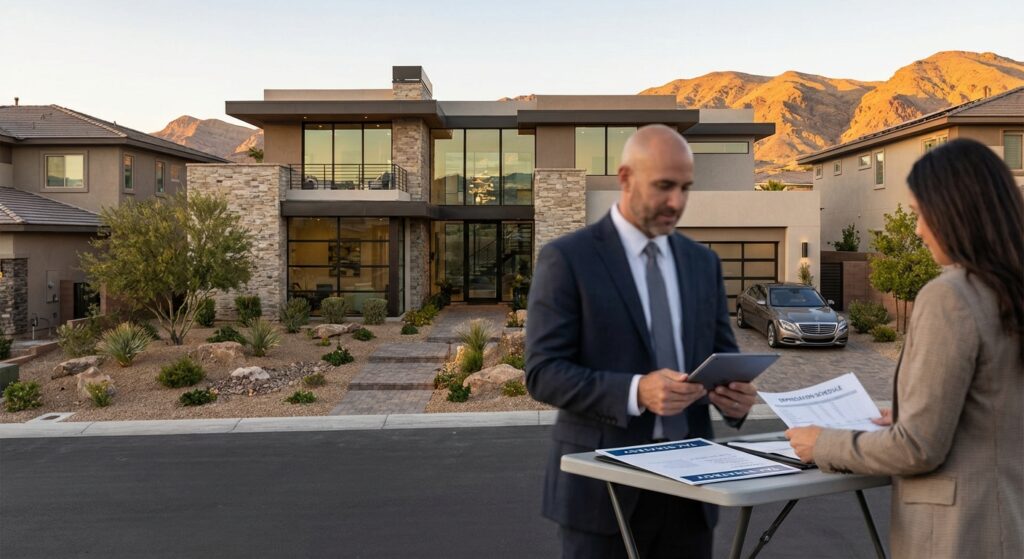
Summerlin Real Estate Depreciation: A 2026 Tax Strategy Guide for Nevada Investors
For real estate investors in Summerlin, Nevada, understanding summerlin real estate depreciation is essential to maximizing 2026 tax savings. Depreciation is one of the most powerful deductions available to property owners, allowing you to deduct the theoretical decline in value of buildings and improvements over time—without spending a single dollar. For 2026, the rules have evolved, bonus depreciation sits at 80%, and strategic planning can unlock six-figure tax savings for Summerlin investors. This guide covers everything you need to know about leveraging depreciation, cost segregation studies, and bonus depreciation strategies tailored to the Nevada real estate market.
Table of Contents
- Key Takeaways
- What Is Real Estate Depreciation and How Does It Work?
- How Does MACRS Depreciation Apply to Summerlin Real Estate?
- What Is Cost Segregation and Why Should Summerlin Investors Consider It?
- How Can Bonus Depreciation at 80% Accelerate Your 2026 Tax Savings?
- What Is Section 179 Deduction and How Does It Apply to Real Estate?
- What Documentation Do You Need for Depreciation Deductions?
- What Is Depreciation Recapture and How Will It Affect Your 2026 Strategy?
- Uncle Kam in Action: Summerlin Investor Saves $47,000 with Cost Segregation
- Next Steps
- Frequently Asked Questions
- Related Resources
Key Takeaways
- Summerlin real estate depreciation allows you to deduct the decline in building value—a non-cash deduction that generates real tax savings for 2026.
- Residential rental property is depreciated over 27.5 years, while commercial property takes 39 years under MACRS rules.
- Cost segregation studies can accelerate depreciation, converting 15-20 year deductions into 5-7 year deductions, generating substantial 2026 tax savings.
- Bonus depreciation at 80% in 2026 allows qualified improvements to be deducted immediately or over a shortened timeframe.
- Depreciation recapture at sale requires careful planning to minimize long-term capital gains tax liability when you eventually sell your Summerlin property.
What Is Real Estate Depreciation and How Does It Work?
Quick Answer: Depreciation is a non-cash tax deduction that allows property owners to deduct the theoretical decline in a building’s value annually. For residential properties, this deduction spans 27.5 years; for commercial properties, 39 years. This creates powerful tax savings without reducing your actual property value or cash flow.
Real estate depreciation is one of the most misunderstood—and underutilized—tax deductions available to Summerlin investors. The IRS recognizes that buildings deteriorate over time. To account for this theoretical decline, the tax code allows you to deduct a portion of your property’s cost each year, spreading the deduction across the property’s useful life.
Here’s the key insight: depreciation is a non-cash deduction. You’re not actually spending money to claim it. You’re simply recovering the cost of your building investment through annual tax deductions. This means you can generate significant tax savings while maintaining full ownership, cash flow, and equity in your Summerlin property.
How Is Property Value Divided for Depreciation Purposes?
To calculate depreciation, you must first allocate your purchase price (or fair market value) between land and building. Land cannot be depreciated—only buildings and improvements can. Here’s the breakdown:
- Land Value: Non-depreciable. Not deductible. Typically 20-40% of total purchase price in Summerlin.
- Building Structure: Depreciable over 27.5 years (residential) or 39 years (commercial).
- Improvements: Depreciable over 5-15 years using MACRS depreciation tables (roof, HVAC, appliances, flooring, etc.).
For example, if you purchase a $2 million residential rental property in Summerlin, and $600,000 is allocated to land, your depreciable basis is $1.4 million. Over 27.5 years, that translates to approximately $50,909 in annual depreciation deductions—without spending a dime.
Did You Know? The IRS requires a formal property appraisal or allocation study to determine land versus building value. Summerlin investors working with our Summerlin tax preparation services receive professional allocation documentation that withstands IRS scrutiny.
Annual Depreciation Calculation for 2026
The calculation is straightforward once you’ve established your depreciable basis. Here’s the formula:
| Property Type | Useful Life | Annual Depreciation Rate | 2026 Formula |
|---|---|---|---|
| Residential Rental | 27.5 years | 3.636% | Depreciable Basis ÷ 27.5 |
| Commercial Property | 39 years | 2.564% | Depreciable Basis ÷ 39 |
| Personal Property | 5-7 years | 14.29%-20% | MACRS Schedule |
Example: A Summerlin investor with a $1.4 million depreciable basis on a residential rental would claim $50,909 in annual depreciation deductions ($1,400,000 ÷ 27.5 = $50,909). This reduces taxable income by $50,909 annually through 2050.
How Does MACRS Depreciation Apply to Summerlin Real Estate?
Quick Answer: MACRS (Modified Accelerated Cost Recovery System) is the IRS method for calculating depreciation on real property and personal property components within buildings. For residential real estate, MACRS uses a 27.5-year straight-line method. For commercial property, it’s 39 years. Personal property components (fixtures, appliances, systems) use accelerated schedules of 5, 7, 15, or 20 years.
MACRS is the standard depreciation system used on all IRS Form 4562 depreciation schedules for real estate. Understanding MACRS tables is critical for Summerlin investors because the method directly impacts your annual deduction amounts and total tax savings through 2026 and beyond.
Straight-Line Depreciation for Buildings
For residential and commercial buildings placed in service in 2026, you’ll use the straight-line method. This means equal deductions each year across the entire recovery period. The building structure itself gets no acceleration—just consistent, predictable deductions annually.
However, components like appliances, roofing, HVAC, flooring, and fixtures can be separated and depreciated on accelerated schedules. This is where cost segregation (discussed in the next section) becomes powerful for Summerlin investors.
Pro Tip: Keep detailed documentation of acquisition date, purchase price, property appraisal, and any improvements made. The IRS requires clear records for depreciation substantiation. Professional tax preparation ensures your MACRS calculations are audit-resistant.
Mid-Year Convention Rules for 2026
The IRS applies a convention rule: property is treated as placed in service mid-year, regardless of actual acquisition date. This means your first-year depreciation is 50% of the full-year amount. For Summerlin properties acquired in 2026, this creates a half-year deduction in the acquisition year, then full deductions in subsequent years.
Strategic insight: If you’re planning a Summerlin real estate acquisition in 2026, timing your purchase early in the year allows you to capture the half-year deduction for 2026 plus full deductions starting in 2027.
What Is Cost Segregation and Why Should Summerlin Investors Consider It?
Quick Answer: Cost segregation is a professional analysis that separates building components into shorter depreciation schedules. Instead of depreciating 100% of your property over 27.5 or 39 years, cost segregation identifies 15-40% of the property value that qualifies for 5, 7, 15, or 20-year depreciation. This accelerates deductions by 10-15 years, creating massive 2026 tax savings.
Cost segregation is the most powerful depreciation strategy available to Summerlin real estate investors. Here’s why it matters for 2026 tax planning:
Standard depreciation spreads deductions over decades. Cost segregation compresses those deductions into years. A $2 million Summerlin rental property might generate $50,000 annually in standard depreciation. With cost segregation, you could accelerate $200,000-$300,000 into the first 2-3 years through shorter property lives.
Components Eligible for Accelerated Depreciation
Professional cost segregation studies identify building components that qualify for accelerated depreciation schedules under MACRS. Common components include:
- 5-Year Property: Appliances, computer systems, movable fixtures, carpeting, certain HVAC equipment ($15,000-$40,000 typical).
- 7-Year Property: Certain improvements, some fixtures, parking lot improvements ($30,000-$75,000 typical).
- 15-Year Property: Certain land improvements, restaurant equipment, retail fixtures ($50,000-$150,000 typical).
- 20-Year Property: Farm buildings, certain land preparation ($20,000-$100,000 typical).
For a typical Summerlin residential rental acquired for $2 million, a cost segregation study might identify $400,000-$600,000 that qualifies for 5-7 year depreciation instead of 27.5 years. This creates accelerated deductions worth $80,000-$120,000 annually for the next 5-7 years.
Did You Know? Cost segregation studies are performed by licensed engineers and cost segregation specialists. The cost ($3,000-$8,000 for typical Summerlin properties) is deductible in the year incurred and typically pays for itself in tax savings within the first year.
When to File a Cost Segregation Study
Cost segregation is most effective when performed shortly after acquisition. The IRS allows you to elect cost segregation retroactively through a Form 3115 (Application for Change in Accounting Method), but filing within the year of acquisition is ideal for 2026 planning.
If you acquired a Summerlin property before 2026 without a cost segregation study, you can still file a retroactive election for 2026 tax filing to capture accelerated deductions starting in 2026 or 2025 (retroactively).
How Can Bonus Depreciation at 80% Accelerate Your 2026 Tax Savings?
Quick Answer: Bonus depreciation allows you to deduct a percentage of qualified property in the year it’s placed in service. For 2026, bonus depreciation is 80%, meaning you can immediately deduct 80% of qualified improvements. The remaining 20% is depreciated over the property’s recovery period. This is temporary—phasing down in future years.
Bonus depreciation is a temporary tax incentive from the SECURE Act 2.0 that creates extraordinary 2026 opportunities for Summerlin real estate investors. Unlike standard MACRS depreciation, bonus depreciation allows immediate deduction of a large percentage of qualified property acquisition costs.
2026 Bonus Depreciation Schedule
| Tax Year | Bonus Depreciation % | Impact on Summerlin Properties |
|---|---|---|
| 2026 | 80% | Deduct 80% of qualified improvements immediately in 2026. |
| 2027 | 60% | Transitioning downward; plan accordingly for future acquisitions. |
| 2028 | 40% | Continued phaseout; traditional depreciation becomes more relevant. |
The declining bonus depreciation percentages mean 2026 is THE year to accelerate property acquisitions and improvements in Summerlin. After 2026, bonus depreciation drops significantly.
Pro Tip: Qualified real property improvements placed in service in 2026 can qualify for 80% bonus depreciation if you meet specific criteria. This includes roofing replacements, HVAC upgrades, flooring, and building enhancements. Strategic 2026 improvements can unlock $50,000-$200,000 in immediate deductions for Summerlin investors.
Eligibility Requirements for 2026 Bonus Depreciation
Not all property qualifies for bonus depreciation. You must meet these criteria:
- Property must be qualified real property (certain building improvements, not land or the structure itself in most cases).
- Property must be placed in service during 2026 (construction completion and ready for use).
- You must elect bonus depreciation on your 2026 tax return (Form 4562).
- Property cannot be subject to capitalized lease agreements.
Strategic planning: If you’re planning Summerlin property improvements or acquisitions, 2026 is the ideal timing to maximize 80% bonus depreciation before it phases down.
What Is Section 179 Deduction and How Does It Apply to Real Estate?
Quick Answer: Section 179 allows immediate deduction of qualified property and equipment purchases up to $1,160,000 for 2026. For real estate investors, this applies to equipment, appliances, and tangible personal property improvements—not buildings themselves. When combined with cost segregation, Section 179 creates powerful deductions for Summerlin investors.
Section 179 is often overlooked by real estate investors, but it’s a critical strategy for maximizing 2026 deductions on equipment and improvements. The 2026 Section 179 limit of $1,160,000 (indexed for inflation) allows immediate deduction of qualified property.
What Qualifies for Section 179 in Real Estate
For Summerlin rental properties, Section 179 applies to tangible personal property and certain improvements:
- Appliances: Refrigerators, stoves, dishwashers, washing machines in rental units.
- Equipment: HVAC systems, water heaters, furnaces.
- Fixtures: Ceiling fans, light fixtures, cabinets (when properly classified).
- Technology: Security systems, smart home systems, surveillance equipment.
- Qualified Improvement Property: Under 2026 rules, certain building improvements qualify for Section 179 and 100% bonus depreciation in some scenarios.
Example: A Summerlin investor purchasing $200,000 in appliances and HVAC equipment for renovated units can immediately deduct the full amount under Section 179 in 2026, reducing taxable income significantly.
Did You Know? Section 179 and bonus depreciation work together. You can elect Section 179 on some assets and bonus depreciation on others in the same year, maximizing total 2026 deductions for Summerlin properties.
2026 Section 179 Limits and Phaseouts
The 2026 Section 179 deduction limit is $1,160,000 for total property acquisitions. If your cumulative purchases exceed $4,600,000 in 2026, the deduction begins phasing out dollar-for-dollar. For most Summerlin investors, this isn’t a constraint, but high-volume investors should track total acquisitions.
Additionally, Section 179 deductions cannot exceed your business income for the year. If your 2026 rental income is $500,000, your maximum Section 179 deduction is $500,000 (excess carries forward).
What Documentation Do You Need for Depreciation Deductions?
Quick Answer: The IRS requires comprehensive documentation to support depreciation deductions: acquisition documents, property appraisals, cost segregation studies (if applicable), depreciation worksheets, and Form 4562. Summerlin investors must maintain organized records to defend deductions during audit.
Documentation is critical. The IRS scrutinizes depreciation deductions, especially on high-value properties in markets like Summerlin. You must substantiate every deduction with clear, contemporaneous records.
Required Documentation Checklist
- Deed and Closing Documents: Proof of acquisition date and total purchase price.
- Professional Property Appraisal: Allocated land and building values; required for depreciation substantiation.
- Cost Segregation Study Report: If you’re claiming accelerated depreciation, the engineering report must be retained.
- IRS Form 4562: Depreciation and Amortization schedule filed annually with your tax return.
- Depreciation Worksheets: Calculations showing annual depreciation amounts.
- Capital Improvement Records: Documentation of all improvements, their cost, and placement-in-service dates.
- Equipment and Appliance Receipts: Proof of Section 179 or bonus depreciation property purchases.
- Repair vs. Improvement Analysis: Documentation distinguishing routine repairs from capitalized improvements.
Strategic documentation: Create a depreciation file for each Summerlin property containing acquisition documents, appraisals, cost segregation reports, and annual Form 4562 copies. This organized file is your defense against IRS audit challenges.
Pro Tip: The IRS allows Form 4562 (Depreciation and Amortization) amendments to correct prior-year depreciation errors. If you under-claimed depreciation in prior years, you can file an amended return to recover lost deductions.
What Is Depreciation Recapture and How Will It Affect Your 2026 Strategy?
Quick Answer: Depreciation recapture requires you to pay tax on accumulated depreciation deductions when you sell the property. Residential rental depreciation is taxed at 25% (Section 1250 recapture), while personal property depreciation recapture can be up to 20% (Section 1245). Strategic planning for 2026 acquisitions must account for future recapture liability.
Depreciation recapture is a critical consideration in long-term real estate strategy. While depreciation deductions reduce your current-year taxes, they create a liability when you eventually sell the property. Understanding recapture is essential for Summerlin investors planning sales or 1031 exchanges in 2026 and beyond.
How Depreciation Recapture Works
Here’s the mechanism: When you claim depreciation deductions annually, you reduce your tax basis in the property. When you sell, the gain calculation uses this reduced basis, increasing your taxable gain. The IRS then requires you to recapture (repay tax on) the depreciation deductions you claimed.
Example: A Summerlin property purchased for $2 million generates $50,000 in annual depreciation for 10 years ($500,000 total). When you sell for $2.5 million, your adjusted basis is now $1.5 million ($2 million – $500,000 depreciation claimed). Your gain is $1 million ($2.5 million sale price – $1.5 million basis). Of that $1 million, $500,000 is depreciation recapture taxed at 25%.
| Recapture Type | Property Type | Tax Rate (2026) | Cumulative Impact |
|---|---|---|---|
| Section 1250 | Residential/Commercial Real Property | 25% | $500,000 depreciation × 25% = $125,000 tax on sale |
| Section 1245 | Personal Property/Equipment | 20% | $100,000 depreciation × 20% = $20,000 tax on sale |
Planning for Depreciation Recapture in 2026
Savvy Summerlin investors use depreciation strategically, understanding the long-term tax implications. Here are key strategies:
- 1031 Exchange Strategy: Defer depreciation recapture indefinitely by exchanging your Summerlin property for like-kind property through a 1031 exchange. This allows you to defer both capital gains and depreciation recapture.
- Long-Term Hold Strategy: If you plan to hold your Summerlin property indefinitely, depreciation recapture is deferred indefinitely. Your heirs receive a stepped-up basis on your death, eliminating the recapture liability.
- Accelerate Depreciation Now, Defer Sale: Maximize 2026 depreciation deductions through cost segregation and bonus depreciation, then hold the property long-term to benefit from tax savings while deferring recapture.
Strategic insight: For Summerlin investors planning to sell within 5-7 years, calculate the present value of depreciation deductions versus the future recapture tax. Often, the deduction value exceeds the recapture cost, making aggressive depreciation strategies worthwhile.

Uncle Kam in Action: Summerlin Investor Saves $47,000 with Cost Segregation Strategy
Client Snapshot: Marcus, a real estate entrepreneur, owned a luxury rental portfolio in Summerlin with five residential properties. Combined portfolio value: $8.2 million. Target: Optimize 2026 tax deductions to offset significant rental income and reduce overall tax burden.
Financial Profile: Annual rental income: $420,000. Depreciation deductions prior to 2026: $290,000 (using standard MACRS). Marginal tax rate: 37% federal + 13.3% California state (he held properties in California and Nevada). Goal: Increase 2026 deductions while remaining IRS-compliant.
The Challenge: Marcus was claiming standard MACRS depreciation across his portfolio, generating approximately $290,000 in annual deductions. However, none of his properties had undergone cost segregation analysis, leaving significant accelerated depreciation on the table. Additionally, he hadn’t strategically planned for bonus depreciation opportunities or Section 179 election on equipment acquisitions planned for 2026.
The Uncle Kam Solution: Our team coordinated a comprehensive 2026 tax strategy that included: (1) Professional cost segregation studies on three properties valued at $5.1 million total, identifying $840,000 in accelerated depreciation property; (2) Strategic Section 179 election on $165,000 of equipment and appliance replacements planned for 2026; (3) Optimization of bonus depreciation at the 80% rate on qualified improvements; (4) Proper documentation and Form 4562 preparation to ensure IRS compliance.
The Results:
- Total 2026 Tax Savings: $47,000 in federal and state taxes (from accelerated depreciation, bonus depreciation, and Section 179 combined).
- Investment: $6,500 in cost segregation study costs + professional planning fees.
- Return on Investment (ROI): 7.2x return on investment in the first year alone—$47,000 in tax savings for $6,500 investment.
This is just one example of how our proven real estate tax strategies have helped Summerlin investors achieve significant savings through strategic depreciation planning. Marcus now has a roadmap for optimizing depreciation across his entire portfolio through 2030 as bonus depreciation phases down.
Next Steps
Ready to maximize your Summerlin real estate depreciation strategy for 2026? Here’s what to do:
- Gather Your Documentation: Collect all acquisition documents, purchase price allocations, and current property valuations. This establishes your depreciable basis.
- Schedule a Depreciation Analysis: Contact our Summerlin tax preparation specialists for a free analysis of your current depreciation strategy.
- Commission a Cost Segregation Study: If you’ve acquired significant Summerlin properties, a professional cost segregation study typically pays for itself in first-year tax savings.
- Plan 2026 Equipment Purchases: If you’re considering property improvements or equipment acquisitions, prioritize them in 2026 to capture 80% bonus depreciation before it phases down.
- File Amended Returns if Applicable: If you’ve underclaimed depreciation in prior years, we can file amended returns (Form 1040-X) to recover lost deductions.
Frequently Asked Questions
Can I Claim Depreciation on Land?
No. The IRS does not allow depreciation on land. Only buildings and improvements to land are depreciable. This is why accurate land-to-building value allocation is critical. For Summerlin properties where land represents 25-40% of purchase price, proper allocation can mean the difference between $40,000 and $60,000+ in annual depreciation.
What’s the Difference Between Depreciation and Amortization?
Depreciation applies to tangible assets like buildings, equipment, and appliances. Amortization applies to intangible assets like goodwill, patents, or loan origination costs. For real estate investors, depreciation is the relevant deduction. Both appear on Form 4562.
How Does Depreciation Recapture Work on a 1031 Exchange?
In a 1031 exchange, you defer both capital gains and depreciation recapture if you exchange like-kind real estate. The depreciation recapture basis carries forward to the replacement property, so when you eventually sell the replacement property, recapture applies to all accumulated depreciation (including prior properties). This defers—but doesn’t eliminate—recapture liability.
Is Summerlin Real Estate Depreciation Worth the Complexity?
Absolutely. For a typical $2 million Summerlin property, standard depreciation generates $50,000-$75,000 in annual deductions worth $18,500-$27,750 in federal tax savings alone (depending on tax bracket). With cost segregation, accelerated depreciation can double or triple that. The complexity is minimal compared to the tax savings.
Can I Claim Depreciation if I Just Inherited a Summerlin Property?
Yes, with a stepped-up basis. When you inherit property, your tax basis resets to the fair market value on the date of death. You then begin depreciating from this new, higher basis. Additionally, inherited property receives a “step-up” in basis that eliminates prior depreciation recapture liability. This is one of the most significant tax benefits of inherited property.
What If the IRS Questions My Depreciation Deductions?
Proper documentation is your defense. If the IRS audits your depreciation deductions, provide: acquisition documents proving purchase price, professional appraisal showing land/building allocation, cost segregation study (if applicable), and Form 4562 worksheets. Professional tax preparation and organized records significantly reduce audit risk and strengthen your position if challenged.
Related Resources
- Real Estate Investor Tax Strategies — Comprehensive guides for maximizing deductions and optimizing rental property taxation.
- IRS Publication 946: How to Depreciate Property — Official IRS guidance on depreciation methods, MACRS tables, and depreciation calculations.
- IRS Form 4562: Depreciation and Amortization — The official tax form for reporting depreciation deductions annually.
- 2026 Tax Strategy Services — Expert guidance on leveraging cost segregation, bonus depreciation, and Section 179 deductions for maximum tax savings.
- IRS Publication 550: Investment Income and Expenses — Complete guidance on rental property deductions, depreciation recapture, and 1031 exchanges.
This information is current as of 01/26/2026. Tax laws change frequently. Verify updates with the IRS (IRS.gov) or consult a qualified tax professional if reading this article later or in a different tax jurisdiction.
Last updated: January, 2026