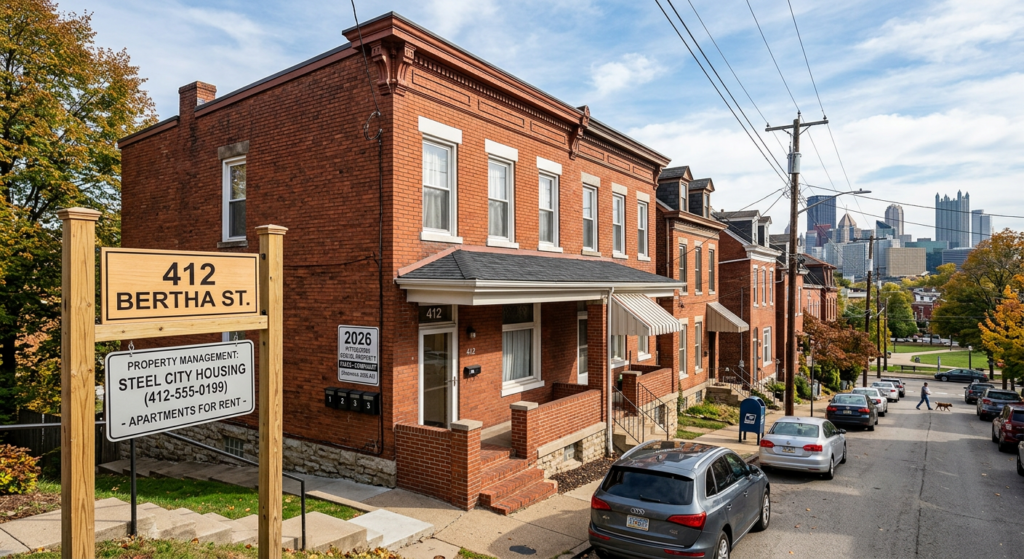
Pittsburgh Rental Property Taxes 2026: Complete Guide for Investors and Landlords

Pittsburgh Rental Property Taxes 2026: Complete Guide for Investors and Landlords
Understanding Pittsburgh rental property taxes for 2026 is essential for any landlord or real estate investor operating in Pennsylvania’s thriving rental market. As of January 2026, Pittsburgh’s median asking rent stands at $1,427 per month, with the market transitioning to a balanced state after significant growth. For the 2026 tax year, landlords face new opportunities under the One Big Beautiful Bill Act, including an expanded SALT deduction cap of $40,000 and strategic federal deduction options that can significantly reduce tax liability.
Table of Contents
- Key Takeaways
- What Are the Federal Tax Obligations for Pittsburgh Rental Property Owners?
- How Do Pennsylvania State Taxes Affect Rental Property Income?
- What Local Taxes Apply to Rental Properties in Allegheny County?
- Which Tax Deductions Reduce Rental Property Income in 2026?
- How Does the $40,000 SALT Deduction Cap Benefit Pittsburgh Landlords?
- What Are the Filing Requirements for Rental Property Owners?
- Uncle Kam in Action
- Frequently Asked Questions
Key Takeaways
- Pittsburgh rental property taxes for 2026 include federal income tax on rental profits, plus property tax obligations through Allegheny County and local school districts.
- Pennsylvania has NO state income tax, eliminating state income tax on rental profits while property taxes remain a significant expense.
- The expanded 2026 SALT deduction cap of $40,000 allows landlords to deduct more property taxes on federal returns.
- Rental property owners can deduct mortgage interest, depreciation, repairs, insurance, and utilities using Schedule E reporting.
- Pittsburgh’s 2026 rental market shows a 6.9% vacancy rate and median rent of $1,427, indicating balanced market conditions for landlords.
What Are the Federal Tax Obligations for Pittsburgh Rental Property Owners?
Quick Answer: Federal rental income is taxed at ordinary income rates (up to 37% for 2026), reported on Schedule E. All rental profits are subject to self-employment tax if you’re self-employed, meaning you owe 15.3% on top of income tax.
For the 2026 tax year, Pittsburgh landlords must report all rental income on IRS Schedule E (Form 1040), which is attached to your personal income tax return. This income is taxed at your marginal federal tax rate, which ranges from 10% to 37% depending on your total income level and filing status. Unlike wage income, rental income faces no wage tax withholding, making quarterly estimated tax payments essential.
How Self-Employment Tax Applies to Rental Property Owners
If you actively manage your rental property as a real estate professional (not passive investment), you may owe self-employment tax on net rental profits. The 2026 self-employment tax rate is 15.3% (12.4% Social Security + 2.9% Medicare), split between employee and employer portions. Self-employed landlords can deduct 50% of self-employment taxes paid, providing some tax relief. Use our Self-Employment Tax Calculator to estimate quarterly payment obligations based on 2026 projections.
Passive Activity Limitations and Real Estate Professional Status
For 2026, rental property activities typically qualify as passive income under IRS rules, meaning passive activity loss limitations apply. If your rental losses exceed rental income, you can generally deduct only $25,000 in net losses (phasing out for higher-income taxpayers at modified adjusted gross income above $150,000). Real estate professionals who spend more than 750 hours annually in real estate activities can avoid these limitations and deduct full losses against other income. Pittsburgh investors generating over $100,000 in rental income should evaluate real estate professional status with a tax advisor.
How Do Pennsylvania State Taxes Affect Rental Property Income?
Quick Answer: Pennsylvania has NO state income tax on rental profits. This is one of the most valuable tax advantages for Pittsburgh landlords—eliminating an entire layer of state taxation that exists in many states.
Unlike many states, Pennsylvania imposes no state income tax on rental property profits or any other personal income for 2026. This creates a significant tax advantage for Pittsburgh landlords compared to landlords in states like New York (top rate 8.82%), California (13.3%), or New Jersey (10.75%). For a Pittsburgh landlord with $100,000 in net rental profit, the absence of Pennsylvania state income tax saves approximately $3,070 (at national average state rates), allowing more capital to reinvest in property improvements or additional acquisitions.
Pennsylvania Property Tax Considerations
While Pennsylvania has no income tax, property taxes remain a significant expense for landlords. The state’s average effective property tax rate is approximately 1.58% of assessed value, higher than the national average of 0.99%. Pittsburgh-area property taxes vary by specific municipality and school district. Landlords should verify their exact property tax rate with the Allegheny County Assessor’s Office, as rates change annually based on reassessments and local budgets.
SALT Deduction and Federal Offset
For 2026, the SALT (state and local tax) deduction cap has been temporarily expanded to $40,000 under the One Big Beautiful Bill Act, up from the previous $10,000 limit. This means landlords who itemize deductions can deduct up to $40,000 in combined state and local property taxes. Since Pennsylvania has no income tax, Pittsburgh landlords can allocate the entire $40,000 cap to property tax and other local taxes without competing with state income taxes. This expansion applies through 2029 with inflation adjustments, reverting to $10,000 in 2030 unless Congress extends the provision.

Free Tax Write-Off Finder
What Local Taxes Apply to Rental Properties in Allegheny County?
Quick Answer: Allegheny County levies property taxes on assessed value; Pittsburgh additionally imposes earned income and occupancy taxes on rental properties; school districts and other municipalities add separate millage rates.
Local property taxes in the Pittsburgh area consist of multiple layers: Allegheny County property tax, City of Pittsburgh taxes (including earned income and business privilege taxes), local school district millage, and municipality-specific assessments. For a typical Pittsburgh rental property assessed at $150,000, annual combined property taxes might range from $2,250 to $3,000 depending on exact location and school district. Each jurisdiction reassesses properties periodically, so landlords should review assessment notices annually and appeal if they believe valuations are inflated.
Pittsburgh-Specific Rental Income Taxes
Pittsburgh imposes an earned income tax on residents earning income within the city. For rental properties within Pittsburgh city limits, this earned income tax applies if you’re a Pittsburgh resident, typically at rates around 3%. Additionally, Pittsburgh may impose business privilege taxes on rental activity. Landlords renting properties within city limits should verify their exact tax obligations with the City of Pittsburgh Department of Finance. Non-resident landlords with Pittsburgh properties may face different tax treatment.
Short-Term Rental and Occupancy Tax Implications
Pittsburgh landlords offering short-term rentals (Airbnb, VRBO) face additional occupancy tax obligations, separate from long-term rental reporting. The city collects occupancy taxes on nightly room rentals, with rates varying by accommodation type. For Airbnb hosts operating in Pittsburgh, collection and remittance of occupancy tax is typically handled by the platform, but you should verify compliance. Long-term rentals (30+ days) generally avoid occupancy tax, making them more favorable for tax planning.
Which Tax Deductions Reduce Rental Property Income in 2026?
Quick Answer: Rental property deductions include mortgage interest, depreciation (typically 27.5 years for residential), repairs, property taxes, insurance, utilities, and HOA fees—all reported on Schedule E.
For the 2026 tax year, landlords can deduct virtually all ordinary and necessary expenses related to rental property operations. The IRS distinguishes between repairs (which are fully deductible) and improvements (which are capitalized and depreciated). A repair maintains the property’s existing condition (new roof shingles), while an improvement adds value or extends useful life (full roof replacement). This distinction matters because it determines whether you get an immediate deduction or a multi-year write-off. Pittsburgh landlords should maintain detailed records of all expenses, including receipts, invoices, and bank statements.
Depreciation: Your Most Powerful Deduction
Depreciation is the largest deduction available to rental property owners, yet many fail to claim it. For residential rental property placed in service for 2026, you depreciate the building value (not land) over 27.5 years using straight-line depreciation. If your Pittsburgh property has a building value of $200,000, annual depreciation deduction is $7,273 ($200,000 ÷ 27.5 years). This reduces taxable income without requiring a cash outlay. Special bonus depreciation rules may apply to certain improvements. When you sell the property, depreciation recapture taxes apply, but the long-term tax deferral benefit justifies claiming depreciation.
Operating Expenses and Mortgage Interest Deductions
All ordinary rental operating expenses reduce income: mortgage interest (not principal), property insurance, utilities, property taxes, HOA fees, maintenance and repairs, cleaning and trash, pest control, and professional fees (CPA, attorney). For a typical Pittsburgh rental generating $18,000 annual rent, operating expenses of $7,000 (property tax $2,200 + insurance $1,200 + repairs $1,500 + utilities $1,100 + other $1,000) reduce taxable income to $11,000. The $40,000 SALT deduction cap for 2026 ensures high-tax-rate landlords can still deduct substantial property tax expenses on federal returns.
| Deduction Category | 2026 Treatment | Example Amount |
|---|---|---|
| Mortgage Interest | Fully deductible on Schedule E | $5,800/year |
| Depreciation (residential) | 27.5-year straight-line | $7,273/year |
| Property Tax | Deductible via SALT cap ($40K for 2026) | $2,200/year |
| Insurance | Fully deductible | $1,200/year |
| Repairs vs. Improvements | Repairs immediate; improvements depreciated | $1,500 repairs/year |
How Does the $40,000 SALT Deduction Cap Benefit Pittsburgh Landlords?
Pro Tip: Pittsburgh landlords with multiple properties or high-value real estate should itemize deductions to fully utilize the expanded $40,000 SALT cap through 2029. This provides significant federal tax savings before the cap reverts to $10,000 in 2030.
The 2026 SALT deduction expansion to $40,000 (from $10,000) is one of the most valuable benefits under the One Big Beautiful Bill Act for Pittsburgh landlords. Previously, landlords in high-tax jurisdictions faced severe limitations on deducting property taxes. For a Pittsburgh landlord with four rental properties assessed at $150,000 each, combined annual property taxes might total $10,000–$12,000. The new $40,000 cap provides headroom to deduct all property taxes plus other local taxes without limitation, maximizing federal deductions.
Itemizing vs. Standard Deduction Strategy
For 2026, the standard deduction is $31,500 (married filing jointly) and $15,750 (single). Landlords with substantial property taxes and mortgage interest should compare itemized deductions versus the standard deduction. If Schedule E rental deductions plus SALT plus mortgage interest exceed the standard deduction, itemizing provides additional tax savings. A married landlord couple with two Pittsburgh rental properties (combined property tax $4,000/year), total mortgage interest $12,000/year, and other deductions totaling $18,000 should itemize (total $34,000 itemized deductions exceed $31,500 standard deduction).
Temporary Nature and Planning Implications
The $40,000 SALT cap is temporary through 2029, with inflation adjustments. Starting January 1, 2030, the cap reverts to $10,000 unless Congress extends the provision. Pittsburgh landlords should plan accordingly: prioritize mortgage payoff and property improvements during the 2026–2029 window when higher deduction limits apply. After 2029, tax planning may shift toward rental entity structures or other strategies to maximize deductions under the lower cap.
What Are the Filing Requirements for Rental Property Owners?
Quick Answer: Report all 2026 rental income on Schedule E (Form 1040) by April 15, 2027; pay quarterly estimated taxes by April 18, June 17, September 15, 2026, and January 18, 2027; maintain detailed expense records for IRS audit support.
For the 2026 tax year, rental property owners must file Schedule E (Supplemental Income or Loss) attached to their Form 1040 personal income tax return. Schedule E requires detailed reporting of all rental income and expenses for each property. The 2026 tax return is due April 15, 2027, with six-month extension available via Form 4868 (due October 15, 2026). If self-employed, you also file Schedule C (if applicable) and Schedule SE for self-employment tax calculation. Pittsburgh landlords should maintain property records including acquisition date, basis, improvements, and depreciation schedules for at least seven years.
Quarterly Estimated Tax Payments
Landlords with substantial rental profit should make quarterly estimated tax payments to avoid underpayment penalties. For 2026, estimated tax due dates are April 18 (Q1), June 15 (Q2), September 15 (Q3), and January 18, 2027 (Q4). Calculate estimated tax by multiplying projected 2026 rental profit by your marginal federal tax rate (15%–37% depending on income), plus 15.3% if self-employed. A Pittsburgh landlord projecting $50,000 net rental profit in the 24% federal bracket plus 15.3% self-employment tax should remit approximately $19,650 in annual estimated taxes ($9,825 per quarter).
Record-Keeping and Documentation
The IRS requires detailed documentation supporting Schedule E deductions. Maintain records for all rental expenses: property tax bills, insurance declarations, maintenance receipts, utility bills, and contractor invoices. Digital filing systems (cloud-based accounting software) simplify 2026 record-keeping. When claiming depreciation, keep the original property appraisal and depreciation schedules. If audited, the IRS will request bank statements, property records, and expense documentation spanning the 2026 tax year and earlier years.
| 2026 Tax Deadline | Form/Action Required | Consequences of Missing |
|---|---|---|
| April 18, 2026 | Q1 Estimated Tax Payment (Form 1040-ES) | Underpayment penalty + interest |
| June 15, 2026 | Q2 Estimated Tax Payment | Underpayment penalty + interest |
| September 15, 2026 | Q3 Estimated Tax Payment | Underpayment penalty + interest |
| January 18, 2027 | Q4 Estimated Tax Payment | Underpayment penalty + interest |
| April 15, 2027 | Form 1040 + Schedule E + taxes owed | 5% monthly penalty + interest on taxes owed |

Uncle Kam in Action: Pittsburgh Real Estate Investor Saves $12,400 Through Tax Strategy
Client Profile: Sarah, a Pittsburgh-based real estate investor, owned two single-family rental properties in the city limits, generating $48,000 combined annual rental income for 2025. She worked with a corporate marketing firm earning $95,000 salary, placing her in the 24% federal tax bracket plus 15.3% self-employment tax on rental income.
The Challenge: For 2025, Sarah had paid approximately $19,500 in combined federal and state taxes on her rental profits, plus Pennsylvania property taxes and Pittsburgh local taxes. She wondered if she was missing deductions or if a different business structure could reduce her tax burden for 2026.
The Uncle Kam Strategy: Uncle Kam’s team conducted a comprehensive 2026 tax analysis and identified three key opportunities: First, Sarah wasn’t claiming depreciation on her buildings. The two properties had combined building values of $320,000, yielding $11,636 annual depreciation deduction. Second, she was taking the standard deduction instead of itemizing, leaving $8,200 in unclaimed property tax deductions. Third, with the expanded $40,000 SALT cap for 2026, Sarah could now deduct $8,200 in property taxes plus $14,000 in mortgage interest (total $22,200 itemized deductions exceeding her $31,500 standard deduction married filing jointly—though she was single, so $15,750 standard). She should itemize for 2026 and beyond.
The Results: By implementing depreciation deductions ($11,636) and itemized deductions including property tax ($8,200), Sarah reduced 2026 taxable rental income by $19,836. At her 24% federal tax rate plus 15.3% self-employment tax (combined 39.3% marginal rate), this strategy generated $7,800 in federal tax savings plus $4,600 in self-employment tax savings, totaling $12,400 in 2026 tax reduction. Sarah achieved a 2.1x ROI in year one through professional tax planning. She paid Uncle Kam $5,800 for the consulting engagement, netting $6,600 in tax savings in 2026 alone.
Next Steps
Take these three actions to optimize your 2026 Pittsburgh rental property taxes:
- Calculate depreciation deductions: Obtain property appraisals to separate building value from land value, then claim 27.5-year straight-line depreciation on Schedule E for 2026.
- Review SALT deduction strategy: Itemize deductions for 2026 if property taxes plus mortgage interest exceed your standard deduction, capturing the expanded $40,000 SALT cap before it reverts to $10,000 in 2030.
- Schedule a tax strategy consultation: Meet with an Uncle Kam tax strategist to evaluate multi-property portfolios, discuss passive loss limitation implications, and plan for estimated tax payments.
Frequently Asked Questions
Can I deduct all rental property repairs in 2026?
Yes, ordinary repairs that maintain existing property condition are fully deductible in the year incurred on Schedule E. Examples include painting, fixing plumbing, replacing door locks, and roof repairs. However, improvements that add value or extend useful life must be capitalized and depreciated over time. Replacing a roof with better materials is depreciation; repairing a leaky roof with similar materials is a deductible repair.
Does Pennsylvania’s lack of income tax apply to out-of-state landlords?
Yes. Non-resident landlords with Pittsburgh rental properties owe federal taxes on profits but avoid Pennsylvania state income tax. However, they may owe Pittsburgh earned income tax or business privilege taxes if they actively manage properties or if Pittsburgh ordinances apply to non-residents. Out-of-state landlords should verify their specific Pittsburgh tax obligations with the City Finance Department.
How do I calculate estimated quarterly tax payments for 2026?
Estimate your 2026 net rental profit, multiply by your marginal federal tax rate (15%–37%), add 15.3% for self-employment tax if applicable. Divide by four for quarterly payments. Use IRS Form 1040-ES or consult a tax professional for safe-harbor calculations. Underpayment penalties apply if quarterly payments fall below 90% of 2026 tax or 100% of 2025 tax (110% for higher-income earners).
Is my Airbnb rental income subject to occupancy tax in Pittsburgh?
Yes. Short-term rental income (less than 30 days) from Airbnb and similar platforms is subject to Pittsburgh occupancy tax. The platform typically collects and remits tax, but verify compliance. Long-term rentals (30+ days) avoid occupancy tax. Federal income tax and Schedule E reporting apply to both.
When does the $40,000 SALT deduction cap expire?
The $40,000 SALT deduction cap is temporary through December 31, 2029, with inflation adjustments. Starting January 1, 2030, the cap reverts to $10,000 unless Congress extends or modifies the provision. Landlords should plan 2026–2029 strategies to maximize deductions during this expanded window.
What rental market trends should Pittsburgh landlords monitor for 2026?
As of January 2026, Pittsburgh’s median asking rent stands at $1,427 with a 6.9% vacancy rate, indicating a balanced market. The city has shifted from renter-friendly to balanced over the past year. Monitor rental demand from out-of-market renters (currently 55% of Pittsburgh rental searchers), local employment trends at major employers like PNC and universities, and new multifamily construction permits. Market balance may support modest rent growth without aggressive increases.
Should I organize my Pittsburgh rental business as an LLC or S Corp for 2026?
Entity choice depends on your income level, activity level, and state law. Passive rental income typically remains as sole proprietorship or LLC taxed as partnership. If you qualify as real estate professional or have substantial active income, S Corp election may provide self-employment tax savings on a reasonable salary plus distributions. Consult a tax professional to evaluate your specific situation and filing requirements with Pennsylvania.
How do I handle passive activity loss limitations if my rental losses exceed income?
For 2026, passive activity rules limit net rental losses to $25,000 per year (phasing out for modified adjusted gross income above $150,000). Unused losses carry forward to future tax years when rental income exceeds losses. Real estate professionals (750+ annual hours in real estate activities) can avoid these limitations entirely. High-income landlords should evaluate real estate professional status or other strategies to deduct losses currently.
Last updated: March, 2026

