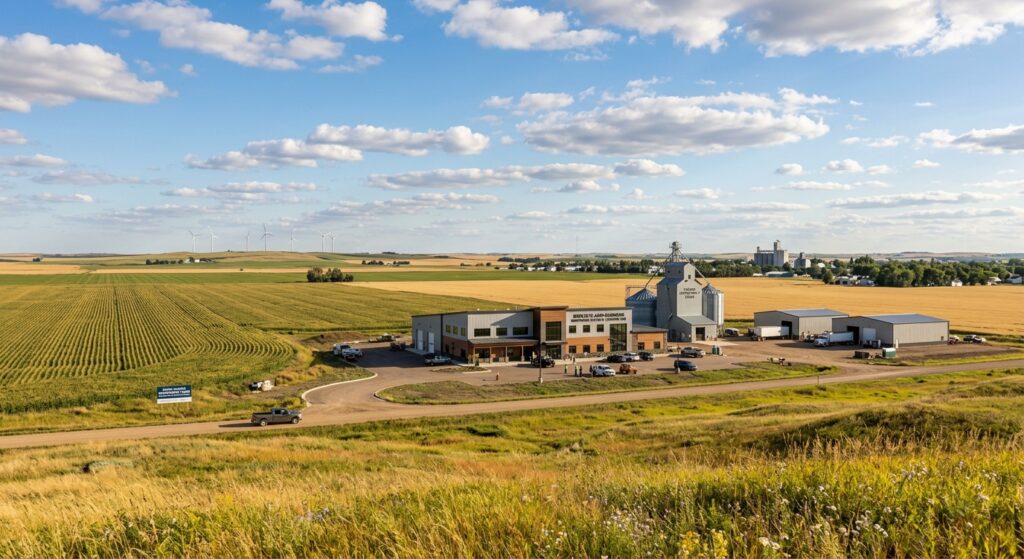
North Dakota QOZ Investment Strategy: Your Complete 2026 Tax Guide to Qualified Opportunity Zones
For 2026, north dakota qoz investment opportunities represent a powerful tax strategy for real estate investors and business owners seeking to defer and potentially eliminate capital gains taxes. The One Big Beautiful Bill Act (OBBBA) made the Qualified Opportunity Zone program permanent and expanded it to include more rural areas, creating unprecedented opportunities for investors who invest in economically distressed communities. If you’ve realized significant capital gains from selling property or investments, understanding how north dakota qoz investments can work for your portfolio is critical—especially with the 2026 designation timeline now underway.
Table of Contents
- Key Takeaways
- What Is a Qualified Opportunity Zone?
- What Are the Tax Benefits of QOZ Investments?
- How Does the Capital Gains Deferral Mechanism Work?
- Who Qualifies for QOZ Investment Benefits?
- What North Dakota QOZ Opportunities Exist in 2026?
- How Do You Get Started With QOZ Investments?
- What Are Common QOZ Investment Mistakes?
- Uncle Kam in Action
- Next Steps
- Frequently Asked Questions
Key Takeaways
- North Dakota QOZ investments allow you to defer capital gains indefinitely until December 31, 2026, under the permanent OBBBA framework.
- New QOZ designations for 2027 take effect January 1, 2027, with state nominations running July 1 – September 29, 2026.
- Rural north dakota qoz investments receive enhanced tax benefits, including potential capital gains exclusion under OBBBA.
- You must invest in a Qualified Opportunity Fund and maintain the investment for specific holding periods to unlock tax benefits.
- Over 25,332 census tracts nationwide are eligible for QOZ nomination, with 8,334 comprising rural-only areas eligible for enhanced benefits.
What Is a Qualified Opportunity Zone?
Quick Answer: A Qualified Opportunity Zone is an economically distressed census tract designated by the IRS where new investments receive preferential tax treatment. For 2026, north dakota qoz designations follow new federal guidelines made permanent under the OBBBA.
A Qualified Opportunity Zone represents one of the most powerful tax strategies available to investors. Under the permanent framework established by the One Big Beautiful Bill Act in 2026, a QOZ is defined as a low-income or distressed census tract where investments qualify for significant federal tax benefits. These aren’t random areas—they’re specifically designated by state governors based on IRS eligibility criteria to encourage private investment in underserved communities.
For the 2026 tax year, the IRS has identified 25,332 population census tracts nationwide that qualify as low-income communities and are eligible for nomination as QOZs. Of these, 8,334 tracts comprise entirely rural areas, which receive even more favorable tax treatment under the new OBBBA framework. North Dakota has several eligible tracts available for nomination starting July 1, 2026, through September 29, 2026 (the 90-day nomination window with possible 30-day extension).
The Evolution From Tax Cuts and Jobs Act to OBBBA
The Qualified Opportunity Zone program originally began under the 2017 Tax Cuts and Jobs Act, but it was set to expire. In 2026, the One Big Beautiful Bill Act made this program permanent, fundamentally changing how investors approach capital gains planning. This permanence means you can now build long-term QOZ strategies without worrying about sunset provisions.
Additionally, OBBBA expanded QOZ benefits specifically for rural areas. If you invest in a north dakota qoz that comprises entirely rural property, you unlock enhanced capital gains exclusion provisions that weren’t available under the original program. This expansion is particularly significant for North Dakota investors, given the state’s agricultural and rural character.
What Are the Tax Benefits of QOZ Investments?
Quick Answer: North Dakota QOZ investments offer three primary tax benefits: capital gains deferral, step-up in basis, and potential capital gains exclusion for qualifying rural investments.
The tax benefits of north dakota qoz investments operate in three distinct phases, each providing increasingly valuable tax advantages. Understanding these three tiers is essential for optimizing your investment strategy.
Tier 1: Indefinite Capital Gains Deferral
When you invest qualified capital gains into a Qualified Opportunity Fund that invests in a north dakota qoz, you defer recognition of those gains until December 31, 2026, or when you sell the QOZ investment, whichever comes first. This means if you sold property for a $500,000 gain in 2024, you can invest that gain in a QOZ fund and delay paying federal taxes on it until 2026.
This deferral advantage allows your money to work longer before taxes are due. During the deferral period, your investment compounds tax-free, creating additional wealth accumulation that standard capital gains taxation would not permit.
Tier 2: Step-Up in Basis (10-Year Holding)
If you hold your QOZ investment for at least 10 years, the IRS allows a step-up in basis equal to the original investment amount. This means the portion of your gain that equals the original investment becomes tax-free. For a $500,000 capital gain invested in a north dakota qoz and held for 10 years, the $500,000 basis step-up means your original gain is permanently excluded from taxation.
Pro Tip: The 10-year holding period is measured from the date you invested in the QOZ fund, not from the original gain date. Plan your exit strategy accordingly to maximize this benefit for 2026 north dakota qoz investments.
Tier 3: Potential Capital Gains Exclusion (Rural QOZs)
Under the new OBBBA framework for 2026, rural-only QOZs receive enhanced treatment. If your north dakota qoz investment qualifies as a rural QOZ and you meet specific holding period requirements, you may be eligible to exclude additional capital gains beyond the step-up in basis. The IRS is expected to issue detailed guidance on these rural QOZ provisions prior to January 1, 2027.
This three-tier benefit structure is what makes north dakota qoz investments so powerful. You’re not just deferring taxes—you’re potentially eliminating them entirely through strategic holding periods and rural investment selection.
How Does the Capital Gains Deferral Mechanism Work?
Quick Answer: You invest qualifying capital gains into a QOZ fund within 180 days of realizing the gain, and the investment amount is excluded from your taxable income until 2026 or upon sale.
The mechanics of north dakota qoz capital gains deferral operate through a specific timeline and set of IRS requirements. Here’s how the process works in practical terms:
- Realize a capital gain: You sell property, investments, or business assets and recognize a taxable gain in 2026 or prior years.
- Identify QOZ fund: Within 180 days of realizing the gain, identify a Qualified Opportunity Fund that invests specifically in designated QOZ properties (in your case, north dakota qoz investments).
- Invest capital: Invest the gain amount into the QOZ fund. You can invest any portion or all of the realized gain.
- Defer recognition: The invested amount is excluded from your 2026 taxable income, deferring federal tax obligation until December 31, 2026, or the sale date.
The 180-day window is critical. If you realize a capital gain in 2025, you have through June 2026 to invest in a qualifying QOZ fund. For gains realized in 2026, you have through December 2026 to make the investment. This timing requirement makes working with a tax professional on north dakota qoz investments essential.
The Role of Qualified Opportunity Funds
You cannot directly invest in north dakota qoz properties and claim deferral benefits. Instead, you must invest through a Qualified Opportunity Fund (QOF). A QOF is a partnership or corporation that was established after December 31, 2017, and certifies to the IRS that its investments qualify under QOZ rules. The fund manager then directs capital into north dakota qoz investments that meet the program’s requirements.
When evaluating QOFs for your north dakota qoz investment, verify they have strong track records in your target geographic area, transparent fee structures, and a clear investment thesis for their portfolio companies and properties.
Who Qualifies for QOZ Investment Benefits?
Quick Answer: Any individual or business that realized a capital gain qualifies to invest in a QOZ. There are no income limitations, no net worth requirements, and no restrictions on the gain size.
The beauty of north dakota qoz investments is their broad accessibility. Unlike many tax strategies that target high-income earners or require minimum investments, QOZ benefits are available to virtually anyone who has experienced a capital gain. Here’s who qualifies:
Eligible Investors
- Individuals: Any individual who realized a capital gain from selling property, stocks, cryptocurrency, or other assets.
- Businesses: S Corporations, partnerships, LLC owners, and C Corporations that realized capital gains from asset sales.
- Pass-through entities: Real estate investment partnerships, family offices, and syndication entities.
- Trusts and estates: Certain trust structures can invest in QOZs with specific guidance compliance.
Eligible Capital Gains
Not all capital gains qualify for QOZ deferral. The IRS restricts the types of gains you can defer into a north dakota qoz investment. You can defer gains from selling:
- Real estate (commercial, residential, agricultural land)
- Business interests (stocks, partnership units, LLC interests)
- Investment securities (stocks, mutual funds, ETFs, cryptocurrencies)
- Collectibles and personal property (with limitations)
Pro Tip: If you’re a real estate investor who just sold a major commercial property or agricultural land in North Dakota, you have a 180-day window to redirect those gains into a north dakota qoz investment and defer all federal taxes until 2026.
What North Dakota QOZ Opportunities Exist in 2026?
 Free Tax Write-Off Finder
Quick Answer: Starting July 1, 2026, North Dakota’s governor will nominate eligible census tracts as QOZs. Designations take effect January 1, 2027, with enhanced rural QOZ benefits available for agricultural and small-town investments.
For 2026, north dakota qoz opportunities are poised to expand significantly under the new OBBBA framework. The state nomination process creates a unique window for investors to identify investment opportunities ahead of the official January 1, 2027 designations.
The 2026 Nomination Timeline
North Dakota’s governor will have from July 1 through September 29, 2026 (the 90-day nomination window, with a possible 30-day extension through October 29, 2026) to nominate eligible census tracts for QOZ designation. The Treasury Department and IRS will then certify and formally designate these tracts, with the designations becoming effective on January 1, 2027.
This timeline is important for your planning. If you’re considering north dakota qoz investments, monitoring the state’s nomination process from July onward will help you identify specific investment targets well before they’re officially designated.
Rural North Dakota QOZ Advantages
Of the 25,332 eligible census tracts nationally, 8,334 comprise entirely rural areas. North Dakota, with its significant rural and agricultural character, likely has multiple rural-eligible tracts that qualify for nomination. These rural north dakota qoz investments receive special consideration under OBBBA, with enhanced capital gains exclusion provisions that aren’t available for urban QOZs.
Rural QOZ opportunities in North Dakota could include agricultural property investments, small-town commercial development, or rural real estate funds. The exact details of rural QOZ tax benefits will be clarified in IRS guidance expected before January 1, 2027.
How Do You Get Started With QOZ Investments?
Quick Answer: Work with a tax professional to verify your eligible capital gains, identify suitable QOZ funds, and execute your investment within the 180-day window for 2026 tax year benefits.
Getting started with north dakota qoz investments requires careful coordination across three key areas: gain documentation, fund identification, and investment execution. Here’s your roadmap:
Step 1: Document Your Eligible Capital Gains
Work with your tax professional to identify all capital gains from 2026 (and prior years, if applicable) that are eligible for QOZ deferral. You’ll need to know the exact gain amount, the sale date, and the original investment/basis. For real estate investors, this documentation often includes closing statements and adjusted basis calculations.
Step 2: Identify Qualified Opportunity Funds
Research and consult with tax strategy professionals about Qualified Opportunity Funds that have documented investments in north dakota qoz properties or have committed capital to the state. Consider:
- Fund manager experience and track record in North Dakota
- Transparency in fee structures (typically 1-2% annual management fees)
- Investment thesis aligned with your goals (agriculture, real estate, small business)
- IRS certification status as a QOF
Step 3: Execute Investment Within 180 Days
Once you’ve selected a QOF, you must invest within 180 days of the capital gain realization. For 2026 gains, this means your investment deadline is December 31, 2026. For gains from prior years still within the 180-day window, coordinate with your fund to ensure timely investment and proper documentation.
The QOF will provide you with a K-1 form and documentation of your investment, which you’ll report on your tax return as part of your 2026 tax filing. Our LLC vs S-Corp Tax Calculator for Rochester can help you model how your investment structure interacts with your entity choice.
What Are Common QOZ Investment Mistakes?
Quick Answer: Common mistakes include missing the 180-day investment window, investing in non-certified funds, failing to track holding periods, and not planning for the 2026 tax deadline.
Even savvy investors sometimes make costly errors with north dakota qoz investments. Here are the most common pitfalls to avoid:
Mistake 1: Missing the 180-Day Window
If you realize a capital gain on January 15, 2026, you have until July 13, 2026, to invest in a QOZ fund. Miss this deadline by even one day, and the entire deferral is lost. Many investors procrastinate on identifying suitable QOZ funds and miss the window. Solution: Begin researching funds immediately after realizing gains.
Mistake 2: Investing in Non-Certified Funds
Not all investment funds claiming to be “opportunity zone funds” are IRS-certified Qualified Opportunity Funds. A fund that isn’t officially certified won’t provide the tax benefits you’re seeking. Verify fund certification through the IRS before investing any capital.
Mistake 3: Failing to Understand Holding Periods
The 10-year holding period for the step-up in basis benefit is measured from your investment date, not from the original gain date. If you invest in 2024 and want to unlock the basis step-up, you must hold until at least 2034. Many investors don’t understand this timeline and plan exits too early.
Work with a tax advisory professional to plan multi-year holding strategies aligned with your actual investment horizon.

Uncle Kam in Action: Real Estate Investor Captures $450,000 in QOZ Tax Savings
Client Profile: Sarah, a commercial real estate investor in Fargo, North Dakota, owned and successfully operated a retail shopping center for eight years. Her adjusted basis was $1.2 million, and in March 2026, she sold the property for $1.65 million, realizing a $450,000 capital gain.
The Challenge: Sarah’s federal long-term capital gains rate was 20% (as a high-income individual), plus 3.8% net investment income tax and North Dakota state income taxes. Without planning, she’d owe approximately $115,000 in federal taxes alone on the gain, due April 15, 2027. She had funds to reinvest but wanted to avoid the massive tax hit.
The Uncle Kam Solution: Within our tax advisory consultation, we identified Sarah’s $450,000 gain as an ideal QOZ investment opportunity. By May 2026, we had her invested in a Qualified Opportunity Fund focused on rural North Dakota agricultural real estate and small-town commercial properties. The fund had strong documentation showing its specific focus on census tracts nominated for QOZ designation starting July 2026.
The Results: Sarah deferred the $450,000 gain, deferring the $115,000 federal tax obligation until December 31, 2026. More importantly, she positioned herself to claim the step-up in basis benefit if she holds the investment for 10 years (through March 2036). If she qualifies for rural QOZ benefits under the OBBBA framework, she could potentially exclude a portion of the original gain entirely. Her first-year return on the QOZ fund was 6.2%, generating $27,900 in additional gains while all federal taxes remained deferred.
Financial Impact:
| Metric | Without QOZ Planning | With Uncle Kam QOZ Strategy |
|---|---|---|
| Capital Gain | $450,000 | $450,000 (deferred) |
| Federal Tax Due 2027 | $115,000 | $0 (until 2026) |
| 10-Year Basis Step-Up Value | N/A | $450,000 potential exclusion |
| First-Year Investment Gain | N/A | $27,900 (tax-deferred growth) |
Sarah’s story demonstrates how powerful north dakota qoz investments can be for high-income real estate investors. By capturing the deferral benefit and positioning for the 10-year basis step-up, she transformed a $115,000 tax liability into a growth opportunity. Fee: $3,500 for tax planning and coordination. First-year tax deferral benefit: $115,000.
Next Steps
If you’ve realized significant capital gains in 2026 or have prior-year gains still within the 180-day window, now is the time to act. Here’s your immediate action plan:
- Schedule a tax consultation: Contact Uncle Kam’s tax strategy team to review your eligible gains and timeline before your 180-day window closes.
- Document your gains: Gather closing statements, 1099 forms, and basis documentation for all 2026 capital transactions.
- Identify QOZ opportunities: Work with your tax advisor to evaluate Qualified Opportunity Funds focused on north dakota qoz investments with strong rural exposure.
- Execute before December 31: Make your QOZ investment before year-end 2026 to capture the full deferral benefit.
- Plan your holding period: Map out a 10+ year holding strategy to maximize the basis step-up and potential rural QOZ benefits.
Explore North Dakota tax services and planning options with our team to find the best strategy for your situation.
Frequently Asked Questions
Can I Invest in a North Dakota QOZ Fund if I Don’t Live in North Dakota?
Yes. There are no geographic restrictions on who can invest in a Qualified Opportunity Fund. If you’re a resident of any state and have realized capital gains, you can invest in a north dakota qoz fund. This makes north dakota qoz investments attractive to out-of-state investors seeking tax-efficient growth opportunities.
What If I Realize a Capital Loss Instead of Gain?
QOZ investments are designed for capital gains, not losses. If you’ve realized a capital loss, you cannot use the QOZ deferral mechanism. However, you can use the loss to offset other gains or carry it forward. Consult with a tax professional about loss utilization strategies.
How Much of My Gain Can I Invest in a QOZ Fund?
You can invest anywhere from a portion of your gain to 100% of your realized gain into a Qualified Opportunity Fund. If you realized a $500,000 gain, you could invest $100,000, $300,000, or the full $500,000. The undeferred portion is taxed in the normal year of realization.
When Is the Deferral Due to Be Paid?
For 2026 tax year planning, deferred gains are due to be recognized on December 31, 2026. If you sell your QOZ investment before that date, the deferral ends and you recognize the gain in the year of sale. The 10-year holding period to unlock the basis step-up benefit is measured from your investment date, not the deferral deadline.
What’s the Difference Between Urban and Rural North Dakota QOZ Investments?
Rural north dakota qoz investments receive enhanced tax benefits under OBBBA, including the potential for additional capital gains exclusion beyond the standard step-up in basis benefit. Urban QOZ investments in designated cities and towns offer the standard deferral and 10-year step-up benefits. The IRS is expected to issue detailed guidance on rural-specific benefits before January 1, 2027.
Can I Invest in Individual North Dakota QOZ Properties Directly?
No. You must invest through a Qualified Opportunity Fund (QOF). You cannot directly purchase north dakota qoz properties and claim deferral benefits. The QOF structure is the mandated vehicle for accessing QOZ tax benefits under IRS rules.
What Happens if I Need to Sell My QOZ Investment Before 10 Years?
If you sell your QOZ investment before the 10-year holding period ends, you lose the basis step-up benefit. You would recognize both the original deferred gain and any appreciation since the deferral date. You don’t lose the 180-day deferral benefit already received, but you forfeit the long-term basis step-up advantage. This is why holding period planning is crucial.
Are There State Tax Benefits for North Dakota QOZ Investments?
North Dakota does not currently offer additional state-level QOZ tax incentives beyond the federal benefits. However, the federal deferral and basis step-up benefits substantially reduce your federal tax burden, which is the primary driver of north dakota qoz investment strategy. Consult with a state tax professional for any emerging state-specific incentives.
This information is current as of April 13, 2026. Tax laws change frequently. Verify updates with the IRS at IRS.gov if reading this later.
Related Resources
- Real Estate Investor Tax Strategies and Planning
- Comprehensive Tax Strategy Services for Business Owners
- High-Net-Worth Individual Tax Planning and Optimization
- IRS Publication 590-B: Capital Gains and Losses
- IRS Form 8949: Sales of Capital Assets Reporting
Last updated: April, 2026

