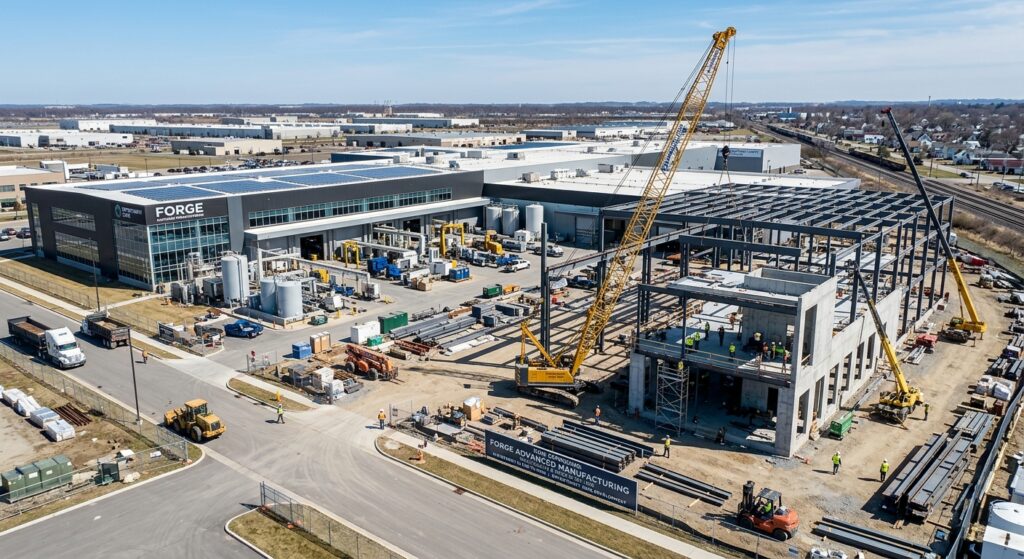
Manchester Opportunity Zone Deferral Strategy: 2026 Tax Planning Guide for Business Owners
For 2026, business owners seeking aggressive capital gains tax deferral strategies should understand Manchester opportunity zone deferral rules and how Qualified Opportunity Funds (QOFs) can unlock significant tax benefits. This comprehensive guide explains how to defer capital gains taxes on reinvested profits, leverage the latest April 2, 2026 IRS guidance on manufacturing facility planning, and implement a structured strategy that keeps more money in your business. Whether you’re expanding operations, upgrading facilities, or seeking to reinvest recent capital gains, understanding these 2026 opportunities is critical to maximizing your business tax efficiency.
Table of Contents
- Key Takeaways
- What Is the Manchester Opportunity Zone Deferral (2026)?
- How Do Qualified Opportunity Funds Work for Business Owners?
- What Changed With the April 2, 2026 IRS Guidance on Manufacturing Tax Planning?
- Are You Eligible for Manchester Opportunity Zone Deferral Benefits?
- How Can You Calculate Your Manchester Opportunity Zone Tax Savings?
- What Is the 2026 Timeline for Implementing an Opportunity Zone Deferral Strategy?
- Uncle Kam in Action
- Next Steps
- Frequently Asked Questions
- Related Resources
Key Takeaways
- Manchester opportunity zone deferrals allow business owners to postpone capital gains taxes on profits reinvested in Qualified Opportunity Funds through the 2026 deadline.
- The April 2, 2026 IRS guidance on Qualified Production Property enables immediate 100% deduction for qualifying manufacturing facility investments instead of standard 39-year depreciation.
- QOF investments provide triple tax benefits: deferral of original gains, tax-free growth, and potential basis step-ups for long-term investors.
- Acting before 2026 deadlines locks in benefits before anticipated inclusion events and potential rule changes.
- Proper structuring with professional guidance maximizes tax efficiency while ensuring compliance with complex IRS regulations.
What Is the Manchester Opportunity Zone Deferral (2026)?
Quick Answer: The manchester opportunity zone deferral is a federal tax strategy allowing business owners to defer capital gains taxes on profits reinvested in Qualified Opportunity Funds through 2026, while locking in potential tax-free growth and basis step-ups.
A manchester opportunity zone deferral is a powerful tax deferral mechanism created under federal law to incentivize investment in economically distressed areas designated as Qualified Opportunity Zones. When you realize capital gains from a business sale, stock sale, or other investment transaction, you typically owe federal capital gains taxes immediately. However, through a manchester opportunity zone deferral strategy, you can postpone paying those taxes indefinitely if you reinvest those gains within a specific timeframe.
For 2026, this strategy has taken on heightened importance because federal guidance now clarifies exactly how manufacturing facility investments qualify for enhanced tax benefits. Business owners expanding operations or upgrading production facilities can now accelerate deductions for qualifying real property, transforming traditional depreciation schedules into immediate expense recognition opportunities.
The manchester opportunity zone deferral works by creating a formal reinvestment plan where your capital gains are initially deferred, your money grows tax-free inside the fund, and you may qualify for a permanent basis step-up if you hold your investment long enough. This makes it dramatically different from simply paying capital gains taxes immediately and reinvesting what’s left.
Key Components of Manchester Opportunity Zone Deferral
- Capital gains deferral: Taxes on original gains are postponed, not eliminated, requiring careful inclusion event planning.
- Qualified Opportunity Fund investment: Your deferred gains must be reinvested in a federally approved QOF within 180 days.
- Tax-free growth window: Fund appreciation beyond your initial investment may be permanently tax-free if held 10+ years.
- Basis step-up potential: Long-term QOF investors may receive a permanent step-up in basis for appreciation earned after December 31, 2026.
- Opportunity Zone designation: Investment must occur in a federally designated economically distressed area, such as manchester zones.
Why This Matters for Business Owners in 2026
In prior years, opportunity zone deferrals were complex to understand and hard to justify for many business owners. But 2026 marks a inflection point. With the April 2, 2026 IRS guidance clarifying how manufacturing equipment and facilities qualify for accelerated deductions, business owners now have a clear roadmap to combine manchester opportunity zone deferral benefits with immediate equipment write-offs. This creates a synergistic tax efficiency strategy that wasn’t previously available.
Additionally, inclusion event deadlines are approaching. If you defer capital gains into a QOF in 2024 or 2025, your deferred gains will be subject to inclusion (taxable events) in 2026 or 2027 unless you take additional actions to qualify for basis step-ups. This creates urgency to act on comprehensive opportunity zone planning while timing windows remain favorable.
How Do Qualified Opportunity Funds Work for Business Owners?
Quick Answer: Qualified Opportunity Funds are investment vehicles that accept your deferred capital gains, deploy capital in opportunity zones, and provide triple tax benefits: gains deferral, tax-free growth, and potential basis step-ups.
A Qualified Opportunity Fund (QOF) is a specialized investment vehicle—typically structured as an LLC, partnership, or corporation—that is certified by the IRS to invest in economically distressed areas designated as Qualified Opportunity Zones. When you reinvest capital gains into a QOF, you’re not simply moving money into another brokerage account. Instead, you’re making a formal economic commitment to support development and job creation in specific geographic areas, earning significant tax benefits in return.
For business owners specifically, QOFs function as a tax planning tool that separates your capital gains tax liability from your investment returns. Instead of paying federal capital gains taxes immediately on a sale, you defer those taxes by rolling your gains into a QOF. Meanwhile, any appreciation earned inside the fund—whether from real estate development, business expansion, or infrastructure investment—grows tax-free. If you hold your QOF investment long enough, you may qualify for a permanent step-up in basis that shields future appreciation from taxation entirely.
The Three-Tier Tax Benefit Structure
QOF investments operate on a three-tier tax benefit system that makes them uniquely valuable for business owners with significant capital gains:
| Benefit Tier | Tax Impact | 2026 Timeline |
|---|---|---|
| Tier 1: Gains Deferral | Original capital gains taxes deferred indefinitely until inclusion event | Inclusion typically occurs 2026-2027 for early investors |
| Tier 2: Tax-Free Growth | QOF appreciation beyond original investment is tax-free if held 10+ years | Must hold until December 31, 2026 minimum for basis step-up eligibility |
| Tier 3: Basis Step-Up | Permanent step-up in basis for post-December 31, 2026 appreciation (potentially permanent tax elimination) | Requires 10-year holding period from QOF investment date |
Understanding these three tiers is essential because they operate independently. You can benefit from Tier 1 (deferral) immediately upon investment, Tier 2 (tax-free growth) over the holding period, and Tier 3 (basis step-up) only if you meet long-term holding requirements. A skilled tax advisor can help you structure your QOF investment to maximize benefits across all three tiers.
Pro Tip: Business owners should prioritize timing QOF investments to occur before December 31, 2026, because investments made before this date unlock the greatest potential for permanent basis step-ups under current IRS rules.
What Changed With the April 2, 2026 IRS Guidance on Manufacturing Tax Planning?
Quick Answer: New IRS guidance released April 2, 2026, permits manufacturers to immediately deduct 100% of Qualified Production Property costs, eliminating the standard 39-year depreciation schedule and dramatically accelerating tax benefits.
On April 2, 2026, the IRS released transformational guidance on how Qualified Production Property (QPP) is treated for tax purposes. This guidance fundamentally changes the economics of manufacturing facility investments in manchester opportunity zones and similar qualified locations. Instead of recovering facility and equipment costs over 39 years (the standard depreciation period for nonresidential real property), qualifying manufacturers can now immediately deduct 100% of their production-related real estate costs in the year the property is placed in service.
This shift from depreciation to expensing creates a massive acceleration of tax deductions, which translates directly into cash flow improvements. For a manufacturer investing $5 million in facility upgrades, the difference between spreading deductions over 39 years versus taking them all in Year 1 represents potentially $128,000+ in annual tax savings (at 25% effective tax rate). This makes 2026 the optimal year to plan significant facility investments in manchester opportunity zones.
How the April 2, 2026 Guidance Combines With Manchester Opportunity Zone Deferral
The April 2, 2026 IRS guidance creates a powerful synergy with manchester opportunity zone deferrals. Here’s the strategic combination:
- You realize capital gains from a business transaction (sale of equipment, real estate, or entire division).
- Within 180 days, you reinvest those deferred gains into a manchester opportunity zone QOF that funds manufacturing facility expansion.
- The QOF invests in Qualified Production Property (QPP) eligible for 100% immediate expensing under the April 2, 2026 guidance.
- Your deferred gains are reinvested in an asset that generates massive Year 1 tax deductions, creating double tax efficiency.
- Any fund appreciation beyond your investment grows tax-free, with potential basis step-ups if you hold 10+ years.
This combination of deferral plus accelerated deductions is why 2026 is such a critical year for manufacturing businesses. The April 2, 2026 guidance has reset the baseline for how facility investments are treated, making them far more attractive than they were in 2025.
Are You Eligible for Manchester Opportunity Zone Deferral Benefits?
Quick Answer: You’re eligible for manchester opportunity zone deferral if you have capital gains to reinvest, can identify a qualified QOF in an opportunity zone, and can commit funds within 180 days of realizing your gains.
Eligibility for manchester opportunity zone deferral is surprisingly broad. You don’t need to be a resident of Manchester or even New Hampshire. You don’t need to be a manufacturer (though manufacturers get special benefits under the April 2, 2026 guidance). You don’t need to be a real estate developer or have prior experience with opportunity zones. If you have capital gains and access to a qualified opportunity zone fund, you can likely structure a manchester opportunity zone deferral strategy.
Core Eligibility Requirements for 2026
| Requirement | Details | 2026 Verification |
|---|---|---|
| Capital Gains | You must have realized capital gains from any source (business sale, investment sale, real estate transaction) | Gains must be reported on 2026 tax return or carried forward from prior year |
| QOF Investment | Reinvestment must occur in a Qualified Opportunity Fund certified by IRS | QOF must have current IRS certification; verify before commitment |
| 180-Day Window | Reinvestment must occur within 180 days of realizing original capital gains | Critical deadline; missing this eliminates entire deferral benefit |
| Opportunity Zone Location | QOF investment must be in assets located in federally designated Opportunity Zones | Manchester zones qualify; verify specific property location |
| No Income Limits | No income limits apply; any business owner can participate | Wealthy owners and moderate earners both benefit equally |
Who Should Prioritize Manchester Opportunity Zone Deferral?
While anyone with capital gains can participate, certain business owner profiles benefit most from manchester opportunity zone deferral strategies:
- Manufacturers with 2026 facility expansion plans seeking immediate write-offs plus long-term growth deferral.
- Business owners with significant one-time capital gains (sale of division, major property sale, investment liquidation).
- High-income professionals seeking to diversify income sources and reduce concentrated capital gains exposure.
- Real estate investors looking to 1031-exchange equivalents with federal tax benefits.
- Businesses in manchester and similar economically designated zones seeking to reinvest locally while capturing deferral benefits.
How Can You Calculate Your Manchester Opportunity Zone Tax Savings?
 Free Tax Write-Off Finder
Quick Answer: Calculate the total federal capital gains tax on your transaction, multiply by years of deferral, apply the April 2, 2026 QPP deduction benefit, then factor in potential basis step-up value.
Calculating your manchester opportunity zone tax savings requires understanding three distinct value components: the tax deferral benefit, the time value of deferred money, and the permanent basis step-up potential. Many business owners focus only on the deferral component and miss the larger financial picture.
Three-Component Tax Savings Formula
Component 1: Deferral Tax Savings
Start by calculating your capital gains tax liability: Capital Gains × Long-Term Capital Gains Rate (15% or 20% federal, plus any state/local taxes). This is the amount you defer immediately. For example, a $2 million capital gain at 20% federal rate = $400,000 deferred tax. This money remains invested in your QOF, earning returns tax-free, rather than going to the IRS.
Component 2: Time Value of Deferred Money
The second value comes from the time value of that deferred tax payment. If your QOF investment averages 6% annual returns over 5 years before your inclusion event, your $400,000 deferred tax payment grows to approximately $535,000 in fund value. You’ve effectively gotten a free $135,000 loan from the IRS (the difference between what you’d have invested with after-tax money versus tax-deferred money). This compounding effect is powerful.
Component 3: Basis Step-Up Potential
The third and largest value component comes from the permanent basis step-up if you hold your QOF investment through December 31, 2026 and beyond. Under current law, any appreciation of your QOF investment earned after December 31, 2026, receives a permanent step-up in basis. This means if your $2 million QOF investment grows to $3 million (with $1 million in appreciation), that $1 million in new appreciation is taxed at 0% when you eventually exit the QOF, provided you meet holding period requirements.
Use our Small Business Tax Calculator to model different deferral scenarios and see exactly how manchester opportunity zone strategy impacts your specific situation with varying capital gains amounts and holding periods.
A comprehensive calculation requires modeling your specific capital gains amount, assumed QOF returns, your personal tax bracket, and your time horizon. Working with a tax strategist who specializes in opportunity zones is highly recommended because the mathematical models are complex and timing decisions have seven-figure consequences.
What Is the 2026 Timeline for Implementing an Opportunity Zone Deferral Strategy?
Quick Answer: Critical 2026 deadlines are: December 31, 2026 for basis step-up eligibility, 180 days from capital gains realization for QOF investment, and ongoing monitoring for inclusion events beginning 2026-2027.
The 2026 timeline for manchester opportunity zone deferral is compressed and critical. Multiple regulatory deadlines converge this year, and missing any one of them can eliminate or significantly reduce your tax benefits. Here’s the precise timeline:
Month-by-Month 2026 Action Plan
- January-March 2026: Identify capital gain transactions you’re planning (business sale, equipment sale, investment liquidation). Meet with tax advisor to model opportunity zone benefits. Begin QOF vetting and due diligence process.
- April 2, 2026: New IRS guidance on Qualified Production Property released. Review guidance with manufacturing-focused tax strategist. Determine if your planned facility investment qualifies for 100% immediate expensing.
- April-June 2026: Close or finalize capital gain transaction. Simultaneously, initiate QOF investment process (these must be coordinated). Lock in 180-day reinvestment window calculation.
- July-September 2026: Execute QOF investment within 180-day window from capital gains realization. Complete documentation, formal agreements, and IRS compliance filings.
- December 31, 2026: Final deadline for QOF investment to qualify for permanent basis step-up on post-2026 appreciation. This is the most critical deadline of the year for maximizing tax benefits.
- 2027 and Beyond: Monitor inclusion events (typically 2026-2027 for early investors). Prepare for potential tax liability when original capital gains become taxable again. Plan long-term holding strategy if pursuing basis step-up benefits.
Pro Tip: Many business owners make the mistake of waiting until late in the year to plan opportunity zone strategies. Because timing is so critical and QOF due diligence takes weeks, begin planning your manchester opportunity zone strategy in January or February 2026, even if your capital gains transaction won’t close until later in the year.

Uncle Kam in Action: Manufacturing Business Expansion Through Manchester Opportunity Zone Deferral
Client Profile: Sarah, owner of a precision machining business with $8 million annual revenue, sold her facility and equipment to a larger manufacturer in April 2026, realizing $1.2 million in capital gains. Without planning, she faced $240,000 in federal capital gains taxes (20% rate) plus $60,000 in state taxes. Her manufacturing business was expanding into a new location in a manchester opportunity zone, requiring $1.8 million in facility and equipment investments.
The Challenge: Sarah’s typical approach would have been to pay $300,000 in taxes immediately (federal and state combined), then use her remaining $900,000 to fund part of her facility expansion. This meant paying taxes first, then reinvesting. Additionally, her new facility qualified for the April 2, 2026 Qualified Production Property guidance, but without proper planning, she’d be depreciating improvements over 39 years instead of deducting them immediately.
The Uncle Kam Solution: By June 2026, Sarah’s tax advisor structured a manchester opportunity zone deferral strategy: Sarah’s $1.2 million capital gains were reinvested into a Qualified Opportunity Fund that invested in her facility expansion project in the manchester opportunity zone. Instead of paying $300,000 in taxes immediately, the full $1.2 million remained invested. Additionally, the facility improvements were structured to qualify for 100% immediate expensing under the April 2, 2026 QPP guidance, creating $1.8 million in Year 1 deductions that offset other business income.
The Results: Year 1 tax impact was dramatic: Sarah deferred $300,000 in capital gains taxes (Tier 1 benefit), captured $450,000 in accelerated depreciation deductions from the facility investment (creating approximately $112,500 in additional tax savings at her 25% effective rate), and positioned her QOF investment for potential basis step-up benefits if held through 2026 and beyond. Over 10 years, assuming 5% annual QOF returns and basis step-up on post-2026 appreciation, Sarah’s total tax benefits from the manchester opportunity zone strategy exceeded $450,000 in present value terms—compared to $0 benefits if she’d paid taxes immediately and reinvested the after-tax proceeds.
Sarah’s case illustrates why timing and proper structure matter so profoundly. The manchester opportunity zone deferral didn’t just defer taxes—when combined with the April 2, 2026 QPP guidance, it transformed her facility investment into a comprehensive tax optimization strategy.
Next Steps
- Audit your 2026 capital gains to date and identify upcoming transactions that will generate gains. Include business sales, equipment dispositions, investment liquidations, and real estate sales.
- Calculate your potential capital gains tax liability at your marginal federal and state rates. This is your deferral opportunity in dollar terms.
- Research IRS-certified Qualified Opportunity Funds operating in manchester opportunity zones or zones aligned with your planned investments. Request offering documents and historical performance data.
- Schedule a consultation with a tax strategy specialist who has deep expertise in opportunity zone deferrals and the April 2, 2026 manufacturing guidance to model your specific situation.
- If your capital gains are imminent, prioritize QOF due diligence and investment documentation—the 180-day window closes quickly, and missing it eliminates all deferral benefits.
Frequently Asked Questions
What happens to my deferred capital gains if I don’t use the opportunity zone deferral?
If you don’t use manchester opportunity zone deferral, you pay capital gains taxes in the year you realize the gains. For a $1 million gain at 20% federal plus applicable state tax (average 5% combined), you’d owe approximately $250,000 in taxes immediately. This $250,000 comes out of your reinvestment capital, reducing the amount you have available to grow. By deferring through a QOF, that full $250,000 remains invested and earning returns tax-free, creating substantial long-term wealth accumulation advantage.
Can I structure a manchester opportunity zone deferral for only part of my capital gains?
Yes. You can defer any portion of your capital gains into a QOF, and pay taxes on the remainder immediately. This flexibility is valuable if you have other tax planning opportunities that benefit from realizing some gains, or if you want to diversify between taxable and tax-deferred investments. Your tax advisor can help optimize what percentage to defer based on your overall 2026 tax picture.
What is the “inclusion event” and when does it happen?
An inclusion event is when your deferred capital gains become taxable. For investors who made QOF investments in 2024, inclusion typically occurs in 2026. For 2025 investments, inclusion typically occurs in 2027. The inclusion event doesn’t mean you lose the deferral benefit—it means your original deferred gains finally become taxable, but by that time they may have grown significantly inside the QOF (creating the Tier 2 tax-free growth benefit) and may qualify for basis step-ups (Tier 3 benefit) if you’ve met holding requirements.
Why is December 31, 2026 such a critical deadline?
Investments made before December 31, 2026 can potentially qualify for a permanent basis step-up on post-2026 appreciation. This is the most valuable tax benefit available under the current opportunity zone rules. After December 31, 2026, basis step-up benefits change, making earlier investments significantly more attractive. This is why 2026 is the critical year to act on manchester opportunity zone strategies.
Does the April 2, 2026 Qualified Production Property guidance apply to all manufacturing businesses?
The Qualified Production Property guidance applies specifically to U.S. manufacturing activities. Your business must meet specific criteria around domestic production activities and the nature of the property being improved. Real property related to manufacturing, production, or processing in the United States qualifies for the immediate 100% expensing treatment. Non-manufacturing businesses don’t qualify for this specific benefit, though they can still benefit from standard manchester opportunity zone deferral strategies.
What happens to my basis step-up benefits if I exit my QOF investment early?
Basis step-up benefits are only available if you maintain your QOF investment for the required holding period (typically 10 years from investment date). If you exit early, you lose the basis step-up benefit on post-2026 appreciation, but you still receive benefits from the original deferral (Tier 1) and any tax-free growth earned while you held the investment (Tier 2). This is why long-term holding horizon is so important to your planning strategy.
Are there any income limits that prevent me from using manchester opportunity zone deferral?
No income limits exist for manchester opportunity zone deferral participation. Business owners at any income level—from those with modest capital gains to those with multi-million dollar transactions—can utilize the strategy. This makes opportunity zones one of the most democratized tax benefits available to business owners regardless of their tax bracket.
How do I know if a Qualified Opportunity Fund is legitimate and meets IRS standards?
Verify that the QOF is registered with the IRS and appears on official opportunity zone fund directories. Request audited financial statements, historical performance data, and written explanation of how the fund invests in opportunity zone assets. Legitimate QOFs are transparent about their holdings, fees, and track record. If a fund can’t provide documentation, or if something feels opaque, move to another option. Your advisor can help vet QOFs for credibility.
Related Resources
- Business Tax Strategy for Owners & Entrepreneurs
- Comprehensive Tax Strategy Planning Services
- Entity Structuring for Tax Optimization
- 2026 Business Tax Preparation & Filing
- Real Estate Investment Tax Planning & 1031 Exchanges
This information is current as of April 6, 2026. Tax laws can change frequently. Verify updates with the IRS or your tax advisor if reading this later in 2026 or beyond.
Last updated: April, 2026

