
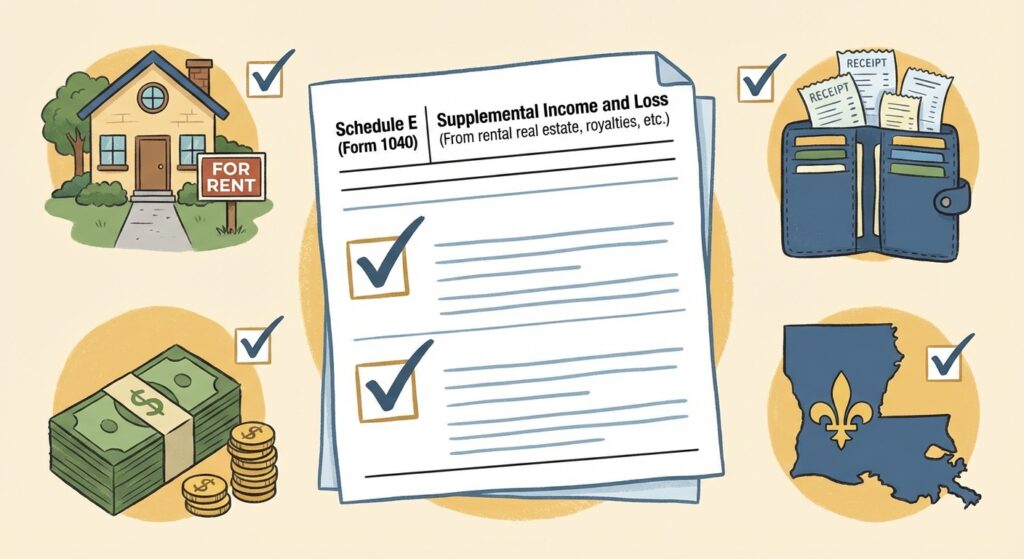
Louisiana Schedule E Help: A Guide for Real Estate Investors
If you own rental property in Louisiana, understanding how to complete Schedule E on your tax return is vital. Proper reporting of rental income, expenses, and deductions can save you money and ensure compliance with state and federal regulations.
What is Schedule E?
Schedule E (Form 1040) is an IRS document used to report supplemental income and loss from rental real estate, royalties, partnerships, S corporations, estates, trusts, and residual interests in REMICs. In Louisiana, real estate investors must file Schedule E to accurately record their rental property performance.
Who Needs to File Schedule E in Louisiana?
- Landlords and real estate investors
- Property owners collecting rental income
- Individuals with income from real estate partnerships or S corporations
Step-by-Step: Completing Louisiana Schedule E
- Gather necessary information: Rental income records, expense receipts, property details, mortgage statements, etc.
- Report rental income: Include all rent received, advance rent, security deposits kept, and other related payments.
- Deduct qualified expenses: Common deductions include mortgage interest, property taxes, repairs, insurance, management fees, utilities, HOA dues, and depreciation.
- Calculate depreciation: Use the Modified Accelerated Cost Recovery System (MACRS) to determine annual depreciation for the building (not land). Louisiana follows federal depreciation guidelines.
- Total your net income/loss: Subtract deductible expenses and depreciation from your total rental income.
- Transfer results: The calculated net income or loss on Schedule E is then transferred to your main Form 1040.
Common Deductions for Louisiana Schedule E Filers
| Category | Examples |
|---|---|
| Mortgage Interest | Interest paid on rental property mortgages |
| Property Taxes | Annual parish/city/state property taxes |
| Repairs & Maintenance | Fixing leaks, painting, lawn care |
| Insurance | Landlord, hurricane, flood insurance |
| Management Fees | Paid to property management companies |
| Utilities | Water, electric, gas (if paid by owner) |
| HOA Fees | Condo or homeowner association dues |
| Depreciation | Allowance for property value loss over time |
Tips for Louisiana Real Estate Investors
- Keep detailed records of all income and expenses throughout the year.
- Consult a Louisiana-based tax professional for state-specific nuances.
- Stay aware of local tax incentives, credits, and potential hurricane damage deductions.
- Review IRS Schedule E instructions for detailed guidance.
Common Questions about Louisiana Schedule E
- Do I need to file Schedule E if my property was vacant? Yes, if the property was available for rent even if unoccupied.
- Can I deduct the full value of repairs after a hurricane? Many repair costs are deductible, but check with a local tax expert on disaster loss provisions.
- Is vacation rental income treated the same? Short-term rental income is generally reported; however, if you use the property personally, special rules apply.
- Do I file a separate Schedule E for Louisiana state taxes? Louisiana references federal reporting, but some personal state adjustments may apply.
- What if I own property in New Orleans? Additional city taxes and rental regulations may apply—consult a local professional.
- How do partnerships or LLCs affect Schedule E? For multi-owner structures, speak to a CPA about entity-level filings and K-1 forms.
- Can I deduct travel expenses to check on my Louisiana properties? Yes, reasonable and necessary travel for property management is deductible.
- How do I handle past-due rent? Only report rental income actually received during the tax year.
- What documentation should I keep? Save all receipts, leases, property tax bills, mortgage statements, and correspondence with tenants.
Getting Expert Help
For complex situations, seek out Louisiana real estate tax specialists. Consider consulting the Louisiana Society of CPAs or use online tax tools.

Related Resources
- IRS Schedule E Form
- Louisiana Department of Revenue
- Real Estate Tax Deductions in Louisiana
- Louisiana Rental Property Laws
Filing Louisiana Schedule E doesn’t have to be complicated—keep organized, know your deductions, and reach out for professional help so you can maximize your tax benefits and stay compliant.

