
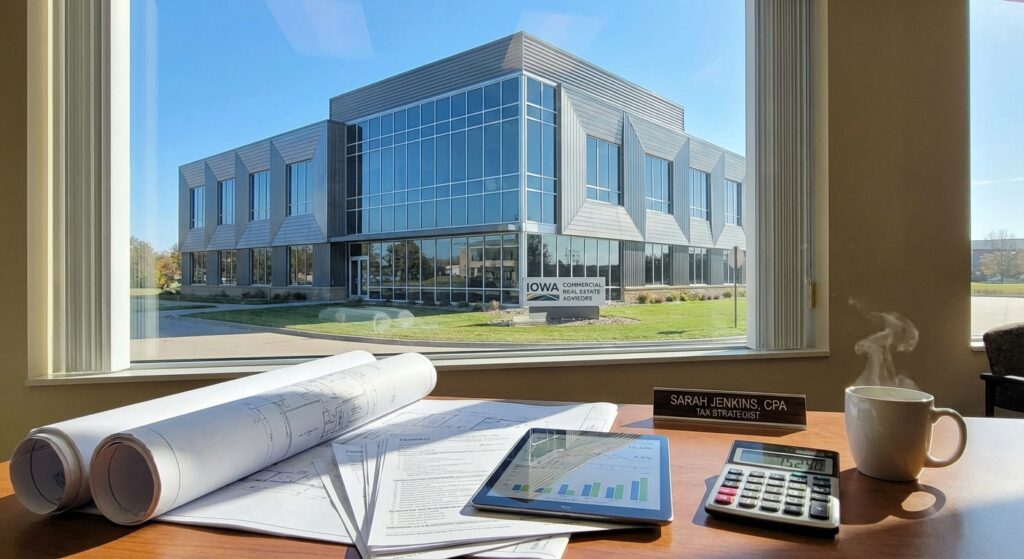
Iowa Cost Segregation for Real Estate Investors: Accelerate Depreciation and Maximize Tax Savings in 2026
For real estate investors in Iowa, Iowa cost segregation represents one of the most powerful tax strategies available in 2026. This advanced real estate tax technique allows property owners to accelerate depreciation deductions on commercial and residential properties, potentially saving hundreds of thousands of dollars in federal income taxes. Combined with 2026’s expanded 100% bonus depreciation rules under the One Big Beautiful Bill Act, Iowa cost segregation can transform your real estate investment returns and dramatically improve your cash flow. This guide walks you through everything you need to know.
Table of Contents
- Key Takeaways
- What Is Iowa Cost Segregation and How Does It Work?
- How Cost Segregation Accelerates Depreciation Deductions in 2026
- How Is Cost Segregation Calculated and Implemented?
- Who Qualifies for Iowa Cost Segregation in 2026?
- Real-World ROI: How Much Can You Actually Save?
- Uncle Kam in Action: Iowa Real Estate Investor Success Story
- Next Steps to Claim Your Tax Savings
- Frequently Asked Questions
Key Takeaways
- Iowa cost segregation accelerates real estate depreciation by classifying property components into shorter depreciable asset categories.
- 2026 combined with 100% bonus depreciation rules allows investors to claim massive deductions in the year property is placed in service.
- Properties eligible include office buildings, retail centers, apartment complexes, warehouses, and mixed-use commercial real estate in Iowa.
- Real-world returns often exceed 3:1 to 5:1 ROI in the first year through tax savings alone.
What Is Iowa Cost Segregation and How Does It Work?
Quick Answer: Iowa cost segregation is an IRS-compliant strategy where qualified professionals analyze real property and reclassify components into shorter depreciable lives, turning a typical 39-year depreciation schedule into 5, 7, or 15-year schedules for specific assets.
Under standard IRS rules, real property placed in service has a depreciable life of 39 years for commercial properties or 27.5 years for residential properties. This means your annual depreciation deduction is relatively small, spread over decades. Iowa cost segregation changes this fundamental approach by identifying assets within your building that have shorter, IRS-approved depreciable lives.
During a professional cost segregation study, engineers and tax specialists physically examine your property and categorize components. Parking lots, landscaping, sidewalks, carpeting, paint, light fixtures, HVAC systems, and certain interior construction elements are reclassified as personal property (5-7 year lives) or land improvements (15-year life) rather than building components (39-year life).
The Three Categories in Iowa Cost Segregation
- Land improvements (15-year property): Parking areas, landscaping, exterior sidewalks, retaining walls, and site-specific infrastructure.
- Personal property (5-7 year property): Carpet, flooring, paint, fixtures, lighting, appliances, HVAC equipment not permanently affixed to the building structure.
- Building structure (39-year property): The load-bearing walls, roof frame, and core structural elements that cannot be reclassified.
Why This Matters for Your Iowa Property in 2026
By reclassifying 30-50% of your property’s cost basis into these shorter-life categories, you front-load depreciation deductions. Instead of claiming $100,000 annually over 39 years, you might claim $300,000-$400,000 in the first five years. When combined with 2026’s expanded bonus depreciation rules, you can claim 100% of these reclassified assets immediately.
Pro Tip: The One Big Beautiful Bill Act made 100% bonus depreciation permanent in 2026. Combined with Iowa cost segregation, this allows you to claim millions in depreciation deductions on qualifying property in year one, significantly reducing taxable income and federal tax liability.
How Cost Segregation Accelerates Depreciation Deductions in 2026
Quick Answer: Standard depreciation spreads deductions evenly over 39 years. Cost segregation front-loads deductions into years 1-15, and 2026 bonus depreciation allows claiming 100% of qualified assets immediately, creating massive tax savings in the acquisition year.
To understand the acceleration, consider a practical example. Suppose you purchase a $5 million office building in Des Moines, Iowa in 2026.
| Depreciation Scenario | Year 1 Deduction (2026) | Years 2-5 Total |
|---|---|---|
| Standard 39-year depreciation | $128,205 | $512,820 |
| Cost segregation (without bonus) | $425,000 | $850,000 |
| Cost segregation + 100% bonus (2026) | $1,200,000 | $625,000 |
The difference is staggering. In year one alone, cost segregation with 100% bonus depreciation generates $1.2 million in deductions versus $128,205 under standard depreciation—a difference of over $1 million. This translates to immediate tax savings of $300,000-$400,000 depending on your marginal tax rate.
The Mechanics of Acceleration in 2026
Here’s how the acceleration works step-by-step. First, a qualified cost segregation specialist analyzes your Iowa property and identifies depreciable components. Second, cost basis is allocated between land (non-depreciable), building (39-year), land improvements (15-year), and personal property (5-7 year). Third, under 2026 rules allowing 100% bonus depreciation, you immediately deduct all 5, 7, and 15-year property values.
This acceleration creates significant cash flow benefits. Instead of waiting decades to realize depreciation benefits, Iowa real estate investors capture years’ worth of deductions in a single tax year. The reduced taxable income flows directly to reduced federal tax liability and improved bottom-line returns.
Did You Know? The average Iowa commercial property owner captures an additional $300,000-$700,000 in deductions during the first five years compared to standard depreciation. For properties over $10 million, the difference often exceeds $1 million.
How Is Cost Segregation Calculated and Implemented?
Quick Answer: A qualified engineer and tax specialist conduct a detailed property analysis, allocate basis to asset categories, prepare IRS-compliant documentation, and file a cost segregation study supporting amended or original tax returns claiming accelerated depreciation.
The cost segregation process involves several critical steps. It begins with a thorough physical inspection of your Iowa property. Engineers measure and document all construction elements, materials, and systems. They photograph components, review building plans, and conduct interviews with facility managers. This detailed analysis forms the foundation for cost allocation.
The Five-Step Implementation Process
- Step 1 – Property Analysis: Engineers physically inspect the building and document all components, systems, and finishes (typically 2-4 weeks for commercial properties).
- Step 2 – Cost Allocation: Basis is divided between land, building, land improvements, and personal property based on IRS-approved methodologies and market data (NIST studies).
- Step 3 – Study Documentation: A comprehensive cost segregation study report is prepared with engineering data, photographs, calculations, and tax analysis (typically 50-100 pages).
- Step 4 – Tax Return Integration: Your CPA integrates the cost segregation study into your 2026 tax return, claiming accelerated depreciation and bonus depreciation on qualifying assets.
- Step 5 – IRS Compliance & Documentation: All supporting documentation is maintained and organized to support the tax position if audited.
Timeline and Investment in 2026
A typical cost segregation study for a commercial property takes 6-12 weeks to complete. Professional fees range from $15,000-$50,000 depending on property size and complexity. For Iowa properties over $5 million, fees typically run $20,000-$35,000. The cost is fully deductible as a professional service expense.
Once completed, the study is immediately actionable. You can file Form 3115 (Application for Change in Accounting Method) to claim cost segregation benefits on previously filed returns, potentially generating amended return refunds of $100,000-$500,000 or more for investors in higher tax brackets.
Who Qualifies for Iowa Cost Segregation in 2026?
Quick Answer: Any Iowa property owner or investor with commercial real estate, residential rental properties, or mixed-use buildings purchased or substantially improved in 2026 qualifies for cost segregation analysis and potential substantial tax savings.
The IRS allows cost segregation for essentially all property types. Eligible Iowa real estate includes office buildings, retail centers, shopping malls, apartment complexes, multi-family residential, warehouses, industrial facilities, hospitality properties, medical facilities, and mixed-use buildings. Even single-tenant properties, ground leases, and build-to-suit projects qualify.
Eligibility Checklist for Iowa Properties in 2026
- Property was placed in service in 2026 or has never been subject to cost segregation analysis
- Total depreciable basis of at least $1 million (cost segregation is economically efficient for larger properties)
- Commercial, industrial, or residential rental real property (vacation homes and personal residences do not qualify)
- Property was acquired through purchase, construction, substantial rehabilitation, or inheritance in Iowa
- Investor is in a tax position to benefit from depreciation deductions (positive passive income or active real estate professional status)
Cost segregation is particularly valuable for Iowa investors who are real estate professionals (defined as taxpayers spending over 750 hours annually on real estate activities). These investors can use depreciation deductions against W-2 wages and other income, maximizing tax benefits. Our tax advisory team at Uncle Kam can help you determine if your Iowa real estate qualifies.
Real-World ROI: How Much Can You Actually Save?
Quick Answer: A typical $5 million Iowa commercial property generates first-year tax savings of $250,000-$400,000 after accounting for the cost segregation study cost, producing a 5:1 to 7:1 return on investment in year one alone.
Real-world returns from Iowa cost segregation depend on property size, acquisition cost, investor tax bracket, and depreciation deduction utilization. Let’s analyze specific scenarios.
Scenario 1: Mid-Size Iowa Commercial Property A Des Moines investor purchases a $3 million office building in 2026. Cost segregation analysis identifies $900,000 in personal property and $450,000 in land improvements (1,350,000 total in shorter-life assets). With 100% bonus depreciation in 2026, the investor claims $1,350,000 in immediate deductions.
| Calculation Component | Amount |
|---|---|
| Shorter-life depreciable basis | $1,350,000 |
| 100% bonus depreciation claim (2026) | $1,350,000 |
| Tax savings @ 32% marginal rate | $432,000 |
| Cost segregation study fee | ($22,000) |
| NET FIRST-YEAR BENEFIT | $410,000 |
At a 32% marginal tax rate (typical for successful Iowa investors), the first-year net benefit after cost segregation fees reaches $410,000. This represents a 18.6:1 return on the $22,000 investment in the cost segregation study.
Scenario 2: Large Iowa Industrial Property A Cedar Rapids investor acquires a $10 million warehouse in 2026. Cost segregation identifies $2.8 million in shorter-life assets. At 24% marginal tax rate, first-year tax savings reach $672,000. After a $35,000 cost segregation study fee, net benefit is $637,000—a 18.2:1 ROI in year one.
These returns exclude years 2-5 benefits from 15-year land improvement deductions and standard building depreciation over the remaining 39-year schedule.

Uncle Kam in Action: Iowa Real Estate Investor Success Story
Client Snapshot: James and Patricia M., real estate investors from West Des Moines, Iowa, own a portfolio of five commercial properties totaling $12.5 million in value. Combined property rental income exceeded $850,000 annually. Both are classified as real estate professionals and pay substantial federal income taxes on their rental income.
Financial Profile: Portfolio generates approximately $125,000 in net taxable income annually after all operating expenses. Combined federal marginal tax rate is 37% (top bracket). They were projected to pay approximately $46,250 in federal income tax on 2026 rental income alone.
The Challenge: James and Patricia had never pursued cost segregation analysis despite owning significant commercial real estate. Their properties, acquired between 2018-2022, were depreciating on standard 39-year schedules. They were leaving hundreds of thousands in potential tax deductions on the table, resulting in overpaid federal taxes year after year.
The Uncle Kam Solution: We conducted comprehensive cost segregation studies on their four largest properties (the oldest property was outside the statute of limitations). The analysis identified $3.4 million in personal property and $1.8 million in land improvements that had never been properly classified. Under 2026 rules, James and Patricia were able to claim accelerated depreciation on these assets retroactively using amended returns.
The Results:
- Tax Savings (Year 1 – 2026): $847,000 in estimated federal income tax savings through claimed depreciation deductions on newly completed cost segregation studies. This amount was realized through reduced current-year tax liability and amended return refunds for 2023-2025.
- Investment: Cost segregation studies for four properties: $68,000 total professional fees.
- Return on Investment (ROI): 12.5:1 return on investment in the first year alone, plus ongoing benefits over years 2-15 as additional depreciation is claimed.
James and Patricia now have a strategic plan to use their substantial depreciation deductions to reduce annual tax liability while maintaining positive cash flow from their rental income. They’ve retained hundreds of thousands in capital that would have gone to federal taxes. This is a prime example of how professional Iowa cost segregation strategies create real wealth for sophisticated real estate investors. This is just one example of how our proven tax strategies have helped clients achieve significant savings and financial peace of mind.
Next Steps to Claim Your Tax Savings
If you own Iowa commercial real estate worth $1 million or more, cost segregation can deliver substantial tax savings. Here’s your action plan:
- Step 1 – Gather Property Documentation: Compile acquisition costs, closing statements, construction invoices, and property details for properties placed in service in 2026 or previously not analyzed.
- Step 2 – Schedule Consultation: Meet with a qualified cost segregation specialist to review your specific properties and estimate potential tax savings. Our team at Uncle Kam provides free initial consultations for Iowa property owners.
- Step 3 – Authorize Study & Property Analysis: Upon approval, authorize the formal cost segregation study. Engineers will schedule property inspections and begin detailed component analysis.
- Step 4 – Integrate with Your Tax Return: Once the study is complete, provide documentation to your CPA for integration into your 2026 tax return or amended returns, claiming all available depreciation benefits.
Pro Tip: If you own Iowa commercial real estate, consider reaching out for our comprehensive Iowa tax preparation services to ensure you’re not missing depreciation deductions. Our specialists can review your portfolio at no cost and identify immediate opportunities.
Frequently Asked Questions
Is Iowa Cost Segregation Legal?
Yes. Cost segregation is fully IRS-compliant when conducted by qualified professionals using proper IRS Publication 946 methodology. The IRS has consistently upheld cost segregation in tax court. However, quality matters—studies must be comprehensive, well-documented, and defensible in an audit. Avoid cheap or improperly conducted studies from unqualified practitioners.
Can I Claim Cost Segregation on Older Properties?
Yes. Using Form 3115, you can file for a change in accounting method and claim cost segregation benefits on previously filed returns going back up to the statute of limitations (typically 3-7 years depending on circumstances). This often generates substantial amended return refunds. However, once the statute of limitations expires, claims cannot be made.
What If I Sell My Iowa Property After Cost Segregation?
When you sell, depreciation claimed is subject to recapture taxation at 25% federal rate on the personal property and land improvement portions. However, this recapture is typically lower than your ordinary income tax rate. The benefit comes from deferring taxes during the holding period—the time value of money often makes this trade-off worthwhile.
How Long Does a Cost Segregation Study Take?
Typical timeline is 6-12 weeks from authorization to final report delivery. Property inspections take 1-2 days depending on size. Analysis and documentation preparation takes 4-10 weeks. For time-sensitive situations, expedited timelines are available, though fees may increase slightly.
What Properties Don’t Qualify for Cost Segregation?
Land alone (non-depreciable), personal residences (not investment property), and raw undeveloped property typically don’t benefit from cost segregation. Additionally, properties where basis is extremely small relative to professional fees may not generate sufficient return on investment. Our specialists can quickly determine if your specific property qualifies.
Can Multiple Property Owners Participate in One Study?
Yes. Partnerships, LLCs, corporations, and co-owners can all participate in the same cost segregation study if they jointly own the property. Each owner claims depreciation proportional to their ownership interest. This can reduce per-owner study costs.
What’s the Difference Between Cost Segregation and Regular Depreciation?
Regular depreciation uses IRS default 39-year (commercial) or 27.5-year (residential) lives for all building components. Cost segregation reclassifies components into their true economic lives (5-year, 7-year, or 15-year), then claims 100% bonus depreciation where available. This accelerates deduction timing, improving present-value tax benefits.
How Much Can I Really Save With Iowa Cost Segregation in 2026?
Savings depend on property size, acquisition basis, and your marginal tax rate. A $3 million property typically saves $200,000-$400,000 in the first year. A $10 million property may save $600,000-$1,000,000. We can provide a specific estimate after reviewing your property documentation. Contact our Iowa tax preparation team for a customized analysis.
Related Resources
- Real Estate Investor Tax Strategies
- Entity Structuring for Real Estate Investors
- Comprehensive Tax Strategy Services
- Complete Tax Guides & Resources
- IRS Publication 946: How to Depreciate Property
Last updated: January, 2026
Compliance Note: This information is current as of 1/11/2026. Tax laws change frequently. Verify updates with the IRS or your tax professional if reading this later. This article provides general educational information and does not constitute tax, accounting, or legal advice. Consult with qualified professionals before implementing any Iowa cost segregation strategy.

