
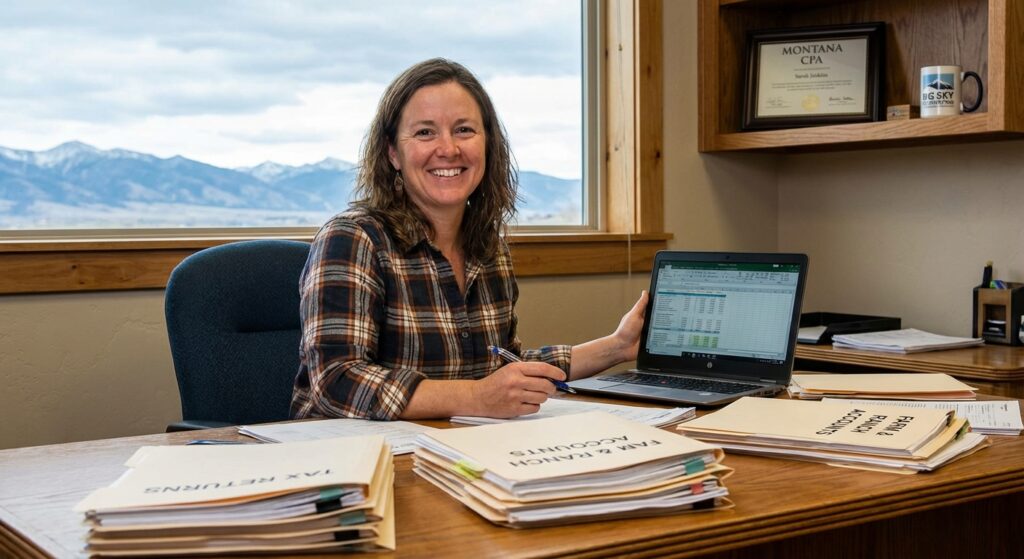
How to Find the Best Accountant in Montana: Your 2024 Guide
Published: January 2024 | Updated: February 2026
Are you looking for a reliable accountant in Montana? Whether you’re a small business owner in Missoula, a freelancer in Billings, or a homeowner in Bozeman, choosing the right accountant is essential to keeping your finances in shape. This guide explores how to select the right accounting professional, what Montana-specific tax rules you need to know, and what questions to ask before you hire. For specialized tax planning support, explore Uncle Kam’s tax strategy services.
Table of Contents
- Key Takeaways
- Why You Need a Montana-Based Accountant
- What Services Do Montana Accountants Offer?
- How to Choose an Accountant in Montana
- Top Questions to Ask Before Hiring
- Montana-Specific Tax Considerations
- Tax Rate Comparison: Montana vs. Neighbor States
- How Accounting Services Benefit Montana Businesses
- Remote vs. Local Accountants: Which Is Best?
- Uncle Kam in Action: Montana Rancher Saves $18K
- Next Steps to Finding Your Perfect Accountant
- Key Resources for Montana Taxpayers
- Frequently Asked Questions
- Related Resources
Key Takeaways
- Montana has unique tax benefits: No sales tax, moderate income tax (4.7%-5.9%), and specialized deductions for agriculture and ranching industries make state-specific expertise essential.
- Credentials matter: Look for Montana-licensed CPAs or Enrolled Agents with verifiable credentials through the Montana Society of CPAs to ensure compliance and maximize deductions.
- Industry specialization saves money: Accountants with experience in Montana’s key industries—agriculture, tourism, real estate—can identify deductions and credits that generalists miss.
- Fees vary widely: Simple tax prep starts around $200, while complex business filings and consulting can exceed $1,000. Always clarify fee structure upfront.
- Proactive planning pays off: Year-round tax strategy—not just April preparation—can save Montana business owners thousands annually through proper deductions, credits, and entity structuring.
Why You Need a Montana-Based Accountant
Quick Answer: Montana’s tax landscape is unique—no sales tax, state-specific income tax brackets, variable property taxes by county, and specialized deductions for agriculture and ranching. A Montana-based accountant understands these nuances and can maximize your tax savings while ensuring compliance with state regulations.
Montana’s unique tax landscape—no sales tax, distinct property taxes, and local business regulations—means you need an expert who understands state and local nuances. A Montana-based accountant can help you:
- Maximize state-specific tax deductions and credits
- Navigate Montana’s income tax rules
- Plan for local business and agricultural taxes
- Prepare accurate returns that withstand state audits
Understanding Montana’s Tax Advantages
Montana is one of only five states without a general sales tax, which creates significant advantages for both consumers and businesses. However, this also means the state relies more heavily on income and property taxes. Your accountant should understand how to leverage Montana’s tax structure to your benefit, including:
- Property tax relief programs: Montana offers several programs including the Elderly Homeowner/Renter Credit and Disabled Veterans Property Tax Benefit that many taxpayers overlook.
- Agricultural exemptions: Farmers and ranchers can access specialized deductions for equipment, livestock, and land management expenses.
- Tourism industry credits: Montana’s growing tourism sector has specific tax credits for infrastructure improvements and seasonal employment.
What Services Do Montana Accountants Offer?
Quick Answer: Montana accountants provide comprehensive services including tax preparation and planning, bookkeeping, payroll services, business formation advice, audit representation, and specialized consulting for agriculture, ranching, and tourism businesses. Full-service firms can handle everything from basic tax filing to complex business structuring and succession planning.
- Tax preparation and planning
- Bookkeeping and financial reporting
- Payroll services
- Business formation and incorporation advice
- IRS and Montana Department of Revenue representation
- Consulting for agriculture, ranching, and tourism-based businesses
Specialized Services for Montana Industries
The best accountants in Montana offer industry-specific expertise that goes beyond general tax preparation:
- Agriculture and ranching: Cost segregation studies, depreciation schedules for equipment and livestock, Conservation Reserve Program (CRP) payment planning, and estate planning for multi-generational farm transfers.
- Real estate and property management: 1031 exchange guidance, rental property depreciation strategies, short-term rental compliance for Montana’s growing Airbnb market, and property tax appeal support.
- Tourism and hospitality: Seasonal business cash flow planning, tip income reporting, Montana Tourism Grant coordination, and seasonal employee payroll management.
How to Choose an Accountant in Montana
Quick Answer: Choose a Montana accountant by verifying credentials (CPA or Enrolled Agent), confirming Montana-specific tax experience, checking reviews through the Montana Society of CPAs, clarifying fee structures upfront, and assessing communication responsiveness. Prioritize accountants with experience in your specific industry for maximum tax savings.
Here are key steps:
- Verify Credentials: Look for CPAs or Enrolled Agents with licenses in good standing.
- Ask for Montana-Specific Experience: Ensure they have experience with Montana tax codes, especially if you have complex needs like farm income or rental properties.
- Check Reviews and References: Use trusted sources like the Montana Society of CPAs and online reviews.
- Clarify Fees: Ask if fees are hourly, flat-rate, or based on return complexity.
- Assess Communication: Reliable accountants answer questions clearly and respond promptly.
Red Flags to Watch For
When evaluating potential accountants, be cautious of these warning signs:
- No Montana license or verification: Always confirm credentials through official channels—unlicensed preparers cannot represent you before the IRS.
- Guaranteed refunds: Legitimate accountants never guarantee specific refund amounts before reviewing your complete financial situation.
- Fees based on refund percentage: Ethical accountants charge for their time and expertise, not a percentage of your refund.
- Unwillingness to sign returns: IRS regulations require paid preparers to sign returns and provide their PTIN (Preparer Tax Identification Number).
Pro Tip: Schedule initial consultations with 2-3 accountants before making your decision. Most offer free or low-cost initial meetings, and this gives you a chance to compare expertise, communication style, and fee structures. Ask each one the same set of questions to make an informed comparison.
Top Questions to Ask Before Hiring
Quick Answer: Essential questions include verifying Montana licensure, confirming industry-specific experience, understanding fee structures, assessing data security measures, and learning how they stay current on Montana tax law changes. These questions help you identify qualified professionals who can maximize your tax savings while protecting your sensitive information.
| Question | Why It Matters |
|---|---|
| Are you a Montana-licensed CPA or Enrolled Agent? | Ensures you’re working with a qualified professional |
| What is your experience with my industry? | Specialized industries (agriculture, tourism) have unique needs |
| How do you structure fees? | Helps avoid unexpected charges |
| What security measures do you use for client data? | Protects your sensitive information |
| How do you stay updated on Montana tax law changes? | Ensures accuracy in your filings |
Additional Questions for Business Owners
If you’re hiring an accountant for your Montana business, add these questions to your list:
- “Do you offer year-round advisory services or just tax preparation?” Proactive tax planning throughout the year can save significantly more than reactive April filing.
- “What business entities do you recommend for my situation?” The right structure (LLC, S-Corp, C-Corp) can save thousands annually in Montana taxes.
- “Can you help with sales tax exemption certificates?” While Montana has no general sales tax, businesses purchasing from out-of-state vendors need proper exemption documentation.
- “What’s your experience with Montana business equipment tax?” Montana’s business equipment tax (Class 8 property) has specific exemptions that experienced accountants can leverage.
Montana-Specific Tax Considerations
Quick Answer: Montana offers unique tax benefits including no sales tax, moderate state income tax (4.7%-5.9%), county-variable property taxes, and specialized credits for agriculture, elderly homeowners, and disabled veterans. A knowledgeable accountant can identify Montana-specific deductions that reduce your tax burden significantly.
- No Sales Tax: Montana doesn’t levy a general sales tax, which benefits both residents and businesses.
- State Income Tax: Residents must file state income taxes. 2024 rates range from 4.7% to 5.9% depending on your income.
- Property Taxes: Property tax rates vary by county. Montana offers programs for property tax relief—ask your accountant if you qualify.
- Farm/Ag Deductions: Farmers and ranchers may be eligible for special deductions and credits.
Montana Tax Credits Worth Claiming
Your Montana accountant should proactively identify these often-overlooked credits:
- Elderly Homeowner/Renter Credit: Up to $1,000 for qualifying Montana residents age 62 or older with household income under $45,000.
- Agriculture Tax Management Credit: Credits for implementing conservation practices, soil testing, and nutrient management plans on Montana agricultural land.
- Alternative Energy System Credit: Up to $500 for residential renewable energy installations including solar, wind, and geothermal systems.
- College Contribution Credit: Credit for contributions to Montana’s 529 college savings plan, valuable for parents and grandparents.
Pro Tip: Montana’s property tax assistance programs vary significantly by county. If you’re in Gallatin County (Bozeman area) or Missoula County, property values have increased dramatically in recent years—make sure your accountant reviews your property tax assessment for potential appeals or relief program eligibility.
Table: Comparison of Montana vs. Neighbor States’ Tax Rates (2024)
| State | Sales Tax | Income Tax | Property Tax (Avg. %) |
|---|---|---|---|
| Montana | 0% | 4.7% – 5.9% | 0.74% |
| Idaho | 6.0% | 1.0% – 6.0% | 0.69% |
| Wyoming | 4.0% | None | 0.61% |
| North Dakota | 5.0% | 1.1% – 2.9% | 1.04% |
How Accounting Services Benefit Montana Businesses
Quick Answer: Professional accounting services help Montana businesses by providing accurate financial statements for loan applications, implementing proactive tax planning strategies that save thousands annually, minimizing audit risk through proper documentation, and handling payroll and compliance issues so you can focus on business growth.
- Accurate financial statements support loan applications
- Proactive tax planning can save thousands
- Expert advice helps minimize audit risk
- Payroll and compliance assistance free up your time to grow your business
For more on business taxes, see our Montana Business Tax Guide.
Real Dollar Impact for Montana Businesses
Quality accounting services deliver measurable ROI for Montana businesses:
- Entity optimization: Converting from sole proprietorship to S-Corp can save Montana business owners $5,000-$15,000 annually in self-employment taxes on profits above $60,000.
- Depreciation strategies: Bonus depreciation and Section 179 expensing can defer $10,000+ in taxes for businesses investing in equipment, vehicles, or property improvements.
- R&D credits: Montana tech companies and manufacturers often qualify for federal R&D tax credits worth 6-8% of qualifying expenses—credits many businesses miss without expert guidance.
- Audit defense value: Professional representation during IRS or Montana Department of Revenue audits can save $15,000-$50,000 in penalties and interest through proper documentation and negotiation.
Remote vs. Local Accountants: Which Is Best?
Quick Answer: Both remote and local Montana accountants can provide excellent service—the choice depends on your needs. Remote accountants offer convenience and potentially lower fees, while local accountants provide face-to-face meetings and deeper understanding of local Montana business conditions. For specialized needs like agricultural tax or local compliance, local expertise often delivers better results.
Many Montana accountants offer digital services, letting you file taxes or consult from anywhere in the state. However, if you have specialized needs (like agricultural tax or local business compliance), a local expert might be your best choice.
When to Choose a Local Montana Accountant
Local accountants make the most sense in these situations:
- Complex local compliance: County-specific property tax issues, city business licenses, or local improvement districts benefit from accountants with local government relationships.
- Industry-specific networks: Montana’s agriculture, tourism, and real estate industries have tight-knit professional communities—local accountants often provide valuable business referrals and connections.
- Preference for face-to-face meetings: Some complex financial situations are easier to discuss in person, especially for business planning and succession strategies.
- Local economic understanding: Accountants in Bozeman understand the ski industry and tech sector differently than those in Miles City who specialize in agriculture and energy.
When Remote Services Work Well
Remote Montana accountants excel for:
- Straightforward tax situations: W-2 employees with standard deductions can efficiently work with remote accountants using secure document portals.
- Tech-savvy clients: If you’re comfortable with video calls, cloud accounting software, and digital signatures, remote services offer convenience and flexibility.
- Multi-state situations: Remote accountants with multi-state expertise can be valuable if you have income from multiple states or are considering relocation to Montana.

Uncle Kam in Action: Montana Rancher Saves $18K Annually
Client: Sarah T., fourth-generation cattle rancher in Cascade County, Montana
Challenge: Paying over $35,000 annually in federal and state taxes despite significant equipment investments and land management expenses
Previous accountant: General tax preparer with limited agricultural experience
Uncle Kam’s Solution:
- Implemented cost segregation study on ranch buildings, accelerating $87,000 in depreciation deductions
- Identified Montana Agricultural Tax Management credits for soil conservation work totaling $2,400
- Restructured cattle sales timing to maximize income averaging benefits under Schedule F
- Set up proper documentation for agricultural vehicle and equipment expenses previously missed
- Applied for Cascade County property tax relief programs for agricultural land, reducing property taxes by $1,800
Results: $18,300 in first-year tax savings—more than 10x the cost of professional accounting services. Sarah now works with Uncle Kam year-round for tax planning, ensuring she captures every available Montana agriculture deduction and credit.
Pro Tip: If you’re in Montana’s agriculture or ranching sector, specialized accountants can identify deductions worth thousands that generalists miss. The investment in expert services typically pays for itself many times over in the first year alone. Learn more about Uncle Kam’s client results.
Next Steps to Finding Your Perfect Accountant
Now that you understand what to look for in the best accountant Montana has to offer, take these action steps:
- Compile your financial documents. Gather last year’s tax returns, current income statements, business records (if applicable), and a list of your specific questions and tax concerns.
- Research Montana-licensed candidates. Use the Montana Society of CPAs directory to find licensed professionals in your area or with your industry specialty.
- Schedule consultations with 2-3 accountants. Most offer free or low-cost initial meetings—use these to compare expertise, communication style, and fee structures before committing.
- Ask the key questions. Use the question list in this guide to evaluate each candidate’s qualifications, Montana-specific knowledge, and approach to tax planning.
- Make your decision and establish year-round support. Don’t wait until April—engage your accountant now for proactive tax planning that maximizes deductions and minimizes surprises. Consider Uncle Kam’s tax advisory services for comprehensive year-round tax strategy.
Key Resources for Montana Taxpayers
- Montana Department of Revenue
- IRS
- Montana Society of CPAs
- Montana Tax Deductions Explained
- SBA Montana Resource Partners
Frequently Asked Questions
What does an accountant in Montana charge?
Fees vary by service and experience. Simple tax prep may start at $200, while business consulting or complex filings can exceed $1,000.
What’s the difference between a CPA and an accountant?
A CPA (Certified Public Accountant) has passed rigorous state exams and ongoing education; not all accountants are CPAs.
Can I deduct accountant fees on my Montana tax return?
Fees related to business income are generally deductible; check with your accountant.
Are there Montana-specific tax credits I can claim?
Yes—options include the Elderly Homeowner/Renter Credit and Agriculture Tax Credits.
How do I file Montana taxes online?
Visit Montana Department of Revenue for online filing tools.
What if I’m audited in Montana?
A good accountant can represent you and ensure proper documentation.
Can CPAs help with estate planning in Montana?
Many CPAs offer estate, retirement, and succession planning.
Is Montana a good state for business tax-wise?
With no sales tax and moderate income taxes, Montana is attractive for many businesses.
What should I bring to my first meeting?
Bring last year’s tax returns, income forms, business records, and questions about your goals.
Do accountants work with remote clients in Montana?
Most do, using secure online portals for document exchange and video consultations.
Does Montana have local income taxes?
No—just a state personal income tax and some local property/business taxes.
How can I check an accountant’s credentials?
Use the Montana Society of CPAs license lookup tool.
Related Resources
Explore these additional resources to maximize your Montana tax savings:
- Uncle Kam Tax Strategy Services — Year-round tax planning for Montana businesses and individuals
- Tax Strategies for Montana Real Estate Investors — Specialized guidance for Montana’s growing real estate market
- Montana Business Tax Guide — Complete overview of Montana business tax requirements and opportunities
- Montana Tax Deductions Explained — Comprehensive guide to Montana-specific deductions and credits
- IRS Publication 225: Farmer’s Tax Guide — Essential resource for Montana agricultural businesses
- IRS S-Corporation Guide — Learn about S-Corp election for Montana small businesses
Take the Next Step
Ready to connect with a top Montana accountant? Contact us today to schedule a free consultation and learn how expert guidance can make tax season stress-free.
Last updated: February 12, 2026

