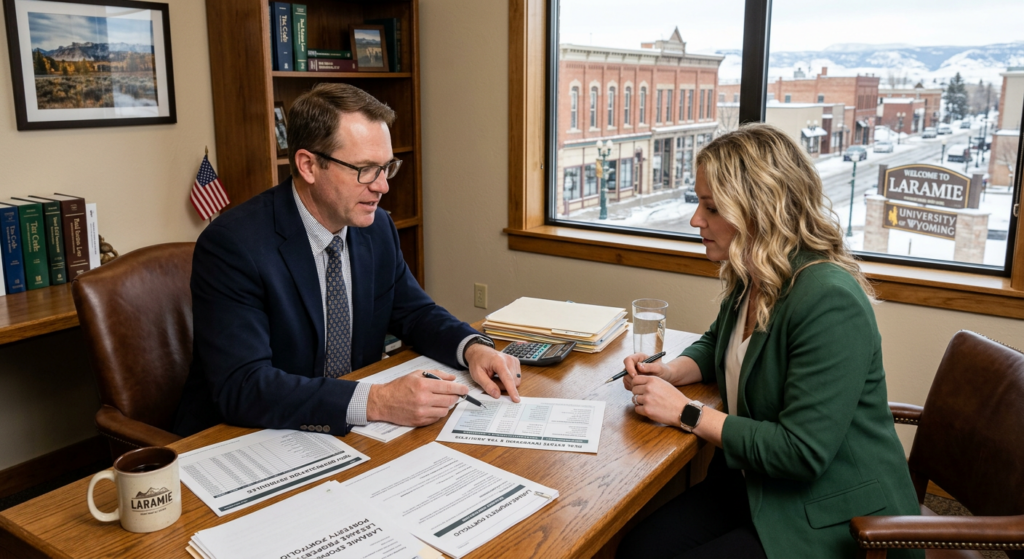
How an Opportunity Zone Advisor in Laramie Can Help You Maximize 2026 Tax Benefits
For real estate investors and business owners looking to reinvest capital gains with significant tax advantages, an opportunity zone advisor in Laramie is essential to navigating the complex federal incentive program designed to revitalize economically distressed communities. In 2026, opportunity zones continue to offer powerful tax benefits including capital gains deferral, stepped-up basis potential, and tax-free investment growth—but only for investors who understand the eligibility requirements, investment timelines, and strategic planning involved. Wyoming’s favorable tax climate, combined with Laramie’s emerging market dynamics and proximity to high-growth areas like Cheyenne, makes opportunity zone investing increasingly attractive for sophisticated investors seeking tax-efficient wealth building.
Table of Contents
- Key Takeaways
- What Are Opportunity Zones and How Do They Work?
- What Are the Tax Advantages of Opportunity Zone Investments for 2026?
- Why Is Laramie an Emerging Opportunity Zone Investment Hub?
- How Do You Qualify for Opportunity Zone Tax Benefits?
- What Is the Investment Timeline for Opportunity Zone Success?
- How Do You Choose the Right Opportunity Zone Advisor in Laramie?
- Uncle Kam in Action: Strategic Opportunity Zone Planning
- Next Steps
- Frequently Asked Questions
Key Takeaways
- Opportunity zones defer capital gains taxes indefinitely and allow 100% tax-free growth on appreciated investments held for 10+ years.
- Wyoming’s zero state income tax combined with federal opportunity zone benefits creates a powerful tax-efficient investing strategy.
- Laramie’s growing real estate market and proximity to Thunder Plains Park’s October 2026 opening make it an attractive zone for early investors.
- An experienced opportunity zone advisor ensures compliance and maximizes tax benefits through proper structuring and timing.
- The investment must begin within 180 days of realizing capital gains to qualify for deferral benefits in 2026.
What Are Opportunity Zones and How Do They Work?
Quick Answer: Opportunity zones are federally designated economically distressed communities where investors can defer capital gains taxes indefinitely, receive a stepped-up basis after holding investments for five years, and achieve complete tax-free growth on gains for investments held 10+ years.
Opportunity zones represent a strategic federal tax incentive program established to encourage private investment in economically distressed communities across the United States. The program allows investors to take capital gains from existing investments—such as rental property sales, business sales, or stock investments—and reinvest those gains into designated opportunity zone funds or businesses without immediately paying the federal capital gains tax. This deferral mechanism creates powerful cash flow benefits, allowing investors to deploy 100% of their capital gains instead of paying a portion to the IRS immediately.
The Three-Tier Tax Benefit Structure
The opportunity zone program delivers tax benefits in three distinct phases. First, when you reinvest capital gains into an opportunity zone fund within 180 days of realizing the gain, the tax liability is deferred—meaning you do not pay federal capital gains tax on those gains immediately. The deferred amount remains taxable only until December 31, 2026, at which point the deferred tax obligation becomes due. This deferral period, ending in 2026, is critical for investors planning their 2026 investment strategy.
Second, if you hold your opportunity zone investment for at least five years before 2026 ends, the tax basis of your original investment is increased by 10%. This means the capital gain amount that becomes taxable in 2026 is reduced by 10%, providing meaningful tax savings. For investors with large capital gains, this basis step-up represents significant tax relief—potentially thousands or tens of thousands of dollars in federal tax savings.
Third, if you maintain your investment in the opportunity zone for 10 or more years, any appreciation on that investment is completely tax-free at the federal level. This means if your original $100,000 opportunity zone investment grows to $250,000 over 10 years, the $150,000 gain is never subject to federal income tax. For investors in high tax brackets facing the 20% long-term capital gains rate in 2026, this feature alone makes opportunity zones exceptionally valuable.
Compliance and Regulatory Requirements
To qualify for opportunity zone benefits, your investment must be made through a designated Opportunity Zone Fund (OZF), which pools capital from multiple investors and deploys it in qualified businesses or real property within designated opportunity zones. The IRS maintains a comprehensive list of designated zones, including specific areas in Wyoming. Additionally, the fund must meet specific operational requirements: at least 90% of fund assets must be invested in qualified opportunity zone property, and those properties must generate income or create jobs within the designated community.
For real estate investors, qualified opportunity zone property includes rental properties, commercial buildings, hotels, and other real estate assets. For business investors, investments can target manufacturing facilities, service businesses, or any enterprise operating in the designated zone. An experienced opportunity zone advisor in Laramie ensures your investment structure complies with IRS requirements and maximizes the benefits available to you in 2026.
What Are the Tax Advantages of Opportunity Zone Investments for 2026?
Quick Answer: For 2026, opportunity zone investors benefit from capital gains deferral until December 31, 2026 (creating a critical deadline), a potential 10% basis reduction if held five years, and complete tax-free growth on gains for holdings beyond 10 years—all while benefiting from Wyoming’s zero state income tax.
The tax advantages of opportunity zone investing create a powerful wealth-building strategy for high-income investors and business owners. For investors in the top 20% federal long-term capital gains tax bracket in 2026, the opportunity zone structure effectively converts taxable investment gains into tax-deferred or tax-free growth. When combined with Wyoming’s zero state income tax, investors benefit from some of the most favorable tax treatment available for capital-intensive investments.
2026 Capital Gains Tax Context
In 2026, the top federal long-term capital gains tax rate remains at 20%, applicable to investments held more than one year by individuals in the highest income brackets (above approximately $573,750 for married filing jointly). Additionally, net investment income taxes of 3.8% apply to high-income earners, plus potential state income taxes. In Wyoming, zero state income tax means investors avoid state capital gains taxes entirely, making opportunity zone investments in Laramie particularly tax-efficient compared to investments in states with 5%, 10%, or higher state income tax rates.
An opportunity zone advisor in Laramie can illustrate the specific tax savings using your financial situation. For example, an investor with $500,000 in capital gains would normally pay approximately $100,000 in federal capital gains taxes (20%) plus 3.8% net investment income tax (approximately $19,000), totaling about $119,000 in federal taxes alone. By investing through an opportunity zone fund, that investor defers the entire tax liability and potentially eliminates a portion through the basis step-up and tax-free growth mechanisms available within 2026.
When you use our self-employment calculator to evaluate business income scenarios, you can model how reinvesting business sale proceeds through an opportunity zone fund impacts your 2026 tax liability compared to traditional reinvestment approaches.
Comparing Tax Scenarios: Direct Investment vs. Opportunity Zone Investment
| Investment Scenario | Direct Investment (No OZ) | Opportunity Zone Fund (2026) | Tax Savings |
|---|---|---|---|
| Initial Capital Gains Realized | $500,000 | $500,000 | — |
| Federal Capital Gains Tax (20%) | $100,000 (due immediately) | $90,000 (deferred/reduced by 10% basis) | $10,000 |
| Net Investment Income Tax (3.8%) | $19,000 (due immediately) | $0 (deferred) | $19,000 |
| Wyoming State Income Tax | $0 (Wyoming has no state income tax) | $0 | — |
| Total Immediate Tax Liability | $119,000 | $0 (Deferred) | $29,000+ initial savings |
The table above illustrates why opportunity zone investing is so powerful in 2026. By deferring your tax liability and potentially qualifying for basis reduction through five-year holding periods, you can deploy significantly more capital into appreciating assets—capital that would otherwise go to the IRS immediately.
Pro Tip: The December 31, 2026 deadline for deferred gains is critical. If your capital gains will be realized in 2026, investing through an opportunity zone fund before year-end 2026 allows you to defer taxes on those gains. Coordinate with your opportunity zone advisor in Laramie immediately to ensure timely fund deployment.
Why Is Laramie an Emerging Opportunity Zone Investment Hub?
Quick Answer: Laramie’s strategic location near Cheyenne, combined with Wyoming’s zero state income tax and strong real estate market fundamentals, positions it as an attractive opportunity zone investment destination in 2026.
Laramie represents a compelling opportunity zone investment market in 2026 for several reasons that extend beyond simple tax arbitrage. The city sits at the intersection of economic catalysts, demographic trends, and favorable policy environments that make opportunity zone investments particularly attractive.
Economic Momentum: Thunder Plains Park and Regional Growth
Cheyenne, approximately 45 miles from Laramie, is experiencing unprecedented economic growth driven by the opening of Thunder Plains Park in October 2026. This major entertainment and economic development project is expected to generate significant job creation, population migration, and real estate demand across the entire region, including Laramie. Real estate professionals in the area have noted that Cheyenne’s median listing price reached $482,000 as of March 2026, reflecting strong investor interest and appreciation potential.
This economic momentum creates immediate investment opportunities in Laramie. As regional growth accelerates, property values, rental rates, and business valuations typically follow. An opportunity zone advisor in Laramie can identify undervalued properties and businesses positioned to benefit from regional economic expansion, allowing investors to capture appreciation gains while deferring taxes under the opportunity zone framework.
Wyoming’s Tax Advantage: Zero State Income Tax
Wyoming’s zero state income tax creates a unique advantage for opportunity zone investments. While federal capital gains taxes apply nationwide, states like California, New York, and others impose additional state capital gains taxes or high state income tax rates (sometimes exceeding 10%). Wyoming investors avoid these taxes entirely, making opportunity zone investments in Laramie exceptionally tax-efficient.
For investors from high-tax states considering relocation or investment diversification, Laramie opportunity zones offer substantial advantages. Relocating residency to Wyoming while deploying capital through opportunity zone funds can achieve combined federal and state tax savings exceeding 25-30% on large capital gains—a powerful incentive for strategic investors and business owners.
How Do You Qualify for Opportunity Zone Tax Benefits?
 Free Tax Write-Off Finder
Quick Answer: To qualify, you must have realized capital gains within the past year, invest those gains through a qualified opportunity zone fund within 180 days of realizing the gain, and ensure the investment meets IRS requirements for qualified opportunity zone property or business operations.
Qualifying for opportunity zone tax benefits requires meeting specific IRS criteria. An opportunity zone advisor in Laramie ensures your investment structure satisfies all requirements and protects your tax benefits in case of future audit.
Eligibility Requirements and Documentation
- Realized Capital Gains: You must have recognized capital gains from the sale of appreciated assets (real estate, business, investments, etc.) within the previous 12 months. These gains form the basis for opportunity zone investment.
- 180-Day Investment Window: The opportunity zone investment must be made within 180 days of realizing the capital gain. Missing this deadline disqualifies you from deferral benefits, making timing critical in 2026.
- Qualified Opportunity Zone Fund: Your investment must be made through a registered OZF that meets IRS criteria. The fund manager must maintain compliance documentation showing at least 90% of assets are deployed in qualified opportunity zone property.
- Qualified Property or Business: The fund’s underlying investments must be located within federally designated opportunity zones and meet specific operational or income-generation requirements.
- No Existing Ownership: For real estate investments, the property cannot have been owned by the fund or investor immediately before the opportunity zone investment. This prevents investors from simply reclassifying existing properties.
Income Limitations and Investor Type Considerations
Unlike some tax incentive programs, opportunity zones have no income phase-out thresholds. Investors at all income levels qualify, making the program equally valuable for high-net-worth individuals, business owners, real estate investors, and even moderate-income investors with significant capital gains. This universal availability is a key advantage of opportunity zone planning for 2026.
However, the benefit scales with your tax bracket. Investors in higher tax brackets (facing the 20% long-term capital gains rate plus 3.8% net investment income tax) realize larger absolute dollar savings than investors in lower brackets. This is why opportunity zone advisors in Laramie often work with business owners, real estate investors, and professionals with substantial capital gains or business sale proceeds.
What Is the Investment Timeline for Opportunity Zone Success?
Quick Answer: Critical 2026 milestones include investing within 180 days of realizing gains, holding for five years by 2031 to qualify for basis step-up benefits, and holding for 10+ years to achieve tax-free growth on appreciation.
Success with opportunity zone investing requires understanding and executing critical timelines. These deadlines are non-negotiable for tax benefit qualification.
Year 1 (2026): The Investment Phase
In 2026, your critical task is realizing capital gains and investing them through an opportunity zone fund within 180 days. If you’re planning to sell a business, rental property, or investment portfolio in 2026, coordinate with your opportunity zone advisor in Laramie before the sale closes. This allows immediate deployment of proceeds into the fund, capturing the deferral benefit.
The deferred gains become taxable on December 31, 2026, but they are included in your 2026 tax return filed in 2027. This deferral provides crucial cash flow advantages: instead of paying $100,000+ in taxes immediately, you can deploy 100% of capital gains into appreciating assets throughout 2026, capturing investment gains on capital that would otherwise flow to the IRS.
Year 5 (2031): The Basis Step-Up
Holding your opportunity zone investment for five years triggers a 10% increase in your cost basis—the original amount of capital gains subject to taxation. If you invested $500,000 in capital gains, the basis increases to $550,000, reducing taxable gains by $50,000. At 20% federal capital gains rates, this step-up saves $10,000 in federal taxes alone.
To capture the five-year basis step-up benefit, maintain your opportunity zone investment through December 31, 2031 (five years from the investment date). Your opportunity zone advisor in Laramie can model whether selling or holding becomes optimal in 2031 based on then-current market conditions and your financial situation.
Year 10+ (2036 and Beyond): Tax-Free Growth
The crown jewel of opportunity zone investing becomes available after 10 years of holding your investment. Any appreciation beyond your original investment amount is completely exempt from federal capital gains tax. This means if your $500,000 opportunity zone investment grows to $1,000,000 over 10 years, the $500,000 gain is entirely tax-free.
This long-term tax-free growth mechanism requires patience but generates extraordinary wealth-building power. In Laramie’s growing market, with Thunder Plains Park and regional economic expansion supporting real estate and business valuations, 10-year holding periods become increasingly attractive for investors willing to think long-term.
How Do You Choose the Right Opportunity Zone Advisor in Laramie?
Quick Answer: Select an opportunity zone advisor with expertise in federal tax law, experience with opportunity zone fund structures, Wyoming-specific tax knowledge, and a track record of successful client placements in qualified funds.
Choosing an experienced opportunity zone advisor in Laramie is critical because the stakes are high. Improper fund selection, missed deadlines, or non-compliant structures can disqualify your investments and eliminate years of deferred tax benefits. Your advisor becomes a strategic partner in wealth preservation and optimization.
Essential Advisor Qualifications and Experience
- CPA or Tax Attorney Credentials: Your advisor should hold either a CPA certification or be a licensed tax attorney with substantial opportunity zone experience. These credentials ensure deep knowledge of tax law compliance and strategy.
- Opportunity Zone Specialization: Ask specifically about the advisor’s opportunity zone transaction volume. Experience with dozens of placements demonstrates competence and access to vetted opportunity zone fund managers.
- Wyoming Tax Knowledge: Your advisor must understand Wyoming’s zero state income tax environment and how to optimize both state and federal tax positions through opportunity zone investing.
- Fund Manager Vetting Process: Reputable advisors maintain relationships with vetted opportunity zone fund managers. They evaluate funds based on track records, property quality, management teams, and compliance infrastructure.
- Ongoing Compliance Monitoring: Your advisor should provide annual compliance monitoring, updated documentation, and coordination with your tax return preparation to ensure continued benefit protection.
- Communication and Transparency: Clear communication about fund performance, compliance status, and annual reporting requirements ensures you understand the investment and remain confident in the strategy.
Questions to Ask Prospective Opportunity Zone Advisors
- How many opportunity zone investments have you completed in the past three years?
- Can you provide references from current clients with successful opportunity zone investments?
- What due diligence do you perform on opportunity zone fund managers before recommending them?
- How do you stay current with opportunity zone regulations and IRS guidance changes?
- What is your fee structure, and are there conflicts of interest with opportunity zone fund managers?
- Can you model the tax impact of opportunity zone investing relative to other capital deployment strategies?
Pro Tip: Request that your opportunity zone advisor provide detailed written analysis comparing opportunity zone investing to other strategies (direct property investment, standard stock/bond portfolios, etc.). This analysis should quantify tax savings, required holding periods, and projected returns for your specific situation.

Uncle Kam in Action: Strategic Opportunity Zone Planning for a Business Seller
Meet Jennifer, a business owner in Laramie who built a successful marketing consulting firm over 15 years. In early 2026, she sold the business to a larger advertising agency for $2,500,000. Of that amount, $1,500,000 represented capital gains subject to federal taxation. At the 20% long-term capital gains rate, Jennifer faced a federal tax bill of $300,000, plus $57,000 in net investment income taxes—totaling $357,000 in immediate federal taxes, with no Wyoming state income tax (benefit of being in Wyoming).
Jennifer partnered with Uncle Kam’s opportunity zone advisor in Laramie to structure her sale proceeds strategically. By investing $1,500,000 of her sale proceeds into qualified opportunity zone funds within 180 days of closing, Jennifer deferred the entire $357,000 tax liability. Instead of paying taxes immediately and deploying $2,143,000 into investments, she deployed the full $2,500,000 while deferring taxes.
Over the following years, Jennifer’s opportunity zone investments appreciated as Laramie’s real estate market benefited from Thunder Plains Park’s October 2026 opening and broader regional economic expansion. By holding her opportunity zone investments for 10 years (through 2036), she achieved complete tax-free growth on appreciation. Additionally, by maintaining her holding through December 31, 2031 (five years), she qualified for the 10% basis step-up, reducing her taxable gains by $150,000 and saving an additional $30,000 in federal taxes.
Financial Impact: Jennifer’s opportunity zone strategy delivered $30,000 in immediate basis reduction tax savings, plus deferred the initial $357,000 tax liability (allowing investment deployment of an extra $357,000 in capital). Over 10 years, her opportunity zone investments generated $500,000 in appreciation that became completely tax-free—a benefit worth approximately $100,000 in federal taxes at the 20% capital gains rate. Her total tax advantage from opportunity zone investing: approximately $487,000 in federal taxes deferred or eliminated.
Jennifer’s success illustrates why opportunity zone investing is particularly powerful in 2026. Investors like Jennifer—business sellers, real estate investors with large gains, and high-net-worth individuals with accumulated appreciation—can leverage opportunity zones to achieve extraordinary tax efficiency while investing in growing markets like Laramie.
Next Steps
If you’re anticipating capital gains in 2026 or have recently realized gains from business or property sales, immediate action is required. The 180-day investment window passes quickly, and missing the deadline eliminates opportunity zone benefits.
- Quantify Your Capital Gains: Calculate the exact amount of realized or anticipated capital gains, including sale proceeds, business valuation, and investment appreciation from closed transactions in 2026.
- Schedule a Consultation: Contact an opportunity zone advisor in Laramie to discuss your situation and explore opportunity zone strategy before your capital gains are realized or shortly after closing.
- Evaluate Fund Opportunities: Work with your advisor to identify vetted opportunity zone funds aligned with your investment objectives, risk tolerance, and Laramie-area investment preferences.
- Execute the Investment: Once you’ve selected a fund, ensure the investment is completed within 180 days of realizing capital gains to capture deferral benefits.
- Coordinate Tax Reporting: Ensure your CPA or tax return preparer understands your opportunity zone investment and properly reports it on your 2026 tax return to protect your deferral benefits.
Frequently Asked Questions
What Is the Exact Deadline for Investing in an Opportunity Zone Fund in 2026?
You have 180 days from the date you realize capital gains to invest those gains through an opportunity zone fund. For example, if you close a business sale on March 15, 2026, you must invest opportunity zone funds by September 11, 2026 (180 days later). Missing this deadline disqualifies your investment from deferral benefits. Your opportunity zone advisor in Laramie monitors this timeline carefully.
Can I Invest in an Opportunity Zone Fund Directly, or Must I Go Through an Advisor?
You can technically invest directly in an opportunity zone fund without an advisor. However, this approach carries significant risks. Opportunity zone fund structures are complex, compliance requirements are strict, and fund manager quality varies widely. An experienced opportunity zone advisor in Laramie performs due diligence on fund managers, ensures your investment structure is compliant, and protects you from fraudulent or poorly-managed funds that could jeopardize your tax benefits.
What Happens if My Opportunity Zone Fund Performs Poorly and Loses Value?
Poor fund performance doesn’t eliminate your tax deferral benefits, but it does reduce your wealth. If you invest $500,000 and the fund depreciates to $400,000, you still owe taxes on the original $500,000 in deferred gains, but your net investment position has declined by $100,000. This is why selecting a reputable opportunity zone fund manager is critical. Work with your advisor to assess fund manager track records, property quality, and business fundamentals before investing.
Are There Any Restrictions on Which Types of Real Estate or Businesses I Can Invest In Through an Opportunity Zone Fund?
Yes. The fund’s investments must be located in designated opportunity zones and must qualify as “opportunity zone property.” For real estate, most commercial and rental properties qualify, including apartments, hotels, office buildings, and retail space. However, certain types of properties are prohibited, including golf courses, tanning facilities, liquor stores, and other businesses the IRS deems harmful or speculative. Your opportunity zone advisor in Laramie confirms that fund investments meet all qualification requirements.
What Happens to My Opportunity Zone Investment When I Sell It or Withdraw Funds?
When you sell your opportunity zone fund investment, you trigger the deferred tax liability on original capital gains (reduced by any basis step-up if held five years). The appreciation on the investment (gains beyond your initial investment) receives favorable tax treatment. If held 10+ years, appreciation is completely tax-free. Your advisor coordinates with your tax preparer to ensure proper reporting and tax calculation when you exit the fund.
Do I Have to Live in Wyoming to Invest in Laramie Opportunity Zone Funds?
No. Opportunity zone investing is available to all U.S. taxpayers, regardless of residency. However, if you relocate to Wyoming and establish residency there, you gain the additional advantage of Wyoming’s zero state income tax, maximizing your overall tax efficiency. Many high-income investors and business sellers from high-tax states strategically relocate to Wyoming while deploying capital through opportunity zone funds to achieve maximum tax benefits.
What Is the Difference Between a 10% Basis Step-Up and Tax-Free Appreciation?
The 10% basis step-up (available after five years) reduces the amount of your original capital gains subject to taxation. If you invested $500,000 in capital gains, a 10% step-up increases your basis to $550,000, reducing taxable gains to $450,000. This saves $10,000 in federal taxes at the 20% rate. Tax-free appreciation (available after 10 years) makes all gains beyond your original investment amount completely tax-free. Both features work together: you receive the basis step-up benefit after five years, then achieve tax-free growth on subsequent appreciation through the 10-year mark.
Should I Use Opportunity Zone Investing if I Only Have Small Capital Gains (Under $100,000)?
Opportunity zone investing works at all capital gains levels, but the absolute tax savings scale with your gains amount. An investor with $50,000 in capital gains saves approximately $15,000 in federal taxes (20% + 3.8% tax rates) through opportunity zone deferral and basis step-up benefits. The relative benefit remains powerful, but smaller investors might have fewer fund options or require larger minimum investments. Discuss your specific situation with an opportunity zone advisor in Laramie to determine if opportunity zones align with your investment profile.
How Do I Report Opportunity Zone Investments on My 2026 Tax Return?
Opportunity zone investments are reported using Form 8949 and Schedule D on your tax return. Deferred gains must be included on your 2026 return even though they’re deferred until December 31, 2026. Your CPA or tax preparer must understand opportunity zone investing to properly report the investment and protect your deferral benefits. Provide your tax preparer with complete documentation from your opportunity zone advisor and fund manager to ensure accurate reporting.
Last updated: March, 2026

