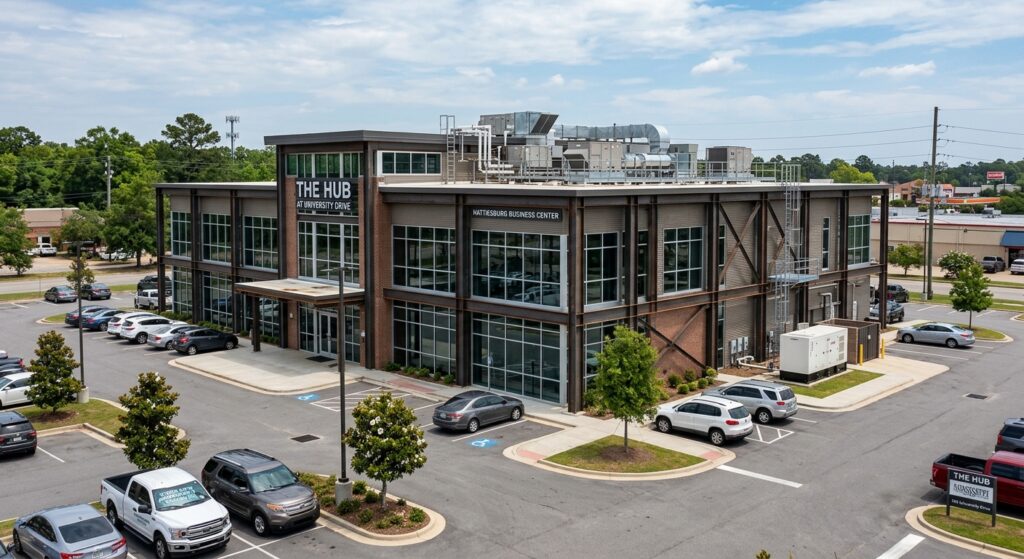
Hattiesburg Cost Segregation 2026: Maximize Real Estate Tax Savings with Strategic Depreciation
For real estate investors in Hattiesburg, Mississippi, implementing a strategic cost segregation study through professional tax preparation services can unlock substantial tax savings and accelerate your property’s depreciation deductions. Hattiesburg cost segregation reclassifies building components into shorter depreciation schedules, transforming decades-long deductions into immediate tax benefits for 2026 and beyond.
Table of Contents
- Key Takeaways
- What Is Cost Segregation and How Does It Work?
- What Are the Key Tax Benefits of Cost Segregation?
- Which Property Components Qualify for Cost Segregation?
- How Does 2026 Bonus Depreciation Amplify Your Savings?
- What Is the Cost Segregation Study Process in Hattiesburg?
- Uncle Kam in Action: Hattiesburg Property Owner Tax Success Story
- Next Steps
- Frequently Asked Questions
Key Takeaways
- Cost segregation accelerates depreciation deductions from 27.5+ years to 5, 7, or 15 years for eligible components.
- 2026 bonus depreciation of 100% allows immediate expensing of eligible property placed in service after January 19, 2025.
- Typical Hattiesburg commercial properties save $15,000–$50,000+ annually in federal and state taxes.
- Cost segregation studies are retroactively available through IRS Form 3115 amended returns.
- Section 179 expensing limit of $2.5 million (phaseout at $4 million) applies to qualifying property in 2026.
What Is Cost Segregation and How Does It Work?
Quick Answer: Cost segregation is a tax strategy that reclassifies building and land components into shorter depreciation schedules, converting 27.5-year deductions into 5–15-year deductions. This accelerates tax deductions and improves cash flow for property owners.
Cost segregation fundamentally changes how you depreciate real property. Under standard IRS rules, commercial buildings depreciate over 39 years and residential properties over 27.5 years. However, specific building components—such as equipment, land improvements, and certain fixtures—qualify for much faster depreciation.
A cost segregation study identifies these components through detailed engineering and architectural analysis. The study reclassifies portions of your property acquisition cost into shorter depreciation categories: 5-year property (equipment, machinery), 7-year property (certain fixtures, systems), and 15-year property (land improvements, qualified leasehold improvements).
How This Creates Immediate Tax Savings
Rather than spreading deductions across four decades, cost segregation allows you to claim significantly larger depreciation deductions in years one through seven. Combined with 2026 bonus depreciation rules, eligible components can be fully expensed in the year placed in service.
The Role of Professional Engineering Analysis
A credible cost segregation study requires certified engineers and architects to physically inspect your property, document existing systems, and trace construction costs to specific components. This professional documentation supports your depreciation claims in IRS audits and ensures compliance with tax law.
What Are the Key Tax Benefits of Cost Segregation?
Quick Answer: Cost segregation generates immediate deductions, reduces current-year taxable income, improves cash flow, and maximizes first-year tax benefits when combined with bonus depreciation and Section 179 expensing.
The financial impact of cost segregation in 2026 extends far beyond simple tax savings. By accelerating deductions into the present year, you reduce your adjusted gross income (AGI), which can unlock additional tax benefits and credits. Here are the primary advantages for Hattiesburg real estate investors:
Immediate Cash Flow Improvement
Accelerated depreciation reduces your federal tax bill immediately. For a Hattiesburg commercial property with a $1 million acquisition cost and $250,000 cost-segregated to 5-year property, you can claim approximately $50,000 in year-one depreciation. At a 35% marginal tax rate, this generates $17,500 in tax savings in the first year alone.
Passive Activity Loss Benefit
Cost segregation can create passive activity losses that offset passive income from other rental properties or investments. Real estate professionals under IRC Section 469(c)(7) may fully deduct these losses against ordinary income, providing comprehensive tax relief.
Enhanced Business Interest Deduction for 2026
Under the One Big Beautiful Bill Act (OBBBA), effective for tax years beginning after January 1, 2025, depreciation and amortization add back into business interest limitation calculations. This expansion allows property owners with debt-financed acquisitions to deduct larger business interest amounts.
Use our small business tax calculator to estimate your 2026 tax savings based on property acquisition costs and depreciation schedules.
Which Property Components Qualify for Cost Segregation?
Quick Answer: Qualifying components include building systems (HVAC, electrical, plumbing), equipment, fixtures, land improvements, and leasehold improvements—each with specific depreciation periods under IRS guidelines.
Not all property components qualify for accelerated depreciation. The IRS categorizes components based on functional purpose and useful life. Understanding these categories is essential for Hattiesburg investors seeking maximum deductions.
5-Year Property (Shorter Depreciation Life)
- Certain manufacturing and computer equipment
- Office equipment and machinery
- Restaurant and hospitality equipment (ovens, refrigeration, point-of-sale systems)
- Certain building components integral to equipment systems
7-Year Property (Moderate Depreciation Life)
- Certain fixtures and special-purpose equipment
- Outdoor signs and signage systems
- Certain agricultural machinery and equipment
- Athletic facilities and recreational equipment
15-Year Property (Land Improvements)
- Sidewalks, driveways, and parking lot paving
- Qualified leasehold improvements (interior builds tailored to tenants)
- Landscaping and irrigation systems
- Fencing, gates, and boundary improvements
Pro Tip: Tangible personal property permanently affixed to buildings—such as HVAC systems, electrical components, and plumbing installations—may qualify as shorter-life property rather than structural building components, enabling faster deductions.
How Does 2026 Bonus Depreciation Amplify Your Savings?
 Free Tax Write-Off Finder
Quick Answer: The OBBBA restored 100% bonus depreciation for qualifying property placed in service after January 19, 2025, allowing immediate expensing of acquisition costs rather than spreading deductions across multi-year schedules.
The One Big Beautiful Bill Act, enacted July 4, 2025, fundamentally changed depreciation strategy for 2026. The restoration of 100% bonus depreciation represents the most significant tax benefit for real estate investors since the Tax Cuts and Jobs Act of 2017.
What Is 100% Bonus Depreciation?
Bonus depreciation allows eligible taxpayers to immediately deduct a percentage of the cost of qualified property placed in service during the tax year. Under the OBBBA, this percentage is 100% for property acquired and placed in service after January 19, 2025, through 2026 and beyond.
For Hattiesburg property owners, this means property components identified through cost segregation analysis can be fully expensed in year one, rather than depreciated over 5, 7, or 15 years.
Section 179 Expensing Complements Bonus Depreciation
Section 179 expensing permits taxpayers to immediately deduct property acquisition costs, subject to annual limits. For 2026, the Section 179 expensing limit is $2.5 million, with the phaseout threshold beginning at $4 million in qualifying property purchases.
When combined with cost segregation and bonus depreciation, Section 179 provides additional deduction opportunities for smaller-ticket acquisitions, such as restaurant equipment, building systems, and fixtures valued under the annual limit.
Pro Tip: For 2026, coordinate Section 179 expensing elections with cost segregation analysis. Bonus depreciation applies automatically to qualified property; Section 179 requires an affirmative election on your tax return. Strategic coordination maximizes deductions within legal limits.
What Is the Cost Segregation Study Process in Hattiesburg?
Quick Answer: A cost segregation study involves property inspection, cost allocation analysis, engineering documentation, and IRS-compliant reporting. The process typically takes 4–8 weeks for commercial properties.
Implementing a cost segregation strategy in Hattiesburg follows a structured, IRS-compliant process. Understanding each phase ensures you maximize deductions while minimizing audit risk.
Phase 1: Property Analysis and Documentation Gathering
The study begins with comprehensive documentation gathering. You’ll provide acquisition documents, closing statements, construction contracts, invoices, architectural drawings, and building system specifications. This foundation establishes the property’s total acquisition cost and identifies available construction cost records.
Cost segregation specialists review these documents to identify reclassifiable components and ensure all costs are properly documented for IRS substantiation.
Phase 2: Physical Inspection and Engineering Analysis
Licensed engineers and architects physically inspect your Hattiesburg property. They document all building systems, component specifications, installation methods, and material composition. This hands-on analysis ensures the study reflects your property’s actual condition and composition.
The inspection typically covers HVAC systems, electrical infrastructure, plumbing, roofing, interior finishes, kitchen equipment, and specialty systems relevant to your property type.
Phase 3: Cost Allocation and Component Identification
Using engineering data and construction cost breakdowns, specialists allocate your total property acquisition cost to specific components. Each component receives a depreciation classification based on IRS guidance and functional purpose.
For example, a $500,000 Hattiesburg commercial building acquisition might be allocated as follows:
| Property Component Category | Allocation Amount | Depreciation Period |
|---|---|---|
| Building Structure (Non-Depreciable) | $200,000 | 39 years |
| HVAC and Mechanical Systems | $80,000 | 5–7 years |
| Electrical and Plumbing | $70,000 | 7 years |
| Land Improvements (Parking, Landscaping) | $60,000 | 15 years |
| Interior Fixtures and Equipment | $90,000 | 5–7 years |
| Roofing and Exterior Components | $50,000–$90,000 | 15–39 years |
| Land (Non-Depreciable) | $60,000 | Not Depreciable |
This allocation identifies approximately $300,000 in accelerated depreciation components versus $200,000 in standard 39-year building structure.
Phase 4: Study Report and Tax Reporting
Your CPA or tax advisor coordinates with the cost segregation firm to prepare a detailed study report documenting all findings, calculations, and supporting engineering analysis. This report becomes your audit defense and substantiation for accelerated depreciation claims.
For new acquisitions, updated depreciation schedules are reported on Form 4562 (Depreciation and Amortization) and Schedule C or Schedule E. For existing properties, an IRS Form 3115 (Application for Change in Accounting Method) files the amended depreciation method retroactively.

Uncle Kam in Action: Hattiesburg Property Owner Tax Success Story
The Client: Marcus Thompson is a commercial real estate investor in Hattiesburg, Mississippi, who acquired a $2.8 million office building in early 2025. The property features modern HVAC systems, upgraded electrical infrastructure, and recent interior renovations. Marcus wanted to optimize his tax position for 2026 and beyond.
The Challenge: Under standard depreciation rules, Marcus would depreciate the $2.8 million building cost over 39 years—approximately $71,800 annually. His accountant recognized that a portion of this cost represented shorter-life components eligible for accelerated depreciation under cost segregation rules.
The Solution: Uncle Kam coordinated a comprehensive cost segregation study with licensed engineers. The study identified $950,000 in shorter-life property components: $480,000 in 5-year property, $320,000 in 7-year property, and $150,000 in 15-year property. Combined with 2026 bonus depreciation, Marcus could immediately deduct the entire cost-segregated portion.
Year 1 Results (2025):
- Standard depreciation (39-year building): $71,800
- Cost segregation accelerated deductions: $950,000 (full bonus depreciation)
- Total 2025 tax deduction: $1,021,800
- Estimated federal tax savings at 35% rate: $357,630
- Mississippi state tax savings at 5% rate: $51,090
- Total first-year tax savings: $408,720
Years 2–7 Results (2026 and Beyond): The remaining 5-year property ($480,000) continues depreciating at $96,000 annually. The 7-year property ($320,000) depreciates at approximately $45,700 annually. The 15-year property ($150,000) depreciates at approximately $10,000 annually.
Long-Term Impact: Over 15 years, Marcus deferred approximately $408,720 in taxes to future years while maintaining full deductibility of all property acquisition costs. This deferral improves cash flow during the critical property ramp-up period, enabling reinvestment in property improvements or additional acquisitions.
Compliance and Documentation: Uncle Kam maintained detailed cost segregation study reports, engineering documentation, and all IRS-required schedules. This comprehensive documentation defense ensures audit protection and substantiates depreciation claims under IRS scrutiny.
Pro Tip: Real estate investors like Marcus can apply cost segregation retroactively to properties acquired in prior years through IRS Form 3115 amended return filings. If you acquired property in 2023 or 2024 without a cost segregation study, you may still recover several years of accelerated deductions and refund opportunities.
Next Steps
Ready to maximize your Hattiesburg real estate tax savings? Follow these actionable steps:
- Step 1: Gather Property Documentation Collect acquisition documents, closing statements, construction invoices, architectural plans, and building system records for properties acquired in 2024 or 2025. This documentation forms the foundation of your cost segregation analysis.
- Step 2: Schedule a Tax Strategy Consultation Connect with Hattiesburg tax preparation specialists who understand cost segregation benefits and 2026 bonus depreciation rules. They’ll assess your property portfolio and identify opportunities.
- Step 3: Request a Cost Segregation Study Proposal Qualified engineers will propose study scope, timeline, and cost. Typical commercial studies cost $8,000–$25,000 but generate deductions worth $100,000–$500,000+ annually.
- Step 4: Coordinate with Your CPA Ensure your tax preparer integrates study findings into your 2026 return filing. IRS Form 3115 and updated depreciation schedules require professional coordination.
- Step 5: Plan for Long-Term Tax Strategy Cost segregation is one component of comprehensive real estate tax planning. Discuss entity structure optimization, 1031 exchanges, and passive activity loss strategies with your advisor.
Frequently Asked Questions
Can I Use Cost Segregation on Residential Rental Properties in Hattiesburg?
Yes, cost segregation applies to residential rental properties, though the standard depreciation period is 27.5 years instead of 39 years for commercial buildings. Eligible components still accelerate to 5, 7, or 15-year categories. Multi-unit residential properties, furnished rental units, and furnished vacation properties benefit significantly from cost segregation analysis.
How Long Does a Cost Segregation Study Take?
Typical cost segregation studies require 4–8 weeks from initial documentation gathering through final report completion. Larger or more complex properties may require 8–12 weeks. Timing depends on property size, construction complexity, and documentation availability. Plan for advance coordination with your tax advisor before year-end filing deadlines.
Is Cost Segregation Risky? Will the IRS Challenge My Deductions?
Cost segregation, when documented by qualified professionals, presents minimal audit risk. The IRS recognizes cost segregation as a legitimate, well-established tax planning strategy. However, only engage reputable engineering firms with IRS experience and detailed audit documentation. Poorly prepared studies lacking professional engineering analysis invite IRS challenges. Strong documentation and professional preparation virtually eliminate audit risk for compliant cost segregation strategies.
What Happens When I Sell My Hattiesburg Property? Do I Recapture Accelerated Deductions?
Yes. Upon property sale, you’ll recapture all accelerated depreciation through depreciation recapture tax. Section 1245 personal property recaptures at ordinary income rates (up to 37% federal). Section 1250 real property recaptures at 25% federal rate. However, the total tax deferral benefit over your holding period typically exceeds recapture taxes, resulting in net present-value tax savings. Strategic real estate investment planning factors recapture into exit strategy calculations.
Can I File Cost Segregation on Properties Acquired Before 2025?
Absolutely. Cost segregation retroactively applies to older properties through IRS Form 3115 (Application for Change in Accounting Method). If you acquired property in 2020, 2021, 2022, 2023, or 2024 without a cost segregation study, you can file amended returns claiming accelerated depreciation deductions. Statute of limitations generally permits claims up to three years back (or seven years for substantial understatement). Immediate action maximizes recovery opportunities.
How Much Does a Cost Segregation Study Cost? What’s the ROI?
Cost segregation study fees typically range from $8,000 (smaller properties) to $25,000+ (larger, complex properties). For a $1–2 million property, expect fees of $10,000–$15,000. Return on investment is exceptional: a $10,000 study generating $150,000 in accelerated deductions provides $52,500 in first-year tax savings at a 35% rate—a 525% first-year ROI. Multi-year benefits extend payback across the property holding period, making cost segregation one of the highest-ROI tax strategies available.
Does Cost Segregation Work for Partnership and Entity Properties?
Yes. Cost segregation applies equally to sole proprietor properties, partnership properties, S-corporation properties, and C-corporation properties. Depreciation deductions flow to owners through K-1 statements (partnerships and S-corps) or corporate returns (C-corps). Entity structure doesn’t limit cost segregation applicability—only confirms that depreciation benefits reach appropriate taxpayers.
Will 2026 Bonus Depreciation Changes Affect My Strategy?
Current law maintains 100% bonus depreciation through 2026 under the OBBBA. However, bonus depreciation percentages are scheduled to decline after 2026. For properties placed in service in 2026, immediate cost segregation implementation maximizes bonus depreciation benefits. Properties acquired in late 2026 should complete studies by year-end to capture full bonus depreciation for tax year 2026 filing in 2027.
Which Hattiesburg Property Types Benefit Most from Cost Segregation?
Office buildings, retail centers, apartment complexes, medical facilities, hospitality properties, and industrial warehouses generate the largest cost segregation benefits. Properties with significant mechanical systems, upgraded electrical infrastructure, and complex interior buildouts see deductions of 25–40% of total acquisition cost. Single-family residential rentals benefit less but still typically generate 15–25% accelerated deductions. Specialized properties (restaurants, data centers) generate the highest reclassification percentages due to specialized equipment and systems.
Last updated: March, 2026

