
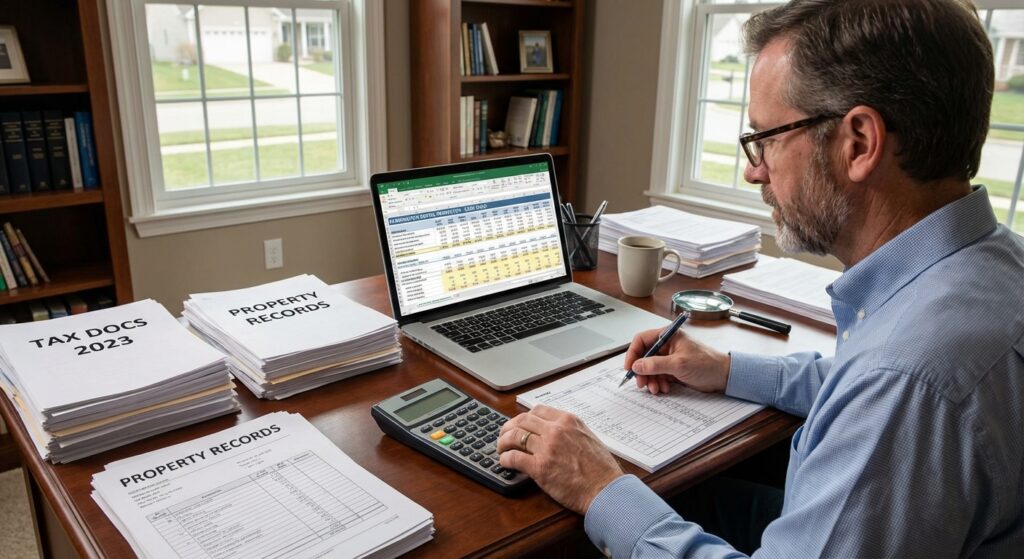
Farmington Rental Income Taxes for 2026: Complete Tax Strategy Guide for Real Estate Investors
For the 2026 tax year, Farmington rental income taxes require strategic planning and knowledge of current federal rules. Real estate investors managing rental properties in Farmington must understand how to report rental income, claim depreciation deductions, and optimize their real estate investment tax strategies to minimize tax liability while maintaining compliance.
Table of Contents
- Key Takeaways
- Understanding Farmington Rental Income Taxes
- What Are the Federal Tax Deductions for Rental Properties?
- How Does Depreciation Reduce Rental Income Taxes?
- What Is Schedule E and How Do You File It?
- What Are the 2026 Federal Tax Brackets for Rental Income?
- How Does Qualified Business Income Deduction Apply to Rentals?
- Uncle Kam in Action
- Next Steps
- Frequently Asked Questions
Key Takeaways
- For 2026, report all rental income on Schedule E; deductible expenses reduce taxable rental income.
- Depreciation deductions spread the building cost over 27.5 years, creating significant annual tax savings.
- 2026 rental losses are limited to 90% deductibility under new OBBBA rules for most taxpayers.
- The 20% Qualified Business Income deduction may apply to rental income under specific conditions.
- Farmington rental properties face both federal and New Mexico state income tax obligations.
Understanding Farmington Rental Income Taxes for 2026
Quick Answer: Farmington rental income is taxed at your marginal federal rate plus New Mexico state income tax, with extensive deductions available through Schedule E reporting.
When you own rental property in Farmington, New Mexico, every dollar of rent you collect becomes taxable income. However, the tax system allows you to deduct business expenses against that income. Understanding Farmington rental income taxes starts with recognizing that the IRS treats rental activity as a business, even if you own just one property.
For the 2026 tax year, rental income taxation involves two layers: federal income tax and New Mexico state income tax. Your actual tax liability depends on your total income, filing status, and the deductions you claim. Most real estate investors in Farmington qualify for significant tax benefits through depreciation, operating expense deductions, and potential tax strategy optimization.
Why Farmington Rental Income Taxes Matter to Your Cash Flow
Without proper tax planning, real estate investors can pay 30-40% of their rental income to taxes. Strategic Farmington rental income taxes planning can reduce that burden to 15-25%. This difference means thousands of dollars annually in additional cash available for reinvestment or personal use.
What Are the Federal Tax Deductions for Rental Properties?
Quick Answer: Federal deductions include mortgage interest, property taxes, insurance, repairs, maintenance, utilities, and property management fees—all directly reducing taxable rental income.
The IRS permits rental property owners to deduct ordinary and necessary business expenses. For Farmington rental properties, this creates a substantial list of deductible items. These deductions are claimed on Schedule E (Supplemental Income and Loss) and directly reduce your taxable rental income.
Primary Deductible Expenses for Farmington Rental Properties
- Mortgage Interest: The interest portion of your monthly payment is fully deductible; principal payments are not.
- Property Taxes: Real estate taxes paid to New Mexico and local Farmington authorities are deductible.
- Rental Insurance: Landlord’s insurance protecting the building and liability is a legitimate business expense.
- Repairs and Maintenance: Routine repairs, painting, carpet cleaning, and HVAC servicing are deductible.
- Property Management Fees: If you hire a property manager, those fees are fully deductible business expenses.
- Utilities: If you pay utilities, internet, or cable provided to tenants, these are deductible.
- HOA Fees: If applicable, homeowner association fees are deductible rental property expenses.
- Office Expenses: A portion of your home office, tax preparation, accounting software, and professional fees qualify.
Many investors overlook smaller expenses. Keep receipts for travel to Farmington properties, supplies for minor repairs, and professional consultation fees. These “miscellaneous” deductions accumulate significantly.
Critical Distinction: Repairs vs. Improvements
The IRS distinguishes between repairs (immediately deductible) and improvements (capitalized and depreciated). Replacing a roof is an improvement; patching shingles is a repair. New flooring throughout is an improvement; fixing one damaged section is a repair. When in doubt, consult with a tax advisor to ensure proper classification.
For 2026, use our Small Business Tax Calculator for Tacoma to estimate your total deductible expenses and potential tax savings.
How Does Depreciation Reduce Rental Income Taxes?
Quick Answer: Residential rental properties depreciate over 27.5 years; annual depreciation deductions significantly reduce taxable income without requiring actual cash outflow.
Depreciation is perhaps the most powerful tax benefit for rental property owners. It allows you to deduct a portion of your building’s cost annually, even though you’re not actually spending money. This creates a “paper loss” that reduces taxable income.
How Depreciation Works for Farmington Rental Properties
When you purchase a Farmington rental property, you allocate the purchase price between land and building. Land cannot be depreciated; only the building value is depreciated. For 2026, residential rental property depreciates over 27.5 years using the straight-line method.
Example Calculation: A Farmington property costs $300,000 total. The land is valued at $75,000 and the building at $225,000. Annual depreciation = $225,000 ÷ 27.5 years = $8,182 per year in deductible depreciation expense, with zero cash outflow.
Pro Tip: For 2026, you may also claim 100% bonus depreciation on certain property improvements purchased after January 19, 2025, allowing immediate deduction rather than spreading over years.
Recapture Tax: The One Caveat
When you sell a Farmington rental property, the IRS taxes depreciation recapture at 25% on the gains attributable to depreciation deductions claimed. This ensures the tax benefit isn’t permanent—it merely defers taxation to the sale date.
What Is Schedule E and How Do You File It?
Quick Answer: Schedule E is IRS Form 1040 supplemental income/loss form where you report all Farmington rental property income, expenses, and depreciation annually.
Schedule E (Supplemental Income and Loss) is the primary form for reporting rental property activity to the IRS. For the 2026 tax year, every rental property owner must file Schedule E with their Form 1040. This form captures all rental income and deductible expenses.
Components of Schedule E for Rental Property Reporting
| Section | Information Required |
|---|---|
| Property Identification | Address, type (single family, multi-unit), and acquisition date for Farmington properties |
| Rental Income | Total rental income received during 2026 tax year from tenants |
| Deductible Expenses | Mortgage interest, property taxes, utilities, repairs, insurance, management fees |
| Depreciation | Annual depreciation calculated on building value (27.5-year residential schedule) |
| Net Profit/Loss | Income minus expenses determines net rental income for tax purposes |
Filing Deadline and Requirements
For 2026 Farmington rental income taxes, Schedule E is due by April 15, 2027, unless you request an automatic extension. Maintain records of all expenses, receipts, and depreciation schedules for at least 7 years. The IRS frequently audits rental property returns, so documentation is essential.
What Are the 2026 Federal Tax Brackets for Rental Income?
Quick Answer: Rental income is taxed at your marginal federal rate (10% to 37%) based on your total income; net losses are limited to 90% deductibility under 2026 OBBBA rules.
Your net rental income from Farmington properties is added to your other income (wages, business income, investments) and taxed at your marginal federal rate. For 2026, federal brackets remain in effect, though specific dollar thresholds may have adjusted for inflation under the cost-of-living adjustment (COLA).
2026 Loss Limitation Rule Under OBBBA
Beginning in 2026, a significant change affects rental property owners: only 90% of losses can be deducted in any given year. This means if your Farmington property generates a $10,000 loss, you can only deduct $9,000 against other income. The remaining $1,000 carries forward to future years.
This limitation applies to most taxpayers and is a major planning consideration for 2026. High-income real estate investors should model their expected income to understand the impact before the tax year ends.
How Does Qualified Business Income Deduction Apply to Rentals?
Quick Answer: The 20% Qualified Business Income (QBI) deduction may apply to rental income if your Farmington properties qualify as active business activity and meet specific IRS criteria.
Under Section 199A, taxpayers may be eligible for a 20% deduction on qualified business income, including rental income under specific conditions. For 2026, this provision remains largely unchanged with technical adjustments from the One Big Beautiful Bill Act.
Eligibility for QBI Deduction on Rental Income
Passive rental activity typically does NOT qualify for the QBI deduction. However, if you actively participate in managing your Farmington properties (not just collecting rent), you might qualify. Additionally, real estate professionals who spend more than 750 hours annually in real estate activities may claim the deduction.
The rules are complex, and individual circumstances vary. Many investors benefit from professional tax planning consultation to determine QBI eligibility for their specific situation.
Did You Know? Real estate professionals can reclassify rental activity as business activity by meeting the 750-hour annual involvement test, potentially unlocking significant QBI deduction benefits.

Uncle Kam in Action: Farmington Rental Property Tax Strategy
Client Profile: Sarah, a real estate investor with three Farmington rental properties averaging $1,200/month rent ($43,200 annual income), owned them for 5 years.
The Challenge: Sarah was reporting rental income on her tax return but claiming minimal deductions beyond mortgage interest. She paid approximately 24% effective tax rate on her rental income ($10,368 annually) while unaware of available depreciation and expense deductions. Additionally, she wasn’t utilizing available entity structuring benefits that could further reduce her tax burden.
The Uncle Kam Solution: Our tax strategist performed a comprehensive Farmington rental income taxes analysis. We calculated depreciation on each property ($8,500 combined annually), documented all operating expenses (property management: $5,000, insurance: $3,600, repairs: $4,200, utilities: $2,400), and identified a small home office deduction ($800). This created a comprehensive tax plan leveraging 2026 rules.
The Results: By properly claiming deductions totaling $24,500 against $43,200 rental income, Sarah reduced her taxable rental income to $18,700. Her tax liability dropped from $10,368 to $4,488—a $5,880 annual savings (56% reduction). Over the 2026 tax year, that represents money available for additional property investments or personal cash flow needs. We also recommended evaluating LLC entity election for future property acquisitions to optimize her overall business structure.
Return on Investment: Sarah’s tax planning fee was $2,400. Her first-year tax savings of $5,880 provided a 245% ROI, with ongoing annual savings of approximately $5,200 in subsequent years.
Next Steps
- Gather all 2026 Farmington rental property documentation including mortgage statements, property tax bills, and expense receipts.
- Schedule a consultation with a tax preparation specialist to calculate your building depreciation and deductible expenses.
- Evaluate whether your Farmington rental activity qualifies as business or passive to determine QBI deduction eligibility.
- Consider entity structure optimization for future property acquisitions or refinancing opportunities.
- Review your 2026 tax plan by August 31 to implement any mid-year adjustments before year-end.
Frequently Asked Questions
Can I Deduct Home Office Expenses Related to Farmington Rental Properties?
Yes. If you use a dedicated space in your home for managing Farmington rental properties—keeping records, paying bills, handling tenant communication—you can deduct that portion of rent, utilities, and office supplies. Use the simplified method ($5 per square foot, maximum 300 sq ft) or actual expense method. Most investors find the simplified method easier to defend in an audit.
What Happens If My Farmington Rental Shows a Loss for 2026?
Under 2026 OBBBA rules, you can deduct 90% of your rental loss against other income (wages, business income, investment income). The remaining 10% carries forward indefinitely to future years. If your loss exceeds passive activity loss limitations, additional restrictions may apply.
How Is New Mexico State Income Tax Calculated on Farmington Rental Income?
New Mexico taxes rental income at graduated rates ranging from 1.7% to 5.9% on the same net income calculated for federal purposes. Most Farmington rental investors in the 4-5% bracket see combined federal-state effective rates of 28-35% on rental income before considering available deductions.
When Should I Start Tracking Depreciation for My Farmington Properties?
Immediately upon placing the property in service (when it’s available to rent). The year you purchase or begin renting is your “placed in service” date. Depreciation calculations begin on Form 4562 (Depreciation and Amortization) attached to your tax return. For 2026, establish your depreciation schedule if not already done, as you cannot retroactively claim prior-year depreciation on current returns.
Are Rental Property Management Software Subscriptions Deductible?
Yes. Software subscriptions (Turbo Tenant, AppFolio, Buildium, etc.) are ordinary business expenses for managing Farmington rentals. Include these in “miscellaneous expenses” on Schedule E. Document the subscription to show it directly relates to rental property management.
What Records Should I Maintain for 2026 Farmington Rental Income Taxes?
Maintain all receipts for expenses, mortgage statements showing interest paid, property tax bills, insurance documents, tenant agreements, maintenance records, and utility bills. The IRS typically audits 2-3 years of returns; maintain documentation for 7 years minimum. Digital organization systems (cloud storage, scanning apps) simplify this process considerably.
Related Resources
- Real Estate Investor Tax Strategies
- Comprehensive 2026 Tax Strategy Planning
- LLC vs S Corp for Rental Property Owners
- 2026 Tax Preparation and Filing Services
- 2026 Tax Deadline Calendar
Last updated: February, 2026
This information is current as of 2/9/2026. Farmington rental income taxes laws change frequently. Verify updates with the IRS (irs.gov) and New Mexico Taxation and Revenue Department if reading this later. Individual circumstances vary; consult a tax professional for personalized guidance.

