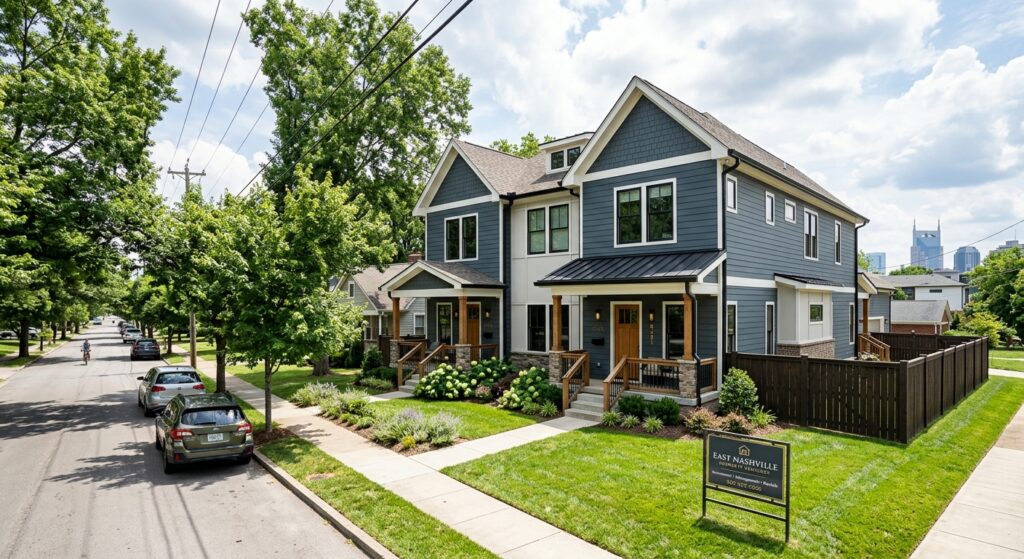
East Nashville Real Estate Investor & CPA: 2026 Tax Optimization Strategies for Maximum Returns
East Nashville’s growth has turned many local owners into serious real estate investors. But with higher rents, rising values, and frequent renovations come more complex tax questions. Working closely with an experienced East Nashville real estate investor CPA can be the difference between overpaying the IRS and legally keeping thousands of extra dollars each year.
This article walks through practical 2026 tax strategies tailored to East Nashville landlords, flippers, and short‑term rental hosts—so you can structure your portfolio, track expenses, and plan ahead with confidence.
Table of Contents
- Key Takeaways for East Nashville Investors
- Why Tennessee Is Attractive for Real Estate Investors
- What Are the Essential Tax Deductions for East Nashville Rentals?
- How to Use Depreciation Strategically in 2026
- LLC, Partnership, or S Corp: Which Entity Fits Your Properties?
- Working With an East Nashville CPA: What to Expect
- Case Study: East Nashville Duplex Investor
- Frequently Asked Questions
Key Takeaways for East Nashville Investors
- Tennessee’s lack of state income tax makes rental and flipping profits more attractive compared with many other states.
- You can usually deduct mortgage interest, property taxes, insurance, repairs, management fees, and more against rental income.
- Depreciation on East Nashville rentals can create large paper losses that reduce your federal tax bill even when cash flow is positive.
- The right entity structure can improve liability protection and, in some cases, reduce self‑employment and payroll tax exposure.
- Proactive planning with a local CPA—ideally at least quarterly—typically saves more than last‑minute, once‑a‑year tax prep.
Why Tennessee Is Attractive for Real Estate Investors
Tennessee does not tax wage or rental income at the state level. For an East Nashville investor with $80,000 of net rental income, that can mean keeping several thousand dollars per year that a similar investor in a high‑tax state would pay to their state revenue department.
At the same time, parts of East Nashville have seen rapid appreciation and rising property tax assessments. That makes it even more important to capture every legitimate federal deduction and to structure your portfolio carefully to protect cash flow.
Metro Nashville Property Tax Context
Metro Nashville property taxes are based on assessed value. Neighborhoods like Five Points, Lockeland Springs, and Cleveland Park have seen sharp value increases, which can push tax bills higher even without rate increases. Reviewing assessments annually and appealing when necessary is part of a good investor’s tax playbook.
What Are the Essential Tax Deductions for East Nashville Rentals?
Most rental property expenses are deductible as long as they are ordinary and necessary for operating your business. Your CPA will typically group these on Schedule E for long‑term rentals or on business schedules for certain short‑term rentals.
Common Deductible Expenses
- Mortgage interest on loans secured by your East Nashville property.
- Property taxes charged by Metro Nashville and related jurisdictions.
- Landlord insurance, liability policies, and umbrella coverage tied to the property.
- Repairs and maintenance (painting, patching roofs, fixing plumbing, cleaning between tenants).
- Property management fees, leasing fees, and HOA dues where applicable.
- Utilities you pay (water, electricity, gas, trash) for common areas or included in rent.
- Advertising, online listings, and tenant screening services.
- Professional services: legal advice, bookkeeping, and real estate investor tax preparation.
Repairs vs. Improvements
The IRS treats repairs and improvements differently. Repairs keep your East Nashville property in good operating condition and are generally deductible in the year paid. Improvements add value or extend the useful life of the property and are usually depreciated over time. Examples:
| Category | Examples for East Nashville Rentals |
|---|---|
| Repairs (expense now) | Patching a small roof leak, replacing a broken window, fixing a sink, repainting one room between tenants. |
| Improvements (depreciate) | Full roof replacement, adding a new bathroom, finishing a basement, major kitchen remodel for a duplex. |
Correctly classifying these projects is one of the places a real estate‑savvy CPA adds immediate value.
How to Use Depreciation Strategically in 2026
 Free Tax Write-Off Finder
Depreciation is a non‑cash expense that lets you deduct the cost of your East Nashville rental over time. For most residential rentals, the building and certain improvements are depreciated over 27.5 years. Land is not depreciable, so a good cost allocation between land and building is important when you close on a property.
Basic Depreciation Example
Suppose you buy a small East Nashville duplex for $450,000. Your closing statement and appraisal support a land value of $120,000 and a building value of $330,000. Your annual straight‑line depreciation on the building would be roughly $12,000 per year ($330,000 ÷ 27.5). That deduction reduces your taxable rental income even if your actual cash flow is strong.
Accelerated Depreciation and Cost Segregation
For higher‑value properties or investors planning to scale, your CPA may discuss cost segregation. This engineering‑based study separates shorter‑life components (like certain flooring, cabinetry, or parking areas) from the 27.5‑year building, allowing larger deductions earlier in ownership. Whether this makes sense depends on your income level, how long you expect to hold the property, and how actively you participate in real estate.
| Depreciation Approach | Pros | Considerations |
|---|---|---|
| Standard 27.5‑year | Simple, low cost, works for most small rentals. | Smaller deductions in early years. |
| Cost segregation / accelerated | Larger deductions up front; may offset high income years. | Study cost, recapture tax when you sell, more complex record‑keeping. |
LLC, Partnership, or S Corp: Which Entity Fits Your Properties?
Many East Nashville investors ask whether they should put each property in its own LLC, or whether an S corporation will save taxes. The right answer depends on the type of activity (long‑term rent, short‑term rent, flips), your risk tolerance, and your other income.
Single‑Member LLC Holding Rentals
For long‑term rentals, a common structure is a single‑member LLC taxed as a disregarded entity. Federal tax reporting is relatively simple: the income flows through to your Form 1040, usually on Schedule E, and is not subject to self‑employment tax in most typical rental situations. The main benefit is liability protection under Tennessee law, not special tax savings.
Partnerships for Multiple Owners
If you co‑invest with friends or family in East Nashville properties, you may use a multi‑member LLC taxed as a partnership. This allows you to share profits, losses, and capital contributions according to an operating agreement. Partnership returns (Form 1065) are more complex, so involving a CPA early is wise.
When S Corporations Enter the Conversation
S corporations are often better suited for active businesses like property management or flipping, rather than for holding long‑term rentals. In some cases, where short‑term rentals rise to the level of an active business, or where you operate a separate management company, an S corp can help reduce self‑employment taxes by splitting income between reasonable wages and distributions. This decision should always be modeled with a real estate‑focused CPA, as the wrong structure can increase tax or create unnecessary payroll obligations.
Working With an East Nashville CPA: What to Expect
The best tax outcomes come when you treat your CPA as part of your investing team, not just someone who files your return in March or April. For East Nashville investors, that usually means:
- Planning before you buy or sell property, not after the closing.
- Reviewing projected rents, renovation budgets, and financing terms.
- Discussing how a new property fits into your existing entity structure.
- Setting up simple bookkeeping and document retention systems.
If you’re just getting started or growing quickly, scheduling periodic planning sessions with an East Nashville CPA can surface opportunities you might otherwise miss.
Case Study: East Nashville Duplex Investor
Scenario: A local investor purchases a renovated duplex near Five Points for $500,000. After separating land and building, they have $360,000 in depreciable basis. Net rental income after operating expenses (before depreciation) is $32,000 in the first year.
Approach with a CPA: The CPA confirms the land/building split using appraisal data, sets up a 27.5‑year depreciation schedule (~$13,000 per year), and identifies an additional $7,000 of first‑year deductions for start‑up and minor repair costs that the investor had not originally tracked. The investor’s taxable rental income drops from $32,000 to roughly $12,000, significantly lowering federal tax.
Over several years, consistent planning like this helps the investor scale into additional East Nashville properties while keeping after‑tax cash flow strong.

Frequently Asked Questions
1. Do I pay Tennessee income tax on my East Nashville rental profits?
No. Tennessee currently does not tax wage or rental income at the state level. You still owe federal income tax, and you will pay local property taxes, but there is no separate state income tax on your net rental profit.
2. Are my East Nashville rentals subject to self‑employment tax?
Most long‑term residential rentals reported on Schedule E are not subject to self‑employment tax. However, some short‑term rental operations that provide hotel‑like services can be treated more like an active business. Your CPA will review your specific facts—length of stays, services provided, how involved you are—to determine the right treatment.
3. Can I deduct travel to check on my East Nashville properties?
Yes, if the primary purpose of the trip is business. In‑town mileage to show units, meet contractors, or attend hearings can be deductible. Keep a mileage log noting dates, addresses, and business purpose, and share it with your CPA at tax time.
4. Should each East Nashville property have its own LLC?
Some investors prefer “one property, one LLC” for liability isolation. Others group several smaller properties into a single entity for simplicity and cost control. There is no one‑size‑fits‑all answer. Factors include property values, financing terms, insurance coverage, and your risk tolerance. A local attorney and CPA can work together to design a structure that balances protection and practicality.
5. How long should I keep records for my East Nashville real estate?
Keep purchase documents, closing statements, loan papers, major renovation invoices, and depreciation schedules for as long as you own the property plus several years after you sell. Routine expense records (utilities, minor repairs, management fees) are commonly kept for at least seven years. Good records make both tax filing and potential audits much easier.
This article is for educational purposes only and is not legal or tax advice. Always consult directly with a qualified CPA and attorney before making decisions about your East Nashville real estate investments.
Last updated: 2026

