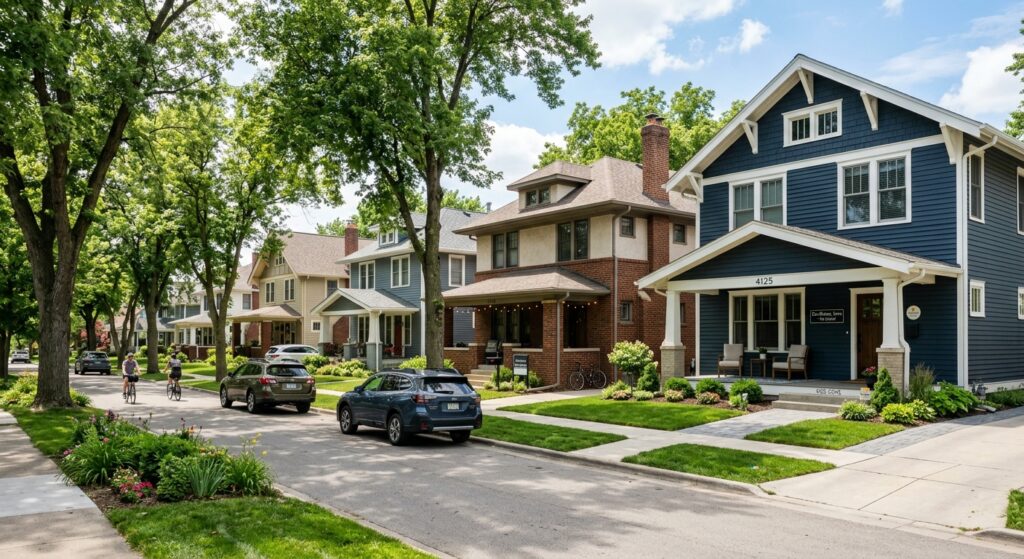
Des Moines Airbnb Taxes 2026: Complete Guide for Hosts (No Specific Airbnb Tax)
If you’re operating an Airbnb in Des Moines, Iowa, you’ve likely wondered whether Des Moines airbnb taxes include special host-specific levies. The good news: in 2026, Des Moines has not enacted a specific Airbnb tax. However, this does not mean you’re off the hook. Like all Des Moines short-term rental hosts, you must report all Airbnb income to federal and state tax authorities, pay self-employment tax, and comply with Iowa’s general tax requirements. This comprehensive guide explains which taxes actually apply to your Des Moines Airbnb hosting business in 2026 and how to stay compliant.
Table of Contents
- Key Takeaways
- Is There a Specific Airbnb Tax in Des Moines?
- What Taxes Actually Apply to Airbnb Hosts?
- Does Airbnb Collect Taxes for You?
- Step-by-Step Compliance Checklist
- Example Tax Calculations
- Uncle Kam in Action
- Next Steps
- Frequently Asked Questions
Key Takeaways
- Des Moines has no specific Airbnb tax for 2026, but federal income tax applies to all hosts.
- Self-employment tax of 15.3% applies to net rental income for Des Moines hosts.
- All Airbnb income must be reported regardless of the $600 1099-NEC threshold.
- Quarterly estimated tax payments are required if annual tax liability exceeds $1,000.
- Save 25-30% of gross Airbnb income to cover federal and state tax obligations.
Is There a Specific Airbnb Tax in Des Moines in 2026?
Quick Answer: No. Des Moines has not enacted a separate, Airbnb-specific tax for 2026. However, hosts must pay federal income tax, self-employment tax, and Iowa state income tax on all earnings.
Many Airbnb hosts mistakenly believe that if there’s no “Airbnb tax,” they have minimal tax obligations. This is dangerous thinking. The absence of a specialized Airbnb ordinance does not eliminate your tax liability. It simply means that Des Moines airbnb taxes fall under general income tax rules rather than a custom short-term rental levy.
Cities across the country—from San Francisco to Miami—have enacted specific short-term rental taxes or occupancy taxes. Des Moines has not followed this trend. This is actually beneficial: you don’t face an additional municipal layer. However, you still owe federal and state income taxes on 100% of your hosting revenue.
Why the Confusion About Des Moines Airbnb Taxes?
The reason some hosts think Des Moines has special Airbnb rules is that other cities do. Cities like New York, Los Angeles, and Austin have passed local short-term rental ordinances that may require licensing, cap the number of rental days per year, or impose additional taxes. Des Moines currently has no such ordinances on the books for 2026. This does not, however, reduce your tax filing requirements at the federal and state level.
What Taxes Actually Apply to Airbnb Hosts in Des Moines?
Quick Answer: Federal income tax, self-employment tax (15.3%), and Iowa state income tax apply to all Des Moines Airbnb hosts. General Iowa sales tax (6%) may apply to some transactions.
Federal Income Tax on Airbnb Income
Every dollar earned from Airbnb hosting is subject to federal income tax. This applies regardless of whether you receive a 1099 form from Airbnb. The $600 reporting threshold only determines whether Airbnb must issue you a 1099-NEC form; it does not determine your tax liability. Even if you earned $100 from Airbnb in 2026, you must report it on your federal tax return using Schedule E (if you’re treating it as rental income) or Schedule C (if it’s self-employment income).
Your federal income tax rate depends on your overall tax bracket. For 2026, federal tax brackets range from 10% to 37%, with most mid-level earners falling into the 22% to 24% range. Your Airbnb income stacks on top of any other income you earn, potentially pushing you into a higher bracket.
Self-Employment Tax (15.3%)
As an Airbnb host, you are self-employed. This means you pay self-employment tax on your net income (gross revenue minus allowable business expenses). The self-employment tax rate for 2026 is 15.3%, consisting of 12.4% for Social Security and 2.9% for Medicare. This tax is in addition to federal income tax.
If your net Airbnb income is $30,000 for 2026, you’ll owe approximately $4,590 in self-employment tax alone (before any federal income tax). This is a major cost that many casual hosts overlook when calculating their actual profit.
Iowa State Income Tax
Iowa has one of the highest state income tax rates in the country. Your Airbnb income is also subject to Iowa state income tax. Iowa does not currently have a special short-term rental tax, so your Airbnb revenue is taxed under Iowa’s general income tax rules. Your state tax liability depends on your total income and Iowa’s progressive tax brackets.
For example, if you’re a resident of Des Moines and have substantial Airbnb income, you may owe both Iowa and federal taxes on those earnings. Combining federal, self-employment, and state taxes, your effective tax rate on Airbnb income could easily reach 35-40% or higher depending on your total income level and filing status.
Iowa Sales Tax Considerations
Iowa’s general sales tax is 6%. While Airbnb typically handles sales tax collection on your behalf in jurisdictions that require it, it’s important to understand that short-term lodging may be subject to sales tax in Iowa. The good news: Airbnb is handling most of these complexities. However, verify that Airbnb is collecting and remitting the correct amount in your Des Moines market.
Does Airbnb Collect and Remit Taxes for You in Des Moines?
Quick Answer: Airbnb may collect and remit certain local taxes in some jurisdictions, but you remain responsible for federal income tax, self-employment tax, and Iowa state taxes. Always verify what Airbnb is handling.
Airbnb’s tax handling varies by location. In some cities with occupancy taxes or short-term rental fees, Airbnb collects these taxes directly from guests and remits them to local authorities. You don’t have to handle that yourself. However, this collection does not include federal income tax, self-employment tax, or Iowa state income tax. Those are entirely your responsibility.
Never assume Airbnb’s tax collection covers your full tax liability. Many hosts make the mistake of thinking the platform handles everything. It doesn’t. You must:
- Report all income on your federal tax return.
- Calculate and pay self-employment tax.
- Report Iowa state income tax.
- Track business expenses to reduce taxable income.
- Pay quarterly estimated taxes if necessary.
Step-by-Step Compliance Checklist for Des Moines Airbnb Hosts
 Free Tax Write-Off Finder
Pro Tip: Create a dedicated spreadsheet or use accounting software to track Airbnb revenue and expenses throughout 2026. This will make tax filing much easier and help you maximize deductions.
Follow these steps to ensure you’re tax-compliant as a Des Moines Airbnb host in 2026:
- Get an EIN: If you don’t already have an Employer Identification Number (EIN), obtain one from the IRS. This is free and simplifies tax reporting.
- Track All Income: Keep records of every booking and payment received through Airbnb, including any additional fees paid by guests. This total is your gross Airbnb income.
- Document Expenses: Record all business expenses: mortgage interest (if applicable), property taxes, utilities, cleaning supplies, maintenance, repairs, insurance, and depreciation. These reduce your taxable income.
- Calculate Net Income: Subtract documented expenses from gross income to determine your net business income. This is what you’ll pay tax on.
- Estimate Tax Liability: If your estimated annual tax liability exceeds $1,000, you must pay quarterly estimated taxes. Calculate this for April, June, September, and January payments.
- Pay Quarterly Taxes: Make estimated tax payments to the IRS on April 15, June 15, September 15, and January 15, 2027. Use Form 1040-ES.
- File Complete Tax Return: By April 15, 2027, file your 2026 federal tax return reporting all Airbnb income. Include Schedule C (self-employment) and Schedule SE (self-employment tax) if required.
- File Iowa State Return: Also file your Iowa state tax return by the same deadline. Iowa has varying tax brackets based on income.
Example Tax Calculations for Des Moines Airbnb Hosts
Quick Answer: A host earning $20,000 gross income with $6,000 in expenses faces roughly $2,100 in self-employment tax alone, plus federal income tax and Iowa state tax. Total tax liability typically ranges from 30-40% of net income.
Let’s walk through a realistic example for a Des Moines Airbnb host:
| Item | Amount |
|---|---|
| Gross Airbnb Revenue (2026) | $20,000 |
| Business Expenses (documented) | ($6,000) |
| Net Business Income | $14,000 |
| Self-Employment Tax (15.3% × $14,000) | $2,142 |
| Federal Income Tax (22% bracket × $14,000) | $3,080 |
| Iowa State Tax (assume 4% × $14,000) | $560 |
| Total Tax Liability | $5,782 |
| Effective Tax Rate | 41.3% |
In this example, the host keeps $14,000 net income but faces $5,782 in combined federal, state, and self-employment taxes. This underscores why it’s critical to save 25-30% of gross income for taxes.

Uncle Kam in Action: Des Moines Airbnb Host Success Story
Client: Sarah, a Des Moines-based real estate investor operating two Airbnb properties
Annual Revenue: $45,000 combined from two Des Moines properties
The Challenge: Sarah was operating her two Airbnb properties without properly tracking expenses or paying quarterly estimated taxes. She was treating her Airbnb income as “free money” after paying her mortgage and utilities. By late 2025, she realized she had a massive tax liability coming for her 2025 return. She was stressed about 2026 and wanted a strategy that would keep her compliant without killing her cash flow.
The Uncle Kam Solution: Uncle Kam’s tax strategists implemented a comprehensive approach for Sarah’s 2026 tax year. First, they helped her establish a dedicated accounting system using cloud-based software to track all Airbnb income and categorize every business expense. Second, they identified $18,000 in previously untracked deductions she could claim: property tax allocation, HOA fees, insurance premiums, maintenance records, and depreciation on the properties themselves. Third, they calculated her quarterly estimated tax liability and set up automatic payments on April 15, June 15, September 15, and January 15, 2027 to avoid underpayment penalties.
The Results: For 2026, Sarah’s gross Airbnb income was $45,000. With properly documented expenses totaling $18,000, her net income was $27,000. Her total combined federal, self-employment, and Iowa state tax liability was approximately $9,720. However, by maximizing legitimate business deductions, Uncle Kam reduced what she would have owed by an estimated $3,200 compared to if she had simply reported gross income. Sarah paid her quarterly estimates on time, filed early in April 2027, and received a small refund of $425. She was stress-free at tax time and retained significantly more cash flow throughout 2026.
Return on Investment: Uncle Kam’s fee for comprehensive tax strategy and quarterly management was $1,200 for the year. The tax savings, penalty avoidance, and refund totaled $3,625, representing a 302% first-year ROI. More importantly, Sarah now has systems in place that will generate ongoing savings for future years.
Next Steps
Don’t wait until April to address your 2026 Airbnb tax obligations. Take action now:
- Set up a dedicated accounting system to track Airbnb income and expenses in real time.
- Calculate your estimated quarterly tax payments and mark them on your calendar.
- Consult with a tax strategist to identify deductions you might be missing.
- Review your filing status and tax bracket to optimize your overall tax strategy for 2026.
- Get professional help from a Des Moines tax preparation firm to ensure compliance and maximize deductions.
Frequently Asked Questions About Des Moines Airbnb Taxes
Do I have to report Airbnb income under $600?
Yes, absolutely. The $600 threshold only determines whether Airbnb sends you a 1099-NEC form. All income, regardless of amount, must be reported to the IRS. Even if you earned only $150 from Airbnb in 2026, you must include it on your federal tax return. Failing to report small amounts of income is a common mistake that triggers audits.
What business expenses can I deduct as an Airbnb host?
Legitimate deductible expenses include: mortgage interest (if you allocate it to the rental portion), property taxes, homeowners insurance, utilities, cleaning costs, maintenance and repairs, advertising costs, property management fees, HOA fees, depreciation on the property, and office expenses. Keep detailed receipts and documentation for everything you claim. The IRS scrutinizes rental property deductions, so be prepared to substantiate any claim.
How do I calculate my quarterly estimated tax payment?
Divide your estimated annual tax liability by four. If you expect to owe $5,000 in combined federal, state, and self-employment taxes for 2026, pay approximately $1,250 each quarter. You can pay via the IRS website, through your bank, or by mail using Form 1040-ES. Miss a quarterly payment, and the IRS will assess an underpayment penalty even if your final return shows you overpaid for the year.
Can I deduct a portion of my mortgage payment as a rental expense?
You can only deduct the interest portion of your mortgage payment (not principal) if you use part of your home for Airbnb hosting. If you rent out one room of your principal residence, you must allocate mortgage interest proportionally. For example, if one of three bedrooms is rented, you can deduct approximately 33% of mortgage interest attributable to that space. This is complex and varies by your specific situation. Professional guidance is essential.
What’s the difference between Schedule C and Schedule E for Airbnb income?
Schedule E is typically used for passive rental income (you rent out an investment property). Schedule C is used for self-employment income (you actively manage a business). Most Airbnb hosts report on Schedule E since short-term rentals are generally considered passive income. However, if you provide substantial services (daily cleaning, guest interactions, property management), you may use Schedule C. Consult a tax professional about which form applies to your situation.
What happens if I don’t file a 2026 tax return reporting Airbnb income?
If you fail to report Airbnb income, you face serious consequences: the IRS can assess a failure-to-file penalty (5% per month up to 25% of unpaid taxes), failure-to-pay penalties (0.5% per month), daily compounding interest on unpaid taxes, and potential audit with back taxes plus penalties dating back years. The IRS has significantly increased enforcement against gig economy and rental income reporting. Don’t risk it. File on time, report all income, and pay what you owe.
Are there any new 2026 tax laws affecting Airbnb hosts?
The One Big Beautiful Bill Act (OBBBA) made several changes to the 2026 tax code, including new reporting requirements and deductions. However, no specific provisions directly changed Airbnb host taxation. The key thing to remember: all existing rules about reporting rental income, self-employment tax, and quarterly estimated payments remain in effect for 2026. Stay current by consulting the IRS.gov website.
How much should I save for taxes if I earn Airbnb income?
Most tax professionals recommend saving 25-30% of your gross Airbnb income for taxes. This accounts for federal income tax, self-employment tax, and Iowa state taxes. For example, if you earn $20,000 gross, put aside $5,000-$6,000 in a separate savings account. Don’t touch this money. When quarterly estimated tax payments or your annual return are due, you’ll have the funds ready.
This information is current as of April 6, 2026. Tax laws change frequently. Verify updates with the IRS or a qualified tax professional if reading this later.
Related Resources
- IRS Schedule E: Supplemental Income or Loss
- Real Estate Investor Tax Strategies
- IRS Publication 527: Residential Rental Property
- Comprehensive Tax Strategy Planning
- Self-Employed Tax Obligations and Solutions
Last updated: April, 2026

