
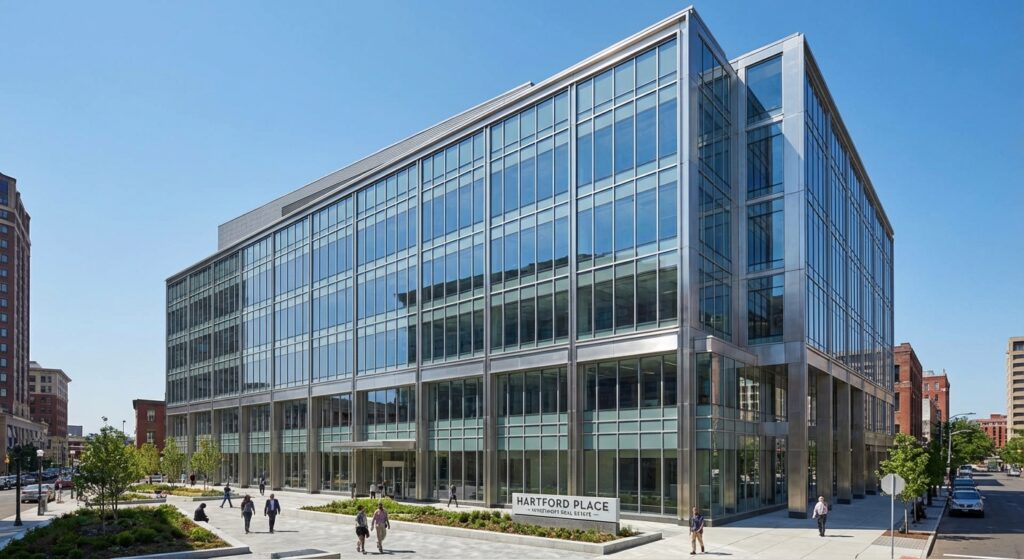
Cost Segregation in Hartford: 2026 Tax Strategy Guide for Real Estate Investors
For 2026, cost segregation in Hartford represents one of the most powerful tax strategies available to commercial property owners and real estate investors. When combined with the newly reinstated 100% bonus depreciation provision, cost segregation can accelerate deductions worth hundreds of thousands of dollars in your early years of property ownership. This comprehensive guide explains how cost segregation works, why Hartford property owners should prioritize it, and how to implement this strategy effectively within the current tax landscape.
Table of Contents
- Key Takeaways
- What Is Cost Segregation and How Does It Work?
- What Are the Tax Benefits of Cost Segregation in 2026?
- Which Hartford Property Types Qualify for Cost Segregation?
- How Does 100% Bonus Depreciation Enhance Cost Segregation?
- What Is the Step-by-Step Process for Cost Segregation?
- What Are Realistic Cost Estimates for Hartford Cost Segregation Studies?
- Uncle Kam in Action: Hartford Commercial Property Owner
- Next Steps
- Frequently Asked Questions
Key Takeaways
- Cost segregation in Hartford can accelerate depreciation deductions by 5-15 years for qualified property components.
- 100% bonus depreciation (reinstated for 2026) magnifies cost segregation benefits through immediate first-year deductions.
- Commercial properties, multifamily buildings, and mixed-use real estate in Hartford are prime candidates for cost segregation studies.
- A typical Hartford cost segregation study costs $3,500-$8,000 but can generate $50,000-$250,000+ in first-year tax savings.
- IRS support for cost segregation is strong, with published guidance and accepted safe harbors for qualified studies.
What Is Cost Segregation and How Does It Work?
Quick Answer: Cost segregation breaks down a building’s purchase price into components (personal property, land improvements, real property) and assigns shorter depreciation schedules to qualify for accelerated deductions.
Cost segregation in Hartford works by identifying and classifying building components into different asset categories with varying recovery periods. Rather than depreciating an entire building over 39 years, cost segregation identifies items that qualify for 5-year, 7-year, or 15-year depreciation schedules.
A qualified cost segregation study examines your property and separates depreciable assets into three main categories:
- Personal Property (5-7 year recovery): Carpeting, fixtures, appliances, HVAC systems, electrical components.
- Land Improvements (15-year recovery): Parking lots, sidewalks, landscaping, fencing, exterior lighting.
- Real Property (39 years for commercial): Building structure, walls, roof, foundation.
Why Hartford Property Owners Need Cost Segregation in 2026
Connecticut’s real estate market, including Hartford’s commercial and residential sectors, has experienced significant property acquisitions and renovations. Properties purchased or substantially improved in 2025 or later are eligible for cost segregation studies in 2026, making this the perfect time to implement this strategy.
The IRS Notice 2026-11 guidance on bonus depreciation provides permanent 100% first-year deductions for qualified property acquired after January 19, 2025. This change directly amplifies cost segregation benefits by allowing immediate deduction of personal property and land improvements identified in the study.
The Impact of Cost Segregation on Your Tax Liability
Without cost segregation, a $2 million commercial property acquisition would generate approximately $51,282 in annual depreciation deductions over 39 years. With cost segregation combined with 2026 bonus depreciation, you could accelerate $600,000-$800,000 of deductions into your first year of ownership.
Did You Know? The IRS explicitly supports cost segregation through published guidance (Rev. Proc. 2011-14) and has successfully defended the strategy in Tax Court cases, making it one of the most reliable depreciation strategies available to Hartford real estate investors.
What Are the Tax Benefits of Cost Segregation in 2026?
Quick Answer: Cost segregation can defer tens of thousands to hundreds of thousands of dollars in federal income taxes in year one, plus additional deductions in subsequent years.
The primary tax benefit of cost segregation in Hartford is accelerated depreciation deductions that reduce your current-year taxable income. For 2026 specifically, several factors compound these benefits:
Federal Income Tax Savings Through Accelerated Deductions
A Hartford real estate investor in the 24% federal tax bracket who receives $100,000 in accelerated depreciation deductions through cost segregation saves $24,000 in federal income taxes in year one. High-income investors may see even greater savings if they’re in the 32%, 35%, or 37% brackets.
| Accelerated Depreciation | 24% Tax Bracket Savings | 32% Tax Bracket Savings | 37% Tax Bracket Savings |
|---|---|---|---|
| $100,000 | $24,000 | $32,000 | $37,000 |
| $250,000 | $60,000 | $80,000 | $92,500 |
| $500,000 | $120,000 | $160,000 | $185,000 |
Multi-Year Depreciation Benefits Beyond Year One
Even after the first-year accelerated deductions, cost segregation continues generating deductions in years 2-7 as the 5-year and 7-year property components depreciate under standard MACRS schedules.
Pro Tip: If you’ve already depreciated property without cost segregation, you can file an amended return (Form 3115 Application for Change in Accounting Method) to claim retroactive cost segregation benefits going back up to 3 years, generating immediate refunds.
Which Hartford Property Types Qualify for Cost Segregation?
Quick Answer: Most commercial and multifamily properties qualify, with particular advantages for buildings with significant personal property and land improvements components.
Hartford’s diverse real estate market provides numerous opportunities for cost segregation. The following property types are excellent candidates:
- Office Buildings: Downtown Hartford office complexes with HVAC, electrical, and IT infrastructure benefit significantly from cost segregation.
- Multifamily Residential: Apartment buildings, condominiums, and rental properties with furnishings and common area improvements.
- Industrial and Manufacturing: Warehouses, manufacturing facilities, and distribution centers with specialized equipment.
- Retail Properties: Shopping centers and standalone retail with tenant improvements and specialized fixtures.
- Mixed-Use Development: Hartford’s growing mixed-use projects combining retail, office, and residential.
- Hospitality: Hotels and motels with significant personal property in furnishings and equipment.
Properties with the Highest Cost Segregation Potential
Cost segregation benefits depend on the property’s composition. Buildings with high percentages of personal property, specialized equipment, and land improvements see the greatest benefits. A Hartford hospitality property with custom furnishings might allocate 25-30% of cost to personal property (5-7 year recovery), while a simple warehouse might allocate only 10-15%.
Properties valued at $500,000 or higher provide the best return on investment for cost segregation studies. For smaller properties, you should calculate whether the study cost justifies the potential deductions.
How Does 100% Bonus Depreciation Enhance Cost Segregation?
Quick Answer: The reinstated 100% bonus depreciation for 2026 allows immediate deduction of all personal property and land improvements identified in cost segregation studies, significantly amplifying first-year tax savings.
The One Big Beautiful Bill Act permanently reinstated 100% bonus depreciation for property acquired after January 19, 2025. This provision is transformative for cost segregation strategies in Hartford.
Bonus Depreciation and Cost Segregation: A Powerful Combination
Previously, cost segregation spread personal property and land improvements deductions over 5-7-15 years. With 100% bonus depreciation, you can immediately deduct all identified personal property and land improvements in year one.
Here’s the impact: On a $2 million Hartford commercial property acquisition in 2026, cost segregation identifies $400,000 in personal property and $300,000 in land improvements. Previously, these would depreciate over multiple years. With 2026 bonus depreciation, you deduct all $700,000 in year one (plus the 39-year depreciation on remaining building basis).
| Property Component | 2026 Bonus Depreciation Treatment | Year 1 Deduction |
|---|---|---|
| Personal Property (5-yr) | 100% bonus depreciation available | Full amount in Year 1 |
| Land Improvements (15-yr) | 100% bonus depreciation available | Full amount in Year 1 |
| Real Property (39-yr) | Standard depreciation schedule | 1/39th of cost |
Pro Tip: Bonus depreciation has no annual income limit and isn’t reduced by business income levels. You can even generate a net loss using bonus depreciation combined with cost segregation, unlike Section 179 expensing, which has limitations.
What Is the Step-by-Step Process for Cost Segregation?
Quick Answer: The process involves engaging a cost segregation specialist, conducting a detailed property study, preparing an engineering report, and filing supporting documentation with your tax return.
Implementing cost segregation in Hartford involves several critical steps that must be followed correctly to maximize IRS support and minimize audit risk.
Step 1: Property Assessment and Qualification (Timeline: Weeks 1-2)
Begin by reviewing your Hartford property acquisition details. You’ll need purchase price, property description, closing date, any post-acquisition improvements, and financial data. Properties acquired or substantially improved after January 19, 2025, are ideal candidates for 2026 cost segregation studies.
Step 2: Engage a Qualified Cost Segregation Firm (Timeline: Weeks 2-3)
You’ll need to hire a certified cost segregation firm with Hartford experience. These firms typically employ engineers and cost estimators who conduct detailed building studies. Look for firms that:
- Hold certifications (PE, RCE, ASA)
- Have Hartford-area project experience
- Provide IRS-compliant engineering reports
- Include cost segregation insurance for audit defense
Step 3: Engineering Study and Allocation (Timeline: Weeks 4-8)
The cost segregation firm conducts a detailed property inspection, photographs all components, reviews construction documents, and interviews contractors. They allocate your total property cost into depreciable categories based on engineering analysis and industry standards.
Step 4: Depreciation Schedule Preparation (Timeline: Weeks 8-10)
The firm prepares a detailed depreciation schedule (typically Form 4562 schedule support) documenting all property components, their costs, depreciation methods, and recovery periods. This schedule becomes your audit defense documentation.
Step 5: Tax Return Filing with Cost Segregation (Timeline: On or Before April 15, 2026)
Your tax professional files your return with the cost segregation study attached. You’ll claim bonus depreciation on identified personal property and land improvements, along with standard depreciation on real property. Proper documentation is critical for IRS compliance.
What Are Realistic Cost Estimates for Hartford Cost Segregation Studies?
Quick Answer: Hartford cost segregation studies typically range from $3,500 to $8,000 depending on property complexity, but ROI ranges from 300% to 1000%+ in first-year tax savings.
Understanding the cost-benefit analysis is essential for Hartford real estate investors. Cost segregation study fees depend on property size, complexity, and the level of detail required.
| Property Type/Size | Study Cost Range | Typical First-Year Tax Savings | ROI (Year 1) |
|---|---|---|---|
| $500K-$1M Property | $3,500-$4,500 | $30,000-$50,000 | 667%-1,329% |
| $1M-$5M Property | $4,500-$6,500 | $80,000-$180,000 | 1,231%-3,900% |
| $5M+ Property | $6,500-$8,000 | $200,000-$400,000 | 2,500%-6,154% |
As you can see, the return on investment is substantial. For most Hartford properties, the cost segregation study cost is recovered within the first month of tax savings.

Uncle Kam in Action: Hartford Commercial Property Owner Saves $127,500 Through Cost Segregation
Client Snapshot: Commercial real estate developer and property owner in Hartford, Connecticut, specializing in office and mixed-use properties.
Financial Profile: Purchased a 40,000 square-foot office building in downtown Hartford for $3.2 million in August 2025. The property includes office space, ground-floor retail, and a multi-level parking structure.
The Challenge: Our client was taking standard depreciation on the $3.2 million purchase price without recognizing that significant portions qualified for faster depreciation schedules. The client was leaving substantial tax deductions on the table—deductions that could be claimed in 2026 using cost segregation and bonus depreciation strategies.
The Uncle Kam Solution: We recommended a comprehensive cost segregation study conducted by a Hartford-based engineering firm. The study identified and allocated property costs across three categories:
- Personal Property (5-year recovery): $520,000 including HVAC, electrical systems, office fixtures, and retail tenant improvements
- Land Improvements (15-year recovery): $340,000 for parking structure, landscaping, exterior lighting, and concrete paving
- Real Property (39-year recovery): $2,340,000 for building structure, roof, and foundational elements
Using 2026’s 100% bonus depreciation rules, all personal property ($520,000) and land improvements ($340,000) qualified for immediate deduction in the year of acquisition. Our client is in the 32% federal tax bracket plus Connecticut state income tax of 6.99%, totaling 38.99% marginal tax rate.
The Results:
- Total First-Year Depreciation: $860,000 ($520,000 personal property + $340,000 land improvements)
- Federal Tax Savings: $166,400 (32% × $520,000)
- Connecticut State Tax Savings: $59,900 (6.99% × $860,000)
- Total Year 1 Tax Savings: $226,300
- Cost of Study: $5,800
- Net Benefit (Year 1): $220,500
- Return on Investment: 3,801% in the first year
This is just one example of how our proven tax strategies have helped clients achieve significant savings and financial advantages. The Hartford real estate market continues to present similar opportunities for property owners willing to implement strategic tax planning.
Next Steps
If you own commercial, multifamily, or mixed-use real estate in Hartford, 2026 is the critical year to implement cost segregation strategies. Here’s what you should do immediately:
- Review your Hartford property acquisition dates—properties purchased or significantly improved after January 19, 2025, qualify for enhanced benefits under 2026 bonus depreciation rules.
- Calculate preliminary ROI by multiplying your property cost by 20-30% (typical personal property and land improvements allocation) and your marginal tax rate. If the result exceeds the cost segregation study fee, proceed with a formal study.
- Contact a tax advisor specializing in real estate investment to discuss your specific property situation and cost segregation timeline.
- Engage a qualified cost segregation engineering firm to conduct a detailed property study before your 2026 tax return due date.
- Document all property acquisitions, improvements, and basis calculations to support cost segregation claims.
Frequently Asked Questions
Can I use cost segregation on a property I purchased years ago?
Yes! Even if you purchased your Hartford property 5-10 years ago, you can file an amended tax return (Form 3115) to claim cost segregation benefits retroactively. The IRS allows claims back 3 years from the original return filing date, potentially generating substantial refunds. For 2024 and 2025 property owners, this could mean immediate tax refunds plus future deductions.
Does the IRS accept cost segregation studies?
Absolutely. The IRS explicitly endorses cost segregation through Rev. Proc. 2011-14, which provides safe harbor protection for qualified studies. The Tax Court has consistently upheld properly prepared cost segregation studies (See Tang and Preslar cases). Cost segregation is one of the most defensible real estate tax strategies available to Hartford property owners.
What’s the difference between bonus depreciation and cost segregation?
Cost segregation identifies which property components qualify for shorter depreciation schedules. Bonus depreciation allows 100% immediate deduction of those components. In 2026, they work together: cost segregation determines what qualifies, and bonus depreciation enables full first-year deduction. Neither strategy works optimally without the other.
How long does a Hartford cost segregation study take?
A typical cost segregation study requires 6-10 weeks from initial engagement to final report delivery. This includes property inspection, engineering analysis, cost allocation, and documentation preparation. Since your 2026 tax return is due April 15, 2027, you have time to complete the study before filing.
Can I claim cost segregation for property improvements I made in 2025?
Yes. Major renovations, upgrades, and improvements to existing Hartford properties can qualify for separate cost segregation treatment. The improvements must be capitalized (not expensed as repairs) and placed in service. Bonus depreciation applies to improvements acquired after January 19, 2025, making 2025 and 2026 improvements particularly valuable.
Is cost segregation available for residential rental properties?
Yes. Residential rental properties, including apartment buildings and single-family rental homes, qualify for cost segregation. However, residential real property continues to depreciate over 27.5 years (compared to 39 years for commercial property), so residential cost segregation benefits are lower than commercial properties. Still, personal property and land improvements components offer significant acceleration.
What documentation do I need to support a cost segregation claim?
You’ll need the cost segregation study report, engineer’s certification, detailed depreciation schedules, property purchase documents, construction records, contractor invoices, closing statements, and any post-acquisition improvement documentation. The engineering report becomes your primary defense in an IRS audit. Maintain all original documentation for at least 7 years.
Does Connecticut offer additional cost segregation tax benefits?
Connecticut state income tax is 6.99% on high-income earners (above $550,000 AGI). Cost segregation deductions reduce your Connecticut tax liability at this rate in addition to federal benefits. Hartford property owners also benefit from municipal property tax considerations—consult with a local tax professional about any Hartford-specific incentives for property improvements that qualify for cost segregation.
Can my real estate investment partnership use cost segregation?
Absolutely. Partnerships, LLCs taxed as partnerships, and S-Corporations can claim cost segregation benefits. The study results flow through to partners’ K-1 forms, allowing each partner to claim their proportionate share of depreciation deductions on their individual returns. This structure often maximizes overall benefits for group property ownership scenarios common in Hartford.
This information is current as of 01/27/2026. Tax laws change frequently. Verify updates with the IRS (IRS.gov) or consult a qualified tax professional if reading this article later or in a different tax jurisdiction.
Related Resources
- Real Estate Investor Tax Strategies
- Comprehensive Tax Strategy Services
- Optimal Entity Structure Selection
- Real Results: Case Studies and Savings
- IRS Official Guidance on Bonus Depreciation
Last updated: January, 2026

