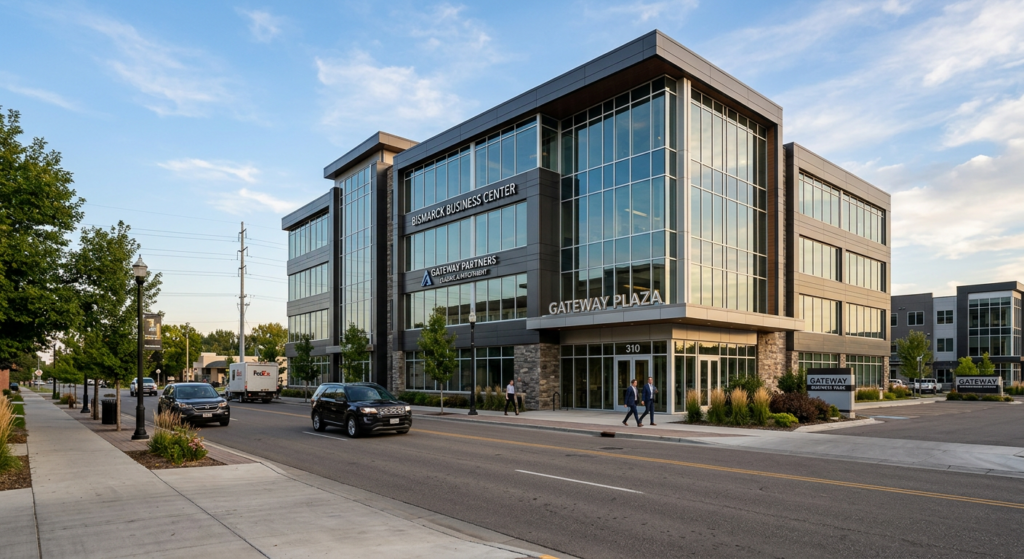
Bismarck Cost Segregation 2026: Maximize Tax Savings with 100% Bonus Depreciation
For 2026, Bismarck business owners and real estate investors have a historic opportunity to dramatically reduce their tax liability through strategic cost segregation planning in Bismarck. The One Big Beautiful Bill Act (OBBBA), passed in July 2025, permanently extended 100% bonus depreciation and restored immediate deduction of domestic research and development costs—two game-changing provisions that synergize with cost segregation to create unprecedented tax savings for property owners and businesses investing in real estate and innovation. Understanding how these 2026 rules interact is critical for maximizing your after-tax returns and accelerating depreciation deductions that would normally stretch across decades.
Key Takeaways
- 100% bonus depreciation is permanently extended for property placed in service after January 19, 2025, allowing immediate deduction of qualified business property costs.
- Cost segregation studies accelerate depreciation deductions by reclassifying building components into shorter MACRS recovery periods (5, 7, or 15 years instead of 27.5 or 39 years).
- Section 174A changes allow immediate expensing of domestic R&D costs, while foreign R&D remains subject to 15-year amortization under 2026 rules.
- North Dakota has not decoupled from federal bonus depreciation provisions, allowing state-level compliance with 100% federal deductions for 2026 tax year.
- Combining cost segregation with bonus depreciation can accelerate first-year tax deductions worth 40-50% of total acquisition costs on commercial real estate.
Table of Contents
- What Is Bismarck Cost Segregation and Why Does It Matter in 2026?
- How Much Can Bismarck Businesses Save with Cost Segregation?
- How Does 100% Bonus Depreciation Interact with Cost Segregation in 2026?
- What Is the Impact of Section 174A R&D Changes on Your 2026 Tax Strategy?
- What Are North Dakota-Specific Considerations for Cost Segregation in 2026?
- Which Types of Properties Qualify for Cost Segregation Studies?
- Uncle Kam in Action: Bismarck Real Estate Investor Case Study
- Next Steps
- Frequently Asked Questions
What Is Bismarck Cost Segregation and Why Does It Matter in 2026?
Quick Answer: Cost segregation is a strategic depreciation analysis that identifies and reclassifies building components and property elements into shorter depreciable lives, accelerating tax deductions within the first 1-15 years instead of spreading them over 39 years for commercial buildings.
Bismarck cost segregation works by conducting a comprehensive engineering and accounting analysis of your commercial or industrial property. During this study, qualified professionals identify every component—from the building structure itself to land improvements, fixtures, and equipment—and classify each item into the appropriate Modified Accelerated Cost Recovery System (MACRS) depreciation category.
Under traditional depreciation rules, commercial buildings have a 39-year depreciable life for federal tax purposes. Residential rental properties have a 27.5-year depreciable life. However, many components within these structures—such as parking lots, roof systems, HVAC equipment, lighting systems, flooring, and interior finishes—actually qualify for much shorter recovery periods under MACRS guidelines, ranging from 5 to 15 years.
Why Cost Segregation Matters for Your 2026 Bismarck Investments
The 2026 tax year presents an exceptional window of opportunity because of two converging factors: the permanent extension of 100% bonus depreciation under the OBBBA and the restoration of immediate R&D expensing under Section 174A. When these provisions align with a properly executed cost segregation study, real estate investors and business owners can realize dramatic first-year tax deductions that significantly reduce taxable income in 2026.
Previously, businesses faced a choice: either claim bonus depreciation on the entire property (gaining immediate deduction but foregoing the accelerated depreciation benefits of cost segregation), or pursue cost segregation alone. For 2026, smart business owners are combining both strategies to maximize first-year deductions while maintaining flexibility in depreciation timing across multiple tax years.
How Cost Segregation Supports Tax Strategy Goals
Cost segregation isn’t just about accelerating deductions—it’s a foundational component of integrated tax strategy. By reclassifying property components into shorter-life categories, you create multiple options for claiming bonus depreciation, Section 179 expensing, and modified accelerated cost recovery. This flexibility allows sophisticated business owners to defer deductions into years with higher income, spread them across multiple entities, or claim them immediately to offset current tax liability.
For Bismarck businesses, this means that a property acquired in 2026 can generate sufficient first-year depreciation deductions to shelter significant other business income from taxation. A $2 million commercial acquisition could potentially generate $400,000 to $600,000 in first-year deductions when cost segregation is combined with 100% bonus depreciation—reducing your 2026 tax liability by tens of thousands of dollars.
How Much Can Bismarck Businesses Save with Cost Segregation?
Quick Answer: Bismarck businesses typically recover the cost of a cost segregation study (typically $3,000-$15,000) within the first year through tax deductions, with ongoing savings across multiple years generating ROI of 300-500% or higher.
The financial impact of cost segregation depends on several factors: property acquisition cost, property type, age of property, mix of components eligible for acceleration, and your marginal tax rate. Here’s a realistic scenario for a Bismarck commercial property owner:
| Property Detail | Amount |
|---|---|
| Building Acquisition Price | $2,500,000 |
| Land Value (non-depreciable) | $500,000 |
| Building Cost Basis | $2,000,000 |
| Cost Segregation Study Cost | $8,000 |
| Components Reclassified to 5-15 Year Life | $600,000 |
| 100% Bonus Depreciation (First Year) | $600,000 |
| Tax Rate (Combined Federal + State) | 25% |
| First-Year Tax Savings | $150,000 |
In this example, the cost segregation study generates $150,000 in immediate first-year tax deductions, recovering the $8,000 study cost nearly 19 times over. The remaining building cost basis of $1,400,000 continues to depreciate over 39 years under standard depreciation rules, providing additional ongoing deductions.
Calculating Your Specific Savings with Our Small Business Tax Calculator
Every Bismarck property is unique. Factors such as the specific property components, local construction costs, land allocation, equipment integration, and your personal marginal tax rate affect the precise amount you’ll save. Use our Small Business Tax Calculator to estimate your 2026 tax savings, accounting for your specific business structure, taxable income, and projected deductions from cost segregation.
Pro Tip: If you’re in a higher tax bracket (28%, 32%, 35%, or 37% federal rate), your first-year tax savings from a cost segregation study will be proportionally greater. High-income Bismarck business owners should prioritize cost segregation studies for properties acquired in 2026.
How Does 100% Bonus Depreciation Interact with Cost Segregation in 2026?
Quick Answer: Under 2026 rules, 100% bonus depreciation is available for property placed in service after January 19, 2025, allowing immediate deduction of both tangible property (machinery, equipment, building components) and certain intangible assets placed into service during the tax year.
The OBBBA made permanent the 100% bonus depreciation provision that was scheduled to phase down. Previously, business owners faced uncertainty about whether bonus depreciation would decline from 100% to 80%, 60%, 40%, or 20% in coming years. For 2026 and beyond, 100% bonus depreciation on qualified property is permanent—a critical development for long-term real estate investment planning.
The Strategic Advantage: Cost Segregation + 100% Bonus Depreciation
Here’s where cost segregation becomes exponentially valuable in 2026: Once components are reclassified through a cost segregation study, those components (if they qualify as tangible property) become eligible for 100% bonus depreciation. This means you can claim a first-year deduction for the entire qualified component cost immediately, without waiting for depreciation schedules.
For example, if a cost segregation study identifies $600,000 in components with 5-7 year MACRS lives, the entire $600,000 can be immediately deducted under 100% bonus depreciation in the year the property is placed in service. Without cost segregation, you would receive a $2,000,000 basis deduction spread over 39 years (approximately $51,300 per year). With cost segregation and 100% bonus, you get $600,000 in the first year, plus accelerated deductions on the remaining $1,400,000.
North Dakota State Tax Implications of 100% Bonus Depreciation
An important advantage for Bismarck businesses in 2026: North Dakota has not decoupled from the federal 100% bonus depreciation provision. This means North Dakota state tax returns can claim the same bonus depreciation deductions you claim federally. Some states have decoupled from OBBBA provisions due to revenue concerns, but North Dakota remains conforming. This provides dual federal and state tax savings on your cost segregation deductions.
What Is the Impact of Section 174A R&D Changes on Your 2026 Tax Strategy?
Quick Answer: Section 174A allows immediate expensing of domestic research and development costs beginning in 2026, reversing the previous requirement to capitalize and amortize R&D costs over five years, which creates complementary tax savings to align with cost segregation strategies.
While cost segregation primarily affects real estate and tangible property depreciation, the Section 174A changes under the OBBBA represent a related opportunity for businesses with research, development, or innovation components. For Bismarck manufacturers, technology companies, or businesses conducting product development, the ability to immediately deduct domestic R&D costs (rather than amortize over five years) creates substantial tax savings in 2026.
How Section 174A Coordinates with Cost Segregation Planning
For business owners who operate both real estate and manufacturing or development operations, integrating Section 174A planning with cost segregation creates a comprehensive tax reduction strategy. If your cost segregation study identifies equipment used for both research and general operations, proper allocation between R&D equipment (eligible for Section 174A treatment) and general-use equipment (subject to cost segregation depreciation) maximizes your deduction timing.
Additionally, the transition relief provisions of Section 174A allow businesses to catch up on previously capitalized R&D costs from 2022-2024. If your business deferred R&D expenses during the uncertain regulatory period, 2026 provides an opportunity to claim those deferred costs immediately or amortize them ratably over 2025 and 2026, providing additional 2026 tax relief.
Pro Tip: If you’re a Bismarck business owner with both real estate holdings and R&D activities, coordinate your cost segregation timing with Section 174A planning. File your 2026 tax return strategically to maximize immediate deductions for R&D costs while optimizing the timing of bonus depreciation and cost segregation deductions.
What Are North Dakota-Specific Considerations for Cost Segregation in 2026?
 Free Tax Write-Off Finder
Quick Answer: North Dakota currently conforms to federal IRC definitions and bonus depreciation rules without selective decoupling, meaning Bismarck businesses claiming 100% federal bonus depreciation can claim identical deductions on their North Dakota state returns for 2026.
Understanding state-specific tax treatment is critical for businesses operating across multiple jurisdictions. As of March 2026, North Dakota has not decoupled from the federal bonus depreciation provisions of the OBBBA. This is significant because some states (including Florida, New Mexico, and others) have begun selective decoupling from federal provisions due to revenue concerns.
North Dakota’s Conformity to Federal Depreciation Rules
North Dakota follows the Internal Revenue Code with limited exceptions. For 2026, this means North Dakota business owners can claim cost segregation deductions and bonus depreciation benefits on both federal and state returns without the complication of recapture or adjustment items. This provides full economic benefit of your cost segregation study at both federal (up to 37% marginal rate) and state levels.
Additionally, North Dakota’s top individual income tax rate is 5.54%, and there is no state capital gains tax. This means that while federal bonus depreciation provides immediate federal deductions, North Dakota state treatment aligns identically. Business owners should verify current state conformity provisions, as state legislative action on OBBBA conformity is ongoing throughout 2026.
Which Types of Properties Qualify for Cost Segregation Studies?
Quick Answer: Cost segregation studies are most effective for commercial buildings, industrial facilities, multifamily residential properties, medical offices, hospitality properties, and any real estate with components that can be reclassified from 39-year to 5-15 year depreciable lives.
Cost segregation is not limited to large commercial skyscrapers. Bismarck property owners should consider cost segregation studies for diverse property types. Here are the most common candidates and what components typically qualify for acceleration:
| Property Type | Key Accelerable Components | Typical Acceleration |
|---|---|---|
| Office Buildings | HVAC systems, electrical, plumbing, flooring, interior finishes, parking lots | 20-30% of building cost |
| Retail/Shopping Centers | Roof, HVAC, electrical, tenant improvements, parking, landscaping | 25-35% of building cost |
| Industrial Warehouses | Dock equipment, specialized flooring, HVAC, electrical systems, loading areas | 30-40% of building cost |
| Multifamily (Apartments) | Appliances, flooring, fixtures, parking systems, amenity equipment | 20-28% of building cost |
| Medical/Healthcare Facilities | Specialized medical equipment, HVAC, plumbing, electrical, IT infrastructure | 25-45% of building cost |
| Hotels/Hospitality | Furniture, fixtures, kitchen equipment, HVAC, electrical, parking structures | 35-50% of building cost |
Properties That May Benefit Most from 2026 Cost Segregation
Bismarck businesses considering property acquisitions in 2026 should prioritize cost segregation for properties with significant mechanical, electrical, plumbing (MEP) systems or specialized components. Industrial properties, data centers, healthcare facilities, and hospitality properties typically generate the highest percentage of accelerable costs (30-50% of total building basis).
Additionally, properties that are recently acquired (placed in service in 2025 or 2026) are ideal candidates for cost segregation studies, as there is no statute of limitations issue and the study can be integrated into your original tax filing position.

Uncle Kam in Action: Bismarck Real Estate Investor Case Study
Client Profile: Sarah, a Bismarck-based commercial real estate developer, acquired a 50,000-square-foot mixed-use property (retail ground floor, office space above) for $4.2 million in January 2026. The property had significant mechanical upgrades, new HVAC systems, electrical distribution upgrades, and specialized retail tenant improvements.
The Challenge: Sarah wanted to maximize her 2026 tax deductions and reduce her substantial business income from her other real estate development activities. Without proper planning, she would claim standard depreciation on the $3.5 million building basis ($89,700 per year over 39 years). She was leaving significant tax savings on the table.
The Uncle Kam Solution: We recommended a comprehensive approach combining three strategies: (1) a cost segregation study to identify accelerable components, (2) 100% bonus depreciation under the OBBBA for qualified property placed in service in 2026, and (3) strategic timing of depreciation elections to maximize first-year deductions while maintaining flexibility for future years.
The cost segregation study identified $1.2 million in components with 5-15 year MACRS lives (mechanical systems, electrical infrastructure, flooring, specialized retail improvements). Under the 100% bonus depreciation rules for 2026, Sarah claimed the entire $1.2 million as a first-year deduction.
The Results: Sarah’s first-year depreciation deductions totaled $1.2 million from cost segregation, offsetting approximately $300,000 of her taxable business income (at a 25% combined tax rate). The cost segregation study ($10,000) was recovered 30 times over in the first year alone. The remaining $2.3 million in building basis continues to depreciate at an accelerated rate over the shortened MACRS schedules established by the study, providing ongoing deductions in years 2-15.
Additionally, Sarah saved money on her North Dakota state income tax, as North Dakota conforms to the federal bonus depreciation deduction. This case demonstrates the power of combining 2026 federal tax law changes with strategic Bismarck cost segregation planning.
Visit our client results page to see additional case studies of real estate investors who optimized their depreciation strategies.
Next Steps
- Schedule a tax review consultation: Contact Bismarck tax preparation services to discuss whether your property qualifies for a cost segregation study.
- Gather property documentation: Collect your acquisition documents, building plans, and component specifications to support a cost segregation study.
- Engage a qualified cost segregation specialist: Ensure your study is conducted by a qualified engineer or cost segregation expert with entity structuring knowledge.
- Integrate with your overall tax strategy: Coordinate cost segregation with your overall business structure, retirement planning, and tax strategy to maximize benefits.
- File your 2026 return with cost segregation deductions: Ensure your 2026 tax return properly reflects your cost segregation study findings and claims available depreciation deductions.
Frequently Asked Questions
Can I claim cost segregation deductions on both federal and North Dakota state returns in 2026?
Yes. North Dakota conforms to federal IRC depreciation rules for 2026 without selective decoupling from bonus depreciation provisions. Cost segregation deductions claimed federally can be claimed identically on your North Dakota state return, providing dual federal and state tax savings. Verify with your tax advisor that North Dakota continues conformity, as state legislation on OBBBA conformity is ongoing.
What if I acquired my property before January 19, 2025? Can I still use cost segregation with 100% bonus depreciation?
Properties placed in service before January 19, 2025, do not qualify for 100% bonus depreciation under 2026 rules. However, they still benefit from cost segregation studies, which accelerate depreciation under standard MACRS schedules. For example, a property from 2024 can still reclassify $600,000 of components from 39-year to 5-15 year lives, generating approximately $15,000-$30,000 per year in additional depreciation deductions over the next 15 years, depending on the component mix.
Is cost segregation only for large commercial projects?
No. While cost segregation traditionally was used primarily on properties above $5 million, advances in analysis and reduced study costs have made cost segregation economically viable for smaller properties. For any property above $1 million in building basis, a cost segregation study typically recovers its cost within the first year through tax savings. Smaller properties below $1 million may also benefit if they contain significant mechanical systems or specialized components.
Can I amend prior-year returns to claim cost segregation deductions?
Yes. Businesses that acquired properties in 2024 or 2025 can file amended returns (Form 1040-X for individuals, Form 1120-X for corporations) to claim cost segregation deductions in prior years. There is generally no statute of limitations issue if you are increasing deductions. However, timing considerations apply—consult with your tax advisor to determine whether amending prior years or claiming deductions prospectively is optimal for your situation.
How does depreciation recapture affect my cost segregation strategy?
Cost segregation accelerates current deductions but creates depreciation recapture when you eventually sell the property. The depreciation claimed through cost segregation is recaptured at Section 1250 rates (25% for most individuals) when you sell the property. However, the time value of money means that deducting $600,000 today (saving $150,000 in taxes) and paying recapture taxes later is almost always economically superior to straight depreciation with no recapture issue. Your tax advisor can model the long-term impact for your specific situation.
Are there any risks or audit concerns with claiming cost segregation deductions?
Cost segregation, when properly supported by a qualified engineer’s study and appropriate documentation, is well-established tax strategy that has survived IRS scrutiny for decades. The IRS has issued formal guidance supporting cost segregation studies (Revenue Ruling 2011-14). The key to audit protection is ensuring your study is prepared by a qualified professional, properly documented, and accurately reflected on your tax return. Working with tax advisors experienced in cost segregation claims minimizes audit risk and ensures proper substantiation.
Should I wait for the cost segregation study before closing on my Bismarck property acquisition?
No. Your property should be placed in service before you conduct the study, and it should be completed before you file your tax return for the year of acquisition. Most cost segregation specialists recommend completing the study within 3-6 months of property acquisition. The cost segregation study must be completed before your tax return is filed (including extensions) to be claimed on that year’s return.
This information is current as of 3/16/2026. Tax laws change frequently. Verify updates with the IRS or a qualified tax professional if reading this later.
Related Resources
- Complete Tax Strategy Services for Real Estate Investors
- Real Estate Investor Tax Planning Guide
- Tax Strategies for Business Owners
- Bismarck Tax Preparation and Advisory Services
- Uncle Kam Client Success Stories
Last updated: March, 2026

