
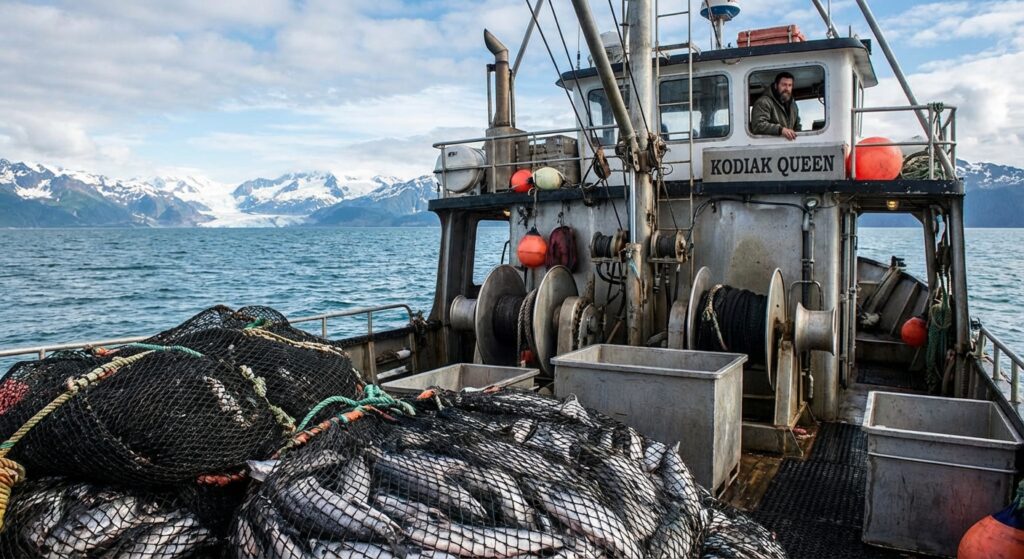
Alaska Commercial Fishing Income Taxes 2026: Complete Tax Strategy Guide for Fishermen
Alaska commercial fishing income taxes represent one of the most complex and frequently overlooked tax challenges facing fishing business owners. For the 2026 tax year, commercial fishermen face significant tax planning decisions that can result in substantial savings or costly mistakes. Whether you operate as a sole proprietor, LLC, S Corporation, or partnership, understanding how to properly report fishing income and maximize available deductions is critical to protecting your bottom line. This comprehensive guide covers everything Alaska commercial fishing income taxes for 2026, including self-employment tax obligations, quarterly estimated payments, deductible business expenses, and strategic entity structure considerations.
Table of Contents
- Key Takeaways
- How Is Commercial Fishing Income Reported for Tax Purposes?
- What Are the Self-Employment Tax Obligations for Alaska Fishermen?
- Which Business Deductions Reduce Alaska Fishing Income Taxes?
- How Do Quarterly Estimated Taxes Work for Commercial Fishermen?
- Should You Form an S Corp or LLC to Reduce Alaska Commercial Fishing Income Taxes?
- What Are the Alaska State Tax Considerations for Commercial Fishing?
- Uncle Kam in Action: Alaska Fisherman Success Story
- Next Steps
- Frequently Asked Questions
Key Takeaways
- Fishing income is reported on Schedule C (Form 1040) or through corporate returns depending on entity structure; self-employment tax applies to 92.35% of net fishing profits.
- For 2026, self-employment tax rate is 15.3% (12.4% Social Security on earnings up to $168,600 plus 3.9% Medicare); Social Security wage base is $168,600.
- Qualifying business deductions include vessel maintenance, fuel, nets/equipment, ice, licensing fees, insurance, and depreciation; tracking these reduces taxable income significantly.
- Quarterly estimated tax payments (Form 1040-ES) are required if expected tax liability exceeds $1,000; quarterly deadlines are April 15, June 15, September 15, and January 15.
- Strategic use of S Corp election or LLC formation can reduce self-employment taxes by 25-35% for mid-to-high income fishing businesses earning $150,000+ annually.
How Is Commercial Fishing Income Reported for Tax Purposes?
Quick Answer: Commercial fishing income is reported on Schedule C as self-employment business income for sole proprietors and partnerships, or on corporate tax returns (Form 1120-S or 1120) if structured as an S Corporation or C Corporation.
The way you report your Alaska commercial fishing income taxes depends directly on your business structure. Most independent commercial fishermen operate as sole proprietorships, which means all fishing income flows through personal tax returns and is subject to both income tax and self-employment tax. This is the simplest structure but often the least tax-efficient for higher-income fishing operations.
For 2026, if you’re a sole proprietor or operate as a partnership, your fishing income must be reported on Schedule C (Profit or Loss from Business). This form requires you to detail gross income from fishing activities, deduct all qualifying business expenses, and calculate net profit. This net profit then flows to your Form 1040 personal income tax return and becomes subject to self-employment tax.
Understanding Gross Fishing Income Reporting
Gross fishing income includes all revenue from catch sales, plus the fair market value of any fish retained for personal use. If you sell your catch to a processor, dock, or directly to consumers, all proceeds count as gross income. Many Alaska fishermen receive 1099-MISC or 1099-NEC forms from fish processors documenting annual sales.
- Document all catch sales with invoices, processor receipts, or bank deposits.
- Record the fair market value if you barter fish or retain catch for personal consumption.
- Reconcile income reported on 1099 forms with your actual sales documentation.
- Maintain detailed catch logs showing species, weight, date, and sale price.
Schedule C Reporting Requirements
Schedule C asks for detailed accounting of business operations. You’ll need to report gross income, cost of goods sold (COGS) if applicable, and all deductible business expenses. For commercial fishing, most expenses are ordinary and necessary deductions that reduce your taxable income dollar-for-dollar.
Pro Tip: Keep your Schedule C filing consistent year-to-year. If your 2026 fishing business operations change significantly, document those changes on the return to avoid IRS scrutiny.
What Are the Self-Employment Tax Obligations for Alaska Fishermen?
Quick Answer: For 2026, self-employment tax is 15.3% of net fishing income (after deducting 50% of self-employment tax). This comprises 12.4% Social Security tax on earnings up to $168,600 and 3.9% Medicare tax on all net earnings with no cap.
Self-employment tax is one of the largest tax expenses for Alaska commercial fishermen. Unlike W-2 employees who split payroll taxes with employers, self-employed fishermen pay both employer and employee portions—a total of 15.3%. Understanding this obligation and planning accordingly separates successful tax strategists from those who face cash flow surprises at filing time.
For the 2026 tax year, the Social Security wage base is $168,600. This means the 12.4% Social Security portion of self-employment tax only applies to net fishing income up to $168,600. Any income above this threshold is not subject to Social Security tax but remains subject to the 3.9% Medicare tax, which has no income limit.
Calculating Self-Employment Tax for Alaska Fishing Operations
The IRS provides Form SE (Schedule SE) to calculate self-employment tax. You multiply net fishing income by 92.35% to determine your self-employment income base. This percentage accounts for the deductibility of the employer portion of self-employment tax.
Here’s a practical 2026 example: If your net fishing income is $200,000, your self-employment income base is $200,000 × 92.35% = $184,700. You then calculate Social Security tax on the first $168,600 ($168,600 × 12.4% = $20,866) and Medicare tax on all $184,700 ($184,700 × 2.9% = $5,356, after accounting for the employer deduction). Total self-employment tax would be approximately $26,222.
Self-Employment Tax Payment and Deduction
A significant benefit is that you can deduct 50% of your self-employment tax when calculating adjusted gross income (AGI). This reduces your income tax liability and is included in the $200,000 to $168,600 calculation above. Additionally, you may be able to deduct self-employment tax contributions to a qualified retirement plan (SEP-IRA or Solo 401k), providing another tax savings opportunity.
Did You Know? By strategically forming an S Corporation and paying yourself a reasonable W-2 salary while taking distributions, you can potentially reduce self-employment tax by 20-35% compared to sole proprietorship—a strategy many high-income Alaska fishermen miss.
Which Business Deductions Reduce Alaska Fishing Income Taxes?
Quick Answer: Qualify deductible fishing expenses include vessel maintenance and repairs, fuel and oil, nets and fishing gear, ice and bait, licensing and permits, insurance, depreciation, and home office expenses—each directly reducing your taxable fishing income.
Business deductions are your primary tool for reducing Alaska commercial fishing income taxes. The IRS allows any ordinary and necessary business expense to be deducted from gross income. The key is understanding which expenses qualify and maintaining meticulous documentation. Many Alaska fishermen leave money on the table by failing to claim legitimate deductions.
Vessel-Related Deductions
Your fishing vessel is typically your largest business asset, and associated costs represent significant deductible expenses. Maintenance and repairs are fully deductible in the year incurred. Major repairs that extend the vessel’s life must be depreciated over time using MACRS (Modified Accelerated Cost Recovery System).
- Fuel and Oil: Fully deductible; track by gallon and price for records.
- Vessel Insurance: Fully deductible hull, liability, and workers’ comp policies.
- Moorage and Dockage: Monthly or annual berthing fees fully deductible.
- Engine Repairs and Maintenance: Oil changes, filter replacements, seasonal overhauls.
- Haul-Out and Bottom Cleaning: Annual maintenance fully deductible.
Fishing Gear and Equipment Deductions
Nets, lines, traps, hooks, and other fishing equipment used to catch fish are deductible. If your equipment costs less than the Section 179 expensing limit ($1,160,000 for 2026), you can deduct the full cost in the year purchased rather than depreciating it over several years. This acceleration provides immediate tax relief.
- Nets and Gear: Fully deductible or Section 179 eligible.
- Hooks, Lines, and Bait: Consumed inventory items, fully deductible.
- Electronic Equipment: GPS, fish finders, radios subject to depreciation or Section 179.
- Replacement Gear: Damaged or worn equipment replacement costs fully deductible.
Operating Expenses and Licensing Deductions
Numerous operational expenses are fully deductible. Alaska commercial fishing licenses, permits, and allocations are business expenses that reduce taxable income. Ice for fish preservation, bait purchases, and other consumable supplies directly used in fishing operations are fully deductible.
| Deductible Expense Category | 2026 Tax Treatment |
|---|---|
| Commercial Fishing Licenses & Permits | Fully deductible in year paid |
| Ice and Bait Supplies | Fully deductible as supplies consumed |
| Professional Dues (Fishermen’s Association) | Fully deductible if directly related to trade |
| Marketing and Sales Expenses | Fully deductible for selling fish |
| Office Equipment and Supplies | Deductible if used for business (computers, phones) |
| Vehicle Expenses (fishing-related) | Mileage or actual expenses for fishing business trips |
Pro Tip: Keep a detailed log of all business expenses, including date, amount, vendor, and business purpose. The IRS is more likely to allow deductions that are well-documented and organized. For vehicle expenses, track mileage separately by trip purpose.
How Do Quarterly Estimated Taxes Work for Commercial Fishermen?
Quick Answer: Commercial fishermen must pay estimated quarterly taxes using Form 1040-ES if they expect to owe $1,000 or more. Payments are due April 15, June 15, September 15, and January 15 of the following year.
Unlike W-2 employees who have taxes withheld throughout the year, self-employed commercial fishermen must make quarterly estimated tax payments directly to the IRS. Failure to make these payments can result in penalties and interest, even if you ultimately owe nothing at tax time. For 2026, understanding estimated tax requirements is essential to managing your cash flow and tax liability.
Calculating Your Quarterly Estimated Tax Payments
To calculate quarterly estimated taxes, you need to project your 2026 income based on previous years’ performance. Take your estimated annual net fishing income, multiply by your expected tax rate (combined federal income tax and self-employment tax), and divide by four to get quarterly payment amounts.
Here’s a practical calculation: If you expect $250,000 in fishing income for 2026 with estimated total tax liability of $95,000, each quarterly payment would be approximately $23,750. If your actual income differs significantly, you can adjust future quarterly payments without penalty, provided you meet the safe harbor requirements (either 90% of current year tax or 100% of prior year tax).
Quarterly Estimated Tax Payment Deadlines and Safe Harbor Rules
For 2026, quarterly estimated tax payments are due on these dates: Q1 April 15, Q2 June 15, Q3 September 15, and Q4 January 15, 2027. The IRS has safe harbor rules that protect you from underpayment penalties if you meet specific requirements.
- Pay 90% of your 2026 tax liability through quarterly payments and tax withholding, or
- Pay 100% of your 2025 tax liability (or 110% if your 2025 AGI exceeded $150,000).
Most commercial fishermen benefit from the prior-year safe harbor rule, which allows them to base 2026 quarterly payments on their 2025 actual tax liability. This provides predictability and eliminates guesswork about income changes.
Pro Tip: Set aside 30-35% of your quarterly fishing income in a dedicated tax savings account. This ensures you have cash available for estimated tax payments and reduces financial stress at payment deadlines.
Should You Form an S Corp or LLC to Reduce Alaska Commercial Fishing Income Taxes?
Quick Answer: For commercial fishermen earning $150,000+ annually, electing S Corporation status can reduce self-employment taxes by 20-35%. This involves forming an LLC and electing corporate tax treatment, then paying yourself a reasonable W-2 salary while taking distributions subject only to income tax.
One of the most significant tax strategies for Alaska commercial fishermen is the S Corporation election. This is where our entity structuring services become valuable for fishing operations. Many successful Alaska fishermen dramatically reduce their tax burden by structuring their business as an S Corporation rather than operating as sole proprietors or traditional partnerships.
How S Corporation Election Reduces Self-Employment Tax
When you operate as a sole proprietor, 100% of your net fishing income is subject to self-employment tax (15.3%). With an S Corporation, you split income into two categories: W-2 wages subject to payroll tax (but not self-employment tax) and distributions subject to income tax only (no self-employment tax). This split is the key to substantial savings.
Here’s a concrete 2026 example: A commercial fisherman with $250,000 net income operating as a sole proprietor pays approximately $35,335 in self-employment tax. That same fisherman could elect S Corporation status, pay themselves $150,000 W-2 salary and take $100,000 in distributions. W-2 wages trigger payroll tax but not self-employment tax, while distributions avoid both payroll and self-employment tax entirely—saving approximately $8,000-$12,000 annually.
LLC Versus S Corporation for Alaska Fishermen
Many commercial fishermen ask whether an LLC is better than an S Corporation. The answer depends on your income level and business complexity. An LLC (Limited Liability Company) provides liability protection but doesn’t automatically reduce self-employment taxes unless you make an election to be taxed as an S Corporation.
The optimal structure for most Alaska commercial fishermen is an LLC taxed as an S Corporation. This provides liability protection plus the self-employment tax benefits of S Corp treatment. You file Articles of Organization to form the LLC, then file Form 2553 with the IRS to elect S Corporation tax treatment. Our Alaska tax preparation services help fishermen navigate this complex filing process correctly.
Pro Tip: Don’t attempt S Corporation formation without professional guidance. The IRS scrutinizes reasonable salary determinations, and incorrectly structured S Corps can face audit challenges. A reasonable W-2 salary must reflect the actual services you perform for your fishing business.
What Are the Alaska State Tax Considerations for Commercial Fishing?
Quick Answer: Alaska has no state income tax, but commercial fishermen must still file federal taxes and may need to pay state fisheries taxes or licensing fees. Sales tax does not apply to commercial fishing operations in most circumstances.
One major advantage for Alaska commercial fishermen is the absence of state income tax. Unlike fishermen in other states, you don’t pay Alaska income tax on your fishing income, which provides substantial tax savings compared to coastal states with high state tax rates. However, this doesn’t mean Alaska has no fishing-related taxes or obligations.
Alaska Fisheries Taxes and Licensing Requirements
Alaska charges commercial fishing license fees and some fisheries assess taxes on landings. These are state-level obligations separate from federal income taxes. You must check with the Alaska Department of Fish and Game to understand specific licensing and fee requirements for your fishery.
- Commercial Fishing License fees vary by species and region.
- Quota share permits or limited entry permits may have associated fees.
- Some fisheries assess landing taxes paid to the state.
- Vessel registration requirements apply in Alaska.
Federal Tax Planning for Alaska Fishermen
Since Alaska has no state income tax, your focus is entirely on federal tax minimization. This makes federal tax strategy even more critical than in other states. Working with professional tax strategists who understand commercial fishing operations ensures you’re not leaving money on the table through missed deductions or inefficient business structures.
Did You Know? The absence of Alaska state income tax makes federal tax optimization particularly valuable. Every dollar saved on federal taxes goes directly to your bottom line without state tax complications that fishermen in other states face.

Uncle Kam in Action: Alaska Fisherman Saves $34,500 Annually Through S Corporation Strategy
Client Snapshot: Marcus is a 42-year-old salmon fisherman based in Southeast Alaska operating a single-boat commercial fishing operation. He has been fishing for 18 years and consistently maintains healthy catch volumes across multiple seasons.
Financial Profile: Marcus’s fishing operation generated $380,000 in annual gross revenue with approximately $95,000 in documented business expenses (fuel, maintenance, licensing, equipment). After expenses, his net fishing income averaged $285,000 annually for the past three years.
The Challenge: Operating as a sole proprietor for 15 years, Marcus paid substantial self-employment taxes on his full net income. For 2026, he faced approximately $42,100 in self-employment tax liability on his $285,000 net income. Despite earning excellent income, he struggled with cash flow because of high quarterly estimated tax payments. Additionally, Marcus had received IRS notices about potential deduction inconsistencies and wanted professional guidance to ensure full compliance.
The Uncle Kam Solution: Our tax strategists recommended Marcus form an Alaska LLC and elect S Corporation tax status beginning in 2026. We conducted a comprehensive analysis of his business operations to determine reasonable W-2 salary versus distributions. Based on his fishing activities, we established a $180,000 annual W-2 salary (reflecting reasonable compensation for his fishing labor and business management) with the remaining $105,000 of net income taken as S Corporation distributions. We also performed a detailed deduction audit and identified an additional $18,000 in legitimate business expenses Marcus had overlooked, including office equipment depreciation and additional vehicle expenses properly allocated to fishing operations.
The Results:
- Self-Employment Tax Savings: $34,500 annually. By splitting income into W-2 wages and distributions, Marcus reduced self-employment tax from $42,100 to approximately $27,600 (self-employment tax applies only to W-2 equivalent wages, not S Corp distributions).
- Additional Deduction Savings: $5,400 in income tax savings from the $18,000 in newly identified deductions (at his 30% effective tax rate).
- Investment: A one-time investment of $3,500 for entity formation and S Corporation election, plus $2,400 annually for enhanced tax preparation and compliance.
- Return on Investment (ROI): In the first 12 months, Marcus achieved nearly $37,000 in total tax savings against $5,900 in Uncle Kam fees—a remarkable 6.3x return on investment. Over five years, Marcus projects cumulative savings exceeding $165,000.
This is just one example of how our proven tax strategies have helped clients across Alaska achieve significant savings and financial peace of mind. Marcus now has better cash flow, greater liability protection through his LLC structure, and confidence that his tax filings are compliant and optimized.
Next Steps
Take action today to optimize your Alaska commercial fishing income taxes for 2026:
- Gather 2025 Tax Records: Collect your prior year tax return, 1099 forms from fish processors, business expense documentation, and vessel/equipment records. This information is essential for accurate 2026 planning.
- Calculate Your Income Projection: Estimate your 2026 net fishing income based on expected catch volumes and historical pricing. This helps determine whether S Corporation election makes financial sense for your operation.
- Review Your Current Entity Structure: Determine whether you’re operating as a sole proprietor, partnership, or already have an LLC. Understanding your current structure is the foundation for any tax optimization strategy.
- Schedule a Tax Strategy Consultation: Our team specializes in Alaska commercial fishing tax planning. We can evaluate your specific situation, calculate potential tax savings, and implement the optimal entity structure and tax strategy. Contact our Alaska tax preparation services today to schedule your personalized consultation.
- Plan Your Quarterly Estimated Taxes: Don’t get surprised by quarterly tax payment deadlines. Set up a system to reserve funds for April 15, June 15, September 15, and January 15 payments.
Pro Tip: Don’t wait until tax season to address your fishing business taxes. Strategic planning in the first months of 2026 allows you to make structural decisions that provide immediate tax benefits rather than discovering optimization opportunities after the year ends.
Frequently Asked Questions
Do I need to file quarterly estimated taxes as a commercial fisherman?
Yes, if you expect your 2026 tax liability to exceed $1,000 after accounting for any withholding, you must file quarterly estimated tax payments using Form 1040-ES. Most commercial fishermen with net income above $75,000 need quarterly payments. Failing to make these payments results in IRS penalties and interest, even if you ultimately receive a refund at tax time.
What deductions can I claim for my fishing vessel?
Deductible fishing vessel expenses include maintenance and repairs, fuel and oil, moorage fees, insurance, depreciation, and haul-out costs. Major renovations extending useful life must be depreciated. Keep detailed records with dates, amounts, and business purposes. The key is that expenses must be ordinary and necessary for your fishing operations. Equipment under $2,500 may qualify for immediate expensing under Section 179 rules.
Is Alaska fishing income subject to self-employment tax?
Yes, for 2026, self-employment tax of 15.3% applies to 92.35% of your net fishing income (as a sole proprietor). This comprises 12.4% Social Security tax on income up to $168,600 and 3.9% Medicare tax on all net earnings. If you form an S Corporation and take distributions, those distributions escape self-employment tax, creating significant savings. However, you must pay reasonable W-2 wages that are subject to payroll taxes.
What’s the difference between business income and capital gains for commercial fishermen?
Fishing income from catch sales is ordinary business income subject to self-employment tax. Capital gains would apply only if you sold a fishing vessel or major equipment for more than your cost basis (adjusted for depreciation). In most cases, fishing vessels depreciate rather than appreciate, so capital gains are rare. If you eventually sell your vessel, consult a tax professional about potential depreciation recapture and Section 1231 treatment.
Can I deduct the cost of fishing gear and nets?
Yes, fishing gear including nets, lines, hooks, and traps are deductible. If the item costs less than the Section 179 expensing limit ($1,160,000 for 2026), you can deduct the entire cost in the year purchased. Alternatively, you can depreciate gear over its useful life using MACRS. The key is maintaining clear documentation showing the purchase date, cost, and business purpose. Replacement gear for damaged items is fully deductible.
Should I incorporate my Alaska fishing business?
For most commercial fishermen earning $150,000+ annually, forming an LLC taxed as an S Corporation provides substantial self-employment tax savings (typically 20-35% reduction). The optimal structure depends on your income level, liability concerns, and long-term business plans. For lower-income operations, the administrative costs of incorporation may exceed tax benefits. We recommend a professional analysis before deciding. Those earning under $100,000 typically benefit from remaining as sole proprietors unless liability is a major concern.
What if I don’t receive a 1099 form from my fish processor?
You must still report all fishing income even if you don’t receive a 1099 form. The IRS may cross-reference your reports with processor filings, and failure to report creates audit risk. Keep detailed personal records of all sales including catch logs, weight documentation, and payment receipts. If you don’t receive expected 1099 forms, follow up with processors and the IRS if necessary to ensure correct reporting.
Can I deduct home office expenses for my fishing business?
Yes, if you use a home office exclusively for fishing business purposes (record-keeping, administrative tasks, business planning), you can deduct home office expenses. Use either the simplified method ($5 per square foot up to 300 sq ft) or calculate actual expenses (utilities, rent, insurance, maintenance). For a 150 sq ft office, the simplified method would provide a $750 annual deduction. Keep detailed records showing exclusive business use.
What happens if my income exceeds the Social Security wage base in 2026?
For 2026, the Social Security wage base is $168,600. Income above this amount is not subject to the 12.4% Social Security tax portion of self-employment tax, but it remains subject to the 3.9% Medicare tax with no cap. So if your net income is $250,000, you pay Social Security tax on $168,600 and Medicare tax on $250,000. This is actually beneficial because it results in a lower overall self-employment tax rate on higher incomes compared to lower-income operations.
This information is current as of 01/20/2026. Tax laws change frequently. Verify updates with the IRS (IRS.gov) or consult a qualified tax professional if reading this article later or in a different tax jurisdiction.
Last updated: January, 2026