
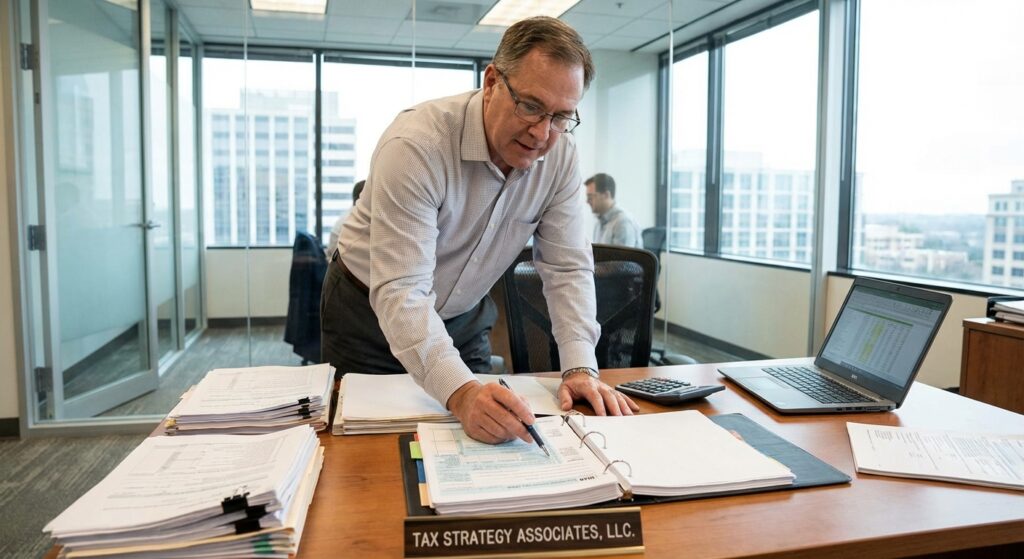
Alabama Tax Advisor 2025: Complete Guide to Working with Tax Professionals for Maximum Deductions
For the 2025 tax year, working with an experienced Alabama tax advisor is more valuable than ever. With the recent tax strategy legislation and significant changes introduced by the One Big Beautiful Bill Act, professional guidance can save Alabama residents thousands of dollars. Whether you’re a business owner, freelancer, real estate investor, or high-income professional, an Alabama tax advisor helps you navigate complex deductions, credits, and compliance requirements while maximizing your tax efficiency.
Table of Contents
- Key Takeaways
- What Does an Alabama Tax Advisor Do?
- Why Hire an Alabama Tax Advisor in 2025?
- How 2025 Tax Changes Impact Alabama Residents
- Essential Tax Deductions an Alabama Tax Advisor Can Maximize
- Understanding Alabama State Taxes vs. Federal Taxes
- How to Select the Right Alabama Tax Advisor for Your Situation
- Uncle Kam in Action: Alabama Entrepreneur Saves $28,500
- Next Steps
- Frequently Asked Questions
Key Takeaways
- An experienced Alabama tax advisor provides year-round tax planning to minimize your 2025 tax liability.
- For the 2025 tax year, the standard deduction is $15,750 (single) and $31,500 (married filing jointly).
- New 2025 deductions include overtime pay ($12,500), tips ($25,000), and a senior deduction ($6,000).
- Professional tax advisors identify overlooked deductions worth thousands by understanding Alabama-specific tax rules.
- The SALT cap increased to $40,000 for 2025, benefiting high-income Alabama residents with state and local taxes.
What Does an Alabama Tax Advisor Do?
Quick Answer: An Alabama tax advisor provides strategic tax planning, prepares accurate returns, identifies deductions, and ensures compliance with state and federal tax laws specific to Alabama’s tax code.
An Alabama tax advisor is a qualified professional who specializes in helping individuals and businesses minimize tax liability while remaining fully compliant with IRS and Alabama Department of Revenue regulations. Unlike a basic tax preparer who simply files your return, a tax advisor takes a proactive, strategic approach to your finances throughout the year.
Tax advisors in Alabama work with various credentials, including CPAs (Certified Public Accountants), Enrolled Agents (EAs), and tax attorneys. Each brings different expertise levels and specializations to help Alabama residents and businesses optimize their tax positions.
Core Services Provided by Alabama Tax Advisors
- Year-Round Tax Planning: Rather than waiting until April, advisors develop comprehensive tax strategies throughout the year to reduce your 2025 tax burden.
- Deduction Identification: Professional advisors know every available deduction and credit under current 2025 tax law that applies to your specific situation.
- Entity Structure Optimization: For business owners, advisors determine whether an LLC, S Corporation, C Corporation, or sole proprietorship minimizes taxes.
- Quarterly Tax Estimates: Self-employed professionals receive guidance on estimated quarterly payments for 2025 to avoid penalties.
- Audit Representation: If the IRS audits your return, your advisor represents your interests and handles all communications.
The Difference Between Tax Preparers and Tax Advisors
Many Alabama residents confuse tax preparers with tax advisors. A tax preparer files your completed return based on information you provide. A tax advisor goes further—they analyze your complete financial picture, identify optimization opportunities, and implement strategies that reduce your 2025 taxes before filing.
Think of it this way: a tax preparer is reactive, working with numbers after the year ends. A tax advisor is proactive, making strategic decisions throughout the year that legally minimize your tax exposure. For Alabama residents facing complex situations—multiple income sources, rental properties, business ownership—the advisor’s proactive approach typically saves far more than the additional cost.
Why Hire an Alabama Tax Advisor in 2025?
Quick Answer: The 2025 tax landscape is more complex than ever, with new deductions, changing regulations, and Alabama-specific tax considerations that professional advisors navigate expertly to save you thousands.
The 2025 tax year brings unprecedented complexity. The One Big Beautiful Bill Act introduced multiple new deductions and expanded credits that most people don’t know about. An Alabama tax advisor stays current with all 2025 changes and applies them strategically to your situation.
Tangible Financial Benefits of Professional Tax Advice
| Benefit Category | 2025 Examples | Estimated Impact |
|---|---|---|
| Missed Deductions | Home office, equipment, travel | $2,000-$8,000 |
| New 2025 Deductions | Overtime pay, tips, senior deduction | $1,500-$12,500 |
| Entity Structure | S Corp vs. LLC decision | $3,000-$15,000 |
| SALT Deduction | Now $40,000 cap for 2025 | $1,000-$6,000 |
| Tax Credit Optimization | Child Tax Credit, education credits | $500-$4,000 |
According to national studies, taxpayers who work with a professional Alabama tax advisor save an average of $3,000-$7,000 annually compared to DIY filers. For business owners and high-income professionals, the savings often exceed $10,000-$25,000 per year.
Pro Tip: An Alabama tax advisor often pays for themselves in tax savings alone. If you earn over $100,000 annually or own a business, professional tax guidance is virtually always worth the investment.
Peace of Mind and Reduced Audit Risk
Beyond financial savings, an Alabama tax advisor provides peace of mind. You know your return is accurate, properly supported by documentation, and optimized within the law. Professional advisors maintain records, follow IRS guidelines, and can defend your return if audited.
Taxpayers who prepare their own returns without professional guidance face substantially higher audit risks, especially for business expenses, home office deductions, and investment income. When the IRS questions your return, having professional documentation and advisor representation makes the process less stressful and typically results in better outcomes.
How 2025 Tax Changes Impact Alabama Residents
Quick Answer: For 2025, Alabama residents benefit from increased standard deductions, new earned income deductions, expanded SALT caps, and higher child tax credits—all requiring strategic planning to maximize.
The One Big Beautiful Bill Act, enacted July 4, 2025, introduced changes that directly affect how Alabama residents calculate their 2025 taxes. An experienced Alabama tax advisor understands each provision and how they interact with your personal situation.
2025 Standard Deduction Increases
For tax year 2025, standard deductions increased due to inflation adjustments:
- Single Filers: $15,750 (up from $15,000 in 2024)
- Married Filing Jointly: $31,500 (up from $30,000 in 2024)
- Head of Household: $23,625 (up from $22,500 in 2024)
An Alabama tax advisor helps you determine whether to claim the standard deduction or itemize. For 2025, with the expanded SALT deduction cap at $40,000, more Alabama residents benefit from itemizing, especially those with high property taxes or significant charitable contributions.
New 2025 Earned Income Deductions
The 2025 tax year introduces unprecedented deductions for working Alabama residents. These are NOT exemptions but temporary deductions lasting through 2028:
- Overtime Pay Deduction: Up to $12,500 annually ($25,000 for joint filers) of overtime compensation is now tax-deductible, phasing out for incomes over $150,000.
- Tipped Income Deduction: Up to $25,000 in tipped wages is deductible (separate from regular income), valuable for restaurant workers and service industry professionals in Alabama.
- Car Loan Interest Deduction: A limited deduction for auto loan interest becomes available for Alabama residents beginning 2026.
Did You Know? Most Alabama workers earning overtime don’t realize they can now deduct this income. An advisor identifies this opportunity and ensures proper documentation for IRS compliance.
SALT Deduction Expansion for 2025
For 2025, the state and local tax (SALT) deduction cap increased from $10,000 to $40,000. This benefits Alabama residents with high property taxes or significant state income tax withholding. The expanded cap begins phasing out at $500,000 MAGI ($600,000 for joint filers), reducing by $0.30 for each dollar over the threshold.
An Alabama tax advisor calculates your exact SALT deduction eligibility and determines whether claiming the standard deduction or itemizing produces greater tax savings for your 2025 return.
Essential Tax Deductions an Alabama Tax Advisor Can Maximize
Quick Answer: An experienced Alabama tax advisor identifies overlooked deductions across home office, business expenses, investment losses, charitable contributions, and new 2025 provisions that reduce your taxable income.
Most Alabama residents leave thousands in unclaimed deductions on the table. An Alabama tax advisor systematically identifies every applicable deduction, ensuring you receive the maximum tax benefit allowed by law.
Self-Employment and Business Deductions
For Alabama freelancers, contractors, and business owners, deductions can reduce taxable income by 30-50%. Common deductions include:
- Home office space (square footage method or simplified $5/sq.ft.)
- Equipment, software, and technology (depreciation or Section 179 expensing)
- Advertising, marketing, and professional services
- Vehicle expenses (actual or mileage method at 67.5 cents/mile for 2025)
- Travel, meals, and entertainment (50% deductible for meals)
- Education and professional development
- Health insurance (self-employed health insurance deduction)
Investment and Rental Property Deductions
Alabama real estate investors benefit from substantial deductions. An experienced advisor optimizes depreciation, cost segregation, and passive loss deductions to minimize tax impact while ensuring compliance with IRS rules.
Rental property owners can deduct mortgage interest, property taxes, insurance, repairs, maintenance, utilities, and depreciation. The 2025 tax year allows continued depreciation strategies that significantly reduce taxable rental income.
Understanding Alabama State Taxes vs. Federal Taxes
Quick Answer: Alabama has its own state income tax (2%-5.75% based on income brackets), which works alongside federal taxes. An Alabama tax advisor optimizes strategies for BOTH state and federal returns.
Many Alabama residents focus only on federal taxes, missing state-specific opportunities. Alabama imposes its own income tax with brackets ranging from 2% to 5.75%, depending on income level. Strategies that reduce federal taxes often reduce Alabama taxes proportionally, but state-specific considerations exist.
Alabama State Income Tax Brackets for 2025
| Filing Status | 2% Bracket | 4% Bracket | 5% Bracket | 5.75% Bracket |
|---|---|---|---|---|
| Single | Up to $3,650 | $3,651-$7,300 | $7,301-$10,950 | Over $10,950 |
| Married Filing Jointly | Up to $7,300 | $7,301-$14,600 | $14,601-$21,900 | Over $21,900 |
An Alabama tax advisor ensures you claim all deductions available under both state and federal rules, potentially producing different results on each return. Some deductions reduce federal taxable income without affecting Alabama, and vice versa.
How to Select the Right Alabama Tax Advisor for Your Situation
Quick Answer: Choose an Alabama tax advisor with relevant credentials (CPA, EA, tax attorney), experience with your specific situation (business owner, investor, W-2 employee), and a proactive planning approach rather than just return preparation.
Finding the right Alabama tax advisor requires evaluating credentials, experience, and approach. Not all tax professionals are equally qualified for every situation. Here’s how to identify an advisor who delivers maximum value for your circumstances.
Credentials That Matter
The most recognized tax advisor credentials include:
- CPA (Certified Public Accountant): Requires comprehensive education, experience, and exam passage. CPAs can represent clients before the IRS and provide the broadest range of services.
- EA (Enrolled Agent): IRS-credentialed tax specialist who can represent clients in audits and appeals. Less restrictive credentials than CPA but highly qualified for tax work.
- Tax Attorney: Provides legal advice on complex tax situations and can represent you in tax court.
For most Alabama residents, a CPA or experienced EA with expertise in your industry (business, real estate, investments) is ideal. For complex situations involving legal implications, add a tax attorney to your team.
Essential Questions for Prospective Advisors
When interviewing an Alabama tax advisor, ask these critical questions:
- Do you provide year-round tax planning or only return preparation?
- What is your experience with my specific situation (business type, income level, tax complexity)?
- How do you stay current with 2025 tax law changes?
- Can you represent me in IRS correspondence and audits?
- What is your fee structure (hourly, flat fee, percentage)?
- Do you use tax planning software and maintain proper documentation?
Advisors who focus on proactive planning and staying current with regulations like the 2025 changes are better positioned to save you money than those offering low-cost return preparation.
Uncle Kam in Action: Alabama Entrepreneur Saves $28,500 with Strategic Tax Planning
Client Snapshot: Sarah, a Birmingham-based e-commerce business owner earning approximately $185,000 in annual business revenue, had previously filed her taxes using an online platform. She was concerned about missed deductions and tax efficiency for her growing business.
Financial Profile: Sarah reported $185,000 in gross business revenue with approximately $68,000 in documented expenses. She worked from a dedicated home office, employed one part-time employee, maintained business vehicles, and invested in professional development. Her overall household income (including a spouse’s W-2 income) was $245,000.
The Challenge: Sarah’s previous DIY tax returns missed substantial deductions available under 2025 tax law. She wasn’t taking advantage of the new home office deduction improvements, hadn’t optimized her vehicle expense documentation, and was using sole proprietor structure despite being eligible for S Corporation election—costing her unnecessary self-employment taxes.
The Alabama Tax Advisor Solution: Working with an experienced Alabama tax advisor, Sarah implemented a comprehensive 2025 tax strategy. The advisor recommended electing S Corporation status, identified $12,800 in additional home office and equipment deductions using the Section 179 expensing rules, optimized her vehicle mileage documentation, and ensured proper claiming of the expanded SALT deduction cap ($40,000 for 2025).
The Results:
- Tax Savings in 2025: $28,500 in reduced federal and state tax liability through S Corporation election ($18,200), additional deductions ($6,800), and SALT optimization ($3,500)
- Investment: A $3,200 one-time investment for S Corp election and comprehensive tax planning, plus $2,400 annual advisory fees
- Return on Investment (ROI): 5.6x return in the first year ($28,500 savings ÷ $5,600 total investment), with ongoing savings of $18,200+ annually from the S Corp structure alone
This is just one example of how our proven tax strategies have helped clients achieve significant savings and financial optimization. Sarah now works with her advisor year-round, implementing quarterly strategies to optimize her 2025 and future tax positions.
Next Steps
Taking action now maximizes your 2025 tax benefits. Here’s what to do next:
- Schedule a Consultation: Contact an Alabama tax advisor to discuss your 2025 situation before year-end. Early planning identifies more optimization opportunities than post-year consultation.
- Gather Documentation: Compile 2025 income statements, expense receipts, investment statements, and property records. Well-organized documentation accelerates planning and reduces advisor time.
- Evaluate Your Structure: If you own a business or have significant self-employment income, ask your advisor about entity selection for 2025 and beyond. S Corp election can save thousands annually.
- Implement Year-Round Planning: Move beyond April filing to quarterly tax planning sessions. This proactive approach identifies mid-year adjustments and ensures optimal year-end positioning.
- Get Professional Guidance: Our tax preparation services in Alabama specialize in helping residents navigate complex tax situations and maximize deductions for 2025.
Frequently Asked Questions
What’s the typical cost of working with an Alabama tax advisor?
Alabama tax advisor fees vary based on complexity. Simple W-2 returns might cost $200-$500, while business returns range from $1,500-$5,000+ annually. Many advisors charge hourly rates ($150-$350/hour) or flat fees for specific services. Despite the cost, professional tax planning typically returns 3-10x the advisor fee through tax savings.
When should I hire an Alabama tax advisor for 2025 planning?
The ideal time is immediately after year-end (January-February 2026) for strategic planning, or even earlier in December 2025 for year-end tax planning opportunities. However, many proactive clients work with advisors year-round, implementing quarterly strategies that provide maximum benefit.
How do the 2025 new deductions affect self-employed people?
The overtime pay deduction ($12,500) and tip deduction are temporary provisions through 2028. Self-employed individuals with overtime income or who receive tips can claim these deductions, reducing self-employment tax as well as income tax. An advisor helps classify income properly and ensures compliance with IRS documentation requirements.
Can I claim the SALT deduction increase of $40,000 in Alabama?
Yes. For the 2025 tax year, the SALT deduction cap increased from $10,000 to $40,000. Alabama residents with substantial property taxes, state income tax withholding, or other state/local taxes can benefit from this temporary increase. Your advisor determines whether claiming the standard deduction or itemizing produces greater savings.
Should I convert my Alabama business to an S Corporation?
S Corporation election makes sense if you have significant self-employment income ($60,000+), as the self-employment tax savings often exceed the additional administrative costs. However, this requires careful analysis. An advisor evaluates your specific income level, deductions, and situation to determine if S Corp election would benefit you for 2025 and beyond.
What documentation should I keep for 2025 tax deductions?
Keep detailed records for all claimed deductions: receipts, invoices, credit card statements, vehicle mileage logs, home office measurements, and business communication. The IRS requires supporting documentation for all deductions, and proper records protect you in audits. Many advisors recommend keeping documentation for 3-7 years.
Is an Alabama tax advisor necessary if I’m a W-2 employee with simple taxes?
For straightforward W-2 situations with standard deductions, you may not need ongoing advisory services. However, if you have side income, investment income, significant charitable contributions, substantial medical expenses, or other complexities, professional guidance often identifies deductions and credits worth far more than the advisor’s fee.
This information is current as of 12/23/2025. Tax laws change frequently. Verify updates with the IRS (IRS.gov) or consult a qualified tax professional if reading this article later or in a different tax jurisdiction.
Last updated: December, 2025

