
St. George Tax Preparation Services
Strategic, Accurate Tax Support for St. George’s Retirees, Investors, Professionals & Business Owners
St. George is one of the fastest-growing and most financially unique cities in Utah — powered by:
- Retirees with pension + SSA income
- High-income families relocating from CA, AZ, WA, and NV
- Real estate investors (STR/LTR boom)
- Remote tech and corporate workers
- Contractors, trades, and home-service professionals
- Tourism & hospitality workers
- Small business owners
- Medical professionals
- Entrepreneurs & multi-LLC operators
St. George taxpayers often manage:
- Complex retirement income
- Multi-state remote W-2/1099 income
- STR/LTR rental properties
- Large real estate portfolios
- K-1 partnership income
- Stock compensation & equity
- Capital gains from property sales
- Contractor/trade-specific deductions
- Business + W-2 blended households
Our St. George tax team provides precision filing + strategic long-term tax planning tailored to Southern Utah’s economy.
Why St. George Residents Choose Our Tax Preparation Firm
- Licensed CPAs & EAs with Utah expertise
- Specialists in retirement tax planning (huge St. George population)
- STR/LTR rental depreciation experts
- Multi-state filing specialists
- Stock compensation reporting
- Contractor & trades deduction optimization
- Bookkeeping cleanup for multi-LLC owners
- IRS correspondence, audits & amended returns
- Transparent flat-rate pricing
- MERNA™ long-term tax strategy included
St. George taxpayers require strategy-first tax preparation — not generic national software.

Tax Preparation Services for Individuals in St. George
We support:
- Retirees with pensions, SSA & IRA withdrawals
- High-income families
- Real estate investors
- Remote workers with out-of-state employers
- Contractors & trades
- Hospitality & tourism employees
- Healthcare workers
- Multi-state commuters
- Newly relocated Utah residents
- Self-employed professionals
Individual services include:
- Federal + Utah filing
- Multi-state W-2/1099 allocation
- STR/LTR rental depreciation
- Capital gains + investment reporting
- IRA/RMD & pension optimization
- Stock compensation (RSU/ESPP/ISO)
- K-1 partnership reconciliation
- IRS letters & amended returns
- Estimated quarterly taxes
- MERNA™ long-term optimization
St. George households benefit most from precise rental strategy + federal tax optimization, since Utah rates are moderate but federal exposure is high.

Tax Preparation Services for St. George Business Owners
St. George’s booming economy includes:
- Contractors & home-service companies
- Real estate investors
- Short-term rental operators
- Restaurants & hospitality
- Consultants & service providers
- E-commerce & online brands
- Wellness & medical practices
- Multi-LLC entrepreneurs
- Tourism-related businesses
Business tax services include:
- S-Corp, LLC, C-Corp & partnership filings
- Bookkeeping + cleanup
- Payroll setup + compliance
- Multi-entity accounting
- Depreciation & fixed-asset tracking
- Quarterly projections
- Multi-state business compliance
- Audit-ready financials
- MERNA™ entity optimization
We help St. George business owners become organized, profitable & fully compliant.
What Sets Our St. George Tax Preparers Apart
St. George taxpayers often deal with:
- Retirement income (SSA, pension, RMDs)
- Multi-property rental portfolios
- STR vs. LTR classification issues
- Remote W-2/1099 income from out-of-state employers
- Capital gains from property sales
- Contractor/trades deductions
- Investments & passive income
- K-1 partnership returns
- Multi-state residency changes
- High-net-worth tax optimization
We understand:
- Utah retirement & distribution rules
- STR depreciation rules (critical in St. George)
- Nevada/California relocation filings
- Capital gains timing for high-value property sales
- Multi-entity structuring
- IRS compliance for multi-income households
We engineer your tax plan, not just file your return.

Areas We Serve Across St. George & Washington County
St. George
Washington
Santa Clara
Ivins
Hurricane
Little Valley
Bloomington Hills
SunRiver
Desert Color
Stucki Farms
Coral Canyon
La Verkin (adjacent)
What St. George Clients Say

Case Study — St. George, UT
Client: L.S. — Retired Executive + STR Investor
Mix: Pension + SSA + STR income + LTR rentals + capital gains + multi-state W-2 history
Problem
- Incorrect STR classification
- Missing depreciation
- Pension & SSA incorrectly coordinated
- Multi-state history misallocated
- Capital gains basis incorrect
Solution
- Re-classified STR for optimal IRS treatment
- Built complete depreciation schedules
- Corrected SSA/pension taxation
- Repaired interstate allocation
- Cleaned capital gains data
- Applied MERNA™ long-term plan
Result:
S12,450 saved in the first year, with multi-year compound savings from the MERNA™ structure.
Model Your Taxes by State- Before You File

LLC vs S-Corp Tax Calculator
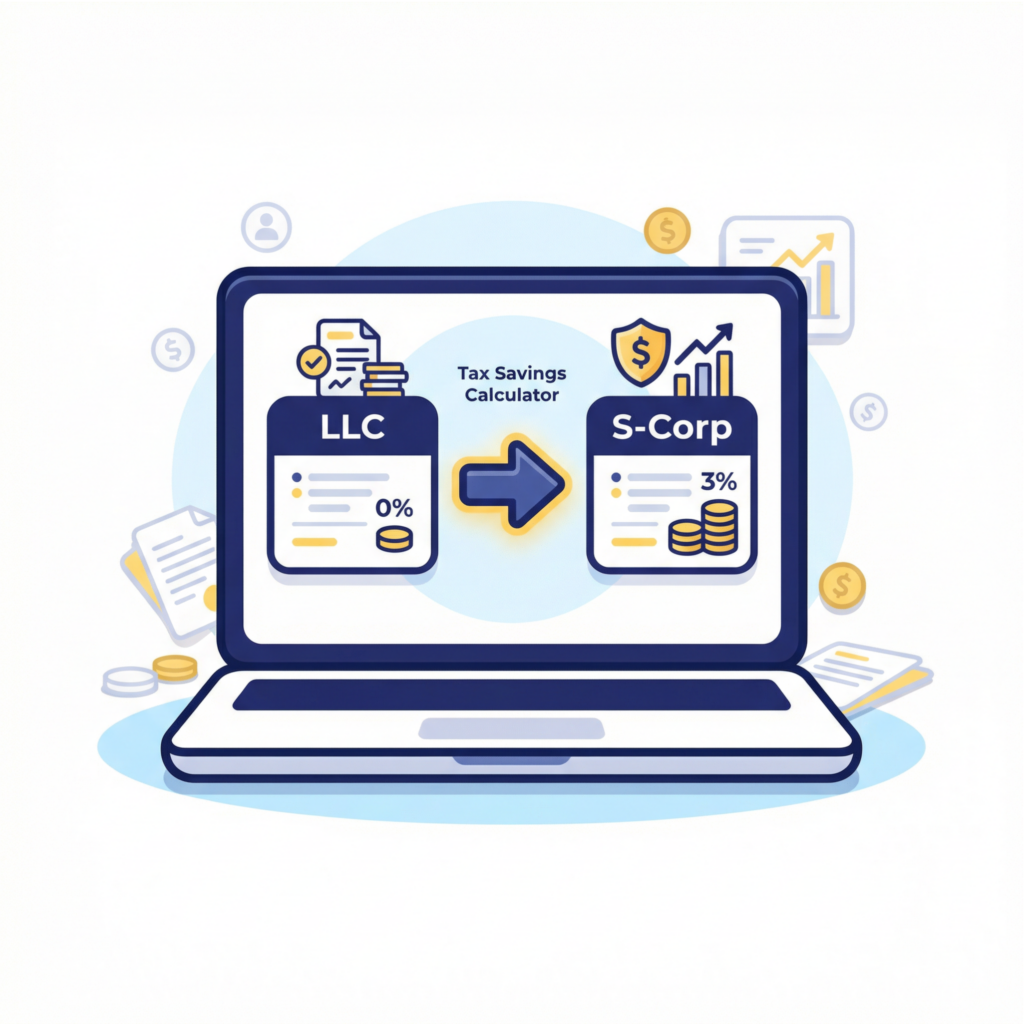
Self-Employment tax Calculator

Small Business Tax Calculator

Not TurboTax. Not H&R Block. A Real Strategy.
Software files your taxes. We engineer your tax strategy. There’s a difference — and it’s worth thousands.
We Find What They Miss
TurboTax asks questions. H&R Block fills out forms. Our MERNA™-certified strategists dig into your income, entity structure, and lifestyle to uncover deductions most CPAs overlook — legally saving clients $15K–$150K+ per year.
Strategy, Not Just Filing
Filing your return is the last step. We start months earlier — restructuring entities, layering write-offs, and building a tax plan that works year-round. By the time we file, you’ve already won.
A Real Strategist in Your Corner
No chatbots. No call centers. You get a dedicated, MERNA™-certified tax strategist who knows your situation, answers your questions, and fights for every dollar — every year.
Work With a St. George Tax Firm That Understands STRs, Retirees, Rentals & Multi-State Tax Strategy
Book a Free Strategy Call and Meet Your Match.
Professional, Licensed, and Vetted MERNA™ Certified Tax Strategists Who Will Save You Money.
FAQ — TAX PREPARATION IN ST GEORGE
As a small business owner operating a storefront near the St. George Terminal, what are the key local business taxes I need to be aware of beyond federal and New York State income taxes?
In St. George, you’ll primarily be concerned with New York State sales tax, which is 4% statewide plus an additional 4% for NYC, totaling 8.875% including the MTA surcharge. For your business, depending on its legal structure, you’ll also need to consider the NYC Unincorporated Business Tax (UBT) if you’re a sole proprietor or partnership, which applies a 4% tax on your net income above a certain threshold, and the New York State corporate franchise tax (Article 9-A) if you’re an S-corp or C-corp, with a minimum tax ranging from $25 to $5,000 based on payroll.
I'm a freelance tour guide specializing in the historic sites around St. George, like the Snug Harbor Cultural Center and the Staten Island Ferry. Can I deduct expenses for my MTA MetroCard or ferry travel as business expenses, and are there any specific New York State rules for self-employed professionals like me?
Yes, as a freelance tour guide, your MTA MetroCard and ferry fares used exclusively for business purposes (e.g., traveling between tour locations or meeting clients) are deductible business expenses under IRS Publication 529. Additionally, New York State generally conforms to federal deductions for business expenses. Remember to maintain meticulous records, as the IRS and NYS Tax Department can scrutinize transportation deductions, especially if there’s a commingling of personal and business use.
My family owns a multi-unit property in the Ward Hill neighborhood of St. George, and we rent out several units. What specific property tax exemptions or abatements might we qualify for in New York City, and what are the key deadlines for filing these applications?
As a property owner in Ward Hill, you might qualify for various NYC property tax exemptions, such as the Basic STAR (School Tax Relief) exemption for owner-occupied primary residences, or the Enhanced STAR for seniors. Additionally, specific abatements like the J-51 program for renovation of residential buildings could apply. The typical deadline for STAR applications is March 15th, and other abatements have varying application periods, so it’s crucial to check the NYC Department of Finance website annually for specific dates and eligibility criteria.
I'm a new remote employee for a tech startup based in California but I live and work from my apartment overlooking the harbor in St. George. How does this impact my state income tax filing, and will I owe taxes to both New York and California?
As a New York resident working remotely for an out-of-state company, you will primarily owe New York State income tax on all your earnings. New York has a ‘convenience of the employer’ rule, meaning if your employer is outside NY but you work from NY for your own convenience, your income is still considered NY-source. You generally won’t owe California income tax unless you perform services physically within California, but you would claim a credit for taxes paid to another state on your New York return if that were the case, to avoid double taxation.
Our construction company frequently takes on projects in the St. George area, including new developments and renovations. Are there any specific New York State sales tax rules or exemptions for materials purchased for construction projects that we should be aware of, especially regarding capital improvements?
Yes, in New York State, sales tax applies to most tangible personal property and services, but there are important exemptions for construction. Materials purchased for ‘capital improvements’ to real property are generally exempt from sales tax. A capital improvement is defined as work that substantially adds to the value of the real property, or prolongs its useful life, and becomes part of the real property. It’s crucial to issue properly completed Form ST-124, ‘Certificate of Capital Improvement,’ to your suppliers to claim this exemption, or you risk paying unnecessary sales tax.
I'm a performing artist who often performs at venues like the St. George Theatre and other local spots. Can I deduct expenses like costumes, makeup, and professional development workshops, and are there any specific limitations for artists under New York State tax law?
As a performing artist in St. George, you can indeed deduct legitimate business expenses such as costumes, professional makeup, headshots, agent fees, and professional development workshops related to your craft, as these are considered ordinary and necessary business expenses. While New York State generally conforms to federal Schedule C deductions for self-employed individuals, remember that the federal deduction for unreimbursed employee business expenses (miscellaneous itemized deductions) was eliminated by the TCJA until 2025, so ensure you are filing as a self-employed individual or independent contractor to claim these effectively.
Tax Strategists Serving All of Utah
Uncle Kam’s MERNA™-certified strategists serve cities across Utah. Find your nearest location.
View all Utah locations →