
Tax Preparation Services in Bridgeport, Connecticut
Bridgeport Tax Preparation Services
Strategic, Accurate Tax Support for Bridgeport’s Professionals, Healthcare Workers, Commuters, Contractors & Investors
Bridgeport is one of Connecticut’s most diverse and economically complex cities — home to healthcare systems, public-sector employees, educators, commuters traveling to nearby Fairfield County or New York, tradespeople, small business owners, and rental property investors. Because of the mixture of W-2 wages, 1099 contractor income, rental activity, multi-job households, and Connecticut’s tax structure, Bridgeport residents face more complexity than standard tax software can handle.
- W-2 wages from hospitals and local employers
- Multiple W-2s from part-time or shift work
- 1099 contracting or consulting income
- Income earned in New York or other states
- STR/LTR rental properties and multi-family buildings
- Stock compensation from remote employers
- Capital gains from home or investment property sales
- Social Security + pension combinations
- Side businesses or multi-income households
- IRS notices from improper past filings
- Healthcare professionals (Bridgeport Hospital, St. Vincent’s)
- Education & public-sector employees
- NYC and Fairfield County commuters
- Contractors & trades (construction, HVAC, electrical)
- Real estate investors (multi-family units & STRs)
- Retail & service workers
- Trucking & logistics staff
- Small business owners & self-employed workers
We provide high-accuracy tax preparation + long-term Connecticut-focused strategy, built around the income profiles of real Bridgeport residents.
Why Bridgeport Residents Choose Our Tax Preparation Firm
- Deep expertise with healthcare + public-sector taxation
- Correct handling of multi-W-2 and multi-income households
- STR & LTR rental depreciation for Bridgeport multi-family properties
- Accurate CT / NY commuter tax strategy
- Contractor & trade-deduction maximization
- Stock compensation reporting for remote workers
- IRS notices, audits & amended returns
- Full bookkeeping cleanup for business owners
- Transparent flat-rate pricing
- MERNA™ long-term tax planning included

Tax Preparation Services for Individuals in Bridgeport
- Healthcare workers
- Federal & state government employees
- Educators & school employees
- Contractors & tradesworkers
- Fairfield County & NYC commuters
- Real estate investors (STR/LTR)
- High-income families
- Remote tech & finance employees
- K-1 partners
- Retirees & veterans
- Federal + Connecticut tax filing
- CT/NY commuter income allocation
- Multi-W-2 reconciliation
- STR/LTR rental depreciation
- Stock compensation reporting
- Capital gains & investment tax strategy
- IRS notices & amended returns
- K-1 partnership income
- Pension + SSA timing
- Estimated tax planning
- MERNA™ long-term tax planning
Bridgeport residents benefit most from commuter optimization + rental depreciation + contractor deduction strategy.

Tax Preparation Services for Bridgeport Business Owners
- Construction & trades
- Logistics & trucking
- Restaurants & retail
- Real estate LLCs & property managers
- Childcare & service providers
- Consultants & advisors
- Small medical practices
- Multi-LLC entrepreneurs
- S-Corp, LLC, C-Corp & partnership filings
- Monthly bookkeeping + cleanup
- Payroll setup & compliance
- Multi-entity bookkeeping
- Depreciation schedules
- Quarterly forecasting
- Multi-state compliance (CT, NY, MA)
- Audit-ready financials
- MERNA™ entity optimization
We provide structure, clarity, and long-term planning so Bridgeport business owners stay profitable and IRS-compliant.
What Sets Our Bridgeport Tax Preparers Apart
- CT/NY commuter income
- Multi-W-2 or multi-job households
- STR/LTR rental depreciation
- Contractor & trade expenses
- Capital gains from CT real estate
- Stock compensation from corporate employers
- K-1 partnership distributions
- Pension + SSA integration
- IRS letters & missed deductions
- Fairfield County commuter tax rules
- Connecticut-specific credits and deductions
- Depreciation for Bridgeport 2–4 unit properties
- Contractor & material deductions
- Multi-income household optimization
- Entity structure benefits for small business owners
We optimize your entire tax savings picture, not just your filing.

Areas We Serve Across Bridgeport & Fairfield County
Downtown Bridgeport
North Bridgeport
Brooklawn
Black Rock
The Hollow
East End
East Side
West End
Mill Hill
Reservoir–Whiskey Hill
Stratfield (adjacent)
Fairfield (adjacent)
Trumbull (adjacent)
What Bridgeport Clients Say

Case Study — Bridgeport, CT
- Wrong CT/NY state allocation
- Rental depreciation missing for 3 years
- Stock compensation misreported
- Capital gains overstated
- IRS notice from prior filing
- Corrected commuter-state sourcing
- Built full rental depreciation schedule
- Repaired stock compensation basis
- Cleaned capital gains reporting
- Resolved IRS letter
- Implemented MERNA™ multi-year plan
Result:
$7,120 saved in the first year, from depreciation + commuter tax correction + investment cleanup.
Model Your Taxes by State- Before You File

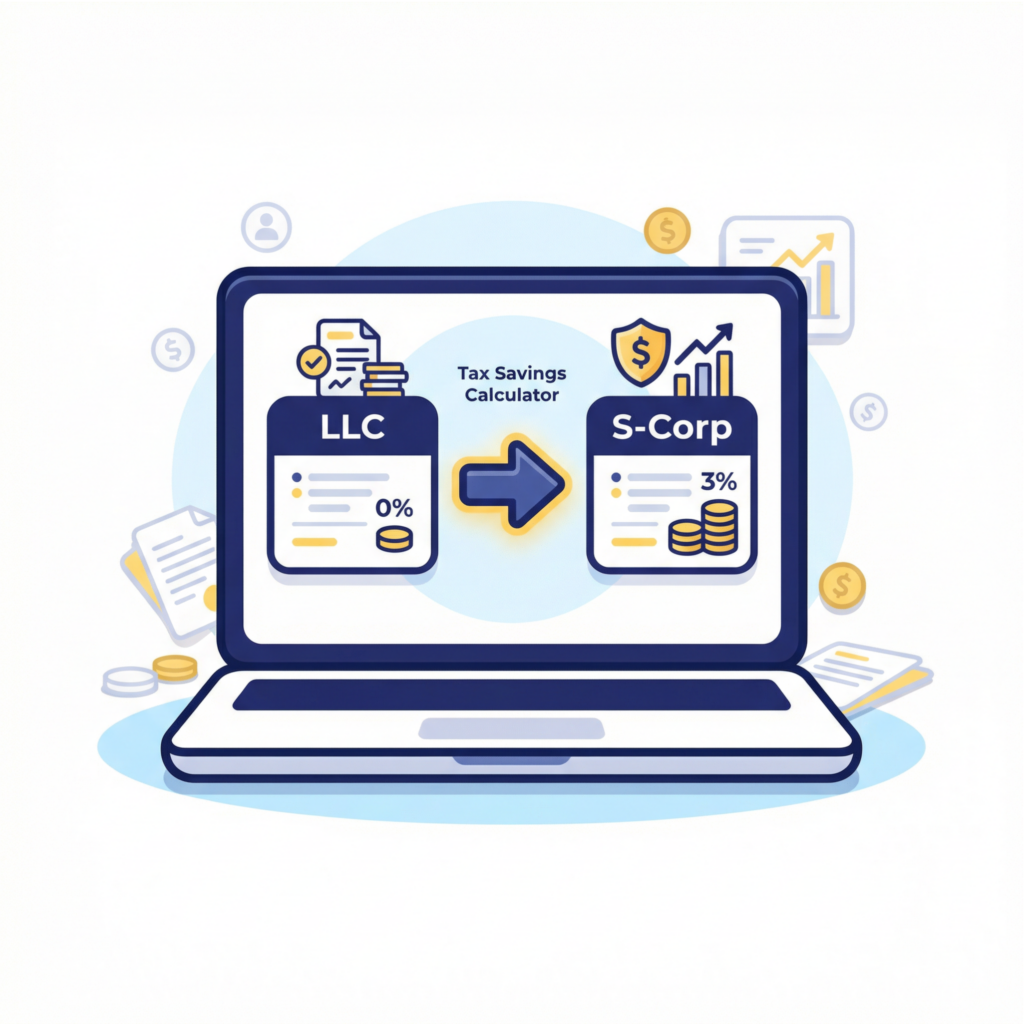
LLC vs S-Corp Tax Calculator
Self-Employment tax Calculator
Small Business Tax Calculator

Not TurboTax. Not H&R Block. A Real Strategy.
Software files your taxes. We engineer your tax strategy. There’s a difference — and it’s worth thousands.
We Find What They Miss
TurboTax asks questions. H&R Block fills out forms. Our MERNA™-certified strategists dig into your income, entity structure, and lifestyle to uncover deductions most CPAs overlook — legally saving clients $15K–$150K+ per year.
Strategy, Not Just Filing
Filing your return is the last step. We start months earlier — restructuring entities, layering write-offs, and building a tax plan that works year-round. By the time we file, you’ve already won.
A Real Strategist in Your Corner
No chatbots. No call centers. You get a dedicated, MERNA™-certified tax strategist who knows your situation, answers your questions, and fights for every dollar — every year.
Work With a Bridgeport Tax Firm That Understands Commuter, Rental & Contractor Tax Strategy
Book a Free Strategy Call and Meet Your Match.
Professional, Licensed, and Vetted MERNA™ Certified Tax Strategists Who Will Save You Money.
FAQ — TAX PREPARATION IN BRIDGEPORT
As a self-employed artist or small business owner operating out of the Arcade Mall or Black Rock in Bridgeport, what specific local deductions can I claim for my studio space or home office, and how does this interact with the Connecticut Pass-Through Entity Tax (PET)?
Bridgeport artists and small business owners can deduct a portion of their home or studio expenses if it’s their principal place of business, using either the simplified option ($5 per square foot, up to 300 sq ft) or the regular method (actual expenses like utilities, rent, and depreciation allocated to the business use). For those organized as pass-through entities, the Connecticut PET (currently 6.99% on adjusted gross income) can be a federal deduction, potentially lowering your federal taxable income, but always ensure proper documentation for both federal and state deductions.
I own a multi-family property in the North End or West Side of Bridgeport and rent out units. Beyond standard depreciation, are there any Bridgeport-specific property tax relief programs or energy efficiency incentives I should be aware of that can impact my federal and state tax liability?
Bridgeport property owners may qualify for the state’s Property Tax Credit for homeowners, which can be up to $200 per return against your Connecticut income tax. Additionally, look into United Illuminating’s energy efficiency programs (e.g., Energize CT rebates for HVAC upgrades or weatherization) that reduce utility costs and can also be eligible for federal energy efficiency tax credits (e.g., Nonbusiness Energy Property Credit, up to $1,200 for certain improvements under IRC Section 25C), directly lowering your federal tax bill.
My small manufacturing business, located near the Port of Bridgeport, often incurs expenses for environmental compliance and specialized equipment. Are there any Connecticut state tax credits or federal deductions specifically aimed at manufacturers in urban enterprise zones like ours?
Connecticut offers various tax credits for manufacturers, including the Manufacturing Reinvestment Act (MRA) tax credit for new capital investments. Businesses in designated Urban Enterprise Zones (like parts of Bridgeport) may also qualify for enhanced property tax abatements and corporation business tax credits (e.g., for hiring new employees), which directly reduce your state tax burden. Federally, you can often expense up to $1.22 million of qualifying equipment under Section 179 for 2024, and potentially claim 60% bonus depreciation for new assets placed in service.
I work at Bridgeport Hospital and frequently pay for continuing education, professional licenses, and specialized medical equipment. Can these expenses be deducted on my federal or Connecticut state tax return, especially given the current limitations on unreimbursed employee expenses?
Unfortunately, for federal purposes, unreimbursed employee business expenses are no longer deductible for most employees due to the Tax Cuts and Jobs Act of 2017. However, if you are self-employed or an independent contractor providing services to the hospital, these expenses (e.g., CME, licenses, equipment) would be deductible as ordinary and necessary business expenses on your Schedule C. For Connecticut state income tax, there are generally no specific deductions for these types of unreimbursed employee expenses either.
As a new restaurant owner in downtown Bridgeport, what are the key local permits and licenses I need to budget for, and how do their costs affect my federal and state tax deductions? Specifically, are there any unique Bridgeport city fees that are deductible?
Opening a restaurant in Bridgeport requires various local permits, including health permits from the Bridgeport Health Department, zoning approvals, and potentially a liquor license from the CT Department of Consumer Protection. While the City of Bridgeport doesn’t impose a separate ‘business privilege tax’ like some municipalities, the costs of these necessary licenses and permits (e.g., annual health permit fees, one-time liquor license application fees) are generally deductible as ordinary and necessary business expenses on your federal Schedule C or corporate tax return, and consequently reduce your Connecticut state taxable income.
I'm a freelancer or gig worker living in Black Rock and providing services to clients both within and outside Connecticut. How do I properly allocate my income for Connecticut state tax purposes, and what are the implications for estimated tax payments if my income fluctuates significantly?
As a freelancer in Bridgeport, you must allocate your income based on where the services are performed. For Connecticut income tax, if you’re physically in Black Rock performing the work, that income is generally sourced to CT. If your adjusted gross income exceeds certain thresholds (e.g., $1,000 in tax liability), you’ll need to make estimated tax payments quarterly (Form CT-1040ES) to both the IRS and the CT Department of Revenue Services to avoid underpayment penalties. You can use the annualized income method if your income fluctuates to adjust your quarterly payments.
Tax Strategists Serving All of Connecticut
Uncle Kam’s MERNA™-certified strategists serve cities across Connecticut. Find your nearest location.
View all Connecticut locations →